Haunted Places in Alabama: 32 of the Most Haunted to Visit
An iron works with a ghost who never existed, a battleship on Mobile Bay, a ghost town that was once the state capital and a face in a courthouse window. These are Alabama’s best-known haunted places, with what is history, what is legend and how to visit.
Alabama’s ghost stories owe a lot to one woman: Selma’s Kathryn Tucker Windham, whose 1969 book 13 Alabama Ghosts and Jeffrey made the Face in the Courthouse Window, the Specter in the Maze at Cahaba and the Red Lady of Huntingdon household names. We have checked every place below against current sources, so you know which are open, which run tours or ghost hunts, which you can only see from the road, and where the records quietly contradict the legend. Two corrections matter most. Sloss Furnaces’ famous foreman “Slag” Wormwood is an invention, and the furnace says so; and Sweetwater Mansion in Florence is no longer open for tours or investigations while its future is decided. Haunted hotels count as haunted places, so you will also find the inns where you can spend the night.
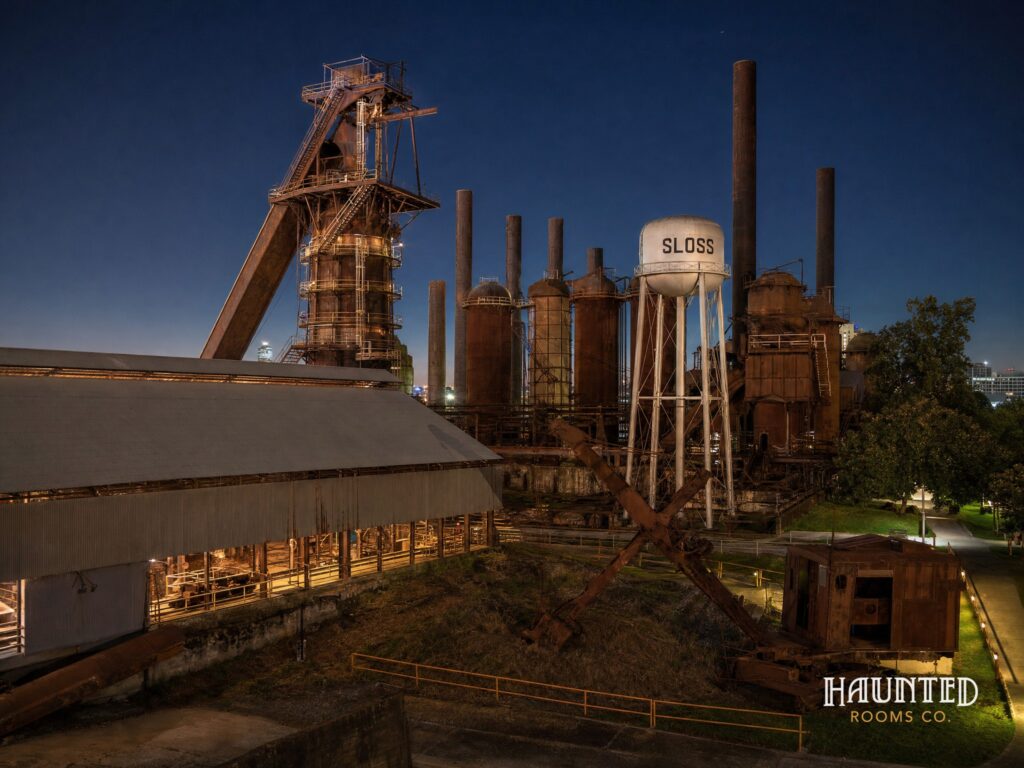
Address 20 32nd Street North, Birmingham, AL 35222
Where to look The blast furnaces and hearths, the boiler rooms and the tunnels under the casting sheds
Reported ghosts Theophilus Jowers, killed in the molten iron in 1887, and the invented foreman James "Slag" Wormwood
Visiting Free self-guided visits; guided tours for a small fee
Hours and season Tuesday to Saturday 10 AM to 4 PM, Sunday noon to 4 PM
Tickets Free admission
Ghost hunting No public ghost hunts; the Sloss Fright Furnace haunted house ended after 2019
Sloss made pig iron in the heart of Birmingham from its first blast in April 1882 until the furnaces went cold in 1971, and the towering stacks, stoves and casting sheds still stand. It was named a National Historic Landmark in 1981 and opened as a museum in 1983. Entry is free, and the work was brutal: the company leased convicts for its mines, and men died in the heat and machinery.
Its most famous ghost, the cruel foreman James “Slag” Wormwood, is not real. Sloss’s own director told Bham Now in 2023 that the story is untrue and that most online hauntings were made up to sell tickets to the old Fright Furnace haunted house. The older story is documented: foundryman Theophilus Jowers fell into the molten iron in 1887, and workers later said they saw a man walking on the hearth.
What investigators report
On Ghost Adventures, the crew focused on the underground tunnel and boiler room, asking questions and provoking during solo sessions, and reported EVPs such as “Come here” plus footsteps and a mist on night vision in the tunnel.
Haunted Rooms tip: Come on a weekday afternoon, take the free self-guided route around Furnace No. 1, and read Kathryn Tucker Windham’s The Ghost in the Sloss Furnaces for the Jowers story.
Address 202 Maple Hill Drive, Huntsville, AL (playground: 1351 McClung Avenue SE)
Where to look The swings of the Dead Children's Playground in Maple Hill Park, below the cemetery
Reported ghosts Swings moving on their own, children's laughter after dark, orbs in photographs
Visiting City cemetery and park, open daily from early morning until sunset
Tours Featured on Huntsville ghost walks and the annual Maple Hill Cemetery Stroll
Hours and season Cemetery 7 AM to sunset; park sunrise to sunset
Ghost hunting No; the park and cemetery close at sunset
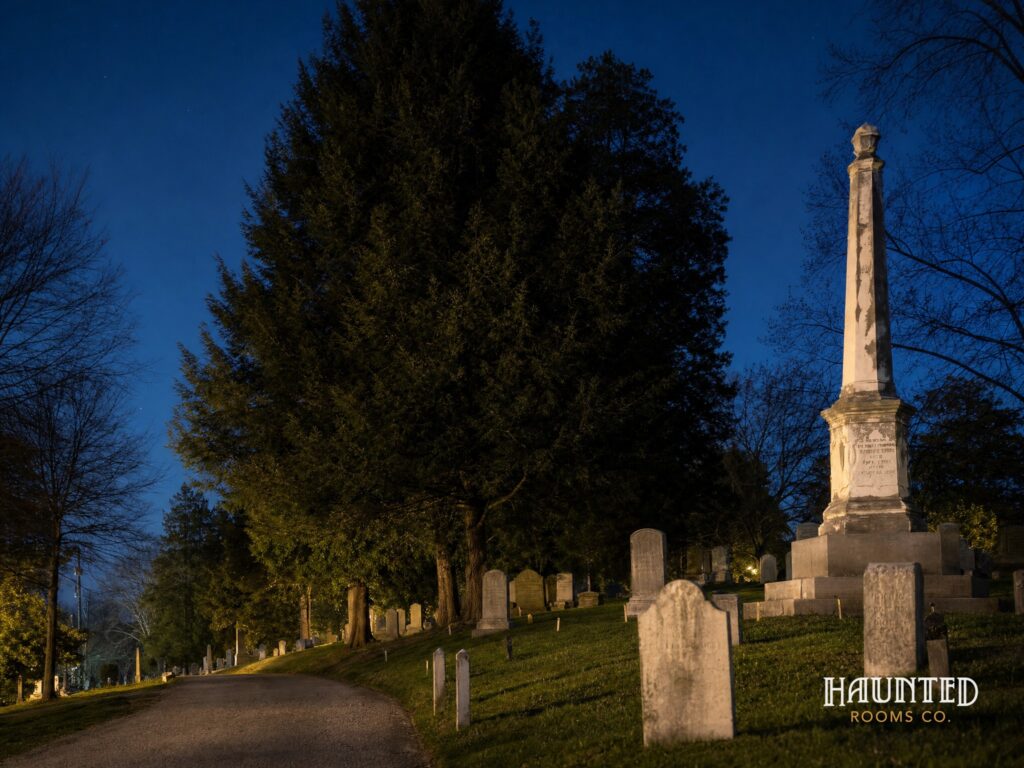
Huntsville founder LeRoy Pope sold the city its first two acres for a burial ground around 1822, and Maple Hill has grown to nearly 100 acres and more than 80,000 burials, including five Alabama governors and five U.S. senators. It joined the National Register in 2012. Behind it, in a hollow that was a stone quarry until the 1950s, sits the small Maple Hill Park playground locals call the Dead Children’s Playground.
People say the swings move when there is no wind and that children laugh there after dark, and the tale is that the young dead from the cemetery, perhaps 1918 flu victims, come down to play. A darker version about children murdered in the 1960s has no record behind it: Alabama Public Radio and Huntsville historians say no reports or burials support it. The city removed the playground in 2007 and later restored it after local efforts.
Haunted Rooms tip: Visit in daylight or at dusk before the gates close at sunset; walk down from the cemetery to the playground, and be respectful of neighbors.
Address Mobile Point, end of State Highway 180 (110 Highway 180), Gulf Shores, AL 36542
Where to look The old barracks, the casemates and the room where a Civil War shell exploded
Reported ghosts A prisoner who hanged himself in 1917, a young woman searching for her attacker, screaming soldiers
Visiting State historic site open to the public; admission charged
Tours Occasional after-dark ghost tours run by outside groups
Tickets Adults $7, seniors and students $5, children 6 to 12 $4
Ghost hunting Only on organized paranormal events
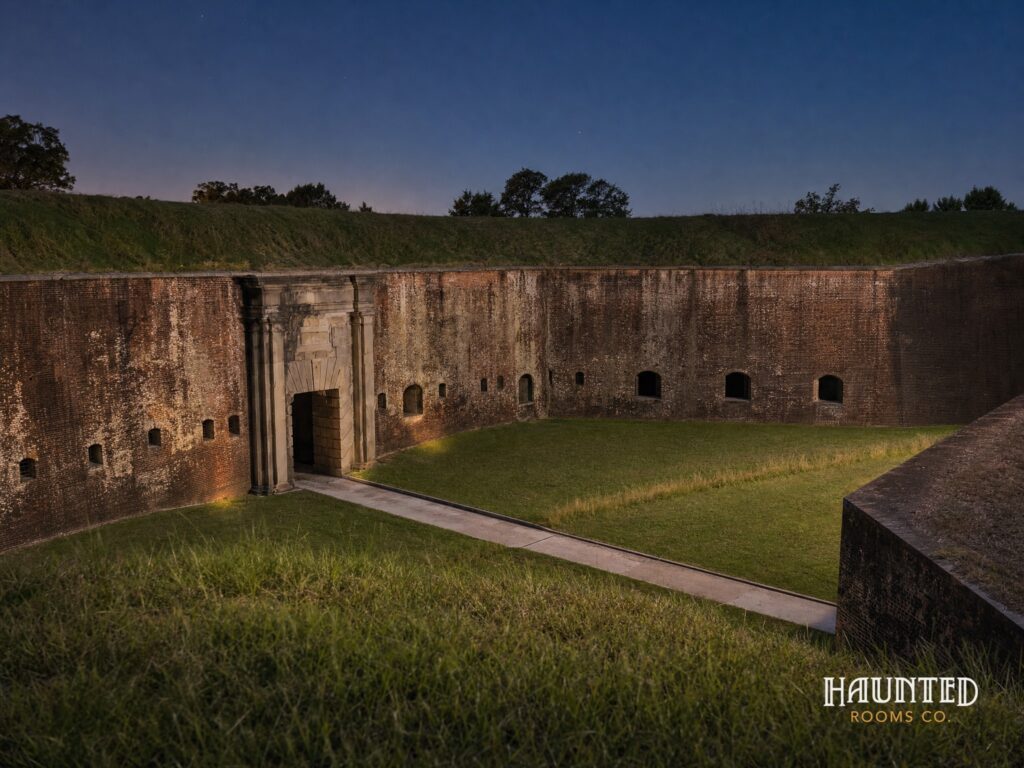
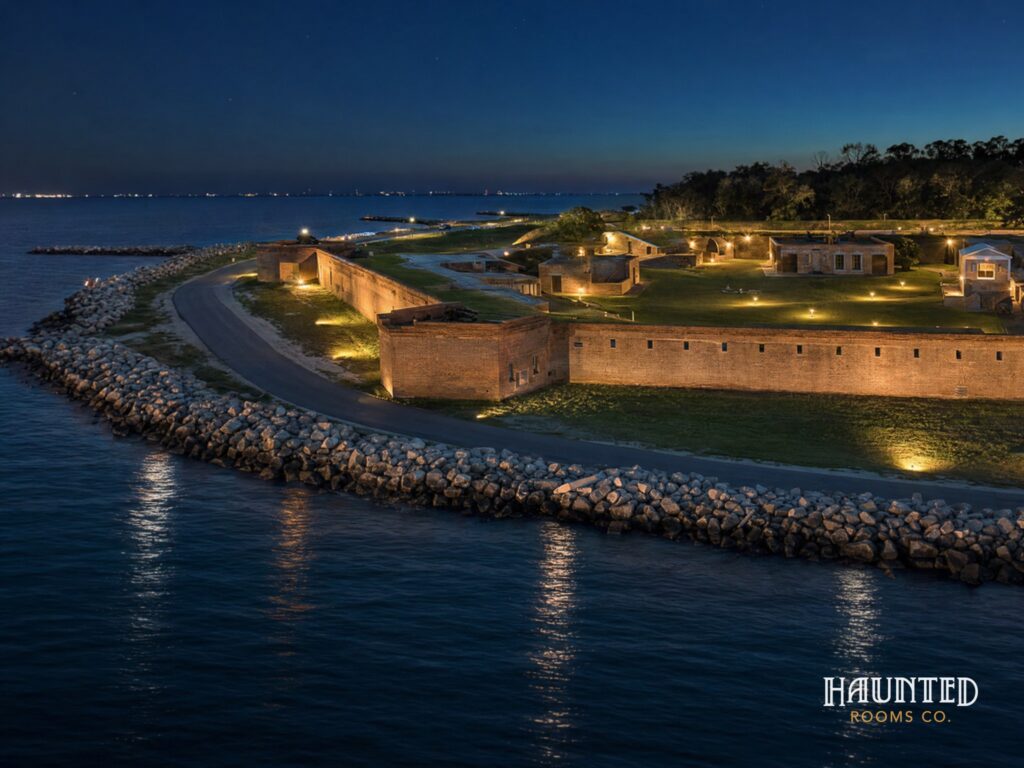
This brick pentagonal fort on Mobile Point, designed by Napoleon’s former engineer Simon Bernard, guarded the mouth of Mobile Bay from 1834. Admiral Farragut’s fleet ran past its guns on August 5, 1864 at the Battle of Mobile Bay, and after a two-week siege its 581 defenders surrendered on August 23. The Army used it again through both world wars, and it has been a National Historic Landmark since 1960.
Alabama Living and the Alabama Tourism Department both repeat the fort’s best-known stories: a prisoner said to have hanged himself in the barracks in 1917, screams from men killed when a shell exploded in a casemate, and a young woman attacked in the 1800s who still searches the fort for her attacker. A longtime interpreter calls it hallowed ground, and outside groups have run after-dark ghost tours.
Haunted Rooms tip: Arrive in the late afternoon, walk the casemates and the barracks before closing, and stay for sunset over the Gulf from the ramparts.
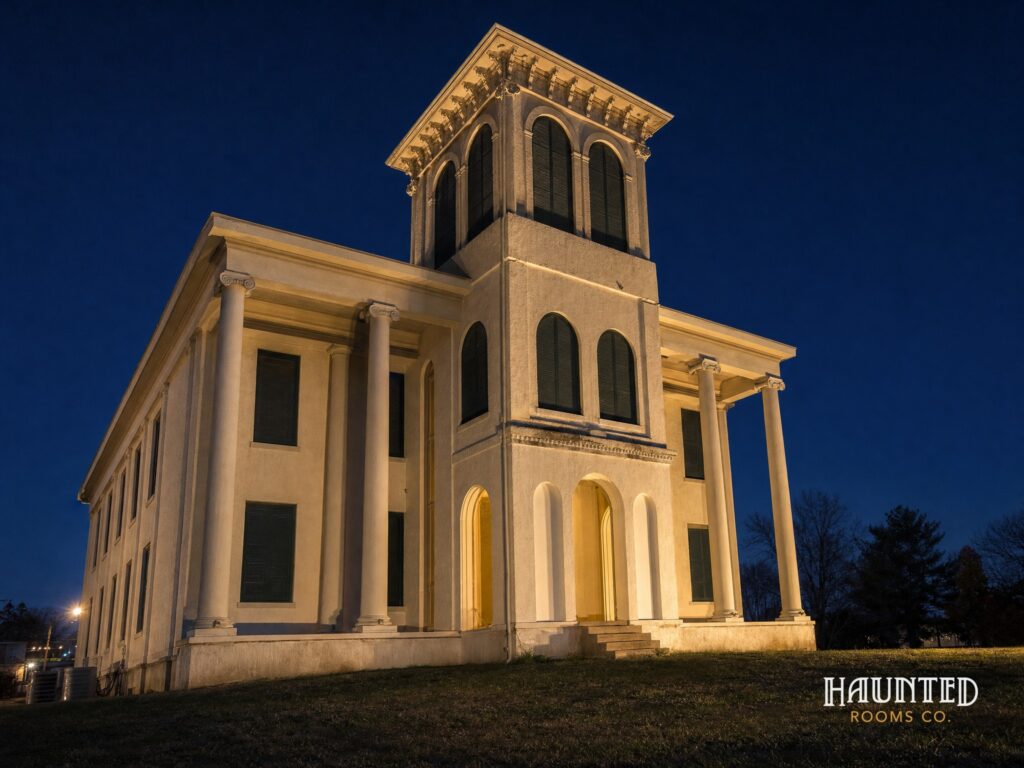
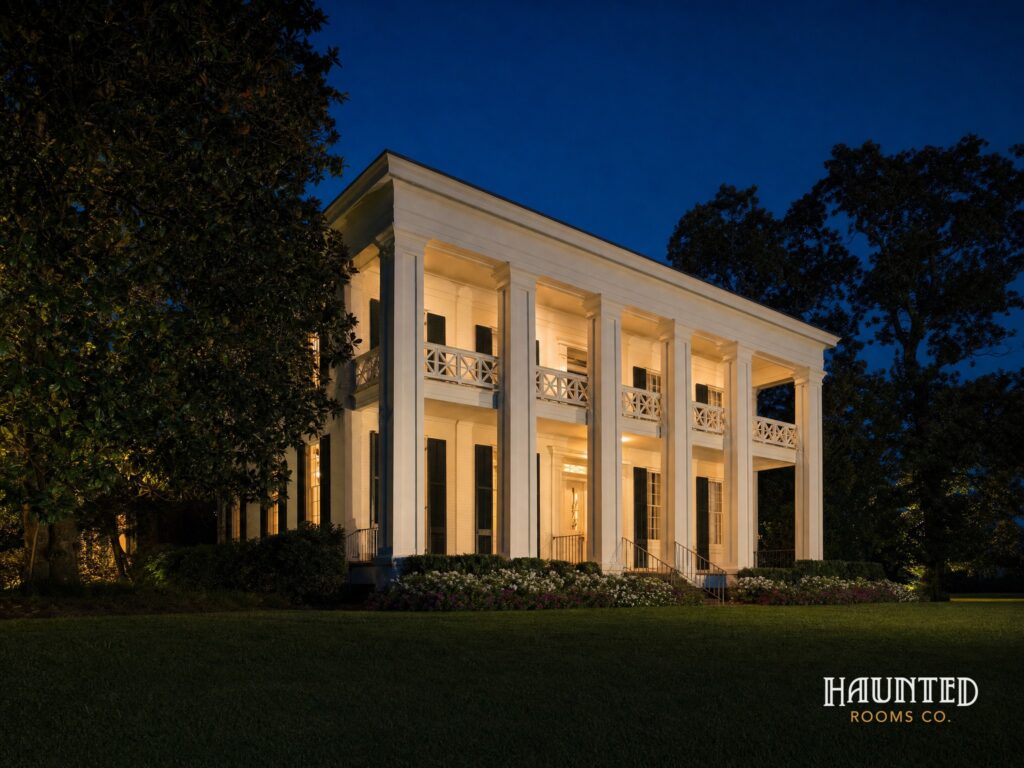
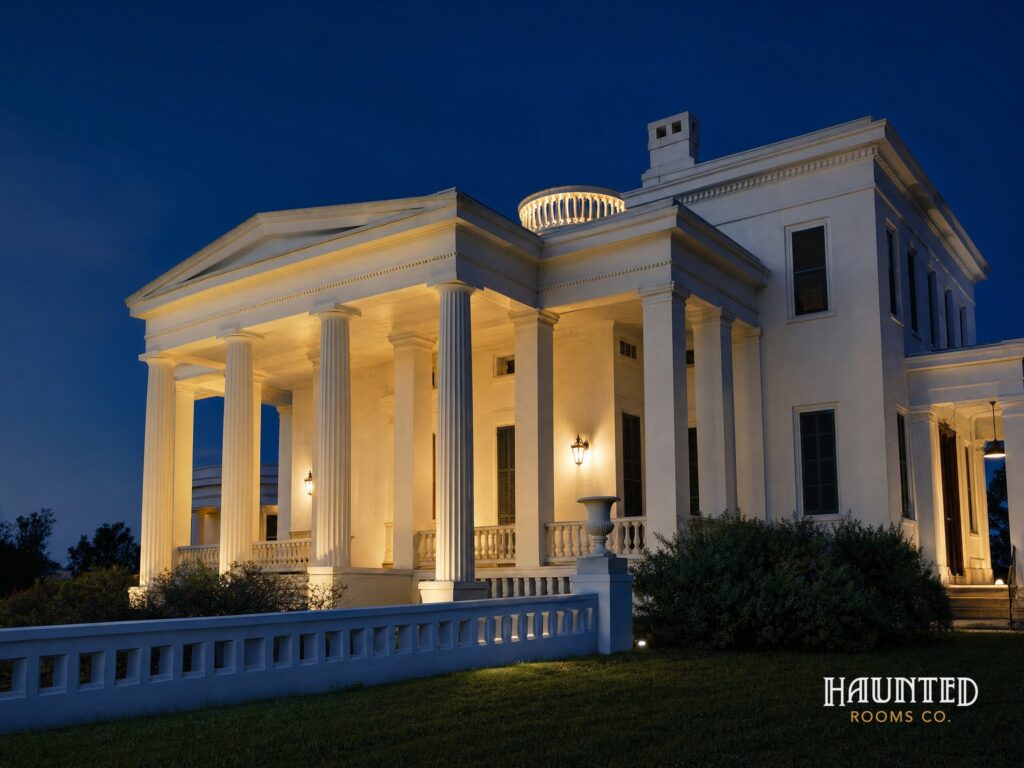
Dr. John R. Drish’s enslaved artisans built this mansion in 1837 at the center of a 450-acre plantation, and a three-story Italianate tower was added before the Civil War. It later served as a school, a wrecking company’s parts warehouse photographed by Walker Evans, and part of a Baptist church. The preservation society saved it in 2007, and since 2016 it has been a privately owned, restored event venue.
Kathryn Tucker Windham’s 1969 story Death Lights in the Tower made it famous. Drish died after a fall on the staircase in 1867; his widow Sarah saved the candles from his wake for her own funeral, but they could not be found when she died in 1884. Since then passersby have reported fire in the tower when there was none. Visitors also tell of ghost lights inside, and the house has hosted Halloween ghost hunts.
What investigators report
Tuscaloosa Paranormal report EVP sessions here in which questions asked during interviews drew replies, including a faint “Yes” and the number “Thirteen” in answer to direct questions, along with children’s giggles and humming on the recordings.
Hours and season Daily 8 AM to 5 PM (last tickets 4 PM), closed Christmas Day
Tickets Admission charged
Ghost hunting No public ghost hunts
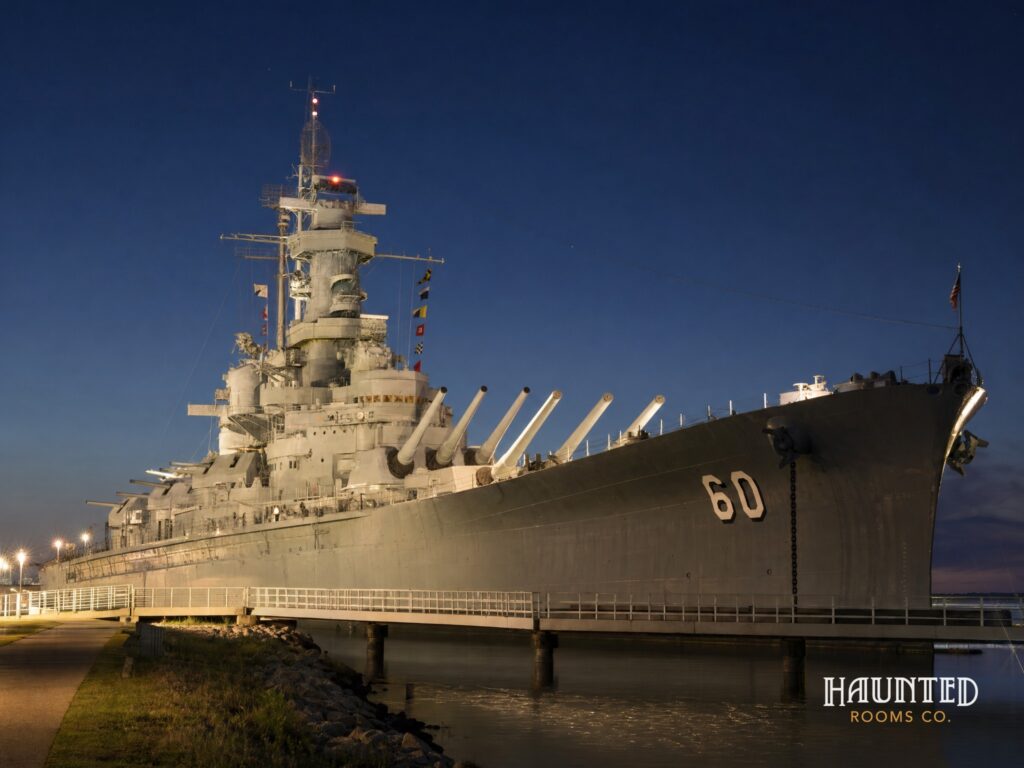
The battleship was commissioned in August 1942, served first with the British Home Fleet on Arctic convoys and then across the Pacific, and came home to Mobile Bay in September 1964 after a statewide campaign raised the money to save her. She opened as a museum on January 9, 1965, became a National Historic Landmark in 1986 and survived a list to port in Hurricane Katrina.
She lost no men to enemy fire, but on February 21, 1944 one of her own 5-inch mounts fired into another, killing five sailors and wounding eleven. Visitors and docents tell of footsteps coming toward them on empty decks, hatches slamming, voices below deck and the feeling of being watched in the berthing spaces. The museum itself does not promote ghost stories.
Haunted Rooms tip: Go late in the day, follow the tour route below deck through the crew berths and galley, then come back out to see the ship floodlit over the bay.
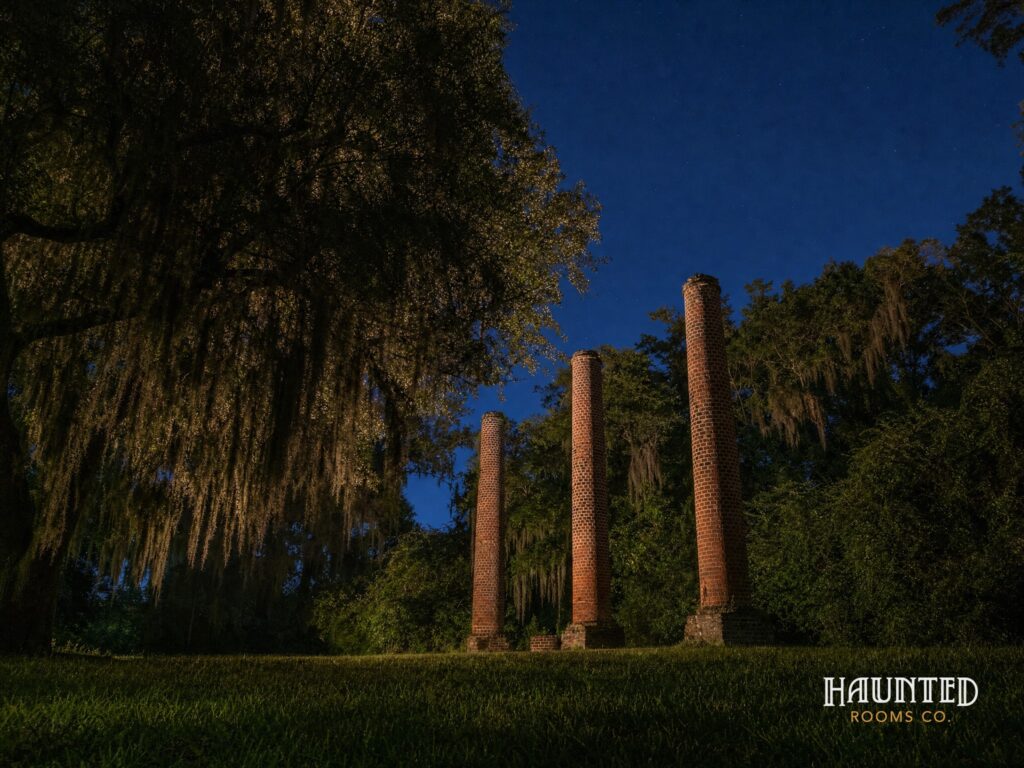
Where to look The Pegues garden site, the old cemeteries and the Crocheron columns
Reported ghosts Pegues' Ghost, a glowing ball of light in the old cedar maze; children laughing in the graveyard
Visiting State historic park; grounds open daily
Hours and season Grounds daily 9 AM to 5 PM; welcome center Thursday to Monday 10 AM to 5 PM
Tickets Adults $2, children $1; walking and wagon tours extra
Ghost hunting No public ghost hunts; daytime visits only
Alabama’s first permanent state capital was laid out in 1820 where the Cahaba meets the Alabama River, and lost the capital to Tuscaloosa in 1826 after floods. It boomed again on cotton, held up to 3,000 Union prisoners at Castle Morgan in 1863 to 1865, then emptied when the county seat left in 1866. By 1903 most buildings were gone. The Alabama Historical Commission keeps the 853-acre site as a park of streets, ruins and cemeteries.
Its famous ghost comes from Kathryn Tucker Windham’s 13 Alabama Ghosts and Jeffrey: a large glowing ball of light that floats through the garden maze of Colonel C. C. Pegues, who was killed in Virginia in 1862. Alabama Public Television filmed the story here in 2026. Visitors also report children’s laughter in the graveyard. Skeptics point to marsh light on this low, wet ground.
Haunted Rooms tip: Pay at the welcome center, walk the old street grid to the Pegues site late in the afternoon, and ask about the wagon and walking tours.
Visiting a haunted place by day is one thing. Investigating one after dark is another. On a Haunted Rooms ghost hunt our team takes you through a historic building with professional ghost hunting equipment, runs EVP sessions and vigils, and gives you time to explore on your own. These are the nearest ones we run.
Where to look The Crystal Ballroom, the fifth floor and Room 552, the domed lobby
Reported ghosts A lady in red in the Crystal Ballroom, Henry Butler on the fifth floor, a grey-suited man in wedding photos
Visiting A working hotel; book a room to stay the night
Ghost hunting No public investigations; you can stay the night as a guest
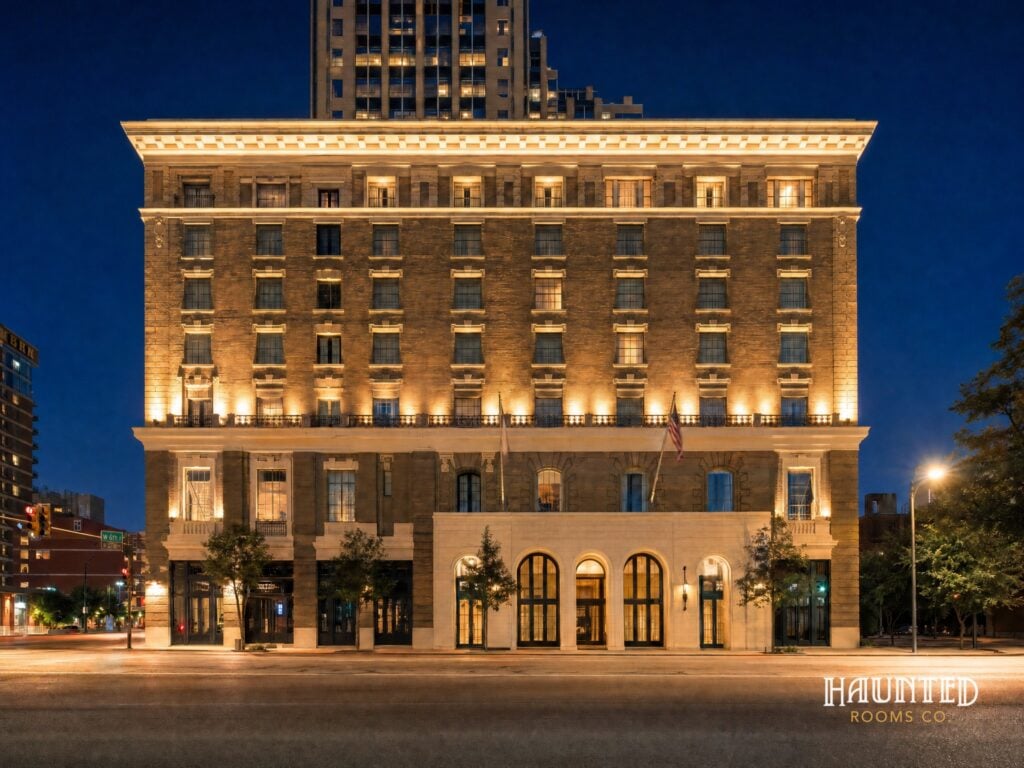
The first Battle House opened in 1852 on the site of Andrew Jackson’s War of 1812 headquarters and hosted Henry Clay, Jefferson Davis and Stephen Douglas. It burned in 1905, was rebuilt in 1908, closed in 1974 and stood empty for some 30 years before a restoration reopened it in May 2007 as a Renaissance hotel beside the RSA Battle House Tower.
The best-known story is a lady in red, said to be a bride abandoned around 1910, seen in the Crystal Ballroom with flickering lights and cold spots. Mobile lore also places former Mardi Gras king Henry Butler, beaten to death in Room 552 in the 1930s, on the fifth floor. During restoration, workers said their tools went missing and finished work was undone overnight.
Haunted Rooms tip: Ask for a fifth-floor room, then walk through the lobby to see the Crystal Ballroom doors in the evening.
Where to look Rooms 214, 314 and 315, the bar, the courtyard and the hallways
Reported ghosts A man in 1880s clothing said to be Jesse James, Lucinda and her lavender scent, a barking dog
Visiting A working hotel; book a room to stay the night
Ghost hunting No public investigations; you can stay the night as a guest
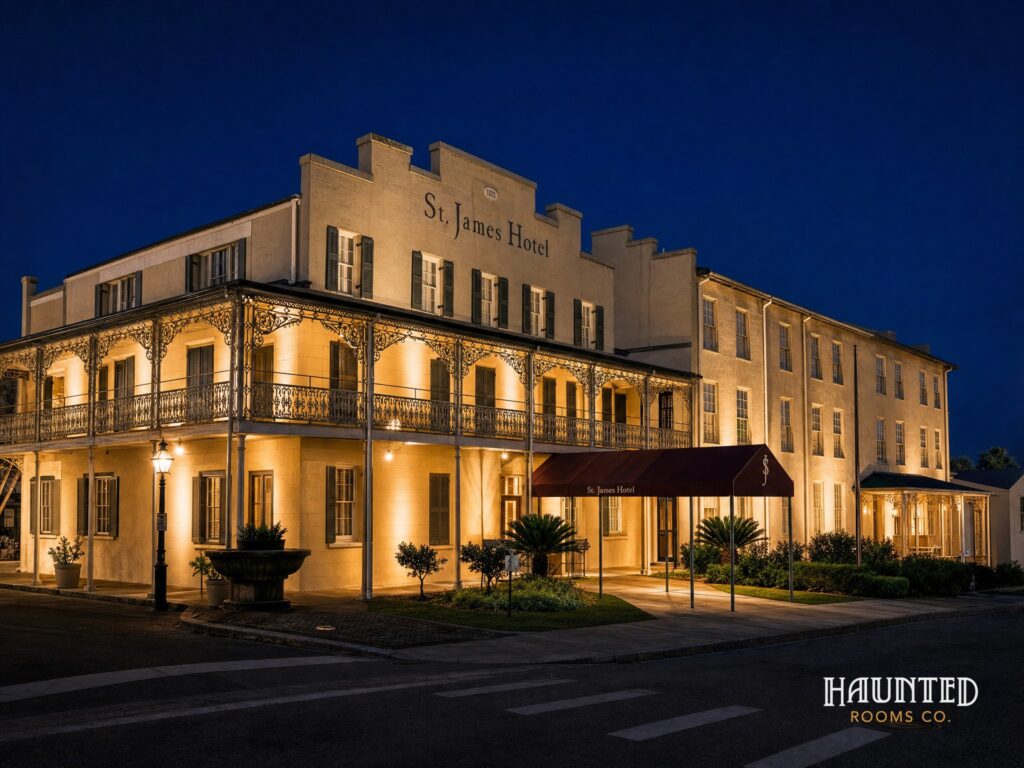
The St. James opened in 1837 as the Brantley Hotel beside the Alabama River docks, and it is often called the last antebellum riverfront hotel left in the South. Union troops used it as headquarters in 1865 and spared it when much of Selma burned. After a year-long closure it reopened in the fall of 2026 under Marriott’s Series collection, with 55 rooms a block from the Edmund Pettus Bridge.
Its ghost stories center on Jesse James, who legend says stayed here with his brother Frank in the 1880s. Guests describe a man in old-fashioned clothes in rooms 214, 314 and 315, a woman they call Lucinda announced by the smell of lavender, and a dog barking in the halls or courtyard when there is no dog. The James visit itself is a rumor, not a record.
What investigators report
The Alabama Paranormal Association report asking questions about Jesse James here and getting a ghost box reply of “Yes, find my missing gun.” Visitors say they have seen him sitting in the chair closest to the lamp in Room 301, his former room.
Address 56 Tuscaloosa Street, Carrollton, AL 35447
Where to look The lower right pane of the north garret window
Reported ghosts The face of Henry Wells, said to have been burned into the glass by lightning
Visiting A working courthouse; the window is seen from the square outside
Ghost hunting No; it is a working county courthouse
Union troops burned Carrollton’s first courthouse in 1865, and the second burned in 1876. The present Italianate brick courthouse went up in 1877 and 1878 and is still the county’s working courthouse. Freedman Henry Wells was blamed for the 1876 fire; he was shot while trying to escape in January 1878 and died of his wounds on February 3, after a confession that may have been forced.
Legend says Wells was held in the garret as a mob gathered, and that lightning burned his face into the window glass. A marker outside tells the story, and a face-like image is still pointed out in the lower right pane. Records do not fit: the windows had not been installed when Wells died, and a 1928 newspaper said the pane was replaced and a face reappeared. Kathryn Tucker Windham made it famous in 1969.
Haunted Rooms tip: Read the marker outside, then look up at the lower right pane of the north garret window from the square; bright daylight makes the image easier to pick out.
Where to look The veranda outside Room 007, the lobby chandelier and the hidden bunker under the stairs
Reported ghosts A lady in white on the Room 007 veranda, a swinging chandelier, soldiers in guests' dreams
Visiting A working hotel; book a room to stay the night
Ghost hunting No public investigations; you can stay the night as a guest
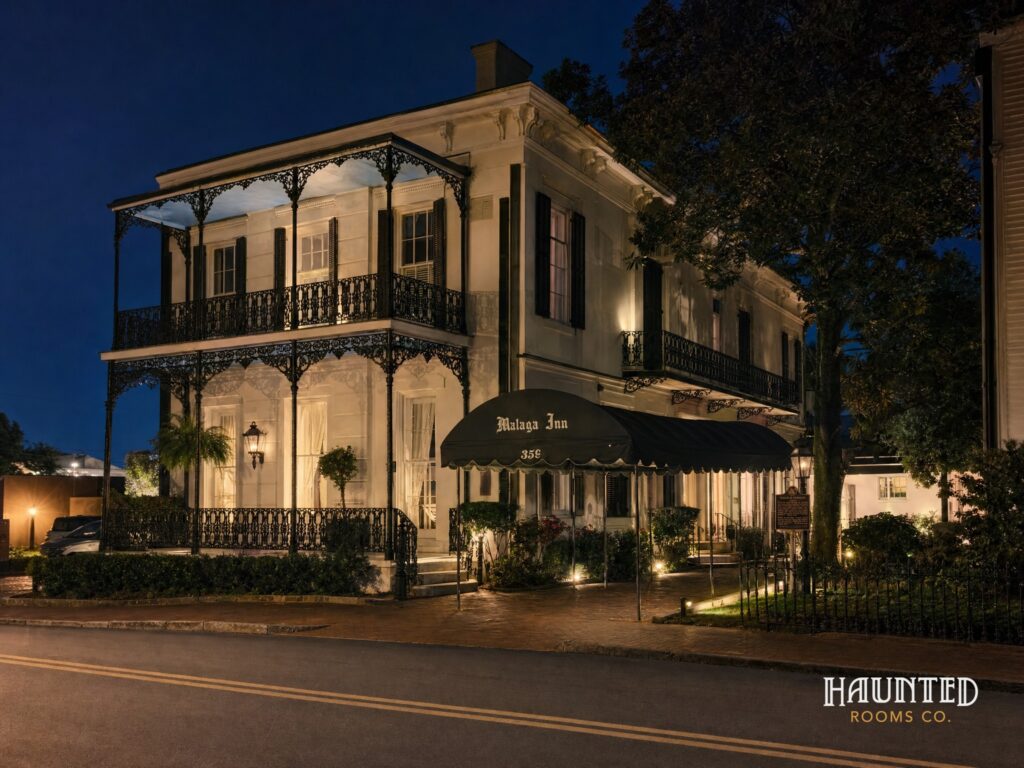
The Malaga Inn is a family-run hotel made from two 1862 townhouses in downtown Mobile, joined together in the 1960s; the lobby was once the yard between them. It opened as an inn in 1968, and USA Today readers voted it the sixth-best haunted hotel in America in 2022. A maintenance worker found a hidden bunker beneath the stairs in the 1990s.
Guests talk about a lady in white pacing the veranda outside Room 007, the inn’s only odd-numbered room. The owner’s family has suggested she may be Maime Sinclair, the grandmother who helped open the inn and loved James Bond. Others report the lobby chandelier swinging, televisions switching on, devices unplugged overnight, clocks reset while they slept and dreams about soldiers.
Haunted Rooms tip: Request Room 007 directly with the inn; it is the room on the veranda where the lady in white is seen.
Where to look The sixth floor (rooms 604, 613 and 615), room 416, the bar and kitchen
Reported ghosts Major Edward Tutwiler, the Knocker, a little girl in pigtails, an older woman in a turquoise choker
Visiting A working hotel; book a room to stay the night
Ghost hunting No public investigations; you can stay the night as a guest
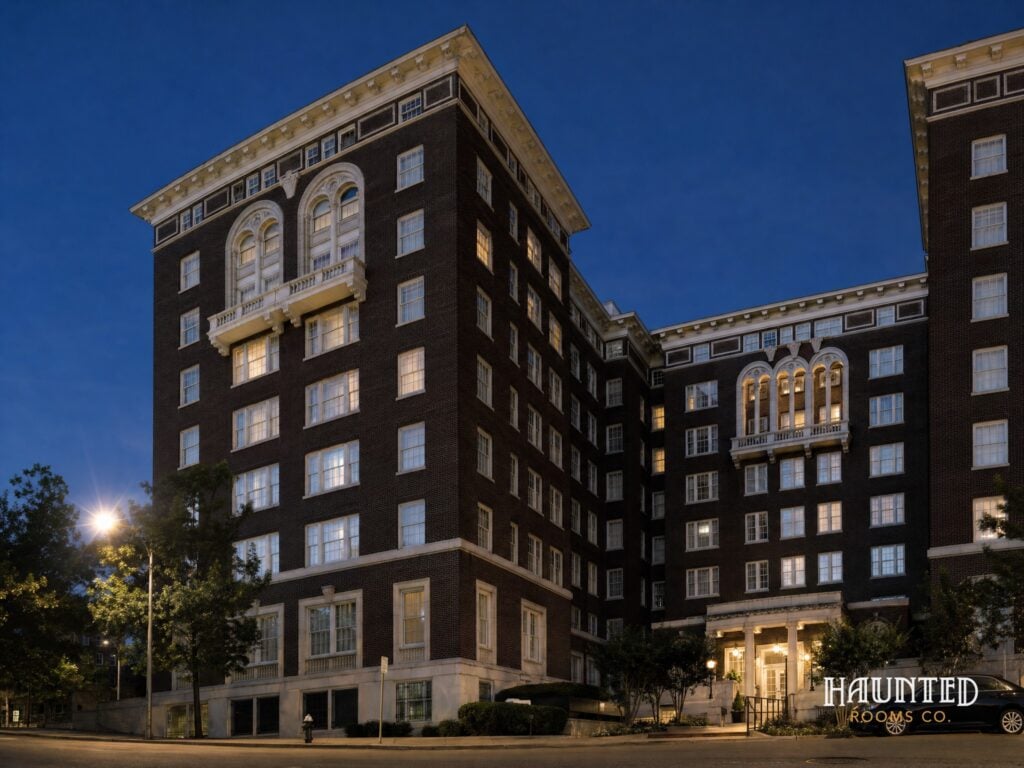
The Tutwiler is Birmingham’s best-known haunted hotel, a Hampton Inn & Suites inside the 1914 Ridgely Apartments on Park Place. The original Tutwiler Hotel stood two blocks away until it was imploded in 1974; the name moved here when the Ridgely reopened as a hotel in 1986. Staff still say good night to the Major at closing time, a habit that began after a bartender’s strange week in 1995.
Most reports come from the sixth floor, where guests describe rapid knocking on their doors in the small hours and nobody in the corridor when they look. A Birmingham paranormal group says it recorded a little girl’s voice saying “knock, knock”, and ghost tour guides add sightings of a girl in pigtails on the security cameras. Ask for a sixth-floor room; it is a request, not a guarantee.
Haunted Rooms tip: Request the sixth floor (rooms 604, 613 or 615 are the ones named in local stories) when you book and again at check-in.
Address 2101 5th Avenue North, Birmingham, AL 35203
Where to look The ninth floor, the room Hank Williams stayed in, the corridors and the lobby
Reported ghosts Hank Williams, former owner Clifford Stiles, a woman in white, a small dog
Visiting A working hotel; book a room to stay the night
Ghost hunting No public investigations; you can stay the night as a guest
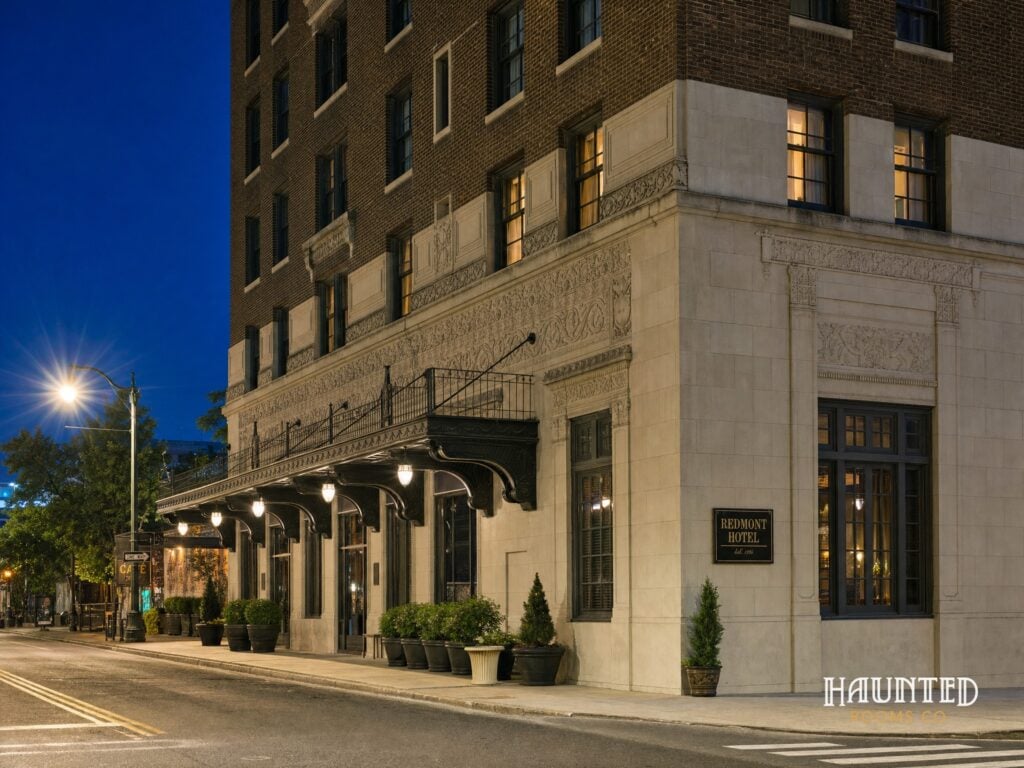
The Redmont opened on May 1, 1925 with a private bath in all 200 rooms, and it is Birmingham’s oldest operating hotel. Businessman Clifford Stiles bought it in 1946 and turned the top floor into a penthouse for his family. After a long restoration it reopened in March 2016 in Hilton’s Curio Collection, with 120 rooms, a block from the Tutwiler.
Country star Hank Williams stayed here on his final road trip in late December 1952; he died in the back of his car on New Year’s Day 1953, not in the hotel. Guests say they have heard a guitar picking out his songs. Others report a woman in white on the ninth floor, Clifford Stiles walking the halls and locking doors, and a little dog trotting along the corridors.
Haunted Rooms tip: Ask staff which room is linked to Hank Williams; they tend to talk about it only if you ask.
Address 331 Cotton Avenue SW, Birmingham, AL 35211
Where to look The upstairs rooms and the front hall
Reported ghosts Doors slamming and rocking chairs rocking on their own, as docents tell it
Visiting House museum with guided tours
Ghost hunting Occasional public ghost hunts run by the Southern Ghost Girls Tours
Arlington is Birmingham’s only antebellum mansion, built between 1845 and 1850 for Judge William S. Mudd by enslaved laborers in the old town of Elyton. Union troops used the house during Wilson’s Raid in 1865, and the raid that burned the University of Alabama set out from here. The city bought it in 1953, and it is now a house museum with gardens on the National Register.
Folklorist Alan Brown records docents’ stories of doors slamming and rocking chairs moving by themselves. Arlington is also one of the few Alabama house museums that lets ghost hunters in: medium Lesley Ann Hyde’s Southern Ghost Girls Tours run public investigations here, and WBHM reported in 2025 that the first one, in 2018, drew about 200 people, with proceeds helping preservation.
Haunted Rooms tip: Watch for the Southern Ghost Girls’ public investigation, usually one night in late summer, or take a daytime tour and ask the docents what they have heard.
Address 1050 Sweetwater Avenue, Florence, AL 35630
Where to look The staircase, the boarded cellar and the small windowless secret room
Reported ghosts Billy Patton, a phantom Confederate casket, a humming lady, a door that locks women in
Visiting Private property in poor repair; no tours or ghost hunts at present
Ghost hunting Not currently; paid investigations ended and the house is unsafe
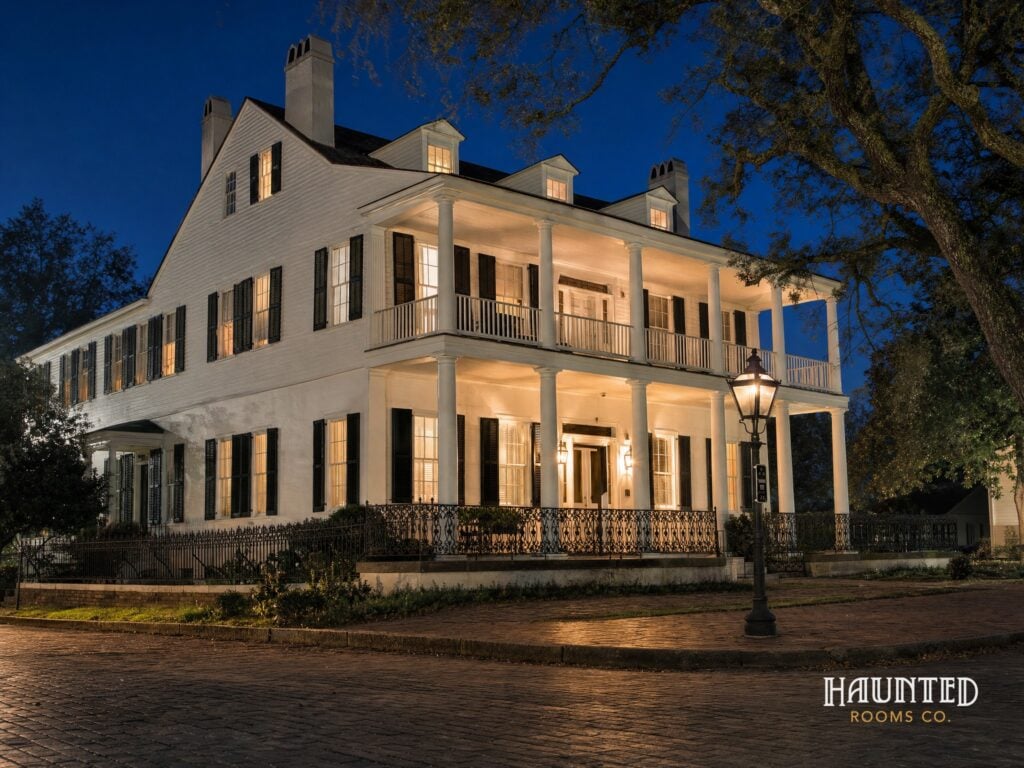
General John Brahan began this brick plantation house before his death in 1835, and his son-in-law Robert M. Patton finished it; Patton became Alabama’s first elected governor after the Civil War. Up to 300 enslaved people were tied to the property. After the Weeden family years it stood largely empty for decades, and in 2023 it sold for $1.35 million to a hotel company. Descendants are now campaigning to save it and to find its lost slave cemetery.
It is one of Alabama’s most famous haunted houses, featured on Paranormal State in 2011 and Travel Channel in 2019. Caretakers told of a casket holding a Confederate soldier that appeared and vanished, a door that locks women inside, a humming lady upstairs and a boy called Billy said to have been kept in the cellar. None of these stories is documented, and the caretakers stopped tours because the house is unsafe.
Haunted Rooms tip: There are no tours: see the house from Sweetwater Avenue only and follow the Save Sweetwater campaign for any future open days.
Where to look The live oak outside the northwest wall on Bayou Street
Reported ghosts Charles Boyington, heard whispering and protesting his innocence
Visiting The oak is on a public sidewalk; the city-owned graveyard is open in daylight
Tours Included on downtown Mobile ghost walks
Ghost hunting No ghost hunting in the graveyard
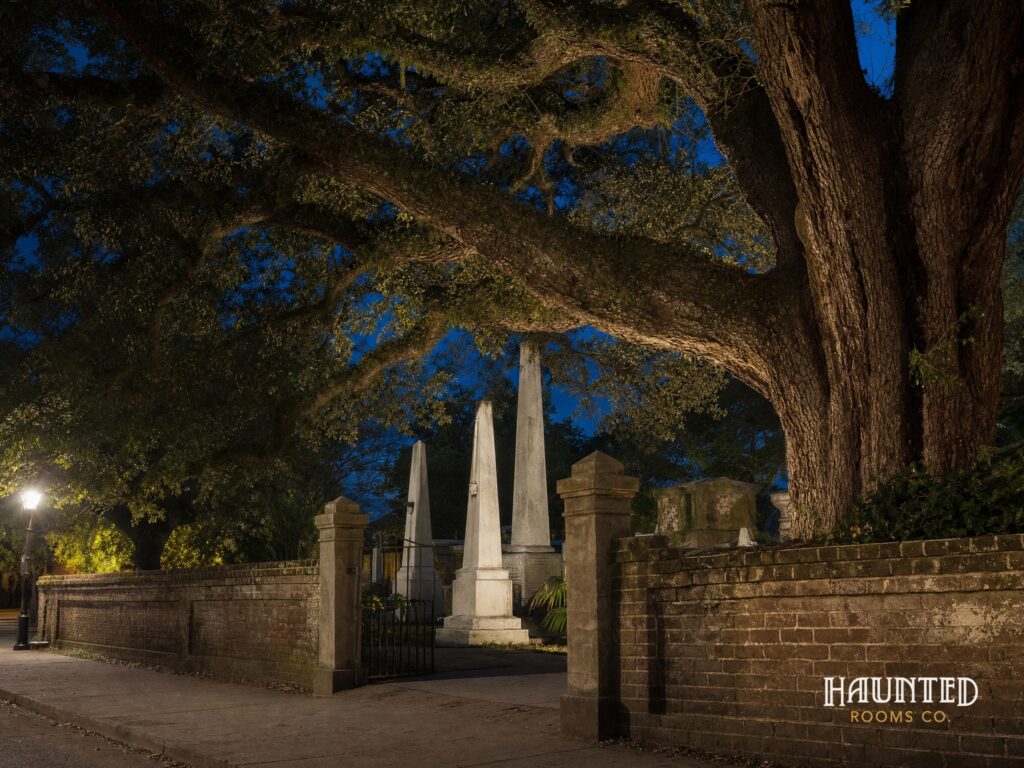
Church Street Graveyard opened in 1819 behind what is now the Mobile Public Library, and its four walled acres hold yellow fever victims, Mardi Gras founder Joe Cain and General Edmund Gaines. In May 1834 printer Charles R. S. Boyington was seen walking toward it with his roommate Nathaniel Frost, who was later found stabbed and robbed nearby. Boyington was hanged on February 20, 1835, insisting he was innocent.
Legend says he swore a mighty oak would grow from his heart to prove it, and a live oak did rise over his grave in the potter’s field. When the wall was moved after 1900 the tree ended up just outside it, beside a marker that calls him unjustly hanged. Passersby say they hear whispering and sobbing in the branches. Whether he was innocent is not on record.
Haunted Rooms tip: See the oak and its historical marker from the sidewalk any time, then visit the graveyard itself in daylight when the gates are open.
Where to look The front windows beside the door and the upstairs rooms
Reported ghosts Ruined banker John McGee Parkman and his two daughters
Visiting House museum with admission
Hours and season Tuesday to Saturday 10 AM to 4 PM (check before you go)
Ghost hunting No public ghost hunts
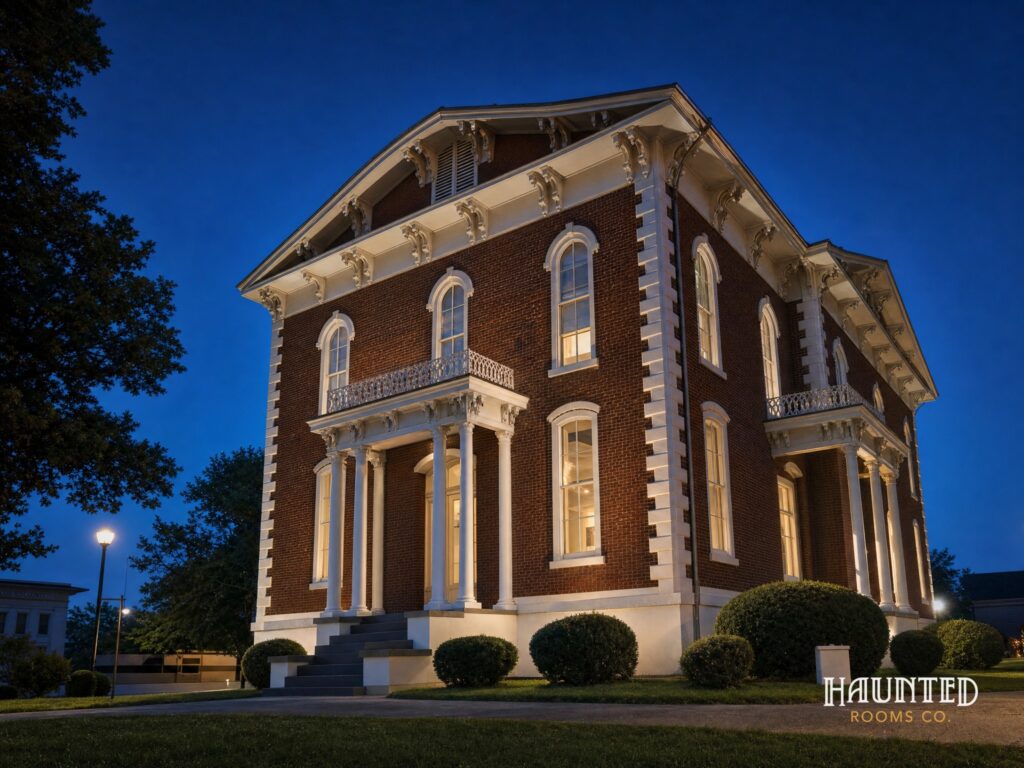
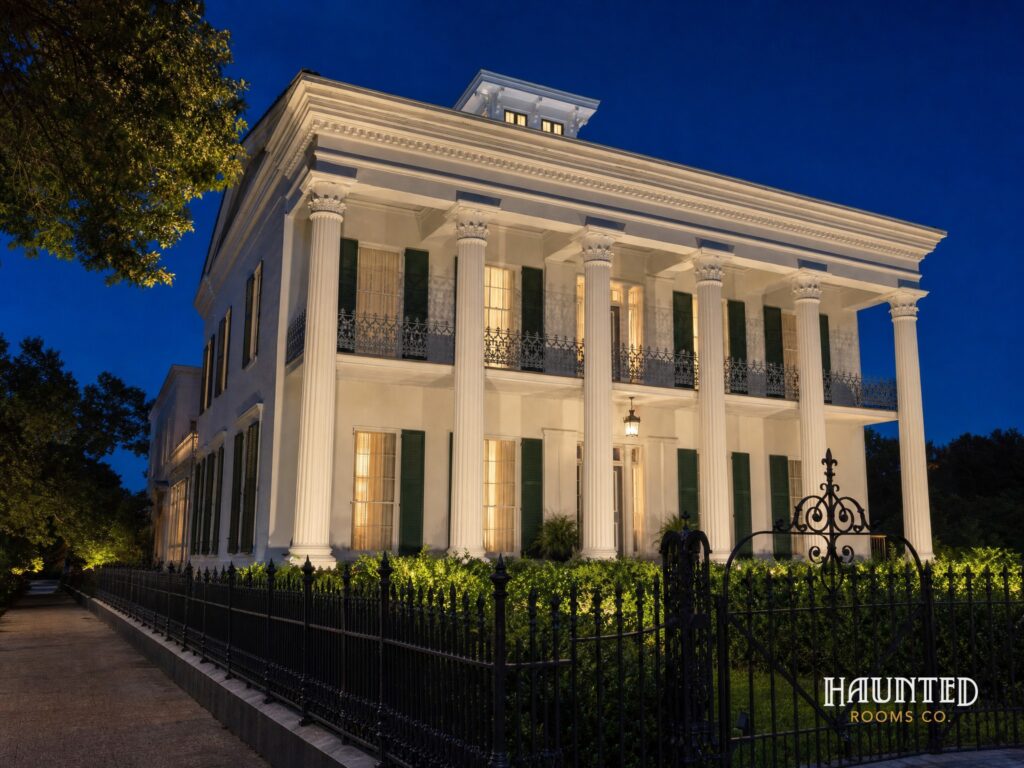
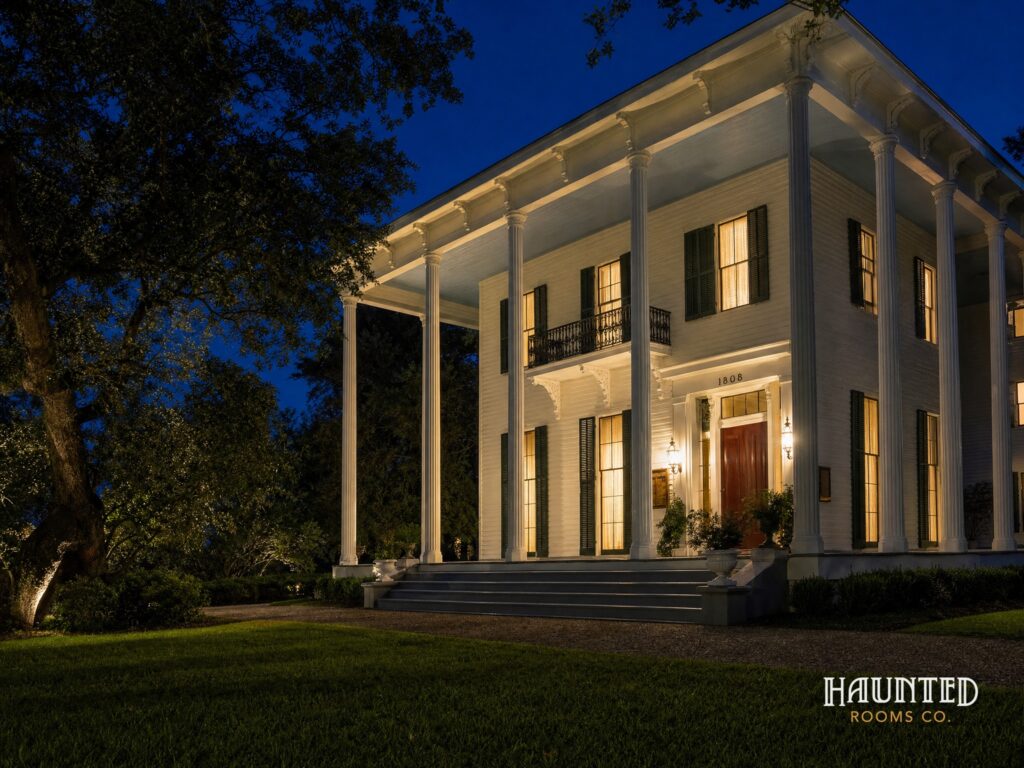
Thomas Helm Lee designed this Greek Revival mansion for Colonel Edward T. Watts, and it was finished in 1856 for about $69,000, with Italian plaster and marble work. Banker John McGee Parkman bought it in 1864. After his bank failed he was jailed at the Cahaba prison, and on May 23, 1867 he was shot dead trying to escape. The City of Selma has owned the house since 1957 and runs it as a museum.
Windham’s story The Return of the Ruined Banker says Parkman came home after death, and Selma tellers add his two daughters. In 2004 the Selma Times-Journal reported a Birmingham visitor whose photo showed three blurred figures in a window beside the front door, and a Mobile TV crew that said it felt movement inside. These are stories; the house itself sticks to history.
Haunted Rooms tip: Tour the house, then drive out to Old Cahawba, where Parkman died trying to escape the prison.
Address 805 South Cedar Avenue, Demopolis, AL 36732
Where to look The piano and the space under the stairs
Reported ghosts Evelyn Carter, a governess who died in the house, heard playing the piano
Visiting State historic house museum with guided tours
Tickets Adults $10, seniors $9, children 6 to 18 $5
Ghost hunting No public ghost hunts
Cotton planter Nathan Bryan Whitfield grew a log cabin into this Greek Revival mansion between 1843 and 1861, using enslaved builders, and it is one of the few American houses to use all three Greek orders. It is a National Historic Landmark, called Alabama’s finest neoclassical house, and the Alabama Historical Commission runs it as a museum with guided tours.
Its ghost appears in Windham’s The Unquiet Ghost at Gaineswood. Evelyn Carter, a young woman who looked after the Whitfield children, died in a hard winter, and her body was kept under the stairs until it could be shipped home to Virginia. Visitors and staff have told of piano music, rustling skirts and voices. Accounts differ on whether she is still there.
Haunted Rooms tip: Ask the guide where the piano stood and where Evelyn’s body is said to have been kept under the stairs.
Address 51 Bienville Boulevard, Dauphin Island, AL 36528
Where to look The brick parapets facing the bay
Reported ghosts A woman in a hoop skirt walking the parapets, soldiers who follow visitors to the gate
Visiting Historic site open to the public; admission charged
Ghost hunting No public ghost hunts
Work on Fort Gaines began around 1819 at the eastern tip of Dauphin Island, but storms and budget trouble meant it took decades to finish. With Fort Morgan it guarded the mouth of Mobile Bay, and after the Battle of Mobile Bay the Union fleet shelled it for nearly three days until Colonel Charles Anderson surrendered on August 8, 1864. Its museum holds the anchor of Farragut’s flagship Hartford.
Dauphin Island’s museum director told WKRG in 2019 that the fort is doubly haunted, by soldiers and by the women tied to them, and that drivers have seen a woman in a full hoop skirt walking the parapets. Visitors also speak of cold spots and of a soldier who follows people until they leave by the gate. Southern Spirit Guide notes it found few detailed reports beyond these.
Haunted Rooms tip: Walk the walls and the museum by day, then drive back past the fort at dusk to look for the lady on the parapet.
Address 34745 State Highway 225, Spanish Fort, AL 36527
Where to look The old town cemetery, the hanging tree and the Fort Blakeley earthworks
Reported ghosts Confederate soldiers, including one who gave his name as Jeffrey; figures in the wrong clothes
Visiting State park open daily; admission charged
Hours and season 8 AM to dusk, every day
Tickets Adults $5, children 6 to 12 $3
Ghost hunting No public ghost hunts; cabins and campsites for overnight stays
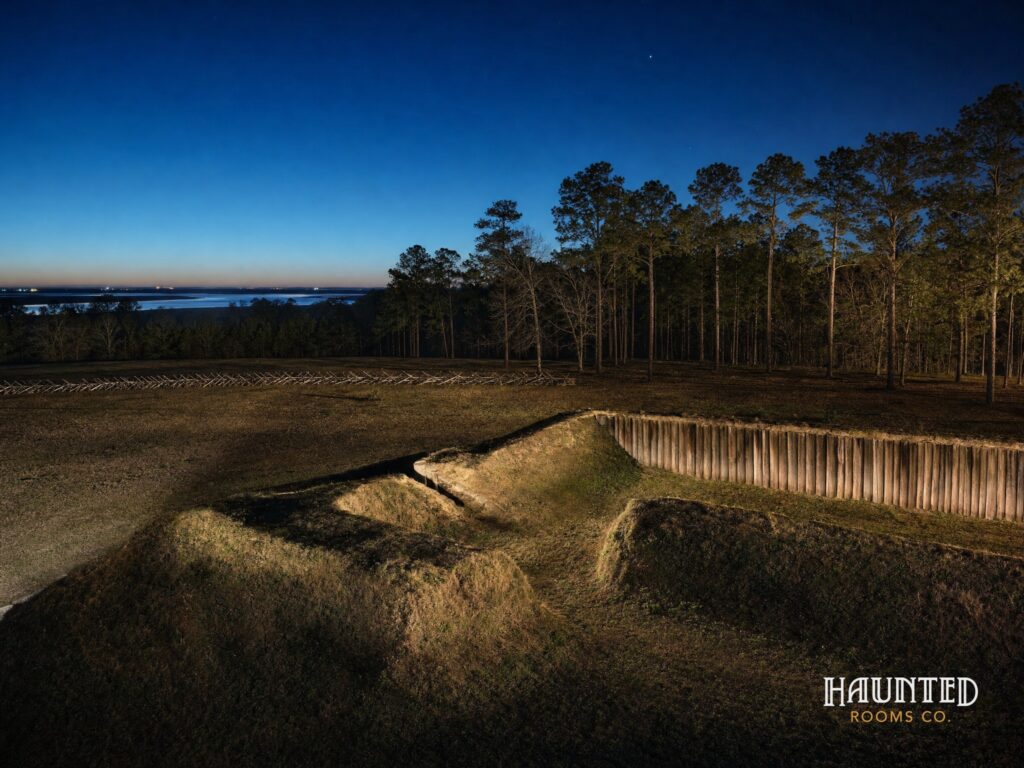
Josiah Blakeley laid out this river town in 1813 to rival Mobile, and by the early 1820s it had more people than its neighbor. Yellow fever in 1822, 1826 and 1828 filled mass graves, and the town faded. On April 9, 1865, about 16,000 Union troops overran 3,500 Confederates here in one of the war’s last major battles. The 2,000-acre park keeps the earthworks, cemetery and old courthouse and jail foundations.
The park’s director told WKRG in 2019 that if any place is haunted, this one should be. Staff tell of a young man in Confederate uniform who gave his name as Jeffrey, visitors who see translucent figures or people in odd clothes, and campers near the cemetery who say they are not alone. A huge oak on the old square is called the hanging tree; that use is legend, not record.
What investigators report
Guided ghost hunts here have attendees run EVP recorders and EMF meters around the earthworks and cannon positions, keeping phones silent and voices low so recordings can be played back as a group.
Haunted Rooms tip: Drive the numbered auto tour to the earthworks, then walk the old town square and cemetery late in the day; the park stays open until dusk.
Where to look The upstairs windows, the parlor and the staircase
Reported ghosts A woman in a full skirt at an upstairs window, piano music at night, a music box that plays by itself
Visiting House museum with guided tours
Ghost hunting Occasional public ghost hunt nights (one ran in November 2019)
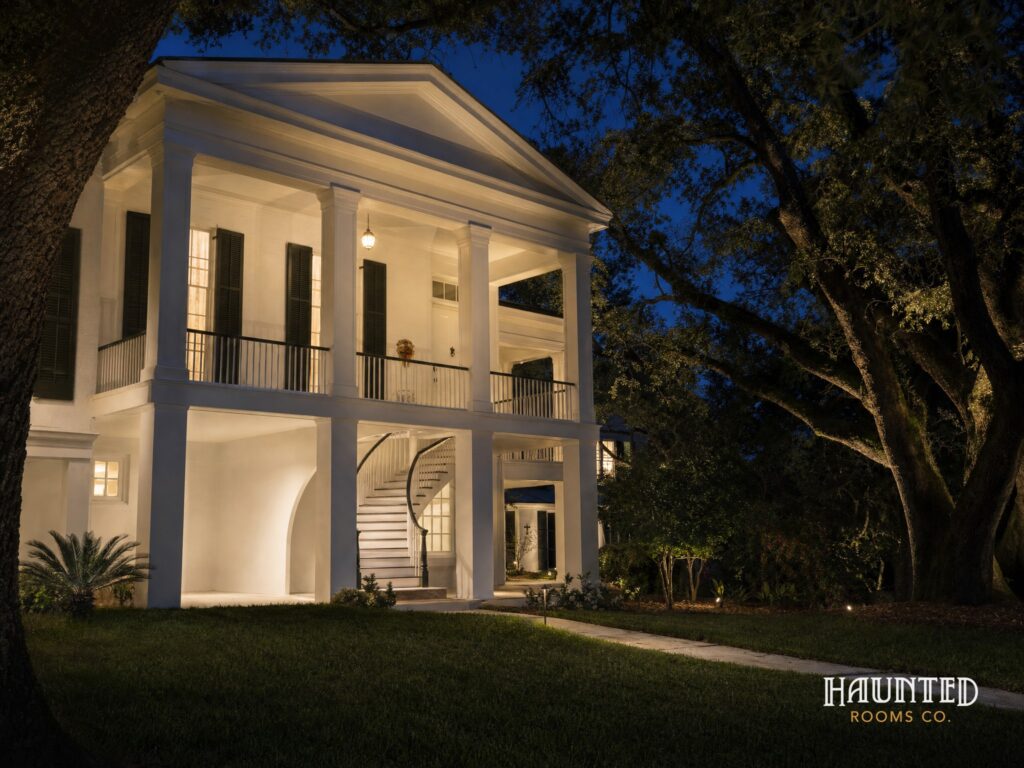
James W. Roper built this Greek Revival house in 1833 on the edge of Mobile with enslaved and free workers, then lost his fortune in the Panic of 1837. The Irwin family lived here from 1852, and the Historic Mobile Preservation Society took it on in 1955; it is now Mobile’s official period house museum, with the Cook’s House and the Cox-Deasy Cottage on the grounds.
Oakleigh’s manager told WKRG in 2019 that her first encounter was a woman in old-fashioned, full-skirted clothes watching her from an upstairs window while the alarm was set. Staff and overnight guests describe piano music playing all night, a broken music box playing at closing time, shadow figures on the stairs and a deck of cards that moves while the house is locked.
Haunted Rooms tip: Take the guided tour and ask about the music box; the museum has hosted occasional public ghost hunts around Halloween.
Where to look The upstairs back window, the attic and the tool shed behind the house
Reported ghosts A woman at an upstairs window with a ghostly cat, Judge Bragg, a gray figure
Visiting Guided tours only
Hours and season Tours Tuesday to Friday on the hour, 10 AM to 3 PM
Ghost hunting No public ghost hunts
Judge John Bragg, a lawyer who served in Congress, began this white Greek Revival mansion in 1855 as his family’s town house on Springhill Avenue. During the Civil War every live oak on the grounds was cut down to give Confederate guns a clear field of fire. A. S. Mitchell bought it in 1924, and today it is a house museum and one of the most photographed buildings in Mobile.
Visitors since the 1970s have described a woman staring out of an upstairs window toward the back field, sometimes with a ghostly cat, and Judge Bragg himself. Southern Spirit Guide adds a gray figure some call General Braxton Bragg and an air conditioning installer who was locked in the attic. A local legend about a Bragg daughter and a forbidden love has no record behind it.
Haunted Rooms tip: Tours run on the hour Tuesday to Friday; take the last one of the day and ask which window the lady is seen in.
Address 256 North Joachim Street, Mobile, AL 36603
Where to look The staircase, the red bedroom and the child's room upstairs
Reported ghosts Children playing on the stairs, a woman at the red bedroom window, a man in an 1860s frock coat
Visiting House museum with guided tours
Hours and season Monday and Friday 11 AM to 3:30 PM, Saturday 10 AM to 4 PM, Sunday 1 PM to 4 PM (2023 hours)
Ghost hunting No public ghost hunts
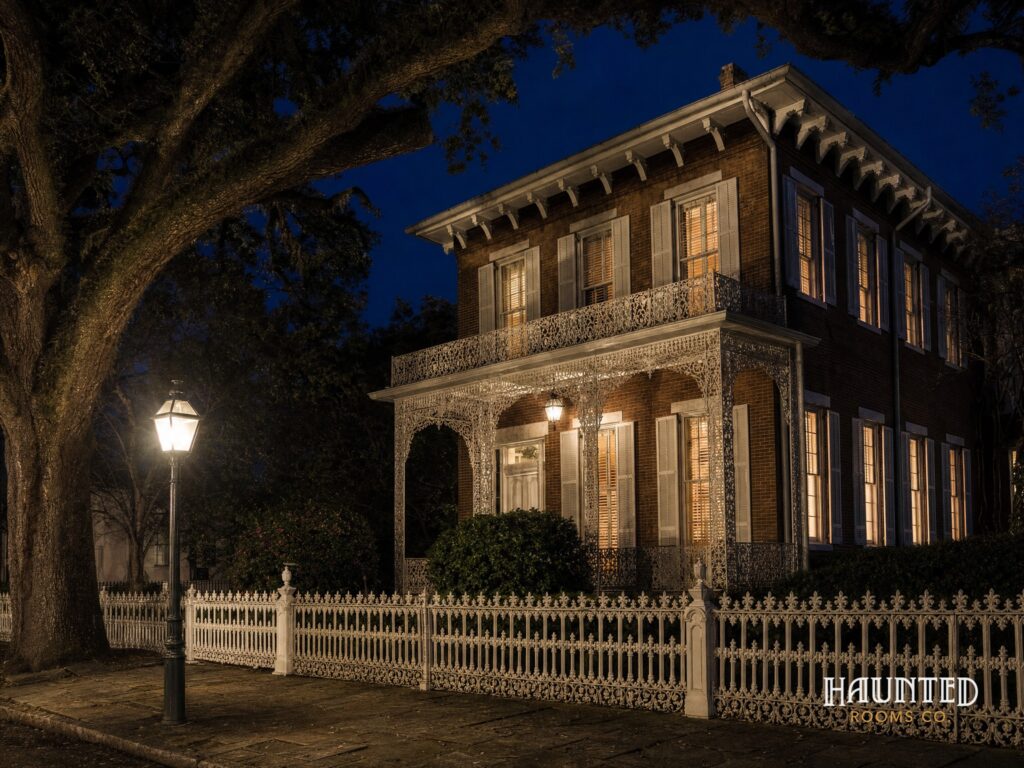
Steamboat captain Charles G. Richards built this Italianate brick house in 1860 in what is now the De Tonti Square district, and its cast iron lace, showing the four seasons, is called the most elaborate in Mobile. His wife Caroline died in 1867 after the birth of their twelfth child, and four of the children died young. The city has owned it since 1973 and the Daughters of the American Revolution run it as a museum.
Volunteers describe children playing on the stairs and marbles left on a child’s bed that are found moved in the morning. A photographer caught a shadowy figure by an upstairs curtain, a woman has been seen staring out of the red bedroom, and one employee saw a man in 1860s dress reflected on the couch behind her. The board’s view is that it is simply the Richards family still at home.
What investigators report
Investigators report leaving marbles out and telling the spirit children they could keep them if they moved them, and later finding the marbles had moved. Staff and visitors also report sounds of children playing on the staircase, especially just after opening up.
Where to look The Erswell vault and the 2024 marker for Emma, May and Irene Hawes
Reported ghosts Catherine Erswell whispering in her husband's vault; May Hawes, said to haunt East Lake
Visiting City cemetery; grounds open to visitors in daylight
Tours Occasional guided history tours by the cemetery
Ghost hunting No ghost hunting; history tours only
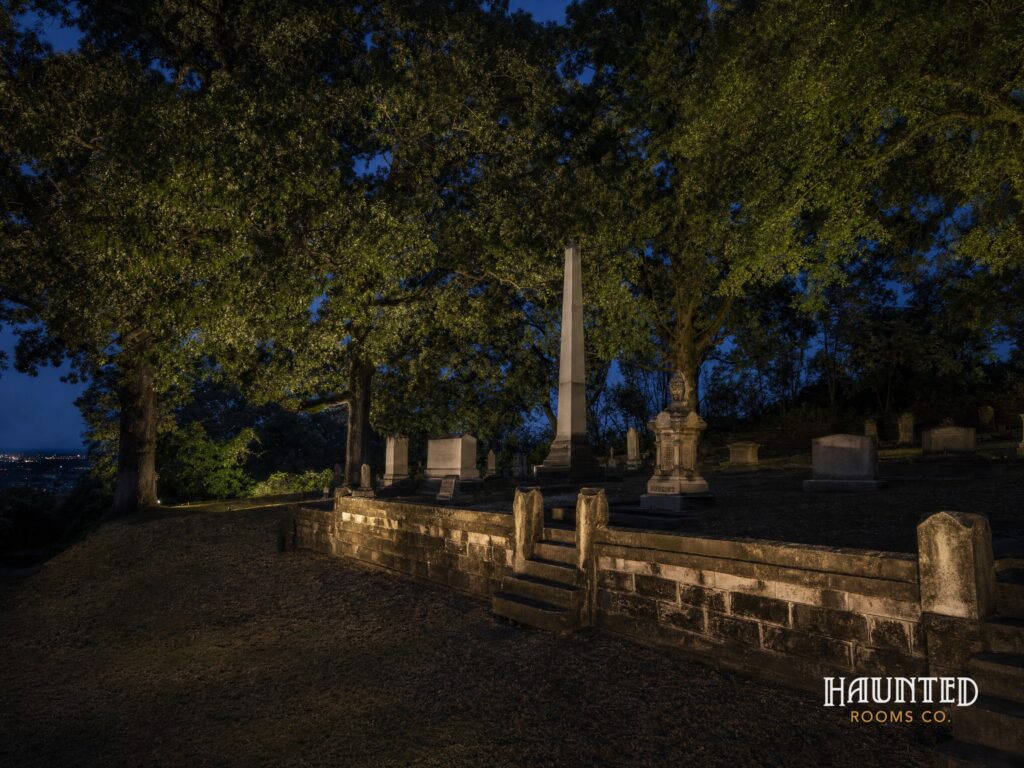
Birmingham’s oldest cemetery was already taking burials by 1869, two years before the city was founded, and it holds nine of the ten landowners who started Birmingham, early mayors, Governor William Hugh Smith, industrialist Henry DeBardeleben and civil rights leader Fred Shuttlesworth. It has been on the National Register since 1977 and sits on a wooded hill just north of downtown.
The ghost story told most is about Catherine Erswell, who wanted to be buried at Elmwood but was put in her husband Edward’s vault here; people say whispers come from the tomb at night. In 2024 the cemetery finally marked the grave of Emma Hawes and her daughters May and Irene, murdered in 1888. May’s body was found in East Lake, where locals still tell of a little girl seen by the water at dusk.
Haunted Rooms tip: Join one of the cemetery’s history tours, often run in October, and look for the 2024 Hawes marker before walking out to the Erswell vault.
Where to look The balcony, the stage wings and the organ loft
Reported ghosts A construction worker in the balcony; a shadow some believe is former organist Stanleigh Malotte
Visiting Open for films, concerts and events; occasional tours
Ghost hunting No public ghost hunts; buy a ticket to a show
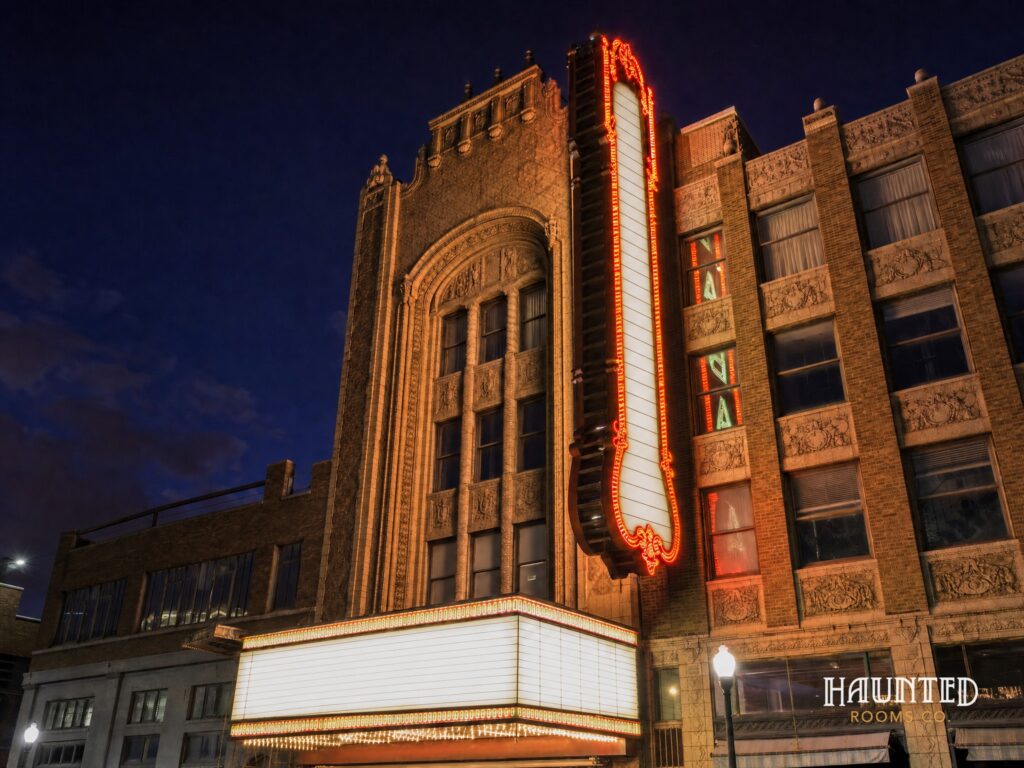
Paramount opened the Alabama on December 26, 1927 as a Spanish Revival movie palace, and it still has its original Mighty Wurlitzer organ, nicknamed Big Bertha. Saved and restored by Birmingham Landmarks, which owns it, the theater now hosts films, concerts and shows under its famous vertical ALABAMA sign. It has been on the National Register since 1979.
Staff stories go back decades. During a 1986 rehearsal, organist Cecil Whitmire and a singer said a shadowy figure stepped from the curtain and vanished; some believe it was Stanleigh Malotte, house organist from 1936 to 1955. Others tell of a construction worker who fell from the balcony, seats folding down on their own and a 2006 investigator pushed back on the balcony stairs. None of it is documented beyond the stories.
Haunted Rooms tip: Go to a classic film night and get there early to hear the Wurlitzer before the show, then look up at the balcony rail.
Where to look The second floor of the main house and the Antunez cottage
Reported ghosts A Confederate soldier at a cottage window, phantom footsteps, voices in empty rooms
Visiting A working hotel; book a room to stay the night
Ghost hunting No public investigations; you can stay the night as a guest
Fort Conde Inn is a 19-room boutique inn in Mobile’s historic Fort Conde Village, made up of an 1836 main house, once known as the Hall-Ford House, and three restored cottages along shaded brick streets, a short walk from the reconstructed Fort Conde and the waterfront. Breakfast is served in the main house or the courtyard, and the cottages take pets.
Guests most often describe voices and a strong sense of company on the second floor of the main house, and lights that flicker after they are switched off. The strangest stories come from the Antunez cottage, where workers say they heard heavy footsteps climbing empty stairs, watched a bucket roll down the steps by itself and once saw a Confederate soldier standing at a window.
Haunted Rooms tip: Book a second-floor room in the 1836 main house, or the Antunez cottage if you are traveling as a group.
Where to look Isabel's Room, the butler's pantry and the dining room
Reported ghosts A little girl running through the house, Isabel Shepard, a playful presence in the pantry
Visiting A working hotel; book a room to stay the night
Ghost hunting No public investigations; you can stay the night as a guest
The Kate Shepard House is an 1897 Queen Anne home on Monterey Place in midtown Mobile, now a small bed and breakfast with rooms named for the house’s history. Kate Shepard ran a school here for decades until her death in 1952, and her sister Isabel died in the house. Its owners put it up for sale in 2021, and it still takes guests today.
The owners have called the activity mischievous rather than frightening. A guest and a contractor both asked about a little girl they saw running through the house, though no child lived there. The butler’s pantry door is said to have flown open in front of the owners, and an antique plate flew off the dining room mantel during a meal. Isabel’s Room is the one to ask for.
Haunted Rooms tip: Book Isabel’s Room, named for Kate Shepard’s sister, who died in the house.
Where to look The third floor, the stairwells and the elevator
Reported ghosts Former library director Fant Thornley, known by the smell of cigarettes
Visiting Public research library, open during library hours
Ghost hunting No ghost hunting in the library
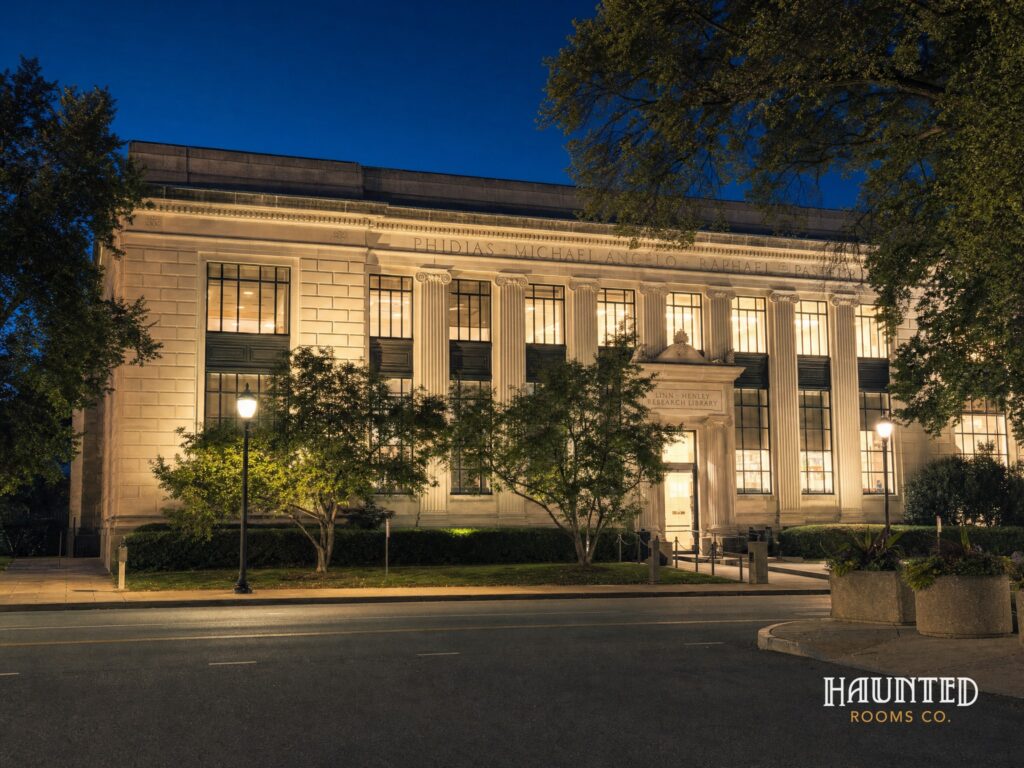
The Neoclassical Indiana limestone building on Linn Park was finished in 1927 as Birmingham’s Central Library and served as the main library for 57 years; it now holds the Birmingham Public Library’s archives and research collections, along with its celebrated murals. It sits a block from the Tutwiler Hotel.
Its ghost is a polite one. Staff and visitors have long credited Fant Thornley, director from 1953 into the 1970s, with the smell of his cigarettes in the elevator and on the stairs, doors opening on their own and pencils that roll across desks. An electrician is said to have seen him. Like most library ghosts, he exists only in staff stories.
Haunted Rooms tip: Visit on a weekday, look at the murals in the main reading room and then take the stairs to the third floor.
Address Fairview Avenue, Old Cloverdale, Montgomery, AL
Where to look The corridors of Pratt Hall and Houghton Memorial Library
Reported ghosts The Red Lady of Pratt Hall; Frank, the library's scholarly spirit
Visiting Private college campus; buildings are for students and staff
Ghost hunting No; residence halls are private
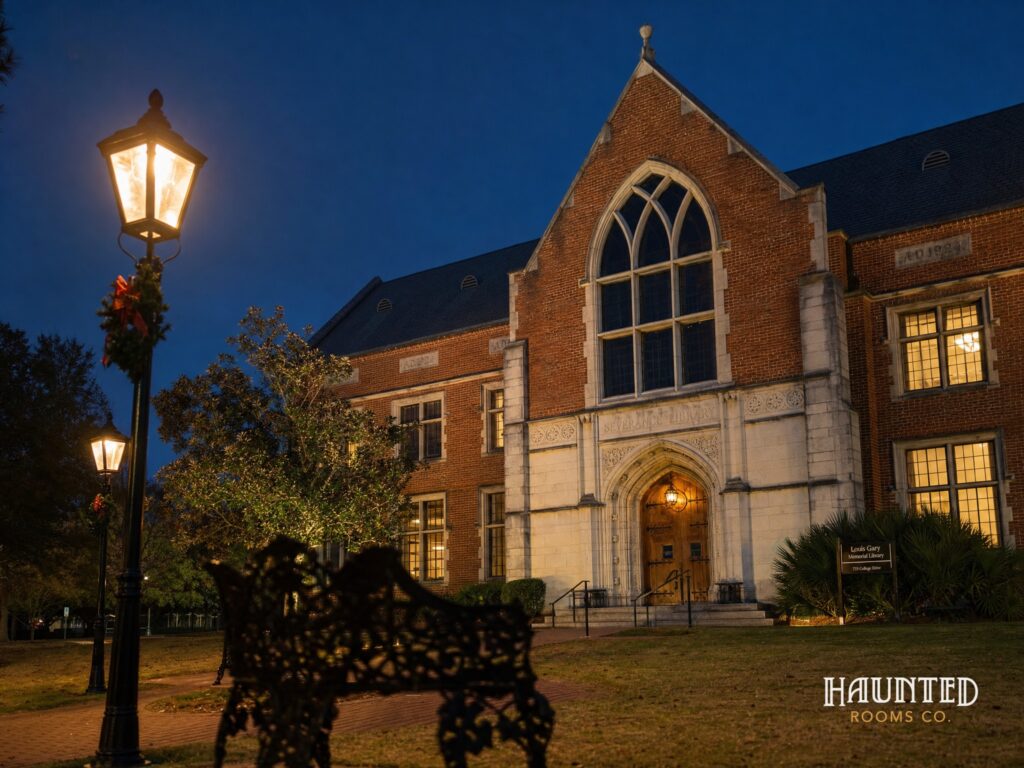
Huntingdon was chartered in 1854 as Tuskegee Female College and moved to a new campus in Montgomery’s Cloverdale neighborhood in 1909, becoming the Woman’s College of Alabama the next year. Its red brick Collegiate Gothic buildings include Pratt Hall, a residence hall, and Houghton Memorial Library, built in 1929.
Huntingdon College’s Red Lady is one of the stories in Windham’s 13 Alabama Ghosts and Jeffrey: an early 1900s student from New York, shunned by classmates, who took her own life in her Pratt Hall room and is said to drift the corridors in red. Students still tell it. The library has its own ghost, a scholarly spirit students named Frank in 1990, blamed for a rolling chair and slamming doors. There is no record of the Red Lady.
Haunted Rooms tip: It is a working campus: admire the buildings from the paths in daytime and do not try to enter the residence halls.
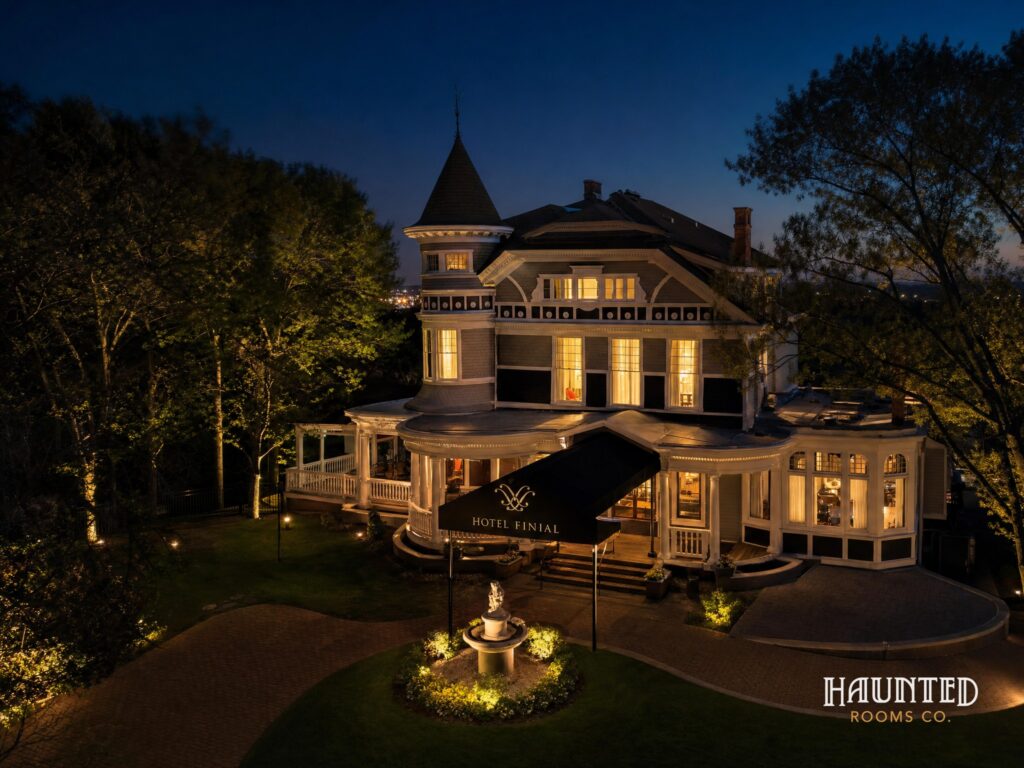
Where to look The upstairs landing of the main house, the old music room, the dining rooms and the bar
Reported ghosts A woman on the upstairs landing, phantom piano music, footsteps in the dining rooms
Visiting A working hotel; book a room to stay the night
Ghost hunting No public investigations; you can stay the night as a guest
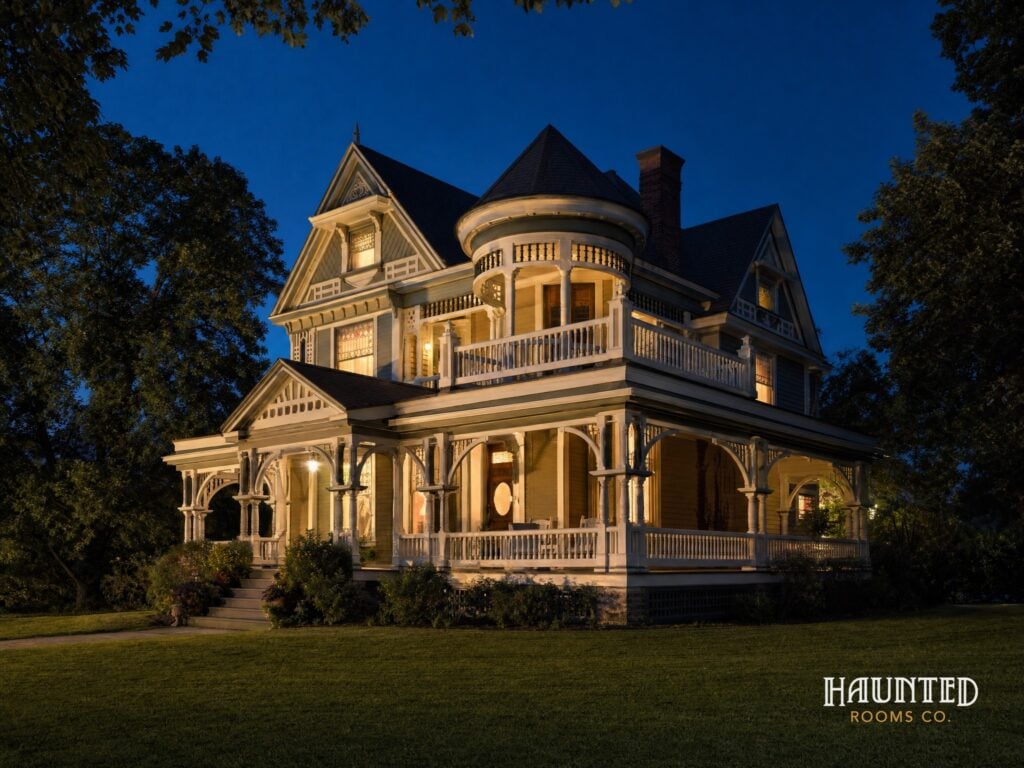
Hotel Finial is the 1888 Queen Anne mansion that Col. John McKleroy built on the highest ground on Quintard Avenue. For decades it was the Victoria Inn; after an eight-month, $2.5 million renovation it reopened in March 2016 as Hotel Finial, named for the iron finial on its turret, and it now belongs to Best Western’s Premier Collection while staying independently owned.
The ghost stories date from the Victoria Inn years. Guests and staff have described footsteps in the dining rooms when they were empty, piano music from the music room, glasses clinking behind the bar and a woman standing on the upstairs landing. Local tellers credit the families who lived here: the McKleroys, the Wilsons and the Kirbys. Book one of the suites in the main house to stay where the stories are set.
Haunted Rooms tip: Book a suite in the 1888 main house (McKleroy, Wilson, Kirby or the third-floor Ballroom Suite); most rooms are in newer buildings on the grounds.
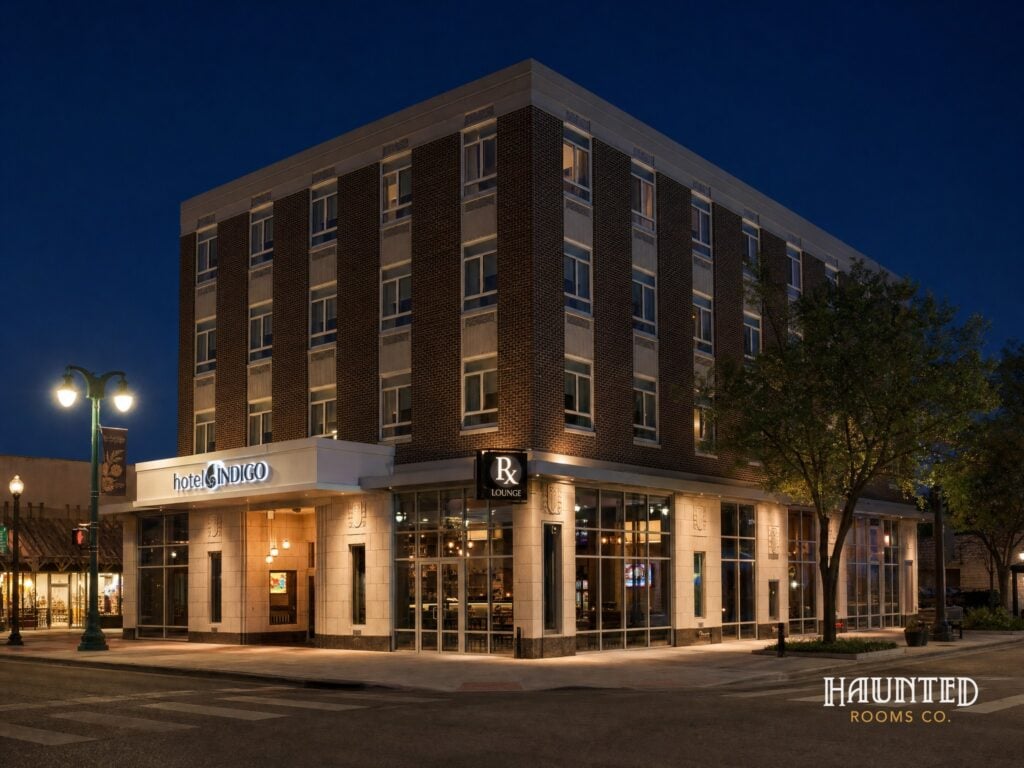
Address 1023 20th Street South, Birmingham, AL 35205
Where to look The main-floor waiting area, guest rooms and the basement fitness room
Reported ghosts A nurse on her rounds, a girl playing jacks, a man who orders guests out
Visiting A working hotel; book a room to stay the night
Ghost hunting No public investigations; you can stay the night as a guest
This 63-room boutique hotel in Five Points South fills the Art Deco Medical Arts Building of 1931, which began life as doctors’ offices; its Rx Lounge and the medical insignia over the door are nods to that past. It became the Pickwick Hotel in the late 1980s, then the Hotel Highland in 2008, and reopened as a Hotel Indigo in September 2018.
The stories here are local lore rather than staff accounts. Guests have described a nurse who seems to be checking on patients, the sound of a girl bouncing a ball and playing jacks near the lobby seating, and a man who appeared in one room and shouted at the guests to leave. The basement, said in some tellings to have held a morgue, is now the fitness room.
Haunted Rooms tip: Sit in the main-floor waiting area late in the evening: that is where the girl with the jacks is said to be heard.
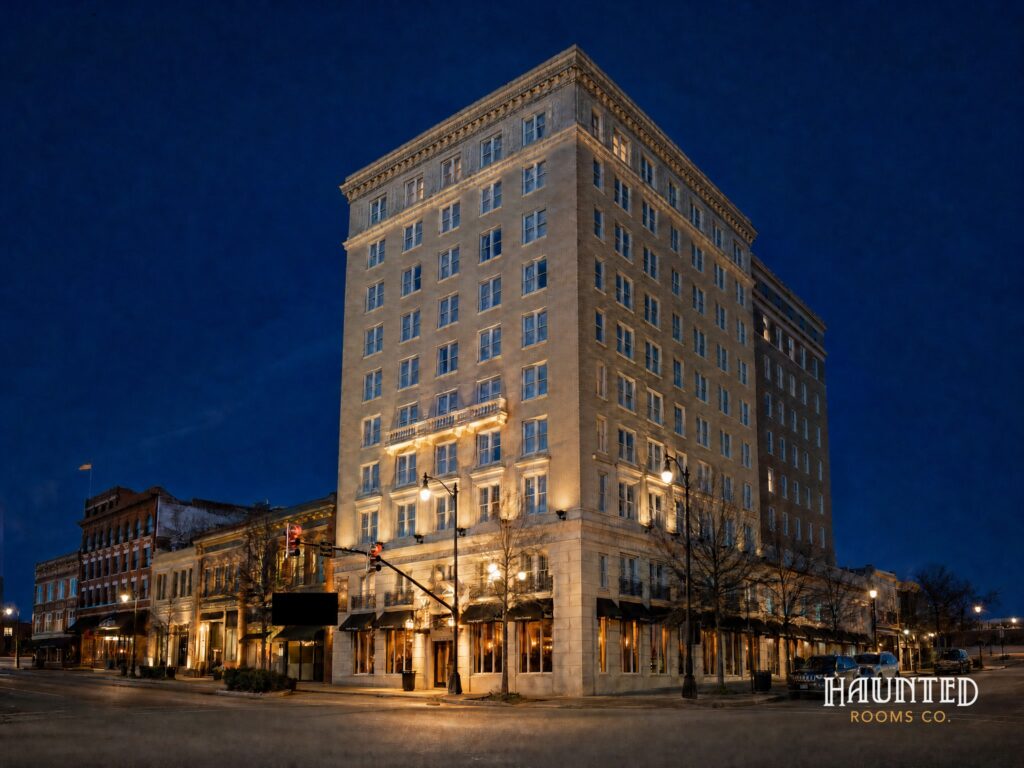
Where to look The fourth floor, the front desk phones and the basement laundry
Reported ghosts A woman on the fourth floor said to be a jilted bride, crying in the basement
Visiting A working hotel; book a room to stay the night
Ghost hunting No public investigations; you can stay the night as a guest
The Hampton Inn & Suites on Commerce Street fills the old Greystone Hotel, a ten-story 1928 tower designed by Montgomery architect Frank Lockwood near the riverfront. After years as a hotel, then a run-down residence and offices, the building was restored as a Hampton Inn when the downtown riverfront revived. It is a short walk from Riverfront Park and the Rosa Parks Museum.
Its ghost story is a local one. Staff have told of a woman seen on the fourth floor, said in legend to be a bride who was jilted and took her own life in the hotel, and of calls to the front desk from rooms nobody is in. In the basement, workers describe crying when no one is there and freshly cleaned linens found soiled again.
Haunted Rooms tip: Ask for a fourth-floor room; it is the floor tied to the Greystone’s ghost story.
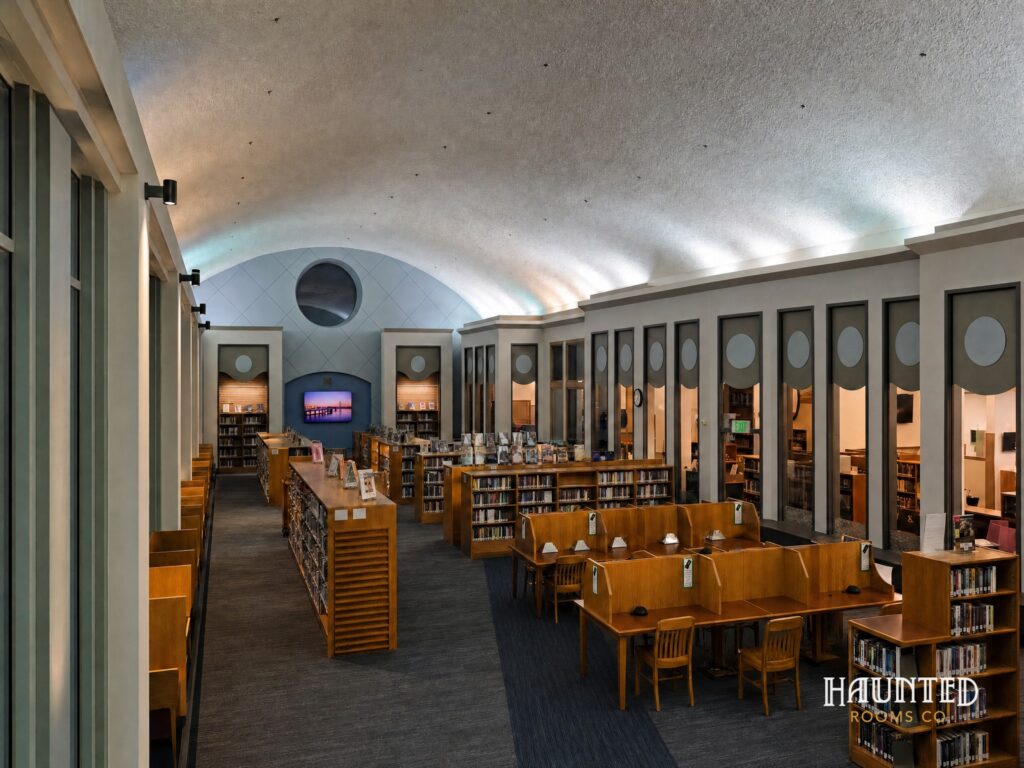
Where to look The adult reading room in the old sanctuary and the basement rooms
Reported ghosts Women's voices in the basement, books falling from shelves, doors that open and close after hours
Visiting Public library, open during library hours
Ghost hunting No ghost hunting in the library
Homewood, just south of downtown Birmingham, bought the former Homewood Church of Christ on Oxmoor Road in 1984 and opened it as the city library in 1986. The adult reading room fills the old sanctuary, and the basement rooms were once Sunday school classrooms.
Staff have long said the building is haunted, mostly after hours: women’s voices talking in the empty basement, books flying off shelves, doors opening and closing and lights switching on by themselves. A local paranormal group says two mediums each counted nine spirits, and that an unexplained “Amen” answered a mock sermon. It is a busy public library, so keep any curiosity quiet and polite.
What investigators report
The library has hosted nighttime investigations with local team S.C.A.R.E., where attendees are encouraged to bring audio recorders and cameras. Staff report voices like a group of ladies talking in the basement rooms that were once Sunday school classrooms, mostly after hours.
Haunted Rooms tip: Visit during opening hours, sit in the reading room under the old sanctuary vault and ask at the desk if anyone has a story to share.
These places appear in older lists of haunted spots. We keep them here so you know the facts before you go, but you cannot (or should not) visit them.
King-Criswell-Garrett Home, Uriah (Monroe County)
Older lists include this 1850s plantation house, said to have the broadest facade of any Alabama plantation home and featured on The Dead Files after an owner described an angry presence. It was moved to Uriah about a century after it was built and is a private home. There are no tours, so please do not visit or trespass.
Bear Creek Swamp, Prattville
Local legend tells of a mother searching for her lost child who attacks anyone who says “We have your baby”, plus phantom cars, lights and a small figure in the road. It is a swamp crossed by rural roads, not a public attraction, and the sheriff’s office has had to clear out Halloween pranks there, including 21 dolls in 2014. Driving it after dark looking for ghosts is not safe, so we no longer list it as a place to visit.
Kenworthy Hall, Marion
The tall-towered 1850s mansion in Windham’s The Faithful Vigil at Carlisle Hall, where Anne Carlisle is said to have thrown herself over the stair rail, is a private home. See it only from the road.
Haunted Alabama by city
Haunted places in Mobile: the USS Alabama, the Boyington Oak, Oakleigh, the Richards DAR House, Fort Morgan and Mobile’s haunted inns
Haunted places in Birmingham: Sloss Furnaces, the Tutwiler, the Redmont, the Alabama Theatre, Oak Hill Cemetery and Arlington
Changed from our older guide: We have corrected the Sloss Furnaces story (Slag Wormwood is fiction; Theophilus Jowers is real), the USS Alabama friendly-fire toll (five men killed in 1944, not eight) and Sweetwater Mansion’s status (private, unsafe and closed to tours since the caretakers stopped them). Fort Morgan’s 1917 prisoner and wandering woman are now framed as the legends they are. The King-Criswell-Garrett Home and Bear Creek Swamp moved to the off-limits list. New in this update: haunted hotels count as haunted places, so Alabama’s haunted inns now have cards, and we added Maple Hill Cemetery, the Pickens County Courthouse, the Drish House, Sturdivant Hall, Gaineswood, Oakleigh, the Bragg-Mitchell Mansion, the Richards DAR House, Fort Gaines, Blakeley, Oak Hill Cemetery, the Alabama Theatre, Arlington, the Linn-Henley and Homewood libraries and Huntingdon College, with new guides to Old Cahawba, the Face in the Window and Maple Hill.
Visited one of these places? Tell us what happened
We collect first-hand accounts from visitors and add the best ones to our guides, with your first name and the date of your visit. We read every story before it’s published.
Sloss Furnaces in Birmingham is the place named most often, though its best-known ghost story is invented. Old Cahawba, the Pickens County Courthouse, Maple Hill Cemetery’s Dead Children’s Playground in Huntsville and the USS Alabama in Mobile are the other big names.
Is the Slag Wormwood story at Sloss Furnaces true?
No. Sloss Furnaces’ executive director told Bham Now in 2023 that the story of James “Slag” Wormwood is not true and that most online hauntings were made up to promote its old haunted house. The documented death behind the older ghost story is Theophilus Jowers, who fell into molten iron in 1887.
Can you visit Sweetwater Mansion?
Not at present. The house in Florence is privately owned, in poor repair and sold in 2023 to a hotel company. The caretakers stopped tours because the building is unsafe, and local descendants are campaigning to preserve it. You can see it from Sweetwater Avenue.
Is the face in the Carrollton courthouse window real?
A face-like image is still pointed out in a garret window of the Pickens County Courthouse, and a marker tells the legend of Henry Wells. Newspaper records show the windows were not yet fitted when Wells died in 1878 and that a pane was replaced in 1928, so the story and the history do not match.
What is the most haunted city in Alabama?
Mobile has the most haunted places you can visit: the USS Alabama, the Boyington Oak, Oakleigh, the Bragg-Mitchell Mansion, the Richards DAR House and haunted inns such as the Malaga Inn and the Battle House. Birmingham comes next, with Sloss Furnaces, the Tutwiler and the Redmont.
Can you go ghost hunting in Alabama?
Haunted Rooms does not run events in Alabama yet; our nearest ghost hunt is at the old Moore County Jail and funeral home in Lynchburg, Tennessee, an easy drive from north Alabama. In Alabama, Arlington in Birmingham and the Drish House in Tuscaloosa host occasional public ghost hunts, and Fort Morgan has had after-dark ghost tours run by outside groups.
Sources and how we research
Every place in this guide is checked against its official website, historic register listings and news coverage, and we confirm whether it is open, closed, private or gone before we list it. Ghost stories are reported as staff, visitors and local historians tell them; we say so where records contradict a story. Each place shows how many independent sources we checked it against; our own Haunted Rooms pages are not counted.
New guides, haunted places to visit and ghost hunt dates near you. No spam, unsubscribe any time.
About the authors
The Haunted Rooms Team runs public ghost hunts and overnight investigations at historic venues across the United States. We research every place in our guides using official sites, historic registers, local archives and news coverage, and we report ghost stories as the stories they are. We review each guide regularly so you are not sent to a place that has closed, changed hands or banned visitors. Spotted something out of date? Let us know.