Haunted Places on the Big Island of Hawaii: 7 to Visit
The home of the volcano goddess, a war temple built to fulfil a prophecy, a royal summer palace and hotels on ground where kings once lived. These are the Big Island’s ghost stories, checked, with how to visit.
Hawaii Island, the Big Island, is where Kamehameha rose to power and where Pele, the goddess of fire, is said to live in Halemaumau Crater. Its ghost stories follow that history: Kona has Kamehameha’s last home at Kamakahonu and the lava-rock Hulihee Palace, Kawaihae has the great heiau of Puukohola, Hilo has Banyan Drive and its bayfront hotels, and Volcano House sits on the rim of Kilauea. Several places here are sacred; we explain how to visit respectfully.
Address Hawaii Volcanoes National Park, Highway 11, Hawaii Island
Where to look The caldera overlooks facing Halemaumau, the home of Pele
Reported ghosts Pele, said to appear as an old woman with a white dog or a young woman in red; the 'curse' on taken lava rocks
Visiting National park; entrance fee charged; overlooks on the caldera rim
Ghost hunting A sacred place: offerings belong to Hawaiian practitioners, not visitors
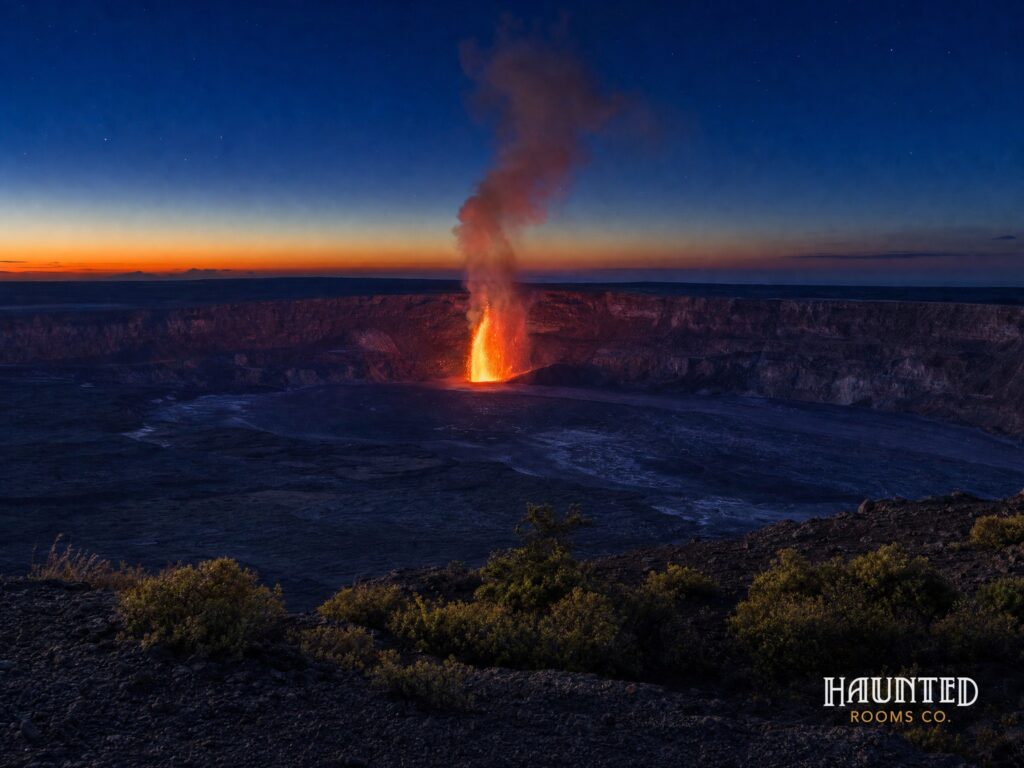
Halemaumau, the house of the amau fern, is the crater within Kilauea’s summit caldera, and in Hawaiian tradition it is the home of Pele, goddess of fire and volcanoes. Its floor collapsed hundreds of meters in 2018, and since 2020 it has erupted again and again; an episodic eruption that began in December 2024 has sent lava fountains hundreds of meters high.
Pele is said to appear as a wrinkled old woman, often with a white or black dog, or as a beautiful young woman. Each year rocks, sand and shells arrive back at the park by mail, thousands of pounds of them by one account, often addressed to Pele with apology letters from people who believe she cursed them. Park staff say no oral tradition mentions a curse: taking rock is simply disrespectful, and illegal in the park.
Haunted Rooms tip: Check the park’s eruption page before you go and come after dark when an eruption is glowing; never take rocks, sand or plants.
Address 1 Crater Rim Drive, Hawaii Volcanoes National Park, HI 96718
Where to look Guest rooms facing the crater and the entrance road
Reported ghosts An elderly woman in the rooms; a white dog on the road, both linked to Pele
Visiting A working hotel inside the national park (park entrance fee applies); the lobby, bar and restaurant are open to visitors
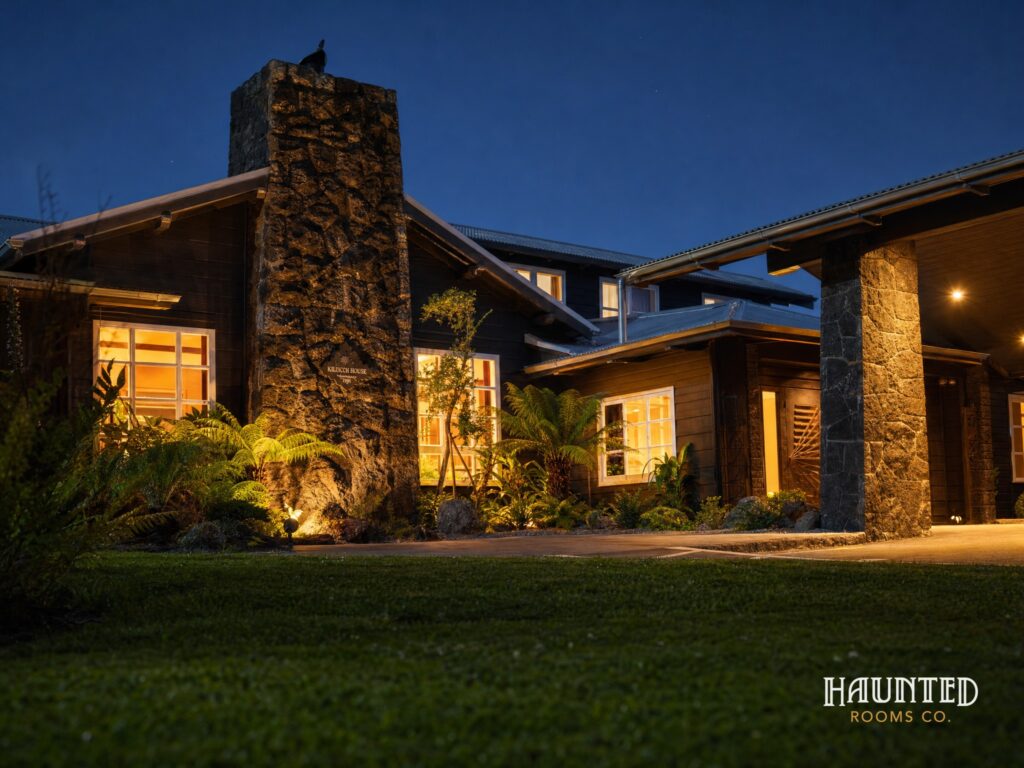
Volcano House is the only hotel inside Hawaii Volcanoes National Park, on the rim of Kilauea’s caldera. Visitors have stayed here since 1846, when a one-room grass shelter stood on the rim; the 1877 building survives as the Volcano Art Center, and the current lodge opened in 1941.
Its stories are tied to Pele, goddess of the volcano, who is said to appear as an old woman or a young beauty, often with a white dog. Guests have described an elderly woman in their rooms who disappears, and drivers tell of a white dog on the entrance road.
Haunted Rooms tip: Book a crater-view room and look out after dark when the summit is glowing during an eruption.
Address 75-5660 Palani Road, Kailua-Kona, HI 96740
Where to look The top floor and the grounds near Ahuena Heiau
Reported ghosts Warriors and the sound of battle; spirits said to be held in the banyan roots
Visiting A working hotel; the lobby, cultural displays and beach are open to visitors
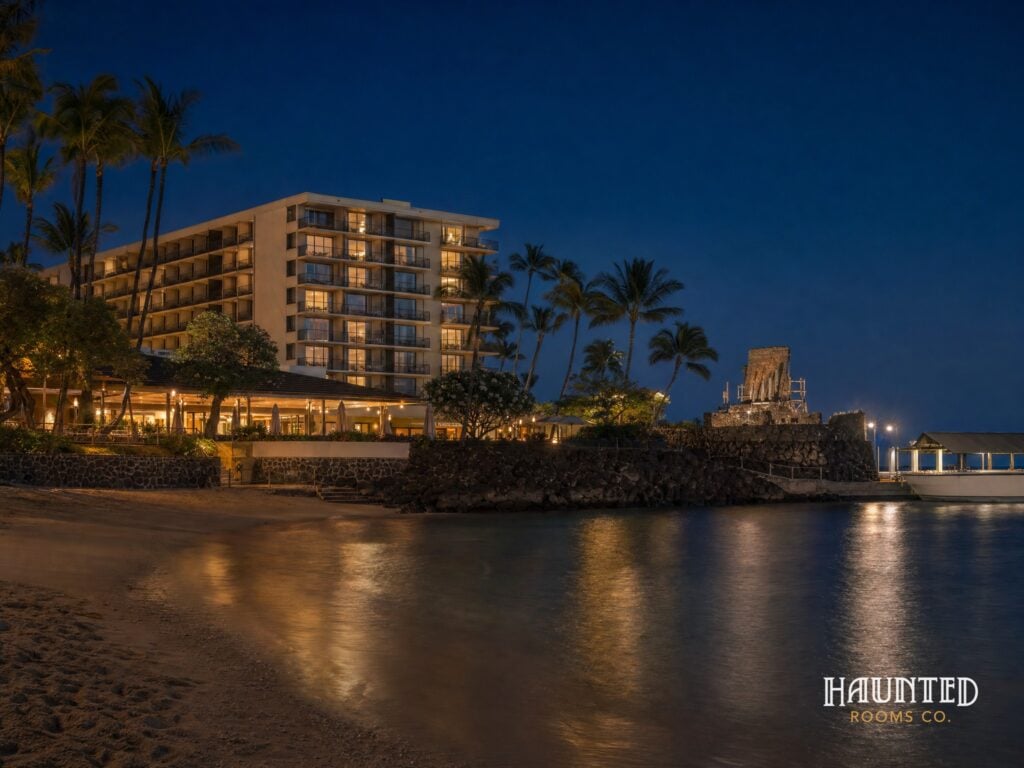
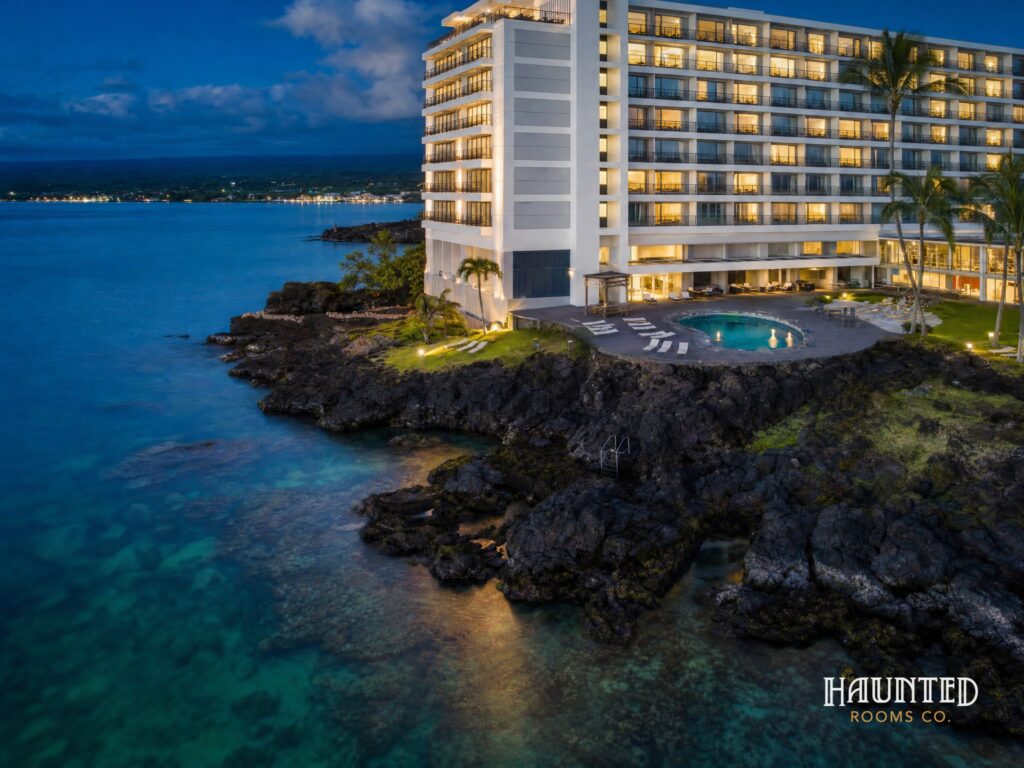
The hotel stands at Kamakahonu, the royal compound where Kamehameha I spent the last years of his life, beside the reconstructed Ahuena Heiau, his personal temple. The first hotel was built here in 1960 and replaced in 1974; it is now a Courtyard by Marriott on Kailua Bay, next to the pier.
Guests on the top floor have described the distant sounds of battle and figures of warriors. A Kona Historical Society member told West Hawaii Today that spirits are said to be trapped in the roots of the hotel’s banyan tree. Some say the activity comes from the king being buried in the grounds; where Kamehameha’s bones lie is a famously kept secret, so treat that as legend.
Haunted Rooms tip: Visit the hotel’s cultural displays and view Ahuena Heiau from the beach; the temple itself cannot be entered.
Where to look The loop trail below the heiau and the shore of Pelekane Bay
Reported ghosts Night marchers heard on the old path to the heiau
Visiting National historic site; walk the loop trail and view the heiau from below
Ghost hunting A sacred site: no ghost hunting
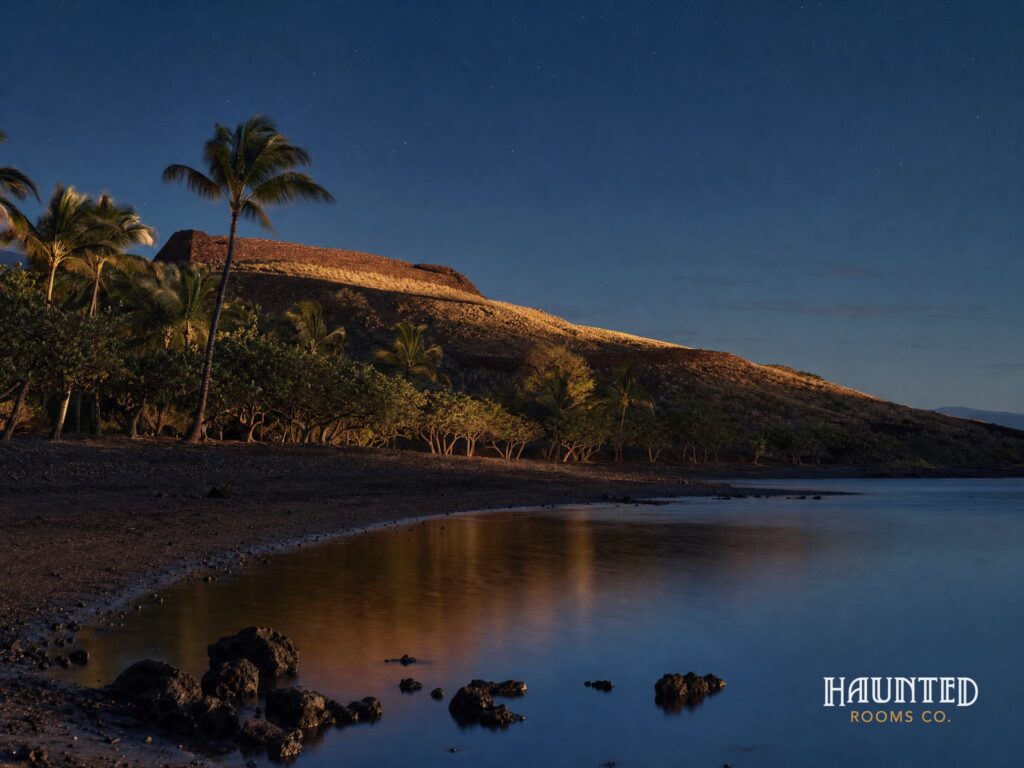
Kamehameha built Puukohola Heiau in 1790 and 1791 after the kahuna Kapoukahi prophesied that the wars would end if he raised a great temple to the war god Ku on this hill above Kawaihae. Stones were passed hand to hand, it is said, from Pololu Valley about 20 miles away. His rival and cousin Keoua was killed as he came ashore to meet him, and became the heiau’s first sacrifice. The site is a national historic site, with the older Mailekini Heiau along the trail.
A woman whose family descends from the heiau’s builders told storytellers Lopaka and Tanya Kapanui that as a child she heard the night marchers pass her house on an old path toward Puukohola. Tradition says that if the procession comes, you lie flat, face down, and do not look.
Haunted Rooms tip: Walk the half-mile loop trail in the cool of the morning, and from the beach watch for sharks over the submerged temple in the bay.
Where to look The Grand Naniloa and Hilo Hawaiian hotels and the banyan-lined drive
Reported ghosts Night marchers passing through the Naniloa; an elderly man by the bed at the Hilo Hawaiian
Visiting Public road and park; the hotels’ lobbies are open to visitors
Banyan Drive loops around the Waiakea Peninsula on Hilo Bay. Before Western contact the land held taro fields, fishponds and Kuakaananuu, a large luakini heiau; dredging and fill later erased much of the old shoreline. From 1933 Hollywood stars, aviators and politicians, among them Cecil B. DeMille, Babe Ruth and Franklin D. Roosevelt, planted the banyans that line the road, and the 1946 and 1960 tsunamis swept the waterfront.
Its hotels have their own stories. A security guard at the Grand Naniloa, which opened in 1939, described distant drums, then a mist moving through the building toward the ocean, as the night marchers passed. At the Hilo Hawaiian, guests describe silent glowing orbs and an elderly man in old-style clothes standing by the bed before he vanishes.
Haunted Rooms tip: Walk the banyans and Liliuokalani Gardens at sunset, then cross the footbridge to Mokuola (Coconut Island).
Where to look The rooms and grounds at closing time
Reported ghosts A calm presence; staff who feel watched while locking up
Visiting Museum open for guided and self-guided visits
Hours and season Wednesday to Saturday, 10am to 3pm (last entry 2:30pm)
Tickets Self-guided adults $16; guided tour $20
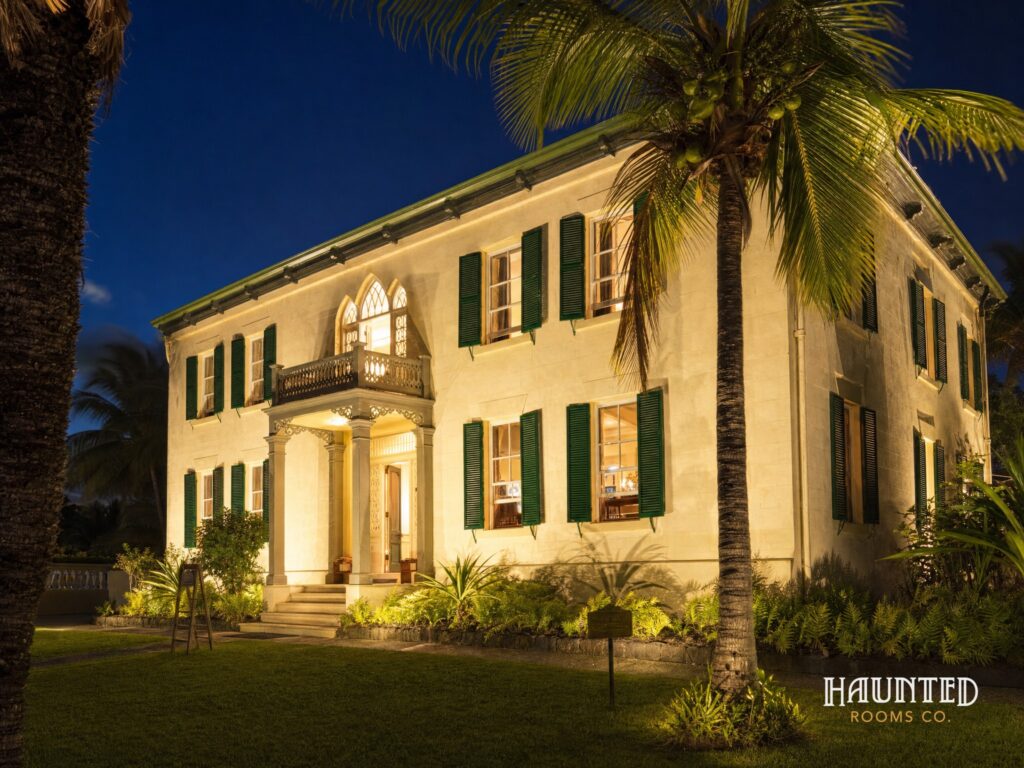
High Chief John Adams Kuakini built Hulihee Palace of lava rock in 1838 on the waterfront in Kailua-Kona. It passed to Princess Ruth Keelikolani and Princess Bernice Pauahi Bishop before King Kalakaua bought it in 1885 as a royal vacation home, and it was used by more royalty than any other house in Hawaii. The Daughters of Hawaii have run it as a museum since 1927.
Its stories are gentle. Staff told West Hawaii Today they feel watched, though never in a threatening way, and the business office manager described sensing someone with her while locking up alone. A former curator called the grounds a puuhonua, a place of refuge. Ghost blogs add a woman in white said to be Princess Kaiulani gazing out to sea, but name no witnesses.
Haunted Rooms tip: Book the guided moolelo tour for the family stories, then sit on the seawall at sunset.
Address 78-128 Ehukai Street, Kailua-Kona, HI 96740
Where to look The guest hallways at night and the lava cliffs in front of the resort
Reported ghosts Two little girls heard running in the halls; a figure on the cliff edge
Visiting A working resort; restaurants and public areas are open to visitors
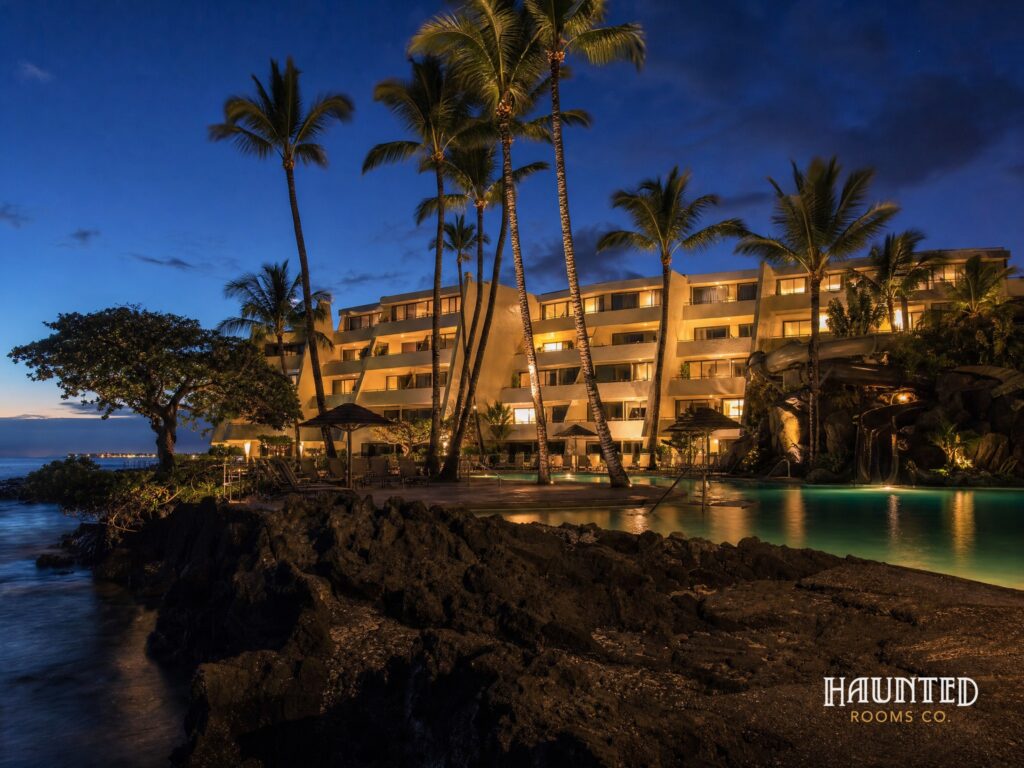
The resort on the south shore of Keauhou Bay opened in 1971 as the Kona Surf Hotel, became the Sheraton Kona Resort and Spa, and was renamed the Outrigger Kona Resort and Spa in 2021. Its rooms stand on lava cliffs, and manta rays gather below the restaurant at night.
Through every name change the same stories have been told. Guests call security about little girls running and laughing in the halls at night, and staff describe a figure standing at the edge of the cliffs that is gone in a blink. The bay is the birthplace of Kamehameha III, and the 1819 Battle of Kuamoo was fought just to the south.
Haunted Rooms tip: Watch the manta rays from the oceanfront restaurant after dark.
Visited one of these places? Tell us what happened
We collect first-hand accounts from visitors and add the best ones to our guides, with your first name and the date of your visit. We read every story before it’s published.
Frequently asked questions
Is it bad luck to take lava rocks from Hawaii?
Many people believe Pele curses anyone who takes her rocks, and every year parcels of rocks are mailed back to Hawaii Volcanoes National Park with apology letters. Park staff say no Hawaiian oral tradition mentions a curse; taking rocks is disrespectful, and it is illegal in the park.
Where does Pele live?
In Hawaiian tradition Pele lives in Halemaumau, the crater inside Kilauea’s summit caldera in Hawaii Volcanoes National Park. You can see it from overlooks on the caldera rim.
Is Volcano House haunted?
Guests have described an elderly woman in their rooms who disappears, and drivers tell of a white dog on the entrance road. Both are linked to Pele, who is said to appear as an old woman with a dog. See our Volcano House guide.
Can you go inside Puukohola Heiau?
No. Entry to the temple is not allowed because bones are believed to be buried there. You can walk the loop trail below it from the National Park Service visitor center.
Who are the night marchers?
Huakai po are processions of ancient warriors and chiefs said to march at night with torches, drums and conch shells. Tradition says that if they pass you should lie face down and not look at them.
Sources and how we research
Every place in this guide is checked against its official website, historic register listings and news coverage, and we confirm whether it is open, closed, private or gone before we list it. Ghost stories are reported as staff, visitors and local historians tell them; we say so where records contradict a story. Each place shows how many independent sources we checked it against; our own Haunted Rooms pages are not counted.
New guides and haunted places to visit. No spam, unsubscribe any time.
About the authors
The Haunted Rooms Team are paranormal researchers who write about historic haunted places across the United States. We research every place in our guides using official sites, historic registers, local archives and news coverage, and we report ghost stories as the stories they are. We review each guide regularly so you are not sent to a place that has closed, changed hands or banned visitors. Spotted something out of date? Let us know.