Haunted Places in NYC: 20 of New York City's Most Haunted Sites
A museum where the last daughter of the house never left, a Broadway showgirl who still takes a bow, a murder well under a SoHo shop and Manhattan’s oldest house. These are New York City’s most haunted places, with what is true and how to visit.
New York’s ghost stories cluster in the oldest corners of the city: Greenwich Village, the East Village, the Theater District and the far ends of Manhattan and Staten Island. We have checked every place below against current sources, so you know which are museums you can tour, which are working theaters, bars and hotels, and which you can only see from the sidewalk. Six of the city’s haunted hotels are here too, each with its own full guide.
Where to look The front parlor, the third-floor servants' rooms and the balcony
Reported ghosts Eliza Jumel, a Hessian soldier, a servant girl
Visiting House museum; temporarily closed on weekdays during a roof and exterior restoration, with weekend and evening programs continuing
Hours and season Park open daily 10 AM to 5 PM; check the museum’s site for house openings
Ghost hunting The museum runs its own adult Paranormal Historical Investigations; join its waiting list
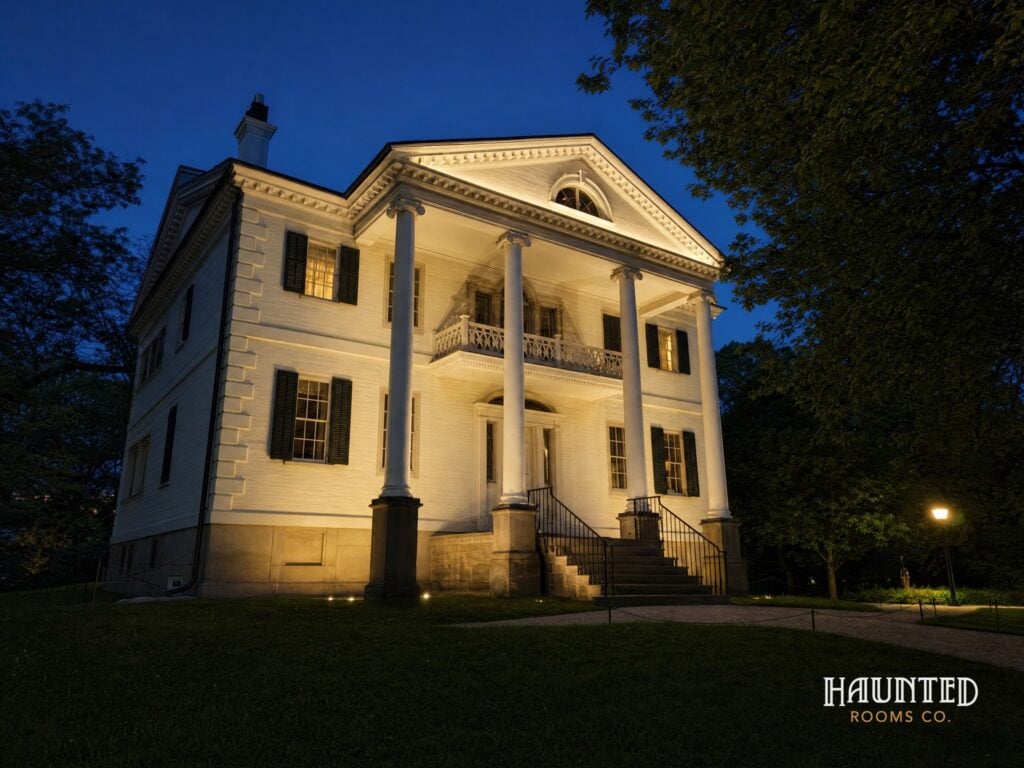
Manhattan’s oldest surviving house was built in 1765 for the British officer Roger Morris and served as George Washington’s headquarters for about a month in the fall of 1776. The merchant Stephen Jumel bought it in 1810, and his widow Eliza married Aaron Burr in the front parlor in July 1833. She filed for divorce within a year and died in the house in 1865.
Eliza is the ghost everyone asks about. The best-known story says a group of schoolchildren in the 1960s were shushed from the balcony by a woman in old-fashioned dress. Others tell of a Hessian soldier stepping out of a painting and a servant girl on the third floor. The museum’s own director told DNAinfo he had never seen anything, yet it now runs its own paranormal programs.
What investigators report
Investigators report K2 and EMF meter activity in Eliza Jumel’s bedroom during all-female question sessions and in Aaron Burr’s bedroom, where meters left on the chairs have lit up. One team also reported a basement motion light flashing on when they offered the ghost birthday cake.
Haunted Rooms tip: Watch the museum’s events page for its after-hours paranormal historical investigations, held on weekends and evenings during the current restoration.
Where to look Gertrude's bedroom, the front parlor and the stairs
Reported ghosts Gertrude Tredwell and other members of the Tredwell family
Visiting Museum open during restoration work next door; entrance at 35 East 4th Street
Tours Guided tours Wednesday to Sunday at noon ($20); self-guided visits 1 to 5 PM ($15)
Hours and season Wednesday to Sunday; candlelight ghost tours on select October nights
Tickets Candlelight ghost tours $45; private ghost tours for up to 20 people by arrangement
Ghost hunting No public ghost hunts; the museum runs its own paranormal research and ghost tours
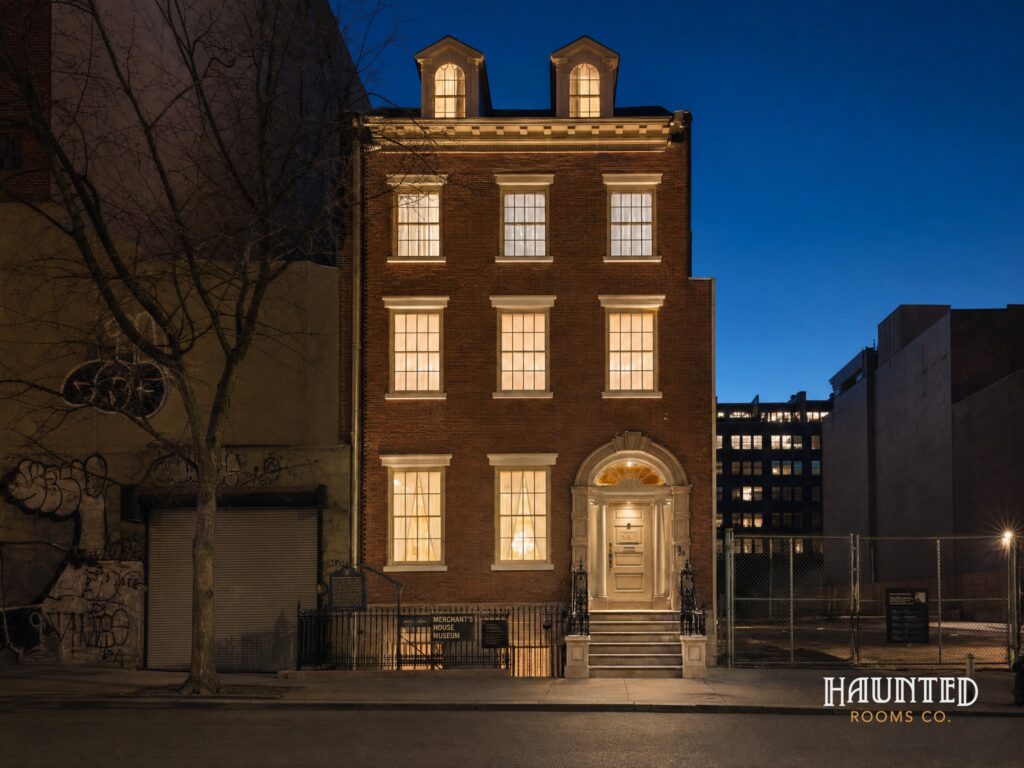
This red-brick row house on East 4th Street was finished in 1832, bought by the merchant Seabury Tredwell in 1835 and lived in by his family for almost a century. His youngest daughter Gertrude was born here in 1840 and died here in 1933, aged 93. The house opened as a museum in 1936 with the family’s furniture and belongings still inside, and it is a National Historic Landmark.
The museum says staff, volunteers, visitors, neighbors and passersby have reported sounds, sightings and smells since the 1930s, and that at least eight people died in the house. Most of it is blamed on Gertrude. The New York Times has called it Manhattan’s most haunted house, and its October candlelight ghost tours sell out.
What investigators report
Investigators have run EVP sessions with audio recorders and tri-field meters, starting in the upstairs servants’ quarters and asking whether the Tredwells were good people to work for. One team reported thumps and meter squawks while talking about family life in 1855.
Where to look The churchyard, the bell tower and the aisles
Reported ghosts Peter Stuyvesant
Visiting Active church; churchyard and events open to the public
Ghost hunting None; it is an active parish. East Village ghost walks stop here
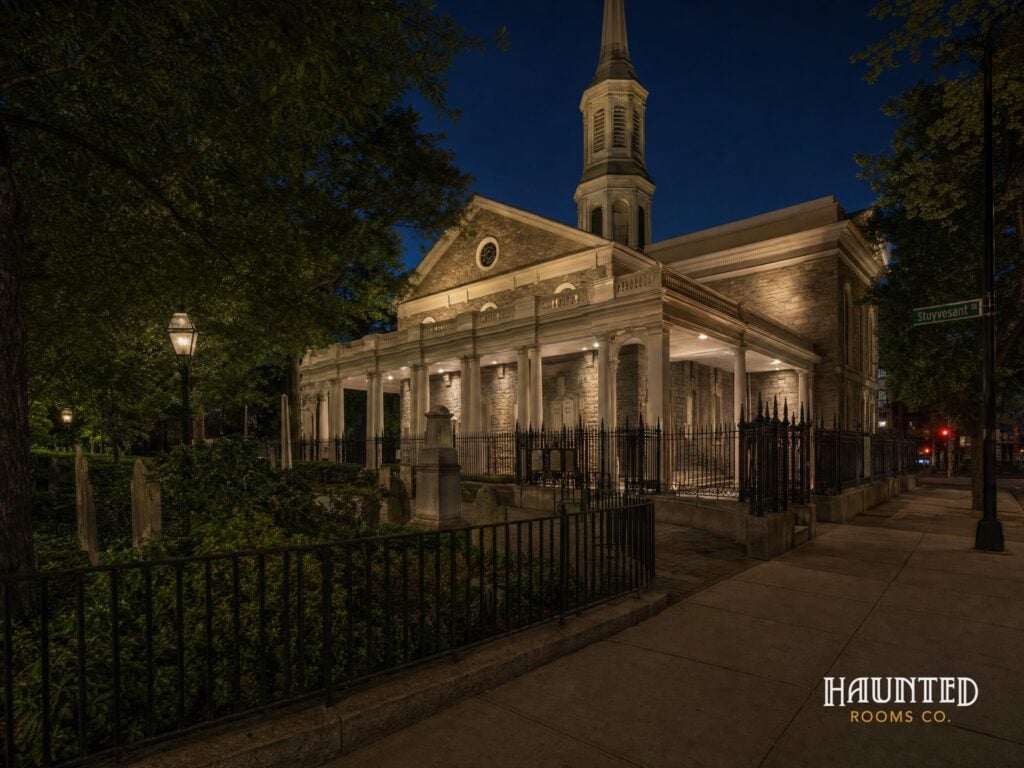
Peter Stuyvesant, the last Dutch director-general of New Amsterdam, was buried in 1672 in a vault under his family chapel on this spot. The present church went up between 1795 and 1799, making it one of the oldest churches in Manhattan, and was rebuilt after a fire nearly destroyed it on July 27, 1978. It is still an active Episcopal parish and arts space.
Stuyvesant walked with a wooden peg leg. Legend says his footsteps tap through the church, and that he rings the bells at odd hours. A bust given by the Dutch government in 1915 stands in the yard.
Haunted Rooms tip: Visit the churchyard by day, then see a Poetry Project reading or a Danspace performance inside.
Address Ellis Island, New York Harbor (ferries from Battery Park)
Where to look The unrestored hospital wards on the south side
Reported ghosts Children's voices, crying, doors moving in the hospital
Visiting Museum open daily; hospital by guided hard hat tour only
Tours 90-minute hard hat tours of the hospital, daily except Thanksgiving and Christmas
Tickets Hard hat tour $55, plus the ferry ticket
Ghost hunting None; tours only
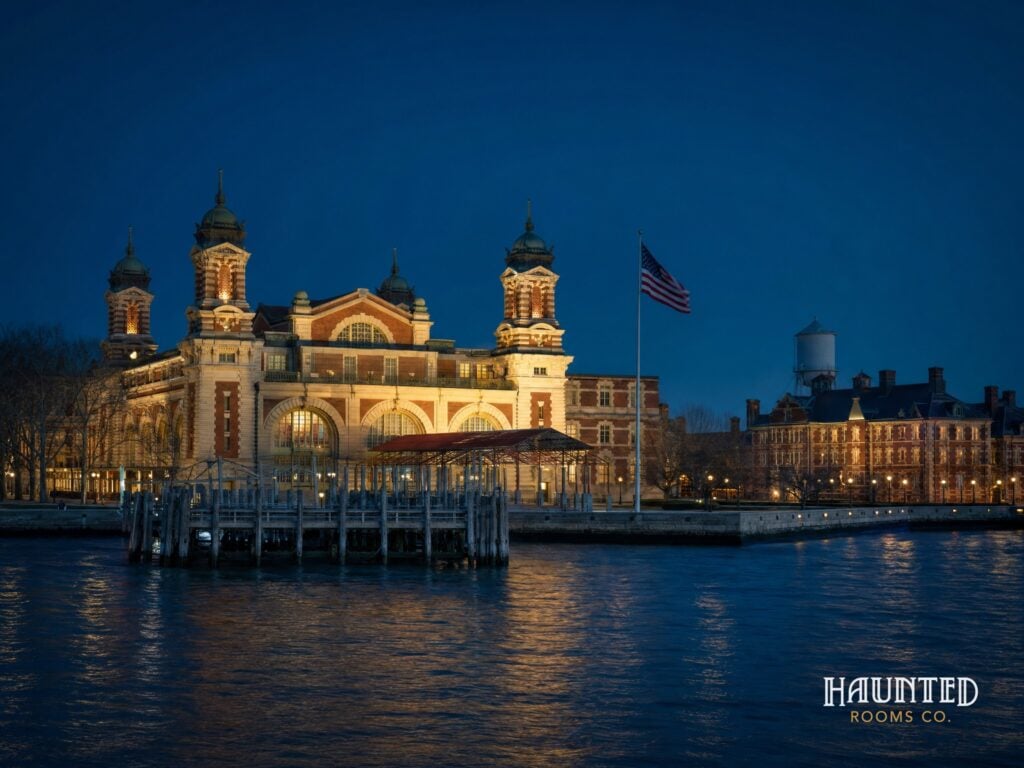
About 12 million immigrants passed through Ellis Island between 1892 and 1954. Those found to be ill were treated in a 29-building hospital complex on the island’s south side, opened from 1902, where tuberculosis, measles, scarlet fever and trachoma were common; roughly 4,000 people died there and about 350 babies were born. The main building reopened as a museum in 1990, but the hospital was left to decay.
Stories of children’s voices, crying and doors opening in the empty wards are passed on by visitors, though we found no solid published account behind them. Save Ellis Island runs hard hat tours through the unrestored hospital, the only way to see it, and in October has added shorter storytelling tours of the contagious disease wards and morgue.
Haunted Rooms tip: Book a Save Ellis Island hard hat tour (minimum age 10) and take the first ferry from Battery Park.
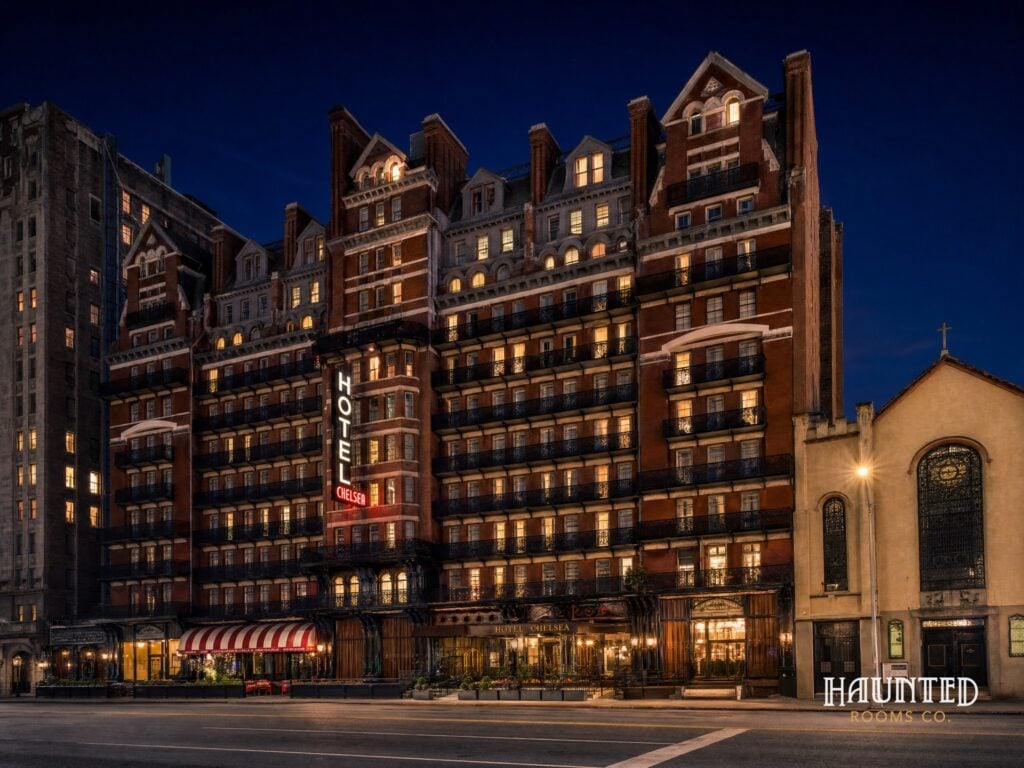
Where to look The fifth floor, the hallways and stairwell, the bar
Reported ghosts Mary, the Titanic widow; Nancy Spungen; Dylan Thomas
Visiting A working hotel; stay the night to experience it
Ghost hunting No public ghost hunts; stay the night instead
The Hotel Chelsea was built in 1883 and 1884 as one of New York’s first co-op apartment houses and became a hotel in 1905. Its red brick front with black iron balconies is a New York City landmark, and its guest book reads like a cultural history: Mark Twain, Dylan Thomas, Arthur Miller, Bob Dylan, Janis Joplin, Leonard Cohen and Patti Smith all lived here. After a long renovation that began in 2011, it reopened to overnight guests in 2022.
The Chelsea’s ghost stories follow its residents. Nancy Spungen was found stabbed to death in Room 100 in 1978, and guests say she still lingers. Dylan Thomas, who collapsed at the hotel in 1953 and died days later in hospital, is said to haunt the bar. The most told story is of Mary, said to have hanged herself on the fifth floor after her husband died on the Titanic. Actor Michael Imperioli described seeing a crying woman there on Celebrity Ghost Stories in 2010.
Haunted Rooms tip: Ask for a room on the fifth floor, Mary’s floor, and walk the famous stairwell late at night.
Where to look The stage, the aisles and the backstage exits
Reported ghosts Olive Thomas, the Ziegfeld girl in green
Visiting Working Broadway theater: visit for a show
Ghost hunting None
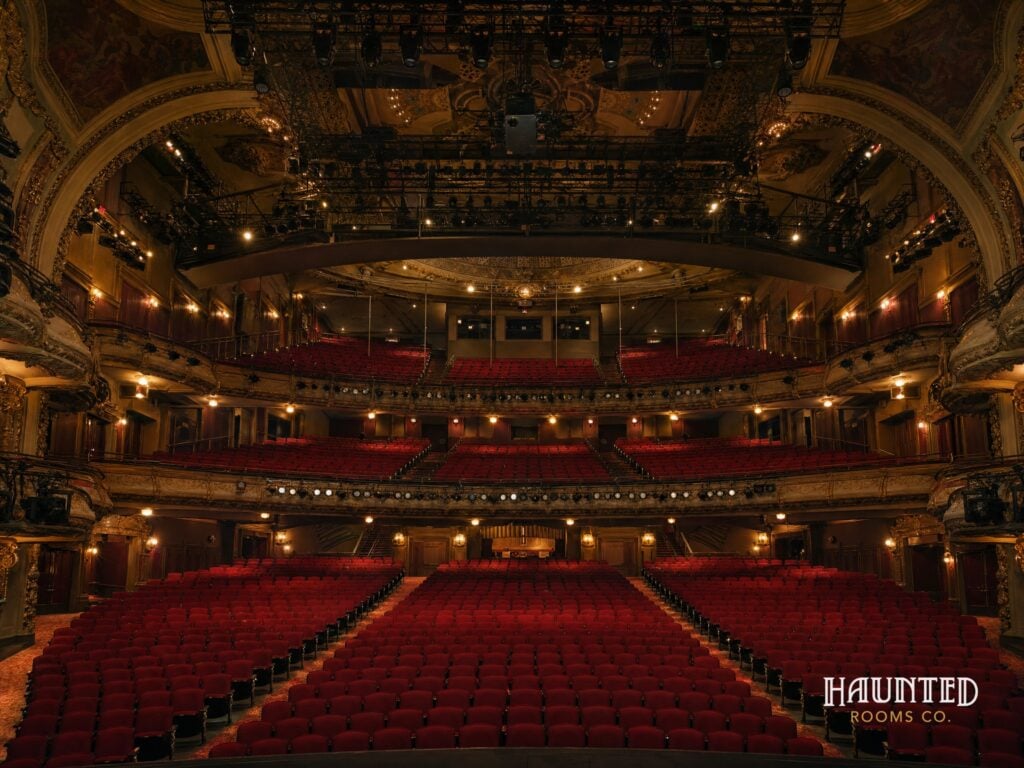
Herts and Tallant’s Art Nouveau theater opened on October 26, 1903, and was the home of the Ziegfeld Follies from 1913 to 1927. After decades of decline on 42nd Street, Disney restored it between 1995 and 1997, and it now hosts Aladdin.
Its ghost is said to be Olive Thomas, a Follies girl and silent film star who died in Paris in 1920 after swallowing mercury bichloride, a death ruled accidental. Her photographs hang by the entrances, and Playbill reported in 2016 that staff blow a kiss or touch the frame as they come and go. Ushers and night security tell of a touch on the back with no one there. Tales of her in a green dress belong to the legend, not the record.
What investigators report
Staff reportedly say good night to Olive Thomas, the theatre’s best-known ghost, when they leave, and her photograph hangs at both entrances.
Visiting a haunted place by day is one thing. Investigating one after dark is another. On a Haunted Rooms ghost hunt our team takes you through a historic building with professional ghost hunting equipment, runs EVP sessions and vigils, and gives you time to explore on your own. These are the nearest ones we run.
Where to look The empty box seats, the old elevator and the top-floor apartment
Reported ghosts David Belasco, the Blue Lady
Visiting Working Broadway theater: visit for a show
Ghost hunting None
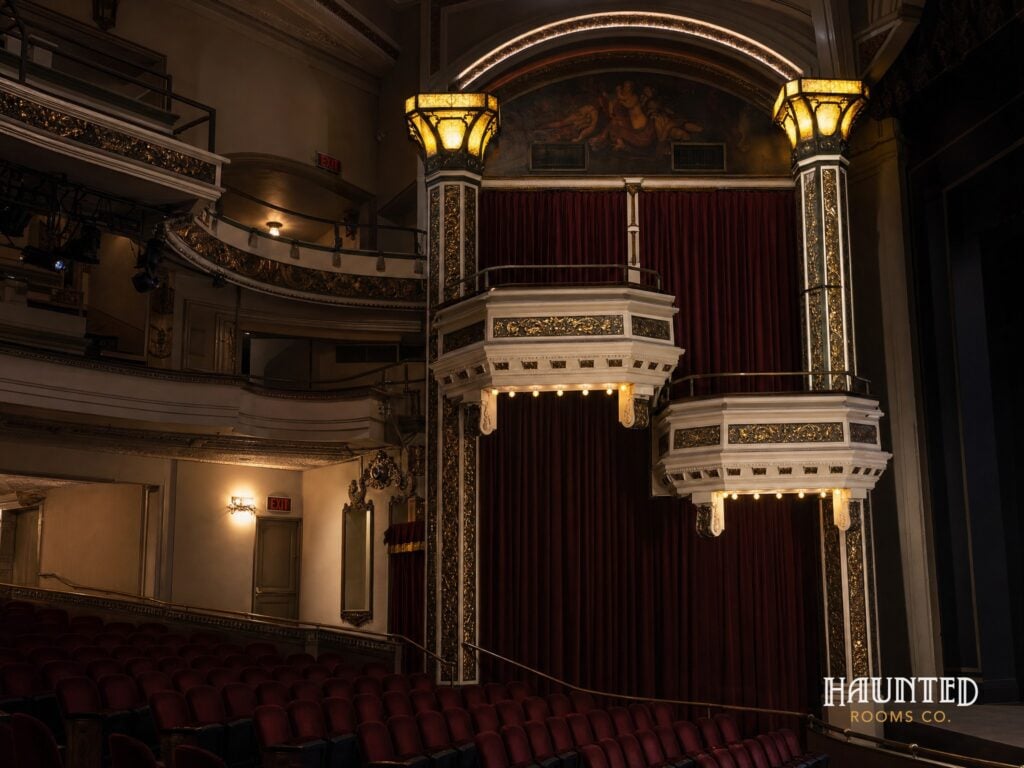
Producer David Belasco opened this Broadway house as the Stuyvesant in October 1907 and renamed it after himself in 1910. He lived above it in a duplex apartment decorated like a Gothic church, full of his theater treasures, until his death in 1931.
Theater lore says he never left. Actors have described a figure in clerical dress watching from a box or the balcony, sometimes shaking hands; others tell of an out-of-order elevator that rides up to his old rooms and of parties heard in the empty apartment. A Blue Lady, said to be a showgirl or Belasco’s mistress, is blamed for a blue glow in a dressing room. The Shubert Organization, which runs the theater, notes the story that the 1971 nude revue Oh! Calcutta! scared Belasco’s ghost away.
What investigators report
Actors say the Belasco’s ghosts tend to appear at final dress rehearsals, and Laura Linney reported seeing a blonde woman in a blue dress in the front row of the locked upper balcony.
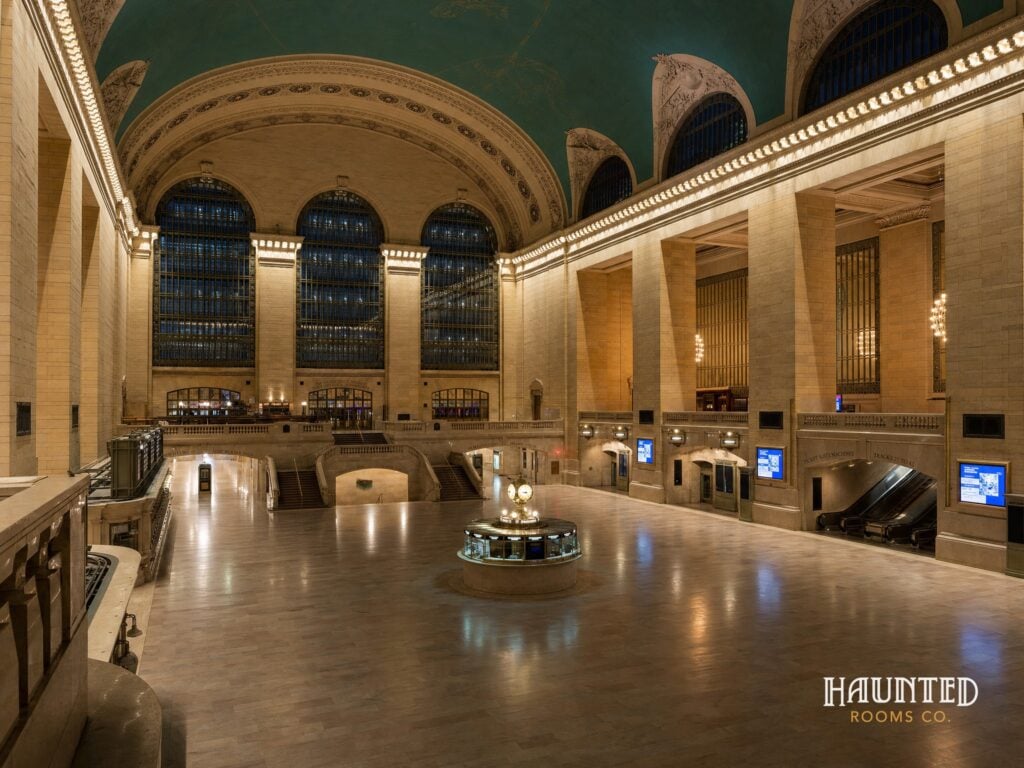
Where to look The Main Concourse, the Campbell bar and the lower levels
Reported ghosts FDR's dog Fala, a well-dressed couple in the Campbell
Visiting Working station, open to everyone
Ghost hunting None; it is a working station. Several Manhattan ghost walks stop here
Grand Central opened on February 2, 1913, and is full of real secrets: Track 61, a siding under the old Waldorf Astoria used by Franklin D. Roosevelt and his private train, a whispering gallery outside the Oyster Bar, and the Campbell, the 1920s office of tycoon John W. Campbell that is now a cocktail bar.
Historian Phil Schoenberg has told of Roosevelt’s Scottish terrier Fala trotting through the terminal late at night. At the Campbell, staff have described being pushed from behind and feeling cold drafts, and the owner has spoken of an old, fashionably dressed couple seen on the balcony after closing. Older lists add a phantom steam train, a story with no record behind it.
Haunted Rooms tip: Have a drink at the Campbell, then try the whispering gallery outside the Oyster Bar.
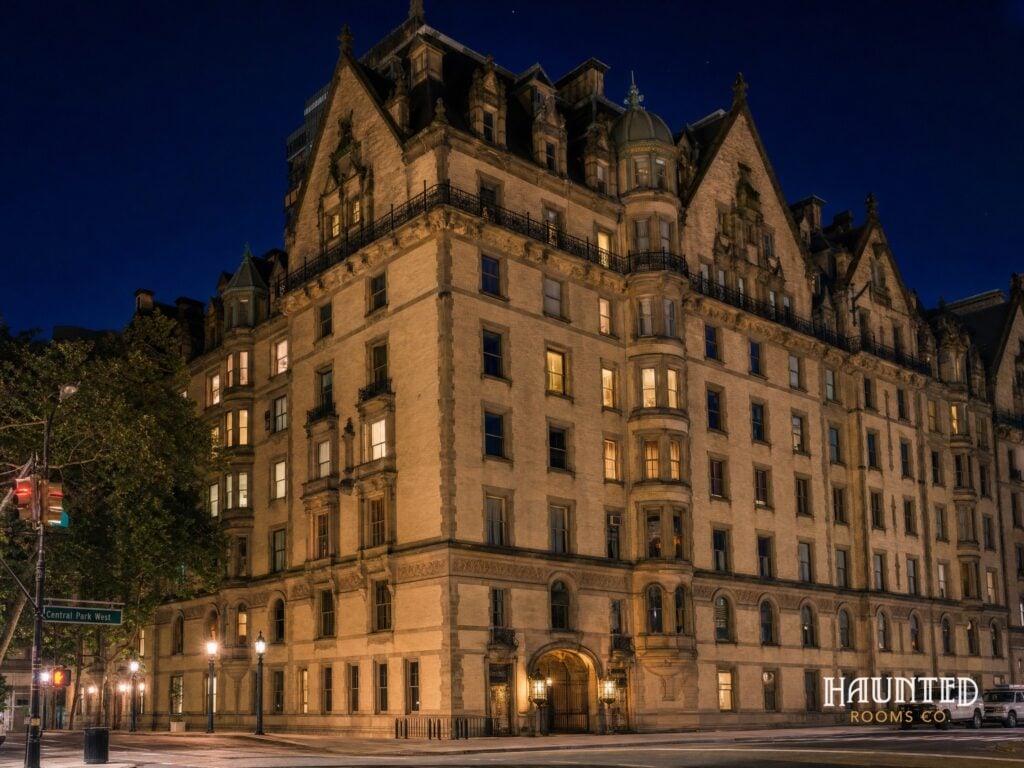
Where to look The 72nd Street carriage entrance and the sidewalk outside
Reported ghosts John Lennon, a crying lady, a young girl, a small man in a wig
Visiting Private co-op: see it from the street only
Ghost hunting None; private residence. Upper West Side ghost walks pass by
Henry Hardenbergh designed this gabled apartment house for Singer sewing machine boss Edward Clark, who died in 1882 before it was finished in 1884. It has housed many famous residents, and on December 8, 1980, John Lennon was shot dead outside its West 72nd Street entrance.
Yoko Ono has said she saw Lennon’s ghost sitting at his white piano, and Lennon himself reportedly spoke of seeing the ghost of a crying lady in the building before his death. Older stories add a young girl and a small man in a wig, sometimes said to be the builder, Edward Clark. The Dakota is a private co-op, so the stories stay inside its walls.
Haunted Rooms tip: See the gateway from Central Park West, then cross into Strawberry Fields in Central Park, Lennon’s memorial.
Address Spring Street (inside the COS store), SoHo, New York, NY
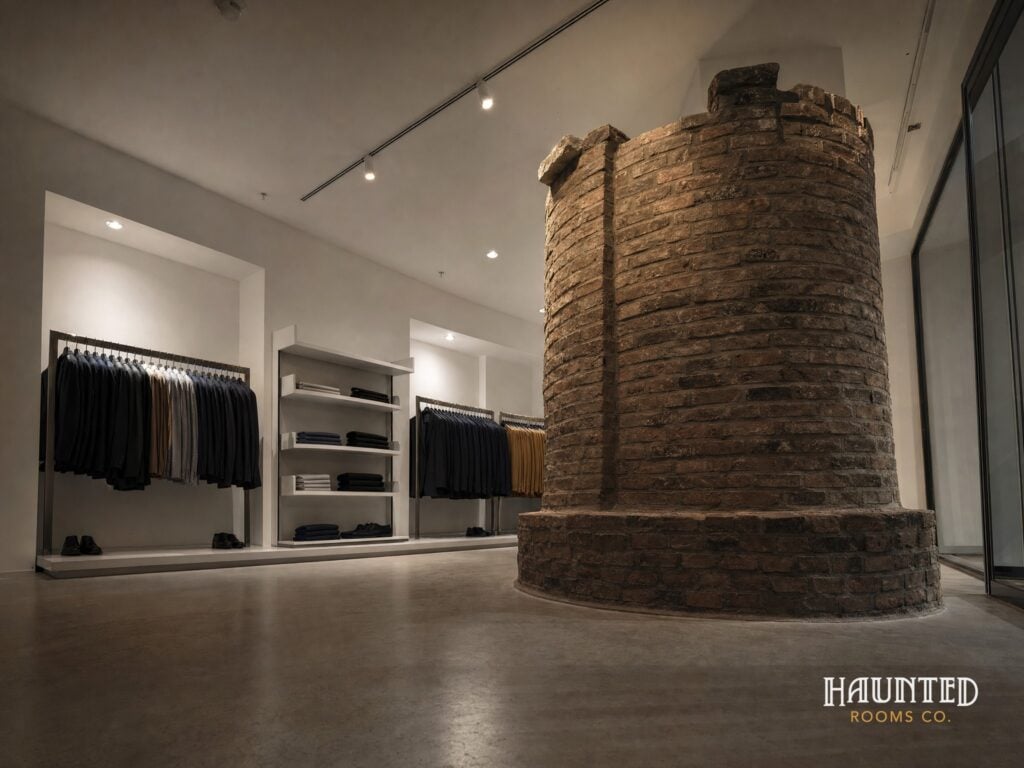
Where to look The brick well shaft in the store basement
Reported ghosts Elma Sands
Visiting Inside a working store; not open as an attraction, viewable only by special request
Ghost hunting None
In 1799 Gulielma “Elma” Sands disappeared from her boarding house on Greenwich Street, and her body was found in a well in what was then Lispenard’s Meadow. Her fellow boarder and secret lover Levi Weeks was tried for her murder in 1800, defended by both Alexander Hamilton and Aaron Burr, and acquitted after a few minutes of deliberation. Many New Yorkers thought him guilty and he had to leave the city.
The well survives in the basement of the COS clothing store at 129 Spring Street. Former staff of the Manhattan Bistro, which uncovered it, told of ashtrays flying off tables, bottles falling, lights switching on and off and the figure of a long-haired woman. Legend also says Elma is heard near Spring and Greene Streets. Atlas Obscura notes the well is not open to the public.
Haunted Rooms tip: Ask staff politely; the well can sometimes be seen by request, but it is not a public exhibit.
Where to look The stairwells and the front of the house
Reported ghosts Mark Twain in a white suit, a lady in white, a gray cat
Visiting Private residence: see it from the street only
Ghost hunting None; it is private housing. Village ghost walks often pass by
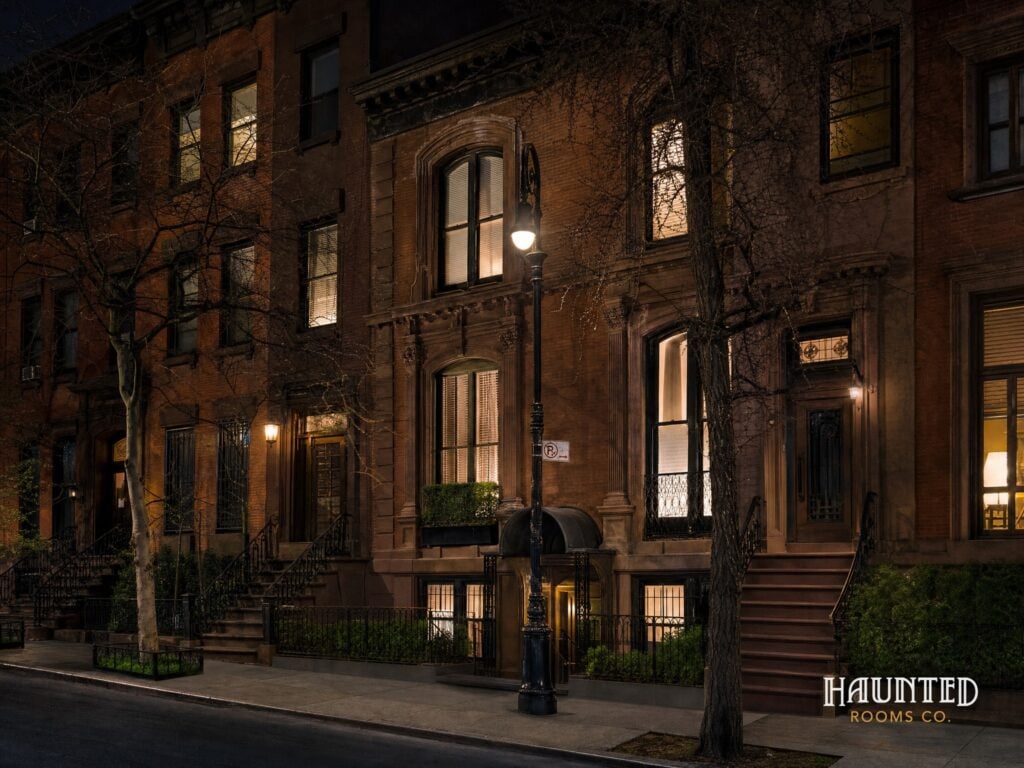
This Greek Revival brownstone in Greenwich Village went up in the late 1850s and was split into ten apartments in 1937. Mark Twain lived here in 1900 and 1901. Actress Jan Bryant Bartell, who lived in its top-floor apartment, wrote in her memoir Spindrift of a “monstrous moving shadow.” In November 1987 six-year-old Lisa Steinberg was fatally beaten in an apartment here, a case that shocked the city.
Its nickname comes from the claim that 22 people died in the house. Legend adds Twain himself in his white suit on the stairs, a lady in white and a gray cat. None of it is documented beyond these accounts, and the building is private housing today.
Haunted Rooms tip: See it from the sidewalk on a Village walk, and remember that people live here.
Where to look The staircase, the bar and the dining rooms
Reported ghosts Aaron Burr, Theodosia Burr, a woman in black
Visiting Restaurant, open Wednesday to Sunday from 5 PM
Ghost hunting None
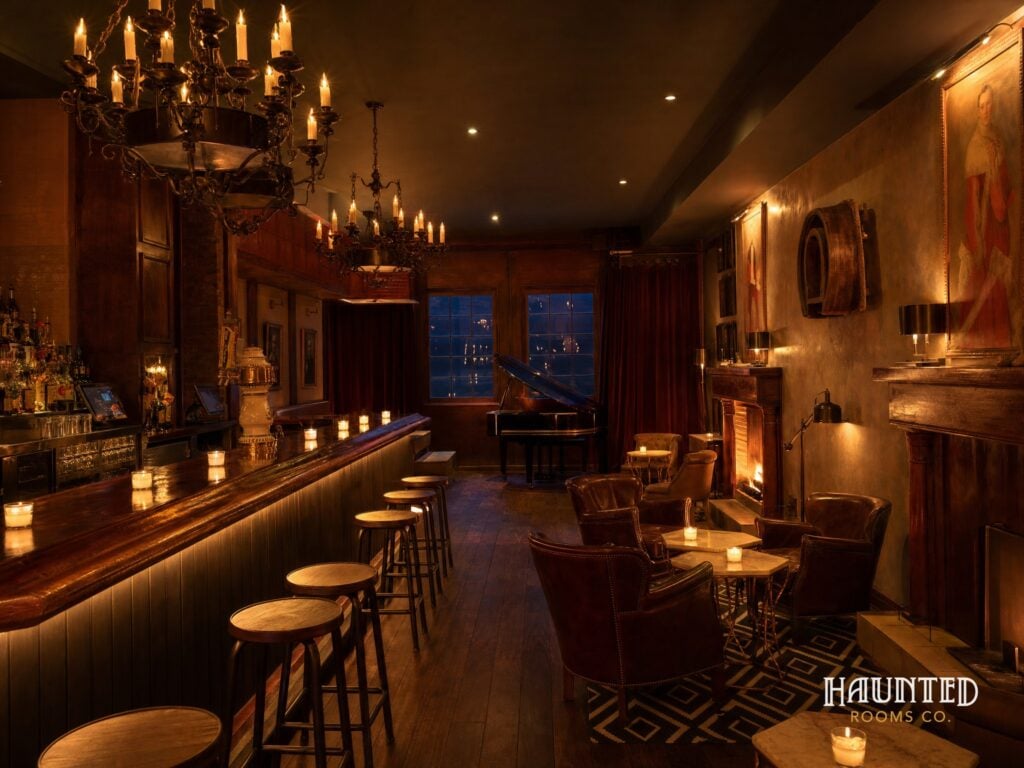
This candlelit West Village restaurant opened in 1973 in what it describes as a landmarked carriage house built in 1767. It is one of the city’s best-known places for proposals and anniversaries, and local tradition links the building to Aaron Burr, a connection that is often repeated but hard to prove.
Staff stories are the heart of it. General manager Rosanne Martino has described flying plates and unexplained drafts, and staff talk of up to twenty ghosts, possibly including Burr, his daughter Theodosia, who was lost at sea in 1813, and a woman in black on the stairs. Women at the bar say their earrings have been tugged off.
What investigators report
Staff say the resident ghosts like to prank women diners by taking their earrings, and the stairwell is where a host reportedly felt shoved by an unseen figure.
Reported ghosts A young woman in 1940s clothes, often linked to Evelyn McHale
Visiting Observatories on the 80th, 86th and 102nd floors; timed tickets
Ghost hunting None
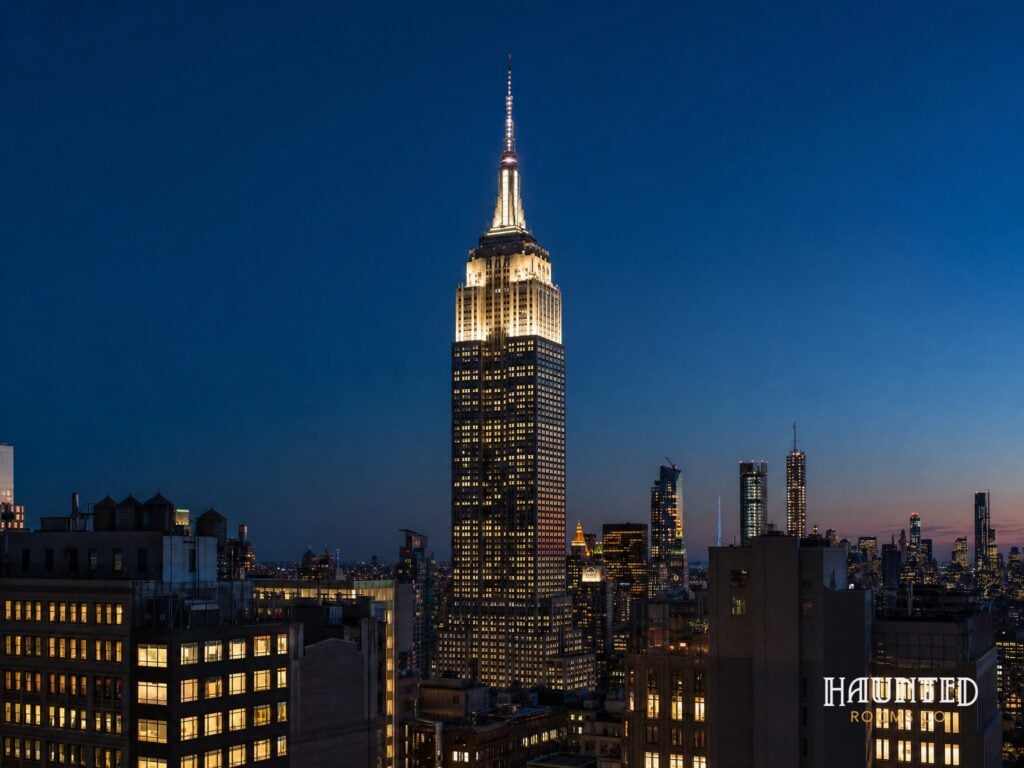
The Empire State Building opened on May 1, 1931, after just over a year of construction. On July 28, 1945, a B-25 bomber flew into its north side between the 78th and 80th floors in fog, killing 14 people; elevator operator Betty Lou Oliver survived a fall of about 75 stories in a damaged car. On May 1, 1947, 23-year-old Evelyn McHale jumped from the 86th-floor deck, and a photograph of her body on a crushed car became famous.
Untapped New York counts more than thirty suicides at the building, and stories tell of a young woman in 1940s clothing on the observation deck, often linked to McHale. It is a sad story, and the deck is a working tourist attraction, so visit for the view.
Haunted Rooms tip: Go up late in the evening, when the 86th-floor deck is quieter.
Address Brooklyn Bridge promenade, City Hall Park entrance, New York, NY 10038
Where to look The pedestrian promenade and the stone towers
Reported ghosts Bridge workers, a woman in white
Visiting Free; the elevated promenade is open to pedestrians at all hours
Ghost hunting None
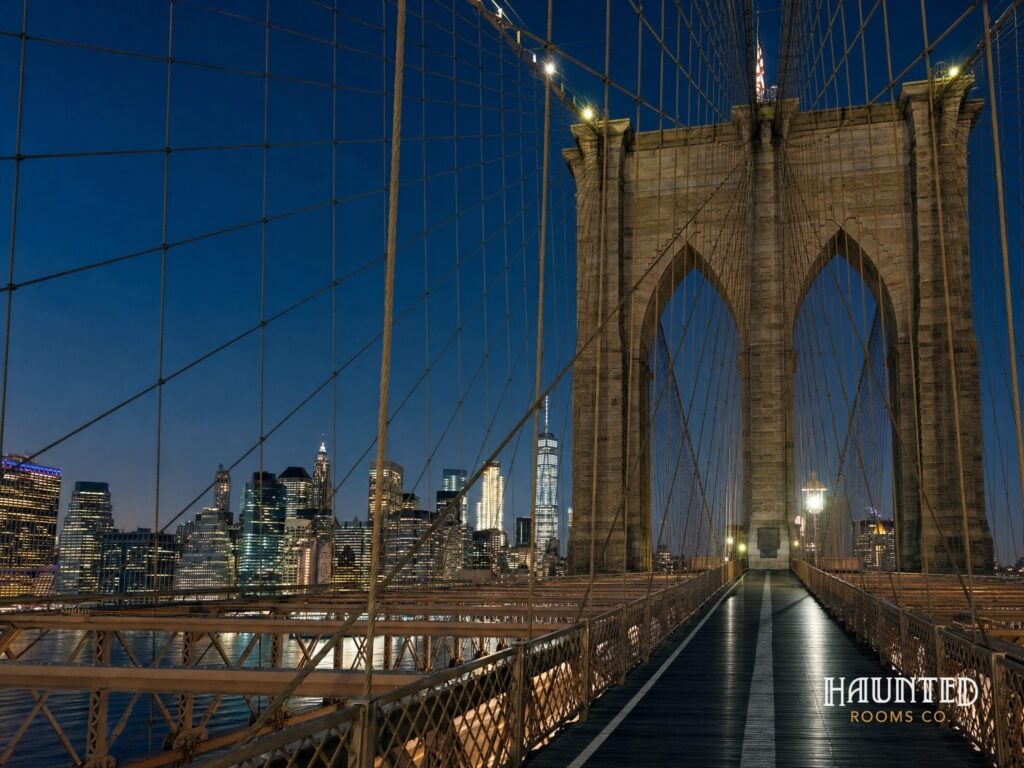
The bridge opened on May 24, 1883, after 14 years of work, and it cost lives. Designer John A. Roebling died of tetanus in 1869 after a ferry crushed his foot, his son Washington was disabled by caisson disease, and about 27 men died during construction. Six days after opening, on May 30, 1883, a stampede on a stairway killed at least twelve people.
Ghost stories here are thin. One Brooklyn family tale, told to Patch, says you can hear trapped workers scratching on the stone and calling for help; a civil engineer in the same piece says there is no proof anyone was buried in the bridge and calls it lore. Other lists add footsteps and a woman in white at the rail. Treat it all as city legend. The walk itself is worth it.
Haunted Rooms tip: Walk it from Manhattan to Brooklyn after dark for the skyline, then take the ferry back.
Address 7455 Hylan Boulevard, Staten Island, NY 10307
Where to look The house and the park at the southern tip of Staten Island
Reported ghosts Revolutionary-era residents, including the Billopps
Visiting House museum in Conference House Park
Tours Saturdays and Sundays, noon to 4 PM
Tickets $10
Ghost hunting None advertised
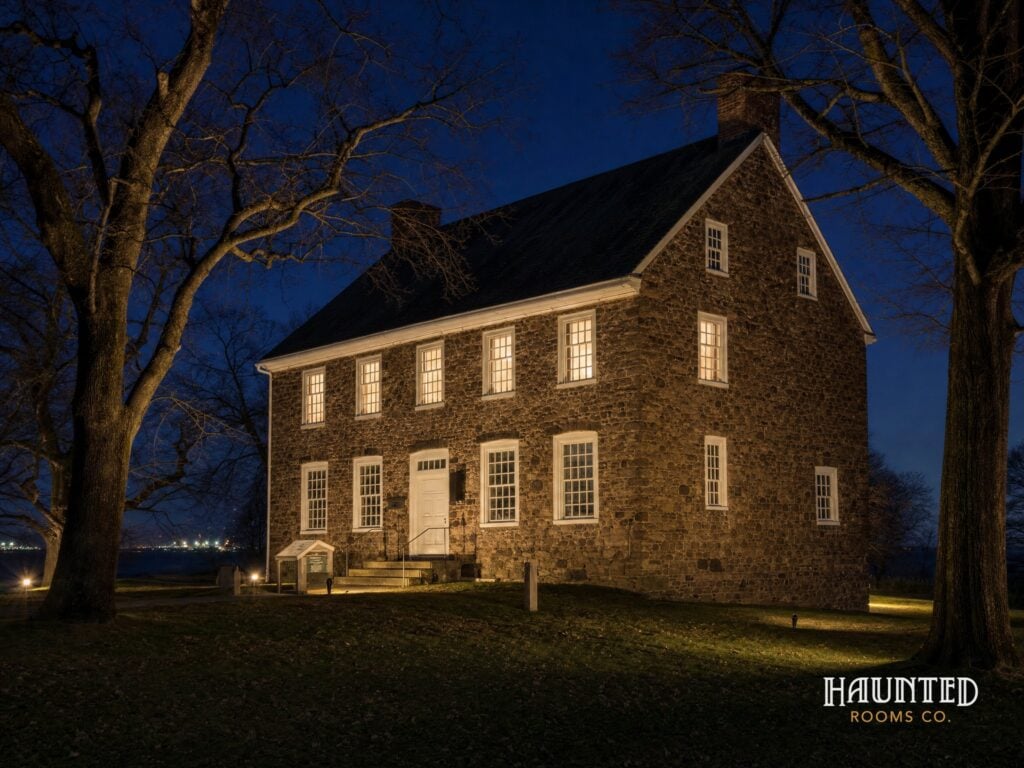
Captain Christopher Billopp built this fieldstone manor house around 1680 at the southern tip of Staten Island. On September 11, 1776, during the British occupation, Lord Howe met Benjamin Franklin, John Adams and Edward Rutledge here in the only peace conference of the Revolution. The Americans refused his terms and the war went on for seven more years. The city owns the house, which opened as a museum in 1927.
Staten Island lore says residents from that era still walk its rooms, and the Bowery Boys include it among New York’s famous haunted houses. The stories are vague and unnamed, so take them as legend. The house itself is a rare survivor and well worth the trip.
Haunted Rooms tip: Pair a weekend tour with a walk to the beach at Conference House Park, the southernmost point in New York State.
Where to look The lobby and its Round Table portrait, the Round Table room, the Blue Bar, the ninth floor
Reported ghosts Dorothy Parker and the Algonquin Round Table; footsteps on the ninth floor and stairs
Visiting A working hotel; stay the night to experience it
Ghost hunting No public ghost hunts; stay the night instead
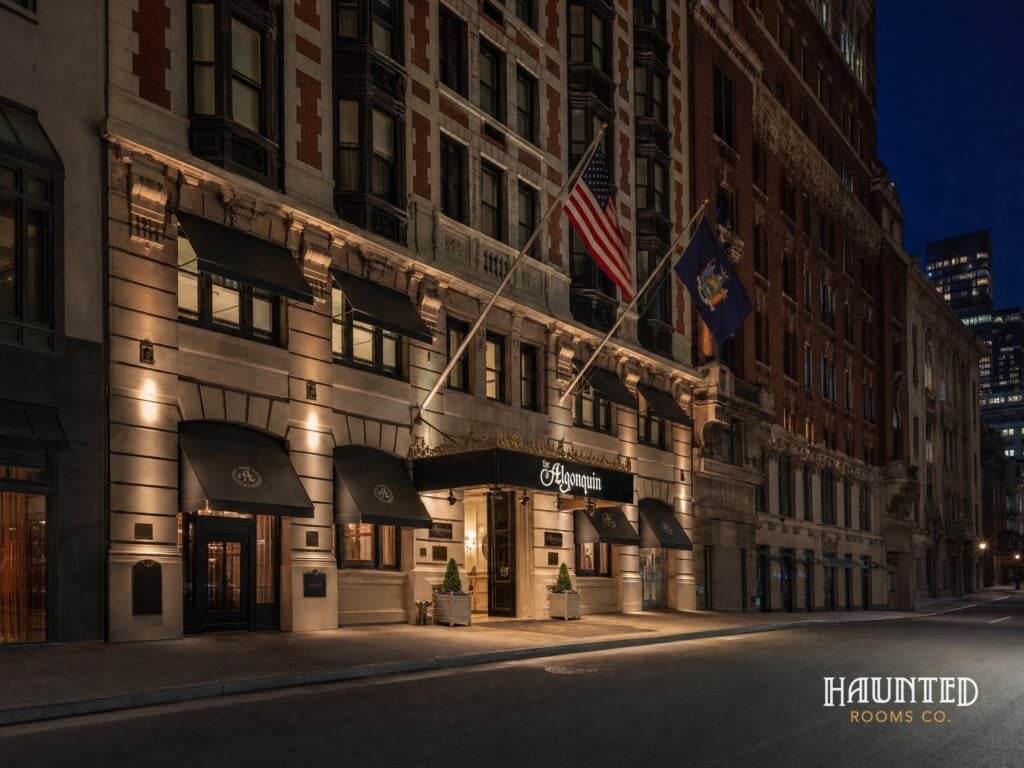
The Algonquin opened on West 44th Street in November 1902 and became the most famous literary hotel in America. From 1919 to 1929 Dorothy Parker, Robert Benchley, George S. Kaufman, Harold Ross and friends met for lunch at a round table in its dining room, and the hotel has kept a resident cat, always named Hamlet or Matilda, since the 1920s. Today it is The Algonquin Hotel Times Square, part of Marriott’s Autograph Collection.
Staff and guests have long said the Round Table never quite left. The best-known story is of Dorothy Parker, the ‘mean woman’ children say told them to be quiet from the lobby portrait. Guests on the ninth floor tell of footsteps on the stairs with no one there and a tapping sound in an empty bathroom. Some say the Parker reports faded after her ashes were finally buried in the Bronx in 2020.
Haunted Rooms tip: Have a drink in the Blue Bar or lobby by the Round Table portrait, then ask for a ninth-floor room when you book.
Where to look Guest room doors and closets, the corridors, the Palm Court
Reported ghosts Voices behind locked doors; shadow figures in guest rooms; Fannie Lowenstein of the Palm Court
Visiting A working hotel; stay the night to experience it
Ghost hunting No public ghost hunts; stay the night instead
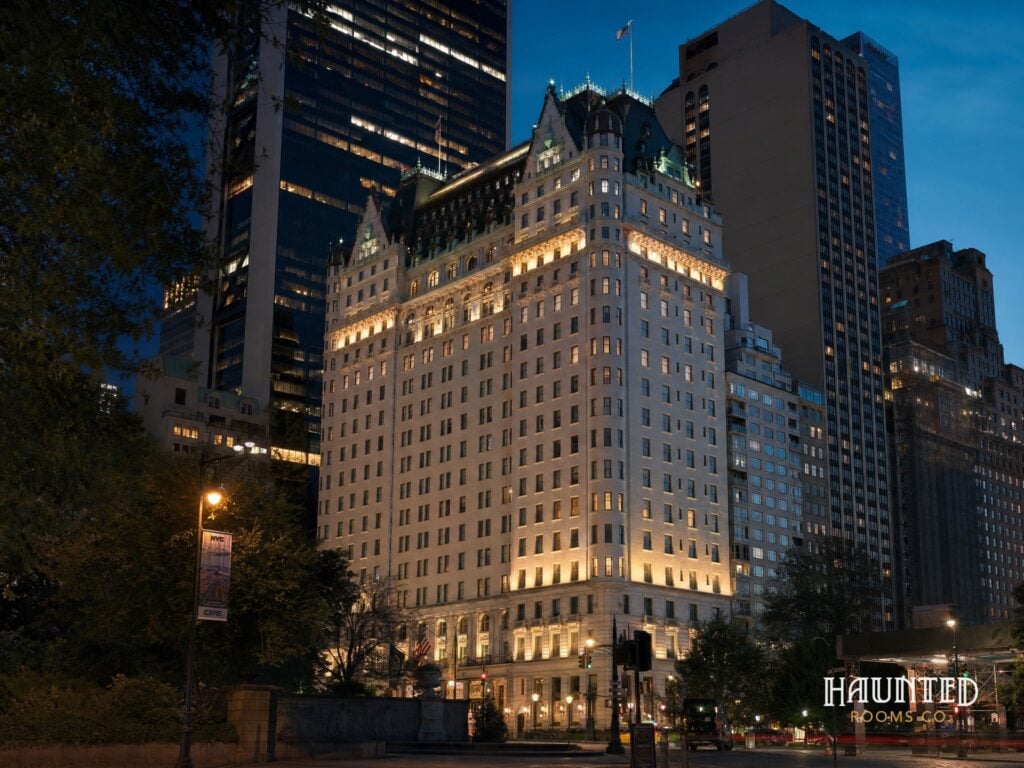
The Plaza opened on October 1, 1907, a white-marble French chateau by Henry Janeway Hardenbergh at the corner of Fifth Avenue and Central Park South. It is a National Historic Landmark, and since a 2008 renovation it has about 282 hotel rooms alongside private condominiums. Fairmont has managed it since 2005.
The Plaza’s ghost stories are quieter than its fame. One family told of being locked in their room while a voice outside mocked their calls for help, and of a shadowy figure coming out of the closet; travel writers add disembodied voices and doors that will not open. The hotel’s old guard also blame mishaps on Fannie Lowenstein, one of the ‘Plaza widows’ who lived here for decades.
Haunted Rooms tip: Have tea in the Palm Court, then ask for a room on an upper floor of the original 1907 building.
Address 301 Veterans Road West (Arthur Kill Road), Staten Island, NY 10309
Where to look The dining room that was Martha's bedroom, the staircase, the first-floor hallway portrait
Reported ghosts Martha Mersereau, the Civil War widow
Visiting A working hotel; stay the night to experience it
Ghost hunting No public ghost hunts; stay the night instead
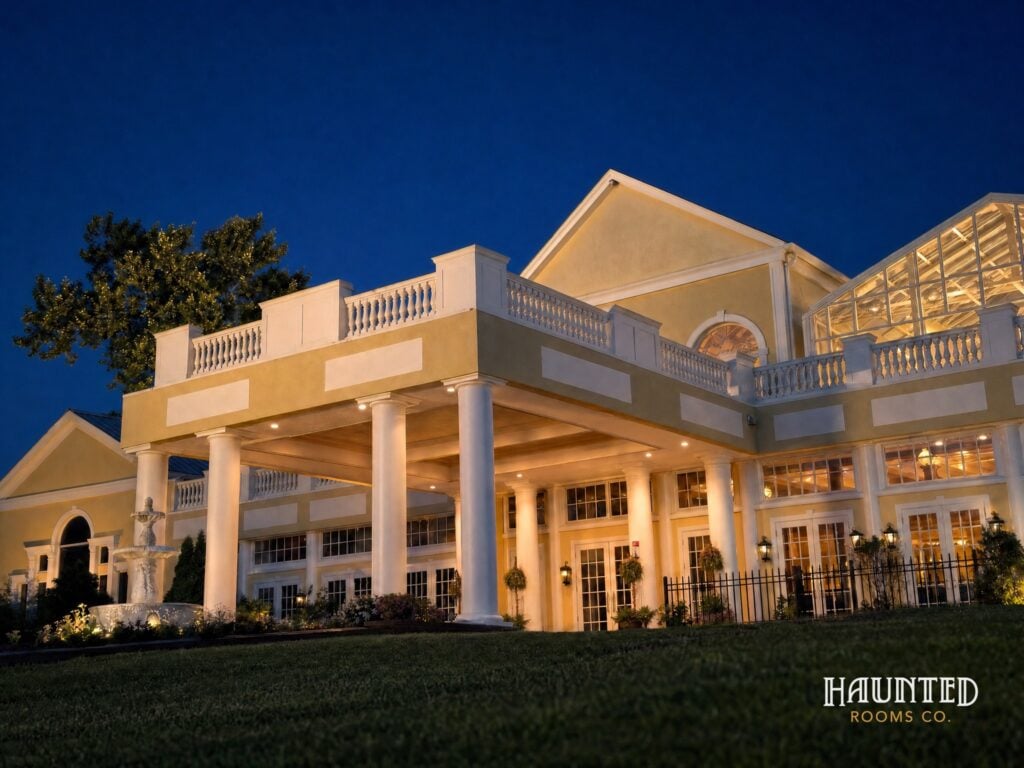
The Old Bermuda Inn stands in Rossville on Staten Island’s South Shore, around a mansion that tradition says the Mersereau family built about 1832. It is best known today as a restaurant, wedding and banquet venue, and it also runs a small bed and breakfast guest house on the grounds, a restored 1840s Victorian that was once the parsonage of St. Luke’s Church.
The inn’s ghost is Martha Mersereau. Local legend says she kept a candle burning in her window while her husband was away at the Civil War, and after word came that he had been killed she shut herself in her room and died of grief. Her room is now a dining room. Staff and guests describe a woman on the stairs, a chandelier light that will not go out and a portrait that once caught fire.
Haunted Rooms tip: Martha’s stories belong to the old mansion, not the guest house, so pair an overnight stay with dinner or an event in the main building and ask staff to show you her portrait.
Where to look The cabin corridors and shared bathrooms
Reported ghosts Titanic crew said to linger; figures in the halls
Visiting A working hotel; stay the night to experience it
Ghost hunting No public ghost hunts; stay the night instead
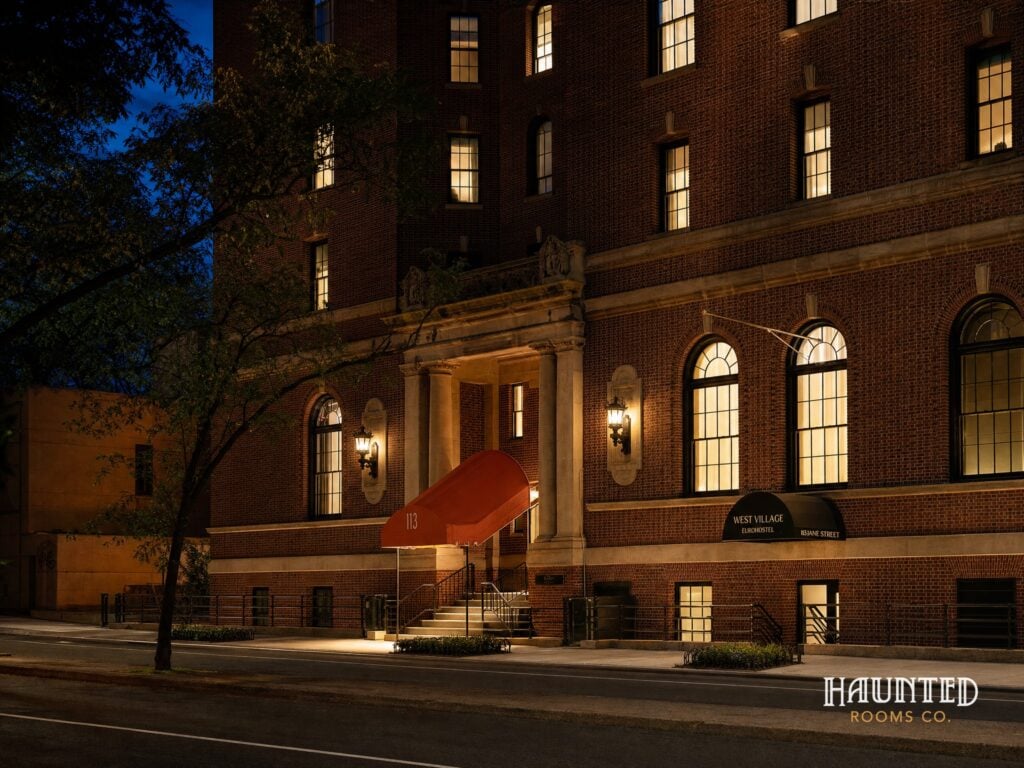
This red brick building on the Hudson waterfront opened in 1908 as the American Seamen’s Friend Society Sailors’ Home. In April 1912 it housed the 100 surviving crew of the Titanic while the American inquiry went on, and the crew held a memorial service in its hall. Later it became the Jane West hotel, a theater and, after a 2008 sale, the much-loved Jane Hotel with its tiny ship-style cabins. By 2025 it had been renamed the West Village Eurohostel.
The ghost stories here are thin but persistent. Local ghost writers say the Titanic survivors’ sorrow never left, and lists of New York haunted hotels have long included the Jane, with guests looking for figures in the narrow halls and shared bathrooms. There is no documented death of a Titanic survivor here, so treat it as atmosphere, and stay for the history.
Haunted Rooms tip: Book a single cabin for the full sailor experience and read the Titanic plaque on the building before bed.
Where to look The elevators around 1 a.m., guest rooms, the lobby
Reported ghosts An elevator poltergeist; a woman in white; guests who vanish mid-conversation
Visiting A working hotel; stay the night to experience it
Ghost hunting No public ghost hunts; stay the night instead
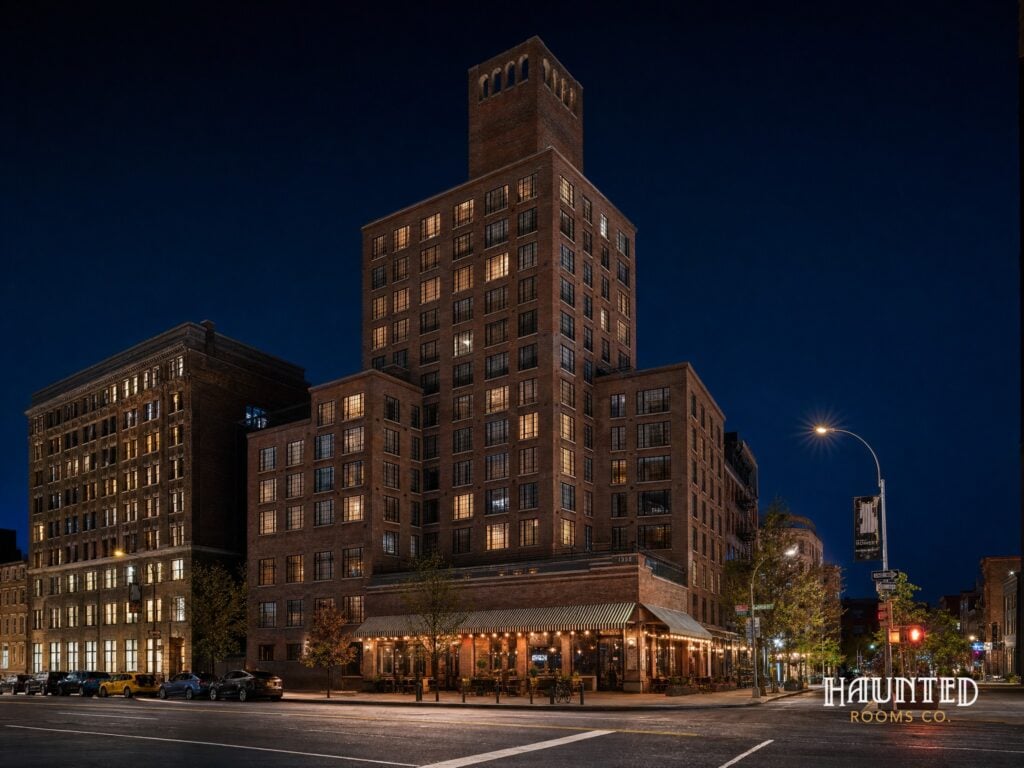
The Bowery Hotel looks a century old, but it opened in February 2007. Its owners built it to feel like an old-world hideaway, with a wood-paneled lobby, velvet chairs and real metal room keys, on a corner that once held the Gothic Dry Dock Savings Bank and later a gas station. It sits in the East Village, a few minutes from the New York City Marble Cemetery and the Merchant’s House Museum, both with ghost stories of their own.
The hotel’s ghost stories are recent and come from guests rather than history. Travel writers repeat reports that the elevators act up around 1 a.m., that a woman dressed in white has been found sitting in a guest room and that a drink was knocked from a guest’s hand when he was alone. Treat it as a stylish base for a haunted East Village walk rather than a historic haunt.
Haunted Rooms tip: Stay out late on a ghost walk, then ride the elevators around 1 a.m., when guests say they misbehave.
These places appear in older lists of haunted spots. We keep them here so you know the facts before you go, but you cannot (or should not) visit them.
Willowbrook State School, Staten Island
The state school for children with intellectual disabilities opened in 1947 and was exposed by Geraldo Rivera’s 1972 reports on its overcrowding and abuse. It closed in 1987. Part of the grounds is now the College of Staten Island campus and part is still state property, so it is not a place to go looking for ghosts.
Moravian Cemetery's Vanderbilt mausoleum, Staten Island
Older lists say the Vanderbilt tomb is haunted by a woman and a man in gray. The mausoleum, designed by Richard Morris Hunt in 1885 and 1886, stands in a private family section that is not open to the public, and we found no published source for the ghost story.
More haunted New York
Haunted hotels in NYC: the Chelsea, the Algonquin, the Bowery, the Plaza, the Jane and the Old Bermuda Inn
Changed from our older guide: we split the old Staten Island entry into the Conference House, which you can tour, and the off-limits notes above, and we dropped the Richmond Road story because we found no reliable source for it. The Manhattan Well can only be seen by request inside a SoHo store. We now say clearly where ghost stories have no published source, as at the Brooklyn Bridge. New in this update: the Morris-Jumel Mansion, One if by Land, the Belasco Theatre, St. Mark’s Church in-the-Bowery, the Conference House and six haunted hotels.
Visited one of these places? Tell us what happened
We collect first-hand accounts from visitors and add the best ones to our guides, with your first name and the date of your visit. We read every story before it’s published.
Frequently asked questions
What is the most haunted place in New York City?
The Merchant’s House Museum on East 4th Street, where Gertrude Tredwell was born in 1840 and died in 1933, is the best-known candidate, and the museum itself collects reports from staff and visitors. The Morris-Jumel Mansion and 14 West 10th Street, the so-called House of Death, are close behind.
Can you go ghost hunting in NYC?
Not in the usual sense, since most haunted sites are museums, theaters or private homes. The Merchant’s House runs candlelight ghost tours every October, and the Morris-Jumel Mansion runs its own paranormal historical investigations. Our nearest public ghost hunt is at Mid-Orange Correctional Facility in Warwick, about an hour north.
Can you go inside 14 West 10th Street or the Dakota?
No. Both are private homes. You can see them from the sidewalk, and Village and Upper West Side ghost walks pass by.
Is the Ellis Island hospital open to the public?
Only on guided hard hat tours run by Save Ellis Island, which take about 90 minutes and are open to visitors aged 10 and up. The main immigration building is a museum you can visit with any Statue of Liberty and Ellis Island ferry ticket.
Which NYC hotels are haunted?
The Hotel Chelsea, the Algonquin, the Bowery Hotel, the Plaza, the Jane and Staten Island’s Historic Old Bermuda Inn all have ghost stories. See our haunted hotels in NYC guide.
Sources and how we research
Every place in this guide is checked against its official website, historic register listings and news coverage, and we confirm whether it is open, closed, private or gone before we list it. Ghost stories are reported as staff, visitors and local historians tell them; we say so where records contradict a story. Each place shows how many independent sources we checked it against; our own Haunted Rooms pages are not counted.
New guides, haunted places to visit and ghost hunt dates near you. No spam, unsubscribe any time.
About the authors
The Haunted Rooms Team runs public ghost hunts and overnight investigations at historic venues across the United States. We research every place in our guides using official sites, historic registers, local archives and news coverage, and we report ghost stories as the stories they are. We review each guide regularly so you are not sent to a place that has closed, changed hands or banned visitors. Spotted something out of date? Let us know.