Haunted Places in Indianapolis: 14 Places You Can Visit or See
A mansion with a legend in its cellar, an asylum that held 3,000 patients, Indiana’s oldest bar and a quiet suburb with a very dark past. Here is what is true about the ghosts of Indianapolis, and where you can actually go.
Indianapolis has more haunted history than its reputation suggests, but many of the stories on older lists, ours included, were repeated without checking. We have gone back to the records for every place on this page: National Register files, the Encyclopedia of Indianapolis, local newspapers and TV, and the places’ own histories. Some famous tales do not hold up. There is no evidence that anyone died in a fire in the Hannah House cellar, and the boarding house suicide at the Nicholson-Rand House has no record behind it. Others have real tragedies under them, like the 1992 Athletic Club fire. We say which is which.
Several places are private homes or closed buildings that you can only see from the street, and we mark them clearly. For the stories told on the spot, Irvington Ghost Tours walk the east side every October, and the Hannah House opens for haunted house nights and investigations. Our own ghost hunts in Indiana run at the Old Jail Inn, the Indiana State Sanatorium and Billie Creek Village in Rockville, about an hour west, and at the Randolph County Asylum near Winchester.
Visit on a tourGhost toursParanormal investigations allowed
Address 3801 Madison Ave, Indianapolis, IN 46227
Where to look The cellar (especially its southwest corner), the bedroom at the top of the stairs, the upstairs hall and the parlor chandelier
Reported ghosts Alexander and Elizabeth Hannah, a man in a black suit, a stillborn baby; the cellar fire legend
Visiting A privately owned historic house, open on event nights and open house days
Tours Open houses, Halloween haunted house nights and event rentals
Hours and season Event dates only; check the website
Ghost hunting Yes, private paranormal investigations can be booked with the house
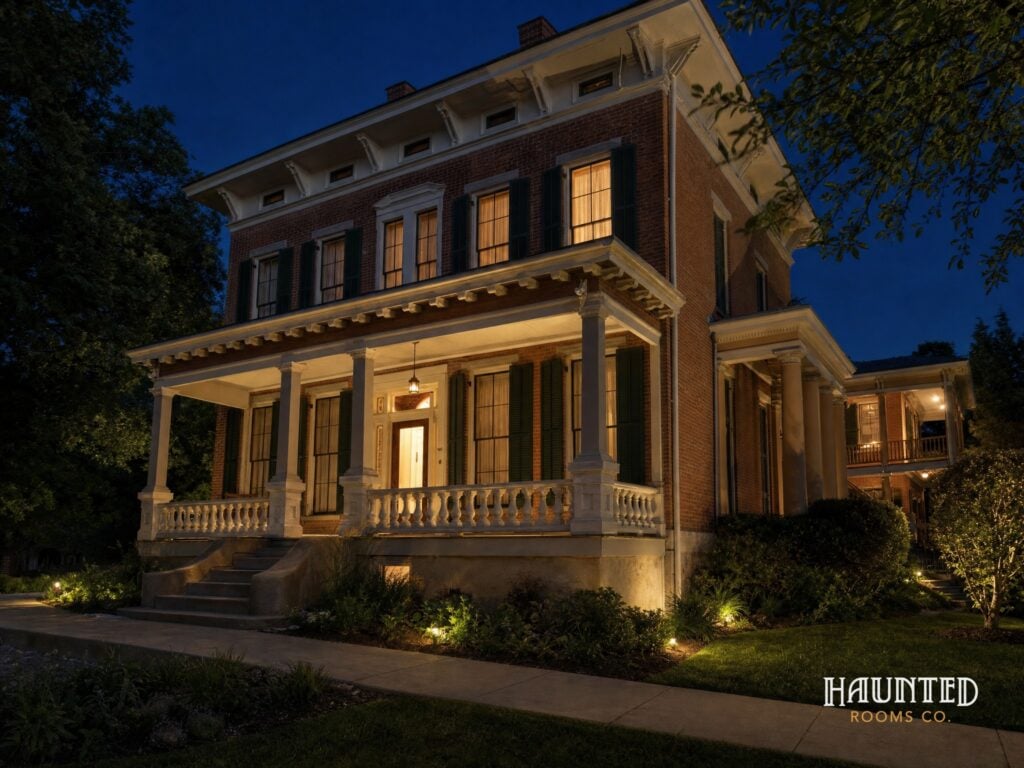
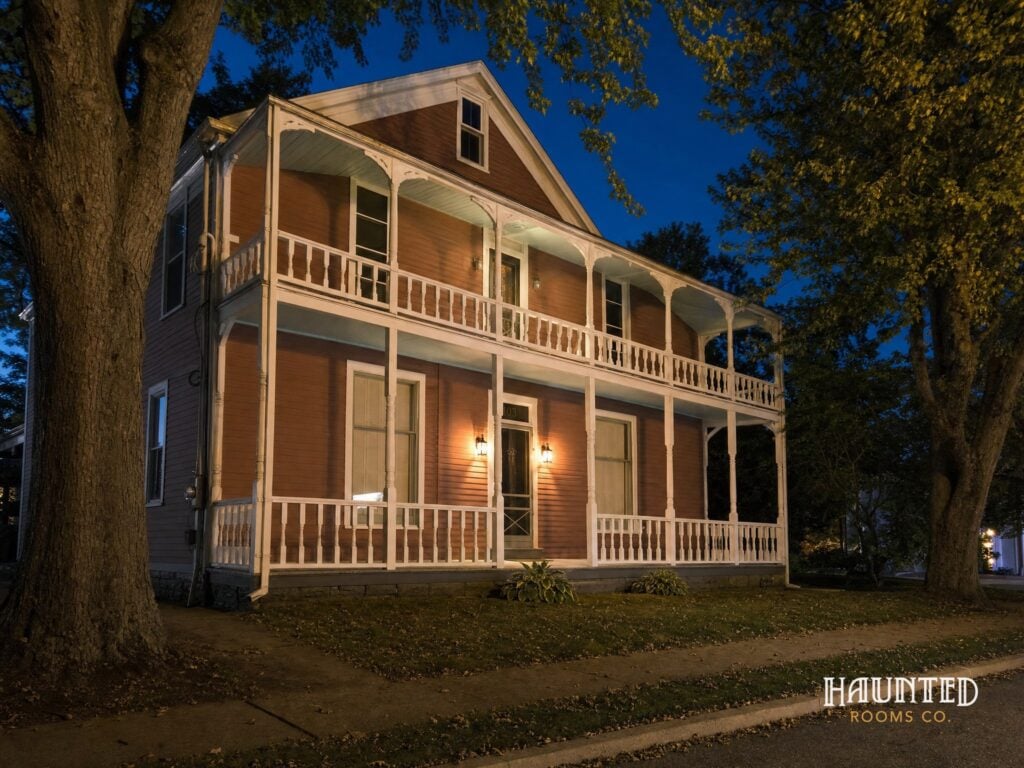
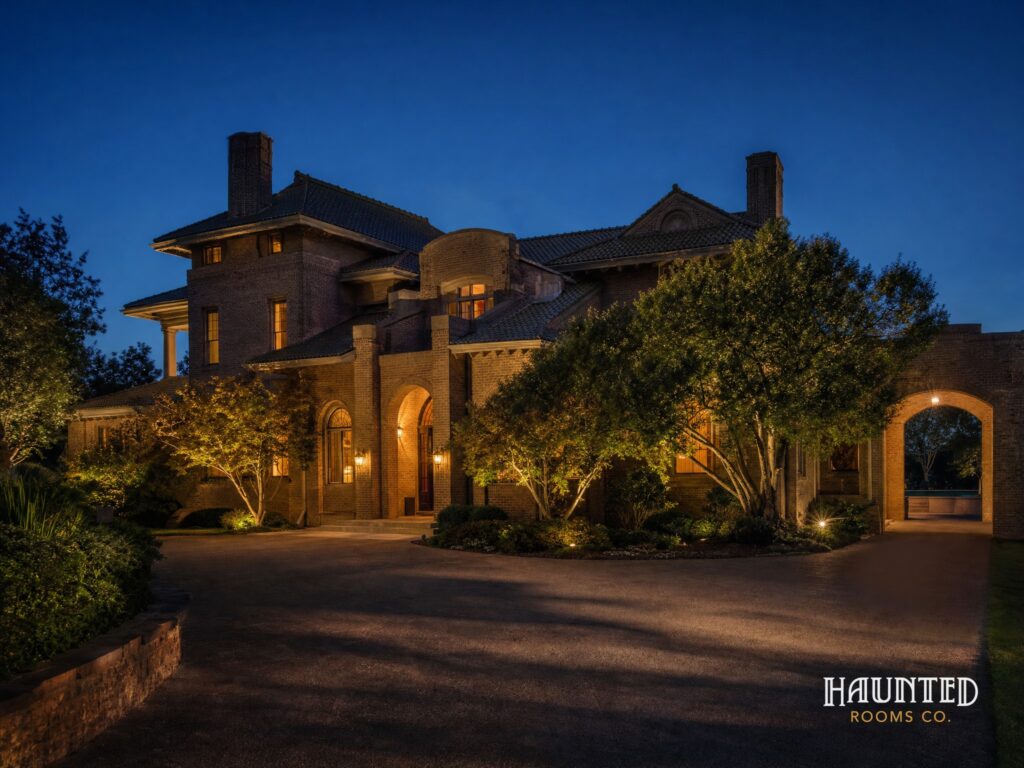
Alexander Moore Hannah, a harness maker who came home from the California gold rush with money to invest, built this 24-room Italianate brick house on his south side farm in 1858 and 1859. He married Elizabeth Jackson in 1872; their only child was stillborn in 1875. German-born Civil War veteran Roman Oehler bought the house in 1899, and his descendants, the Elder family, still own it. It has been on the National Register since 1978.
The haunting stories began in the 1960s, when the house was rented to an antique dealer: a smell of decay in an upstairs bedroom, swaying chandeliers, breaking glass in an empty cellar, and figures at the windows. The famous legend says people escaping slavery died in a cellar fire and were buried there. Indianapolis historians say there is no evidence Hannah ever sheltered freedom seekers, so treat that story as legend. The house raises restoration money with haunted house nights, investigations and open houses.
What investigators report
Ghost Research Society investigators report that Ovilus X sessions in the attic and parlors produced replies including names and fire-related words, and a motion detector was set off in the empty attic. They also ran dowsing rod and SB-11 ghost box sessions in the basement, where the box reportedly answered “male” to a question.
Haunted Rooms tip: The Elder family opens the house for open houses, Halloween haunted house nights and private paranormal investigations. Check the Hannah Mansion website for the current dates.
Address Stephenson Mansion: 5432 University Ave, Indianapolis, IN 46219 (private); Bona Thompson Memorial Center: 5350 University Ave
Where to look The Stephenson Mansion on University Avenue (from the sidewalk), the H.H. Holmes cottage site and the old rail line
Reported ghosts Cigar smoke, music and crying at the Klan leader's house; a White Lady in the Oberholtzer window; the Lincoln ghost train
Visiting Public streets in a historic district; the Stephenson Mansion and other houses are private homes
Tours Irvington Ghost Tours walk the neighborhood on Friday and Saturday nights in October
Hours and season Historical society museum: Saturday and Sunday, 1 PM to 4 PM
Ghost hunting No. The haunted houses are private residences
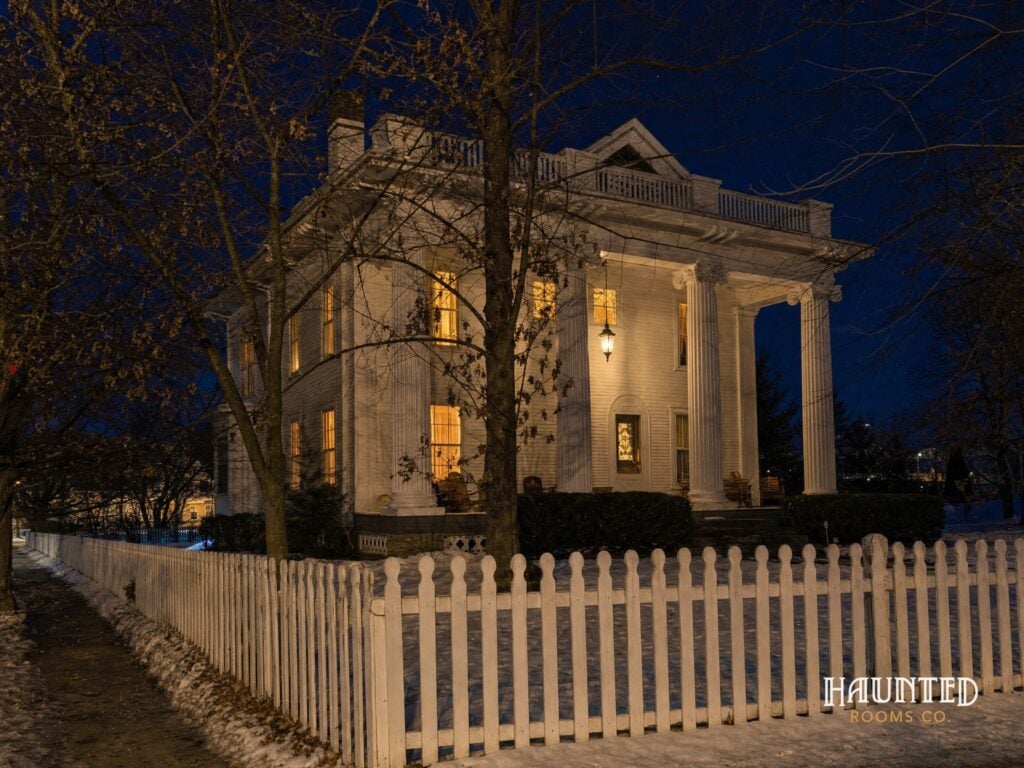
Irvington, a leafy east side suburb founded in the 1870s, holds some of the darkest history in Indianapolis. In October 1894 serial killer H.H. Holmes rented a cottage here and murdered 10-year-old Howard Pitezel. In the 1920s D.C. Stephenson, Grand Dragon of the Indiana Klan, ran state politics from his 1889 Colonial Revival house at 5432 University Avenue. In March 1925 he abducted and assaulted Madge Oberholtzer, a young Irvington woman who died in April; his murder conviction helped break the Klan in Indiana.
Local storyteller Al Hunter’s Irvington Ghost Tours, which have walked the neighborhood every October for more than twenty years, tell of passersby smelling cigar smoke and liquor and hearing music and screams at the Stephenson house, a glowing White Lady in an upstairs window of the Oberholtzer home, a cold spot at the Holmes cottage, and Lincoln’s 1865 funeral train passing in the night. The houses are private homes; the stories are folklore built on very real crimes.
Haunted Rooms tip: Join an Irvington Ghost Tour on a Friday or Saturday in October (cash tickets, about two hours of walking), or visit the Irvington Historical Society museum at the Bona Thompson Memorial Center on weekend afternoons.
Address 3045 W Vermont St, Indianapolis, IN 46222 (museum)
Where to look The Old Pathology Building's autopsy room and teaching amphitheater, and the old administration building (now apartments)
Reported ghosts Unexplained voices, including one heard by investigators in the administration building
Visiting Museum in the 1895 pathology building, open on guided tours; the rest of the old campus is apartments and private land
Tours Guided tours of the Old Pathology Building
Hours and season Check the museum website for tour days
Ghost hunting No public ghost hunting; the old campus buildings are private
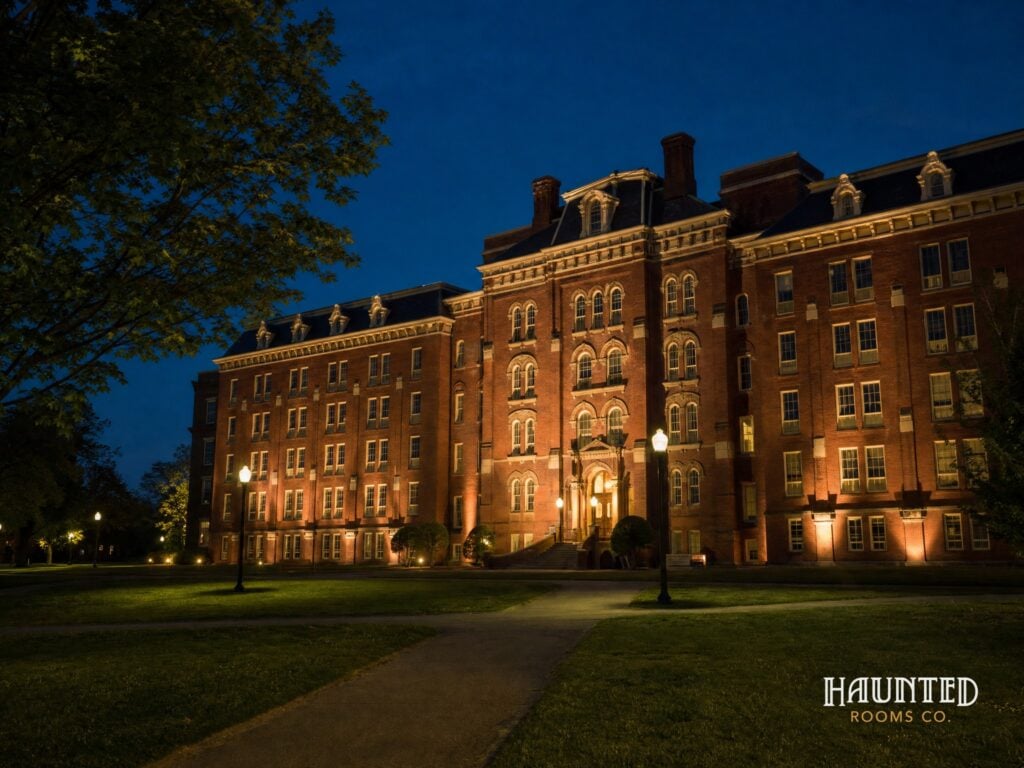
The Indiana Hospital for the Insane opened on West Washington Street in 1848 with five patients. By the 1890s it held close to 3,000. Chronic underfunding and overcrowding led to decades of abuse and neglect, and an 1870 superintendent described the dark, damp cells where unruly patients were kept. Renamed Central State Hospital, it closed in 1994. Most of the campus was cleared and redeveloped; the 1895 Old Pathology Building survives as the Indiana Medical History Museum.
Ghost stories followed the closure. Investigator Maggie Zoiss of Indiana Paranormal Investigations told WRTV that her team heard a voice say “Pull down from the top” in a second-floor room of the old administration building, which is now student apartments. Online lists add apparitions and screams from basements, but those reports are unsourced. The museum, with its original autopsy room, labs and teaching amphitheater, takes no position: staff told Indiana Public Media they let visitors decide for themselves.
Haunted Rooms tip: Take the guided tour of the Old Pathology Building: the original autopsy room and teaching amphitheater are genuinely unsettling, and the guides know the hospital’s real history.
Where to look The basement (bullet slugs in the east wall) and the second floor, where the bordello was
Reported ghosts George the caretaker in overalls, a cowboy killed in a fight, women from the old bordello
Visiting A working bar and live music venue
Hours and season Open most days from lunch until late; check the website
Ghost hunting No ghost hunting events of its own
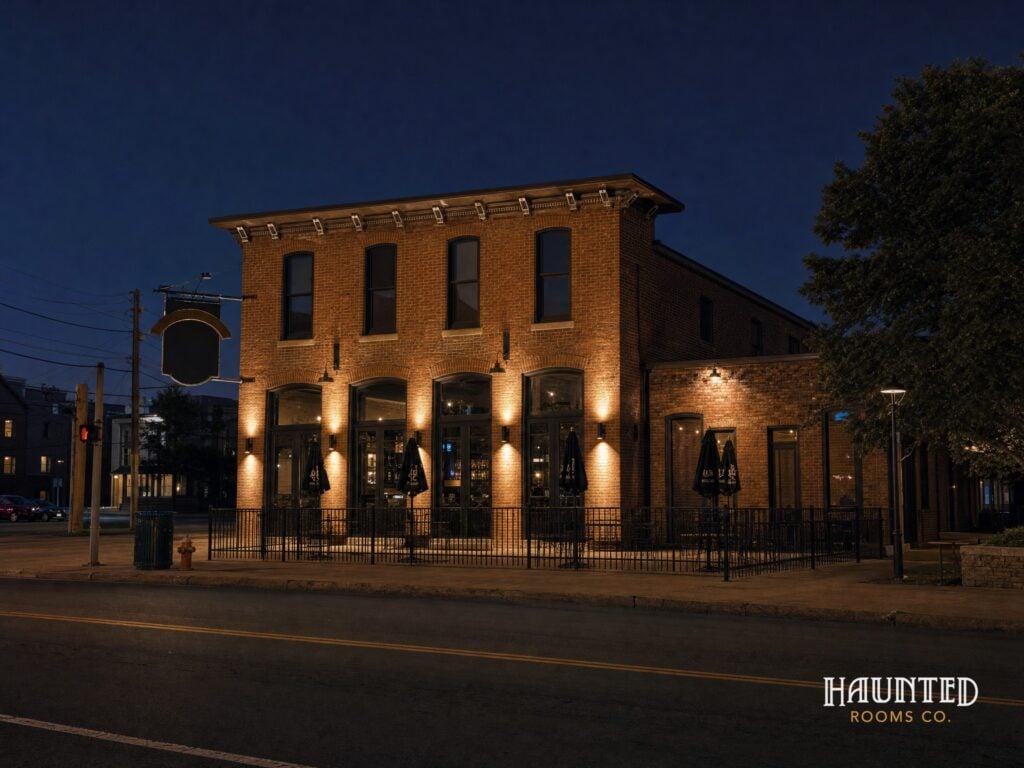
Indiana’s oldest bar opened in 1850 as the Tremont House, a roadhouse near the railroad. It became the Concordia House and Germania House for the German immigrant trade, Beck’s Saloon in World War I and Moore’s during Prohibition, when beer was still brewed in the basement. The bar says the Brady and Dillinger gangs used the back building for target practice, and slugs remain in the lower east wall. The Yeagy family bought it in 1963 and named it the Slippery Noodle; it became a famous blues club and is on the National Register.
The bar’s own history says it was an Underground Railroad stop and later held a bordello where a customer was killed in a fight over a woman. Those are traditions rather than documented events. Staff have told Indianapolis Monthly about George, a caretaker in overalls said to give keg delivery men a shock in the basement, a cowboy said to be the man killed in the fight, and women seen on the second floor. A manager admitted she avoids parts of the basement.
What investigators report
Staff report encounters with a presence they call George in the basement, and a visiting psychic said a female spirit claiming to be the old brothel’s madam came through on the second floor.
Where to look The doll room, the upstairs bedrooms, the staircase
Reported ghosts Everett Roads and members of the Roads family; apparitions of men, women and children
Visiting A working hotel that takes overnight guests
The Roads Hotel was built around 1893 in Atlanta, a small railroad town in Hamilton County north of Indianapolis, as a layover stop for rail passengers. It worked as a hotel until the 1920s, later became apartments, and was listed on the National Register of Historic Places in 1987. Local legend says Al Capone and John Dillinger stayed here, but nobody has proved it.
Today it no longer runs as a regular hotel: you book an overnight paranormal investigation instead, public or private, and proceeds help preserve the building. Fox 59 reported that Everett Roads was isolated here with tuberculosis until he died, and that Clara, Newton and Catherine Roads also died in the house. Visitors report apparitions, lights switching on, doors opening and voices in empty rooms.
What investigators report
Ghost Research Society investigators report Phasmabox sessions in the main dining room drew replies such as “Hello” and “Stay here”, and an EM meter spiked unusually in the first-floor Doll Room.
Haunted Rooms tip: Book a private overnight investigation for your group, and spend time in the upstairs doll room, where visitors say they have recorded voices.
Address County Road 625 E, south of US 36, Washington Township Park, Avon, IN 46123
Where to look Under the arches on County Road 625 East and the trail down from Washington Township Park
Reported ghosts A worker said to be sealed in the concrete, a mother who lost her baby from the tracks
Visiting Free to see from Washington Township Park or by driving under it; the railroad tracks above are off-limits
Hours and season Park hours
Tickets Free
Ghost hunting No organized investigations; never go onto the tracks
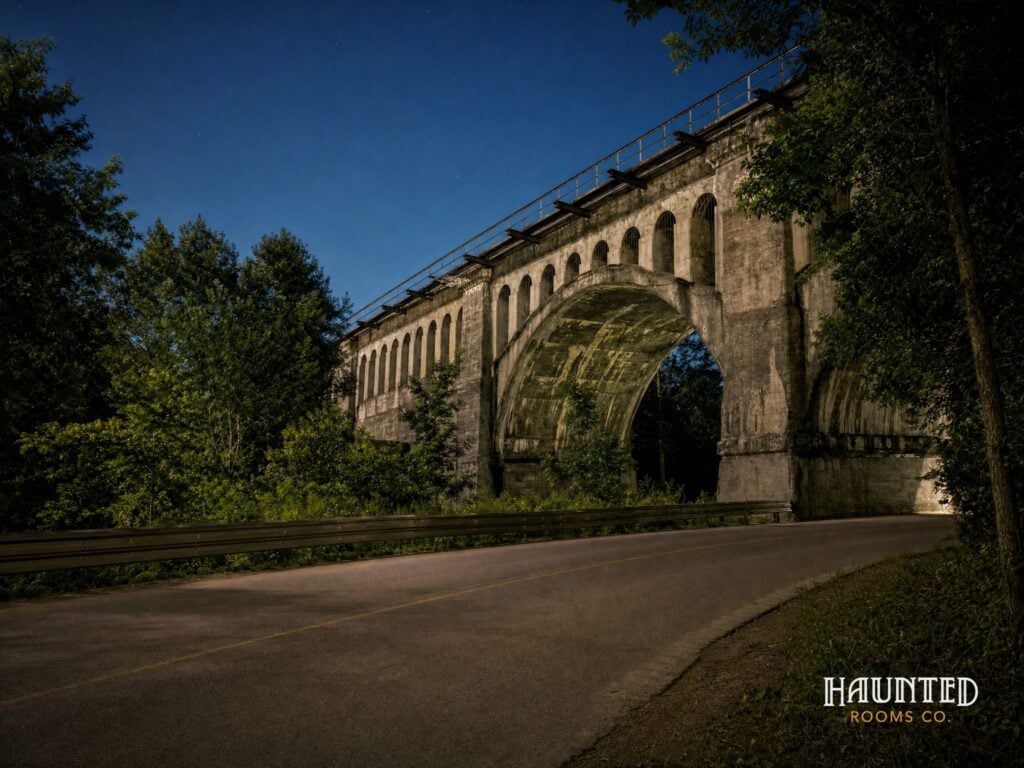
The Big Four Railroad (the Cleveland, Cincinnati, Chicago and St. Louis) built this 305-foot concrete viaduct over White Lick Creek and County Road 625 East in 1906 and 1907, and double-tracked it in 1908. Passenger trains once ran across it to Indianapolis Union Station; today it carries CSX freight. It is so loved locally that it appears on the Town of Avon’s seal, and Indianapolis Monthly put driving under it on its list of things every Hoosier must do.
The legends are many and none is verified, as Avon’s own library historian says. The most famous tells of a worker, sometimes named Henry Johnson, who fell into wet concrete and was left inside; people say they hear him knocking or moaning when trains pass. Another tells of a mother who dropped her baby from the tracks. A 1908 local paper already reported spirits near the bridge. A DePauw professor suggested trains rumbling through the hollow chambers explain the sounds.
Haunted Rooms tip: Park at the top of Washington Township Park and take the short trail down to see the arches. Never climb onto the tracks: it is an active CSX line.
Visiting a haunted place by day is one thing. Investigating one after dark is another. On a Haunted Rooms ghost hunt our team takes you through a historic building with professional ghost hunting equipment, runs EVP sessions and vigils, and gives you time to explore on your own. These are the nearest ones we run.
Mortuary Manor Ghost Hunt, Toledo: investigate a former north Toledo funeral home with its embalming rooms, basement morgue and viewing parlors still in place.
Address 140 W Washington St, Indianapolis, IN 46204
Where to look The mezzanine on cold, rainy days, the balcony and the backstage dressing rooms
Reported ghosts Artistic director Tom Haas, said to jog the mezzanine; a woman in white
Visiting A working professional theater; open for performances
Tickets Show tickets from the IRT box office
Ghost hunting No ghost hunting events
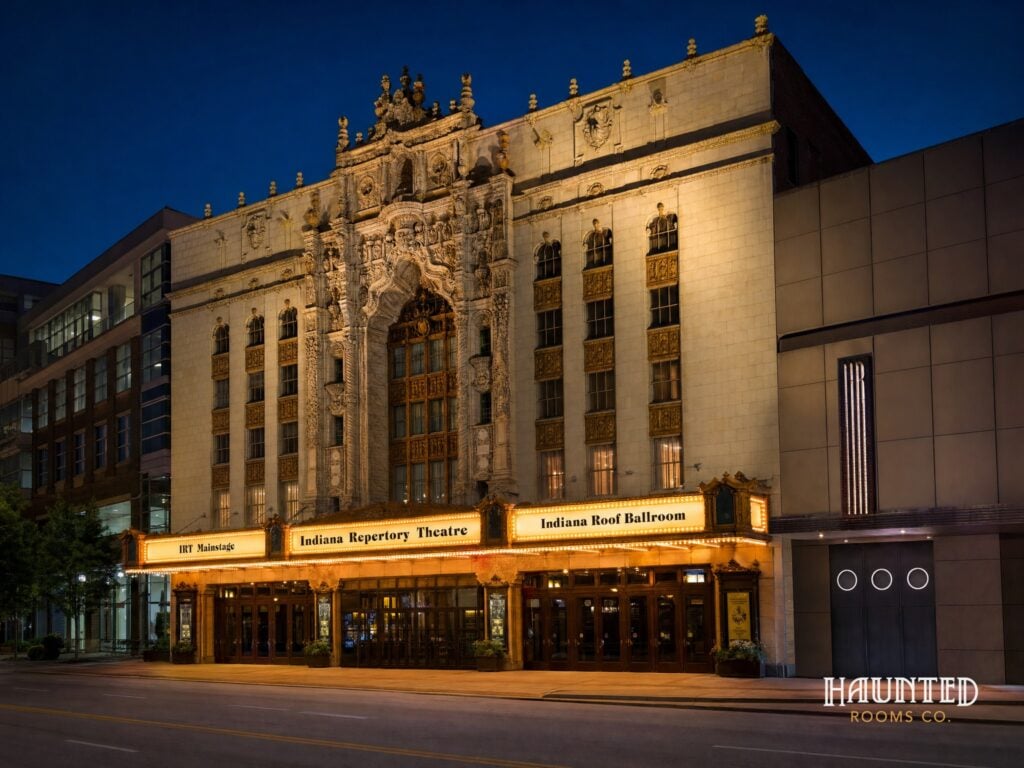
The Indiana Theatre opened in 1927 as a 3,200-seat Paramount movie palace by Rubush and Hunter, with a white terra cotta Spanish Baroque front and the Indiana Roof Ballroom on its top floors. The movie house closed in 1975 and the building was nearly lost before the Indiana Repertory Theatre moved in from the Athenaeum in 1980, turning the auditorium into a 600-seat mainstage. The city owns the building, which is on the National Register.
Its best-known ghost story has a real tragedy behind it. IRT artistic director Tom Haas, who liked to jog, was struck by a van while running on a foggy January morning in 1991 and died about a month later. Soon afterward staff began saying they heard floorboards creaking on the mezzanine on cold, wet days, as if Haas were still running his indoor laps. Tour companies add a woman in white and a gentleman in the balcony; those tales have no named witnesses.
Haunted Rooms tip: See a show: the IRT runs a full season, including A Christmas Carol every winter. Staff keep a ghost light burning on the empty stage at night, an old theater tradition.
Address 3200 Cold Spring Rd, Indianapolis, IN 46222
Where to look The basement indoor pool, the attic and the library
Reported ghosts James Allison, and a child said to have drowned in the pool
Visiting On the Marian University campus; grounds open dawn to dusk, interior by arrangement or on event days
Hours and season Grounds daily, dawn to dusk
Tickets Free to walk the grounds
Ghost hunting No ghost hunting; it is a university events center
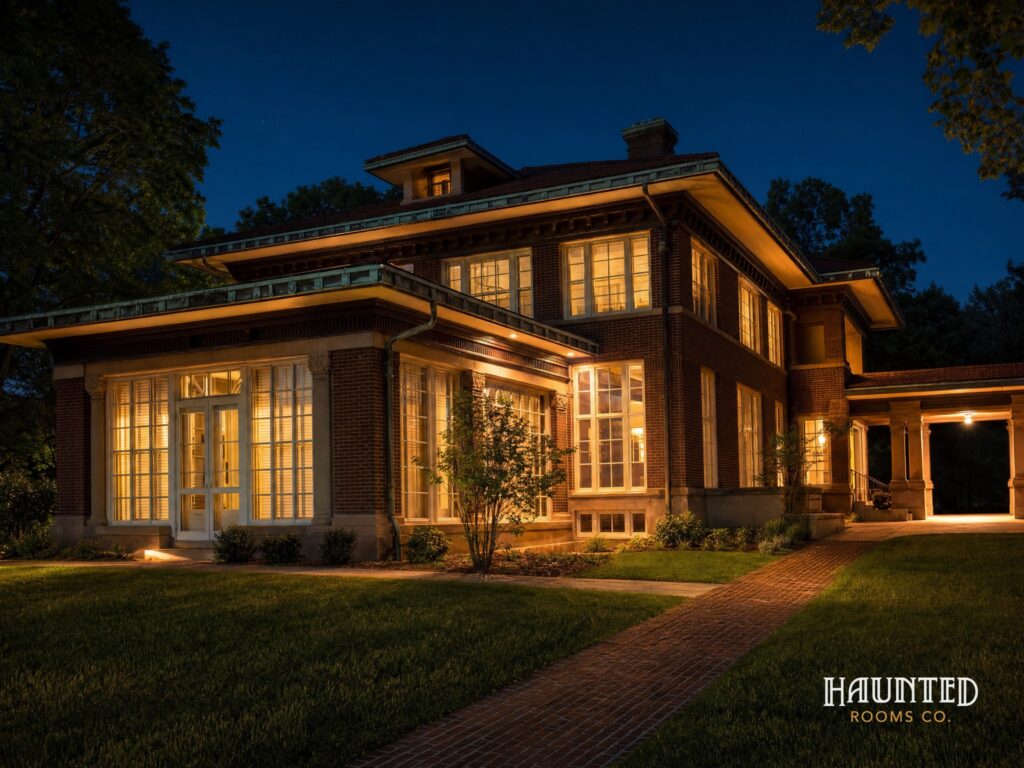
James A. Allison, co-founder of Prest-O-Lite and the Indianapolis Motor Speedway and founder of the engine company that became Allison Engine, built Riverdale on a bluff above the White River between 1911 and 1914. Herbert Bass designed it until Allison fired him; William Price finished the lavish interior, with an aviary, a sunken conservatory and a basement swimming pool, and Jens Jensen laid out the grounds. The Sisters of St. Francis bought it in 1936 and it became the heart of Marian College.
Allison died in 1928, and campus rumors have him still at home: books rearranged, items going missing, voices in the attic. The best-known story is of a little girl who drowned in the basement pool. James A. Willis’s book Haunted Indiana tells it as an infant whose cries are heard, but there is no record of any child drowning there. Marian University uses the mansion for conferences and weddings, so the house is open on event days rather than as a museum.
Haunted Rooms tip: The grounds are open daily from dawn to dusk. For a look inside, ask at the front desk or call ahead, since interior tours depend on the event schedule.
Address 3200 Cold Spring Rd, Indianapolis, IN 46222
Where to look The 320-foot covered colonnade (the old dog walk), the front door and the third floor
Reported ghosts Frank Wheeler, a man walking his dog, a brown-haired woman running to a carriage
Visiting On the Marian University campus; grounds open by day, interior on event days
Ghost hunting No ghost hunting; it is a university events center
Frank H. Wheeler, who made his fortune in carburetors and was a co-founder of the Indianapolis Motor Speedway, built Hawkeye next door to the Allison estate from 1911, to a design by Philadelphia architect William Price. It has a green terra cotta roof, Mercer tiles, a Japanese teahouse and a covered colonnade about 320 feet long. Wheeler died in 1921; a 1990 campus article said he took his own life while suffering from diabetes. William B. Stokely Jr. bought it in 1937, and Marian acquired it in 1963.
The ghost stories, passed on by students and local media, center on that history. People describe a man walking a dog along the colonnade, the old dog walk; a brown-haired woman running out of the front door as if to a waiting carriage; and an unseen push on the path. An assistant professor and a student said they saw a man in a rehearsal room, and security staff tell of a dog that would not climb to the third floor. None of these are documented beyond retelling.
Haunted Rooms tip: Walk the colonnade and Japanese garden by day; the campus grounds are open, and the mansion itself hosts university events.
Address 350 N Meridian St, Indianapolis, IN 46204 (private condominiums)
Where to look The third-floor barroom where the 1992 fire began and the upper-floor halls
Reported ghosts A young man said to go door to door waking people, linked to the firefighters who died in 1992
Visiting Private condominiums; exterior only
Ghost hunting No. It is a private residential building
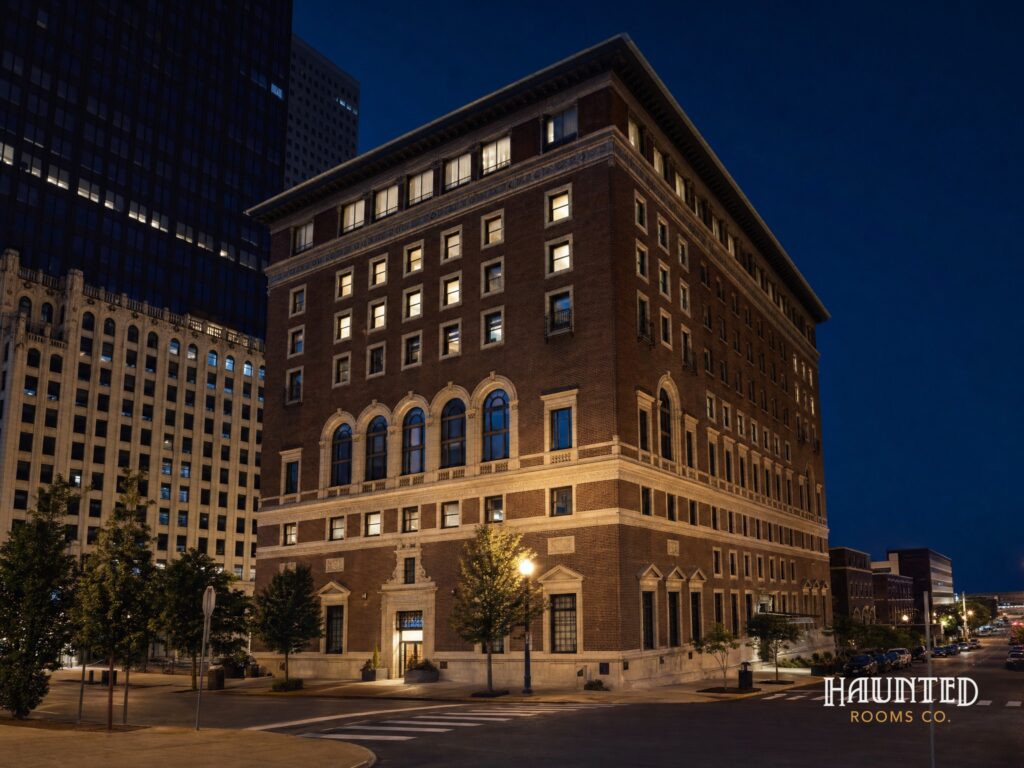
Founded in 1886, the Indianapolis Athletic Club was the city’s leading men’s club, and in 1924 it moved into this ten-story Italian Renaissance building by Robert Frost Daggett, with a pool, ballroom, basketball court and guest rooms. Shortly after midnight on February 5, 1992, an electrical fault near a refrigerator in the empty third-floor bar started a fire. Firefighters Woody Gelenius and John Lorenzano and guest Thomas Mutz died. Jurors from the Mike Tyson trial, sequestered there, all got out.
The fire changed high-rise firefighting nationally: every high-rise in Indianapolis now has sprinklers. The club closed in 2004 and the building became condominiums; it joined the National Register in 2015. Former staff and guests have told local writers about a young man seen going door to door as if trying to wake people, and about footsteps and slamming doors in empty halls. Those stories began after the fire and are unverified. Remember the real people who died here.
Haunted Rooms tip: It is a private residential building. View it from Meridian Street and do not try to enter.
Address 5010 W Southport Rd, Indianapolis, IN 46221 (private)
Where to look The center second-story window seen in the 1997 photograph
Reported ghosts A girl in a blue dress at the upstairs window; a woman; later legends of a hanging and a cellar fire
Visiting Private home; see it from the road only
Ghost hunting No. It is a private residence
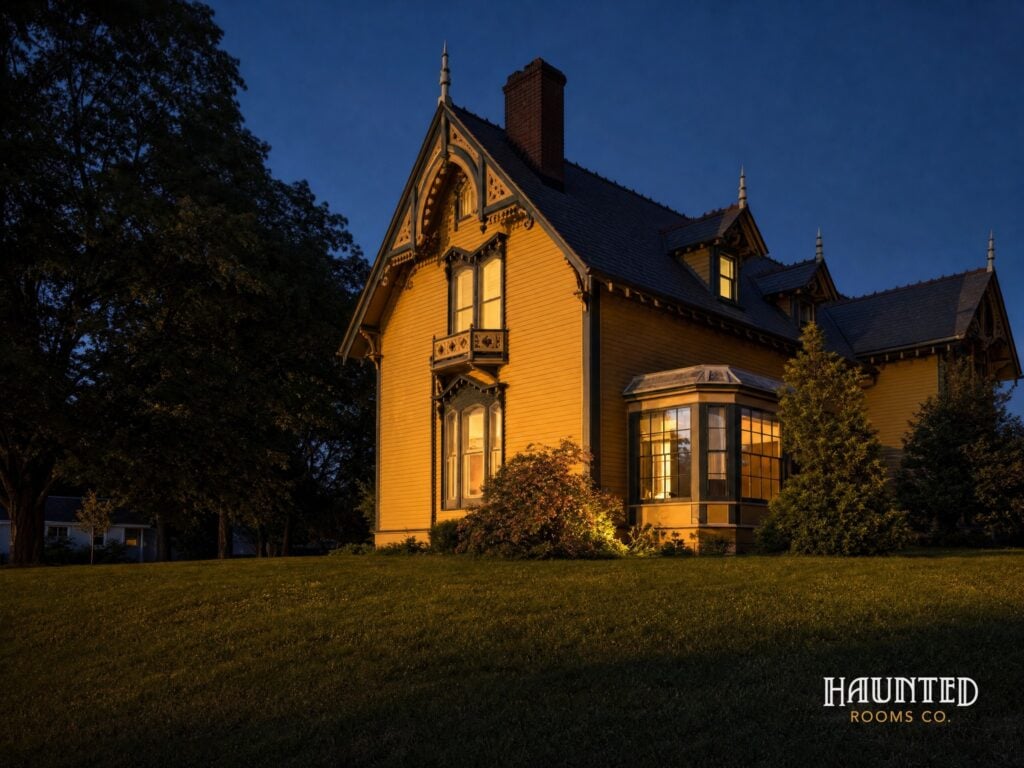
Scottish-born stonemason David Nicholson began this Gothic Revival house in 1870 while he was working on the Marion County Courthouse, and finished it about six years later, with carved bargeboards and decorated rafter tails. John Lindsay Rand bought it in 1903 and his family kept it into the 1950s, when it was given to DePauw University and slowly fell apart. In April 1997 the Historic Landmarks Foundation of Indiana moved it about half a mile to save it from a developer. It joined the National Register in 2003.
The ghost story begins with that move. Indianapolis Star photographer Mike Fender thought he saw a figure in an upstairs window, and his front-page photo appeared to show a blond girl in a blue dress at the center window of the empty house. Later tellings added a boarding house suicide, bleeding walls and slaves dying in a cellar fire, but no record supports any of those, and the fire tale is the same legend told about the Hannah House. It is a private home.
Haunted Rooms tip: This is a private residence. See it only from the public road, and do not walk onto the property.
Where to look The projection booth, balcony and backstage dressing rooms (stories only; the building is closed)
Reported ghosts A projectionist called Bob, a woman in 1930s dress in the balcony, phantom organ music
Visiting Closed and under restoration; see the facade from the East 10th Street sidewalk
Ghost hunting No. The building is closed to the public
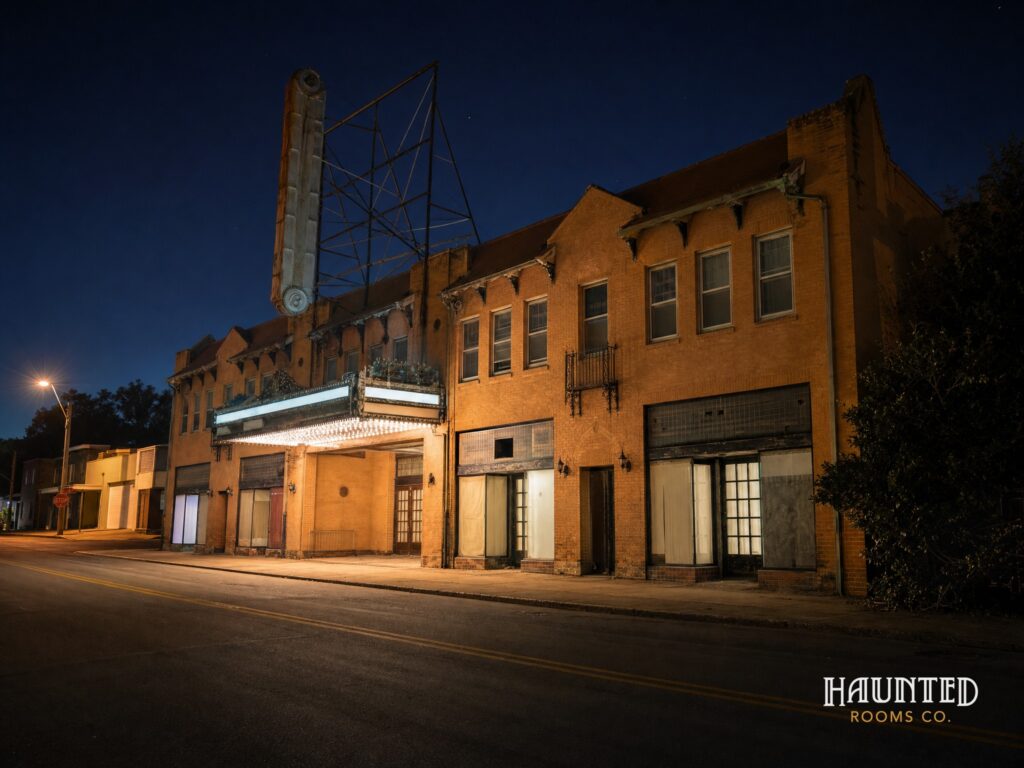
Universal Pictures opened the Rivoli on the Near Eastside in September 1927, a 1,500-seat Spanish Mission Revival movie palace by Henry Ziegler Dietz, and it was the first theater in Indiana to show movies with sound. Later it hosted rock shows, including Lynyrd Skynyrd and John Mellencamp, then adult films. It closed for good in 1992, landed on Indiana Landmarks’ 10 Most Endangered list, and has had new roofs and a marquee restoration plan as part of the East 10th Street revival.
Ghost stories about the empty theater are told mainly by tour companies: a projectionist nicknamed Bob blamed for equipment trouble, a woman in 1930s clothes in the balcony, a crying child and organ music in the dark. Older lists add toilets flushing and claims it was built on a burial ground; we found no record of a burial ground on the site. Treat all of this as folklore. The building is fragile and closed, so enjoy the facade from the sidewalk.
Haunted Rooms tip: Combine a look at the facade with dinner on the East 10th Street corridor, and check the Rivoli’s website for any restoration open days.
Where to look John Dillinger's grave in Section 44 and James Whitcomb Riley's tomb on the Crown
Reported ghosts No single famous ghost; the cemetery leans into its notorious residents
Visiting A working cemetery open to visitors by day
Tours History tours by the Crown Hill Heritage Foundation, including true crime driving tours in October
Hours and season Daytime; check the website
Tickets Free to visit; tours from about $10
Ghost hunting No ghost hunting; it is an active cemetery
Dedicated in June 1864, in the middle of the Civil War, Crown Hill covers 555 acres and is the third largest non-governmental cemetery in the United States, with more than 195,000 burials. President Benjamin Harrison, poet James Whitcomb Riley (on the Crown, the highest point in the county) and Eli Lilly lie here, along with more than 1,600 Confederate prisoners who died at Camp Morton. It has been on the National Register since 1973.
The most visited grave belongs to bank robber John Dillinger, killed in Chicago in 1934. Souvenir hunters chipped away his first headstone and a motorcycle gang stole the second; his father had the grave filled with concrete and scrap iron to stop robbers. Crown Hill is often listed as haunted, but we found no specific, documented ghost story. Its heritage foundation runs history tours of its murders and scandals instead, which are the real draw for dark tourists.
Haunted Rooms tip: Pick up a map at the office for Dillinger’s grave, then drive up to the Crown at sunset for the best view of downtown. Book the foundation’s true crime tours ahead; they sell out.
Address 11300 E Prospect St, Indianapolis, IN 46239
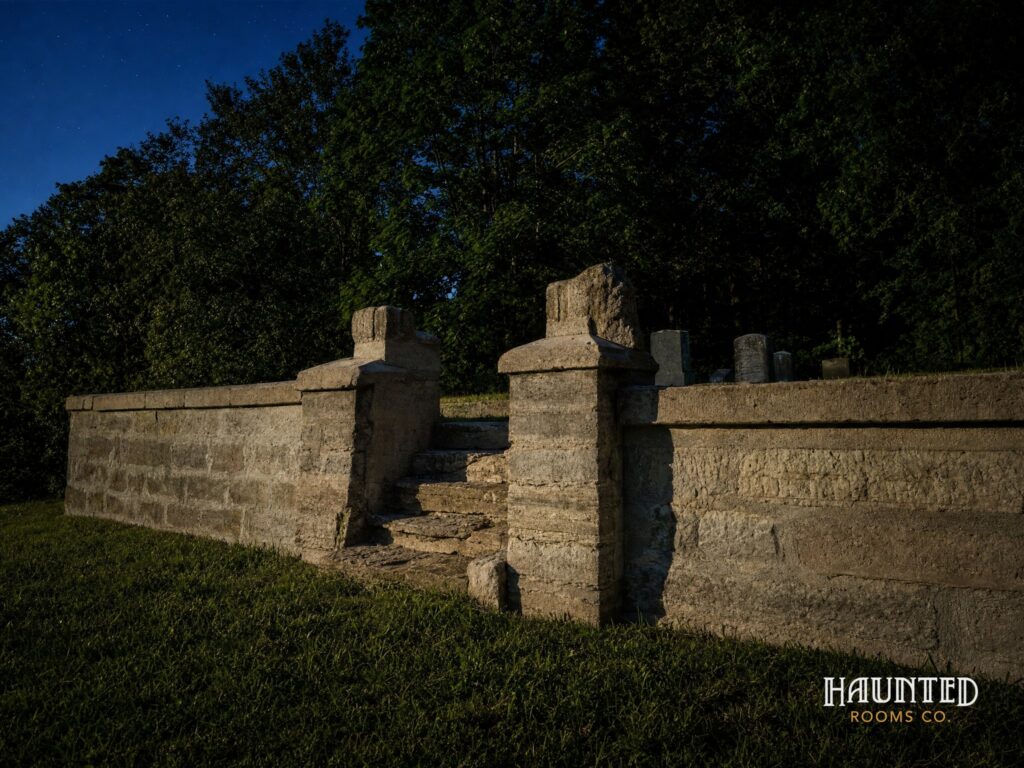
Where to look The walled Kitley-King burial plot on Prospect Street, the woods path from the soccer fields and the fishing pond
Reported ghosts A boy heard playing a harmonica
Visiting Public city park
Hours and season Dawn to dusk
Tickets Free
Ghost hunting No organized investigations; the park closes at dusk
This Far Eastside park, named in 1979 for Paul M. Ruster, a Warren Central graduate, teacher and softball coach who died young, covers former farmland along Buck Creek. The Kitley family recorded the farm in 1825 and intermarried with the neighboring Kings. Their small walled burial ground survives at the edge of the soccer fields on East Prospect Street, up a few worn steps. Only two cracked monuments stand: John W. King (1806 to 1893) and Francis Kitley (1823 to 1886). Other burials are unmarked.
The legend is of a 12-year-old farm boy killed near the railroad tracks; no record says how he died. Walkers on the path from the soccer fields to the graves, and anglers at the pond, say they hear a harmonica that seems to circle them, and some describe a small boy walking the road. Local writer Alan Hunter suggests the boy may be John Kitley, the owner’s namesake son, who died in April 1864. It is a pleasant public park with trails, a pond and a dog park.
Haunted Rooms tip: The park is open dawn to dusk. Visit the little cemetery respectfully, by daylight, and walk the woods path back toward the pond.
Changed from our older guide: we corrected the Hannah House and Nicholson-Rand House stories, which older lists repeated without evidence; dropped the claim that the Rivoli Theater stands on a burial ground, for which we found no record; took the unsourced EVP claim off Paul Ruster Park; marked the Athletic Club, the Rivoli and the Nicholson-Rand House as see-from-outside only; and added Irvington, Crown Hill Cemetery, the Avon Haunted Bridge and the Roads Hotel.
Visited one of these places? Tell us what happened
We collect first-hand accounts from visitors and add the best ones to our guides, with your first name and the date of your visit. We read every story before it’s published.
Frequently asked questions
What is the most haunted place in Indianapolis?
The Hannah House on Madison Avenue has the biggest reputation, with smells, apparitions and a legend of a deadly cellar fire. Historians say there is no evidence for the fire or for the house being an Underground Railroad stop, but the 1960s reports of strange events there are well recorded. Central State Hospital has the darkest real history.
Can you go inside the Hannah House?
Yes, on its open house days, Halloween haunted house nights and booked paranormal investigations. It is privately owned by descendants of the Oehler family and is not open daily, so check the Hannah Mansion website for dates.
Is Central State Hospital still standing?
Mostly not. The hospital closed in 1994 and most of its buildings were cleared. The 1895 Old Pathology Building survives as the Indiana Medical History Museum, which you can tour, and the old administration building is now apartments.
Is the Slippery Noodle Inn haunted?
Staff have told Indianapolis Monthly about a ghostly caretaker called George in the basement, a cowboy and women seen on the second floor. Opened in 1850, it is Indiana’s oldest bar and still a working blues club, so you can go and judge for yourself.
Are there ghost tours in Indianapolis?
Yes. Irvington Ghost Tours walk the historic east side neighborhood on Friday and Saturday nights in October, and the Crown Hill Heritage Foundation runs true crime history tours of the cemetery. The Hannah House holds Halloween haunted house nights.
Can you visit the Nicholson-Rand House?
No. It is a private home on Southport Road. You can see it from the public road, but please do not walk onto the property.
Sources and how we research
Every place in this guide is checked against its official website, historic register listings and news coverage, and we confirm whether it is open, closed, private or gone before we list it. Ghost stories are reported as staff, visitors and local historians tell them; we say so where records contradict a story. Each place shows how many independent sources we checked it against; our own Haunted Rooms pages are not counted.
New guides, haunted places to visit and ghost hunt dates near you. No spam, unsubscribe any time.
About the authors
The Haunted Rooms Team runs public ghost hunts and overnight investigations at historic venues across the United States. We research every place in our guides using official sites, historic registers, local archives and news coverage, and we report ghost stories as the stories they are. We review each guide regularly so you are not sent to a place that has closed, changed hands or banned visitors. Spotted something out of date? Let us know.