Haunted Places in Charleston, SC: 19 Places to Visit, Tour or Stay
A jail that held pirates and highway robbers, a theater built into an old hotel, a churchyard photo nobody has explained and a carrier where Ghost Hunters filmed a figure walk into nothing. These are Charleston’s most haunted places, with the history checked and the legends labeled as legends.
Charleston has been burying its dead, hanging its pirates and rebuilding after fire, war and earthquake since 1670, and almost every street south of Calhoun has a ghost story. We have checked every place below against current sources, so you know which you can tour, which you can only see from the sidewalk and which haunted inns take guests tonight. Where a famous story has no record behind it, such as Lavinia Fisher the serial killer or Poe’s lost love in the Unitarian churchyard, we say so.
Where to look The ground-floor cell blocks, the stairs and the rear octagonal wing
Reported ghosts Lavinia Fisher in white, a guard with a rifle, unseen hands that tug hair and grab
Visiting Event venue and offices; the ground floor is open on guided night tours
Tours Bulldog Tours’ Haunted Jail Tour, about 45 minutes, nightly from early evening
Ghost hunting No public ghost hunts; the guided tours are the way in
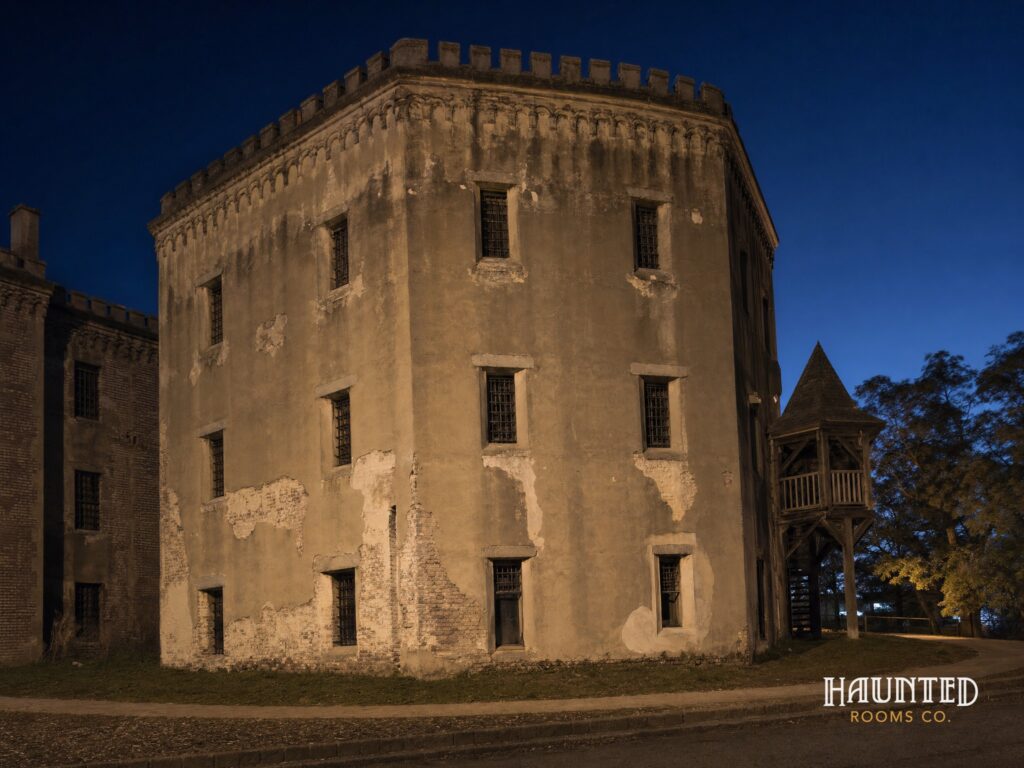
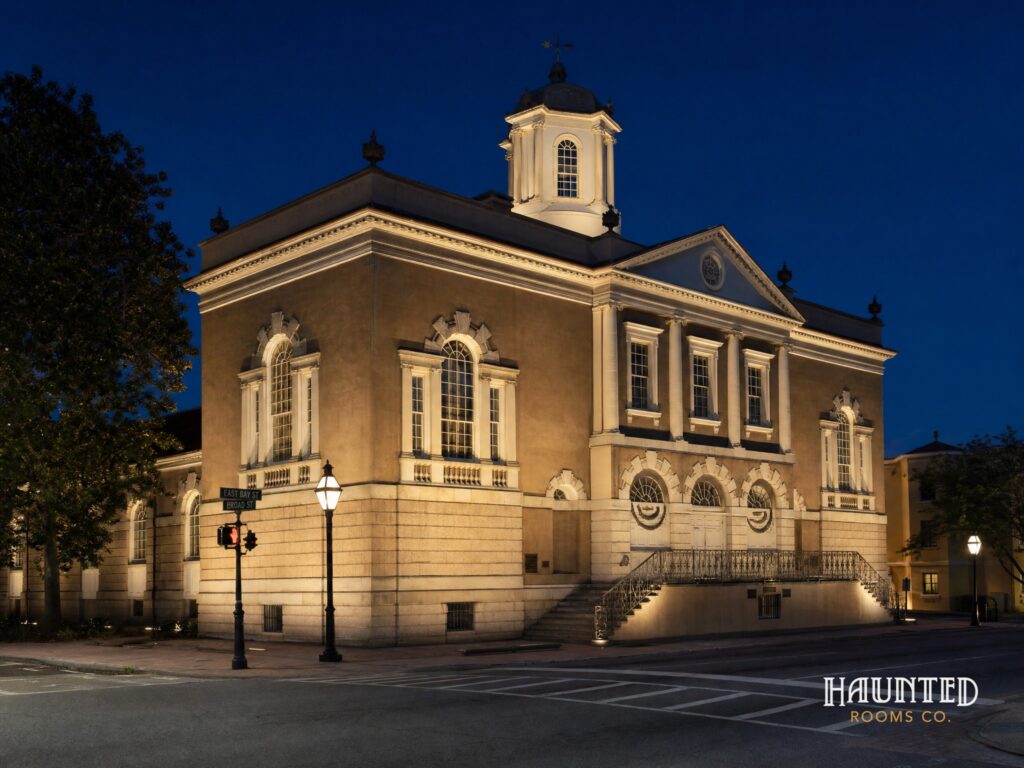
The castle-like jail on Magazine Street stands on a lot set aside for public use in 1680, the site of a poorhouse, hospital and potter’s field. It held prisoners from 1802 to 1939, including the highway robbers John and Lavinia Fisher, pirates awaiting the gallows in the 1820s and Black soldiers of the 54th Massachusetts captured at Fort Wagner in 1863. The 1886 earthquake took its tower and top floor.
After a $15 million restoration it reopened as the Twenty-One Magazine event venue, with offices upstairs, but the ground floor is still toured every night. Guides and guests describe footsteps, rattling chains, scratches, hair pulling and a guard who charged at two guides on the third floor before vanishing. Lavinia Fisher, hanged in 1820, is said to walk in white. Historians note she was convicted of robbery, not murder, and the serial killer story is legend.
What investigators report
Tour visitors report recording with phone EVP apps while asking questions such as “Is there anyone here with us?” and calling out to Lavinia on the second floor; the spiral staircase, where guides say a spirit called Thomas walks, is a favourite photo spot.
Where to look The old Battery Carriage House rooms, especially Rooms 8 and 10, and the garden courtyard
Reported ghosts A headless torso in a gray jacket (Room 8), the Gentleman Ghost (Room 10), a little girl by the fountain
Visiting A working hotel: book a room to stay the night
Ghost hunting No public ghost hunts; stay the night instead
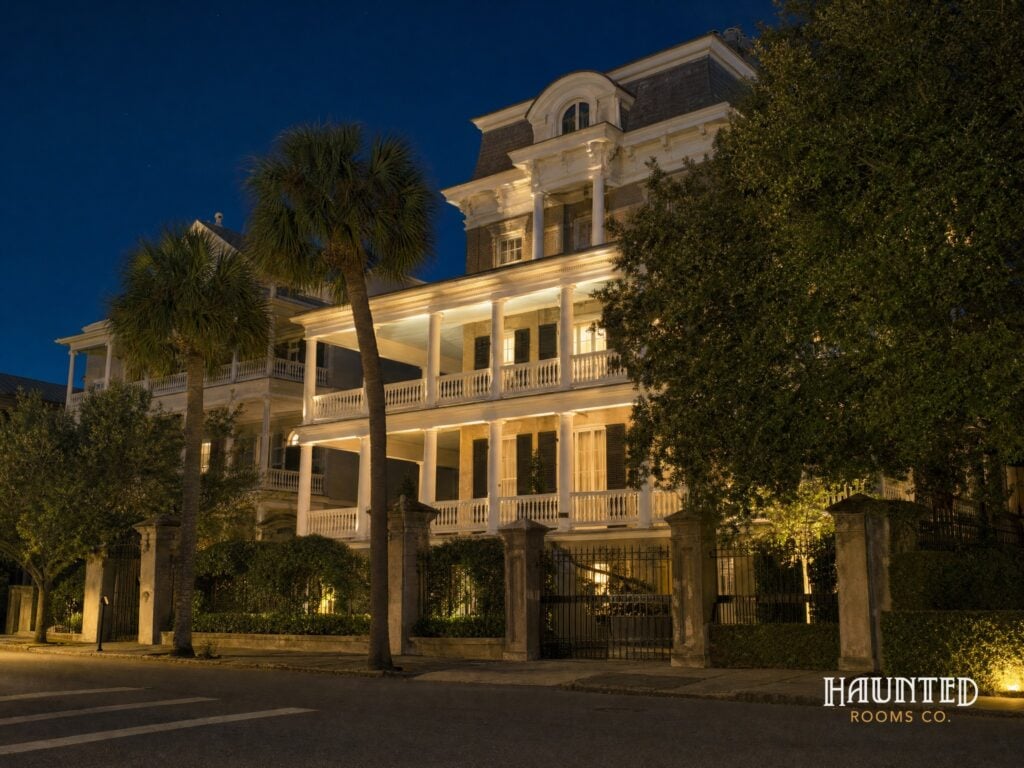
For decades this 1843 mansion on the Battery was known to ghost hunters as the Battery Carriage House Inn, and its old servants’ quarters held the rooms with the most famous stories in Charleston. Dr. Jack Schaeffer bought the property in 2018, spent three and a half years restoring it, and reopened it as 20 South Battery, an 11-room inn with a grand ballroom where Charleston’s preservation movement began in 1920.
The stories came through the renovation intact. Guests have described a headless, armless torso in a coarse gray jacket in Room 8, often taken to be a wounded Confederate soldier, and a gentle figure in a suit, the Gentleman Ghost, who settles beside sleeping guests in Room 10. Some say he is Col. Richard Lathers, who rebuilt the house in 1870. Forbes has called it the most haunted house in South Carolina.
Haunted Rooms tip: Book one of the Battery Carriage House rooms and ask the inn which of them were the old Rooms 8 and 10; the ghost stories belong to that building, not the main mansion.
Where to look The live oaks near the northeast corner, where the 1718 hanging marker stands, and the seawall
Reported ghosts Hanged pirates said to appear in the oaks and the water; screams at midnight
Visiting Public city park, open daily
Ghost hunting No organized ghost hunts; most walking ghost tours stop here
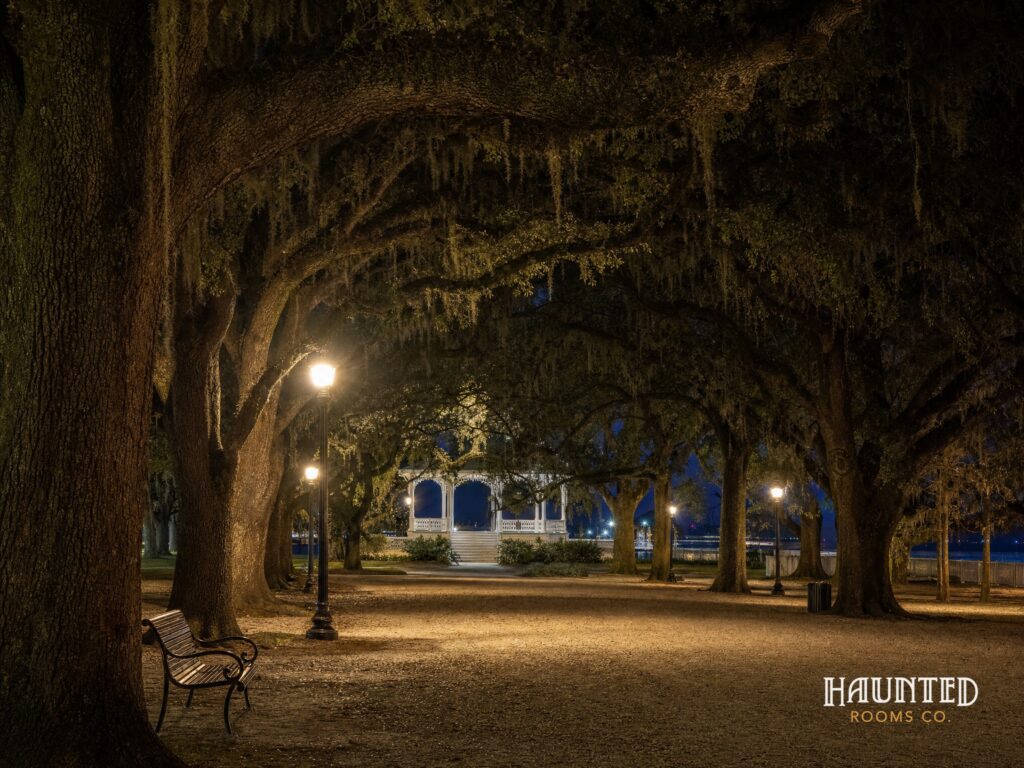
At the tip of the Charleston peninsula, this 5.7-acre city park of live oaks, cannons and monuments ends at the Battery seawall. In 1718 the Gentleman Pirate Stede Bonnet and his crew were hanged near its northeast corner, and a 1943 marker also recalls Richard Worley’s pirates, hanged in 1719. The marker says 29 of Bonnet’s men died; the evidence suggests 29 were sentenced and 22 hanged.
Ghost tours here tell of a figure hanging from the oaks, faces seen in a tree trunk or in the harbor water, and screams at midnight, blamed on the executed pirates. These are tour stories with no record behind them, but standing under the oaks at night where Bonnet’s crew died, they are easy to imagine. Confederate guns lined the point in the Civil War, and the guns on display recall it.
Haunted Rooms tip: Walk the seawall from East Battery at dusk, then find the pirate marker near the corner of East Battery and Water Street.
Address Patriots Point, 40 Patriots Point Road, Mount Pleasant, SC 29464
Where to look The flight deck, the interior compartments and the passageways below the hangar deck
Reported ghosts A figure in an airman's uniform; a shadow that walks into nothing
Visiting Naval museum, open daily
Tours Guided ghost tours aboard run on select evenings
Ghost hunting Ghost tours only; Patriots Point also runs overnight camp-aboard programs for groups
The Fighting Lady was commissioned on April 15, 1943, fought across the Pacific and earned a Presidential Unit Citation. In March 1945 a bomb hit her signal bridge, killing five men and wounding 26. She later recovered the Apollo 8 astronauts in December 1968. Decommissioned in 1970, she was towed to Charleston harbor in 1975 and opened as the heart of the Patriots Point museum in 1976.
In 2012 Syfy’s Ghost Hunters spent several nights aboard with the power off, and the show filmed a figure leaning against a wall, standing up and walking away. Patriots Point’s director Mac Burdette keeps a visitor’s photo of what looks like an airman on the flight deck, and a museum supervisor said his radio microphone was pulled farther than its cord could reach while he was alone.
What investigators report
On an informal ghost hunt, author Andrew Kuhn reports his group heard a voice yelling at them to get out as they descended toward the engine room; visitors also report whispers in the fo’c’sle and doors slamming in the passageways.
Where to look The second-floor balcony, the second balcony box at stage right and the stage
Reported ghosts Nettie Dickerson in a red dress; a man in 19th-century clothes said to be Junius Brutus Booth
Visiting Working theater; see a show or visit when the lobby is open
Ghost hunting No public ghost hunts; a regular stop on walking ghost tours
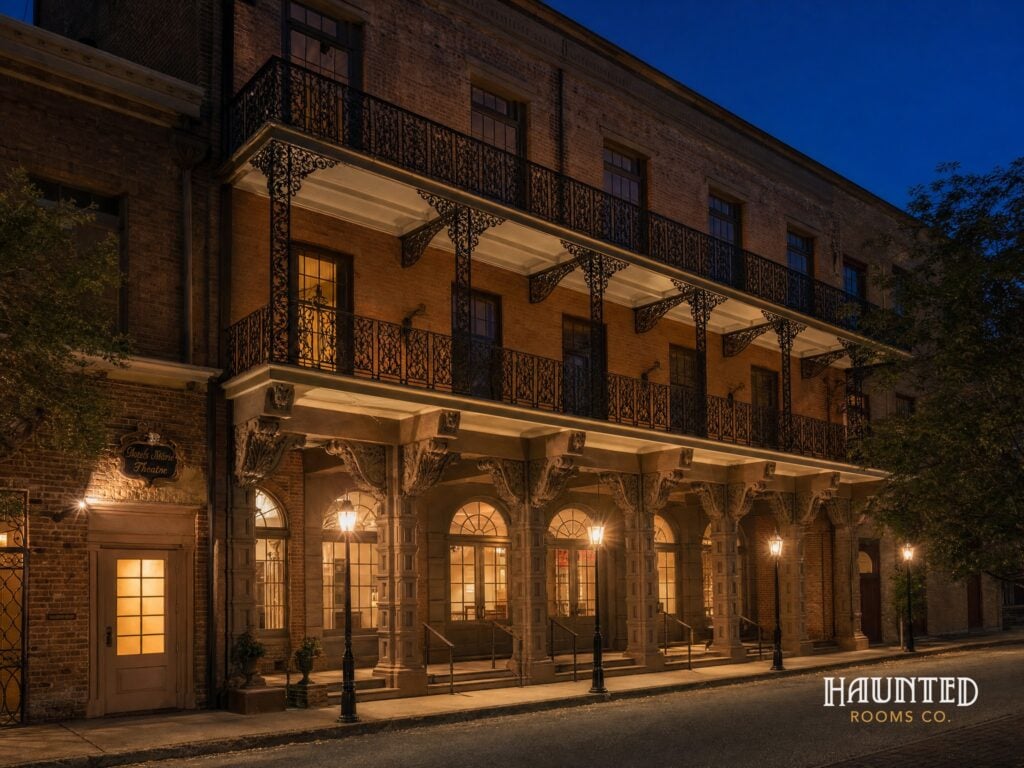
America’s first purpose-built theater opened on this corner in 1736. It was lost, probably in the fire of 1740, and the Planters Hotel went up on the site in 1809. A Works Progress Administration project turned the old hotel back into a theater, which reopened on November 26, 1937. Charleston Stage has been its resident company since 1978.
Two ghosts are named. Nettie Dickerson, the story goes, was a church clerk who became a prostitute at the hotel and was killed by lightning on its balcony during a storm in the 1840s; a construction worker said in 2010 that he saw her pacing the balcony in rags. The other is a man in 19th-century dress often said to be the actor Junius Brutus Booth, though he died in Kentucky. Neither story has a record behind it.
Haunted Rooms tip: See a Charleston Stage show and look up at the balcony during the interval.
Where to look The brick-vaulted Provost Dungeon in the basement and the upper floors
Reported ghosts Moaning and clanking chains blamed on prisoners; footsteps upstairs
Visiting Museum with docent-led tours of the dungeon
Hours and season Monday to Saturday 9 AM to 5 PM, Sunday 11 AM to 5 PM
Tickets $16 adults, $12 children, under 6 free
Ghost hunting No public ghost hunts
The colony built this Georgian exchange and custom house on the waterfront from 1767 to 1771 to designs by William Rigby Naylor. After the British took Charleston in 1780 they used its basement as a military prison, and researchers have documented at least 120 prisoners there. The Daughters of the American Revolution have owned it since 1913, and it is a National Historic Landmark.
Charleston legend puts the Gentleman Pirate Stede Bonnet, hanged in 1718, in the dungeon and blames him for the crying, moaning and swinging lights visitors describe. Bonnet was held elsewhere in the city before the Exchange was built, so this is tradition, not history. Staff and guides also tell of footsteps on empty upper floors.
What investigators report
One investigator who joined an ordinary daytime tour reports his EMF meter stayed active throughout the Provost Dungeon and that a spirit box app produced words such as “cruel” and variations of his own name.
Visiting a haunted place by day is one thing. Investigating one after dark is another. On a Haunted Rooms ghost hunt our team takes you through a historic building with professional ghost hunting equipment, runs EVP sessions and vigils, and gives you time to explore on your own. These are the nearest ones we run.
Where to look The churchyard gates on Church Street and the Hardy grave
Reported ghosts A woman bent in mourning over a grave, said to be Sue Howard Hardy
Visiting Active church; the churchyard is visible from Church Street
Ghost hunting No ghost hunting; respect the active church and graves
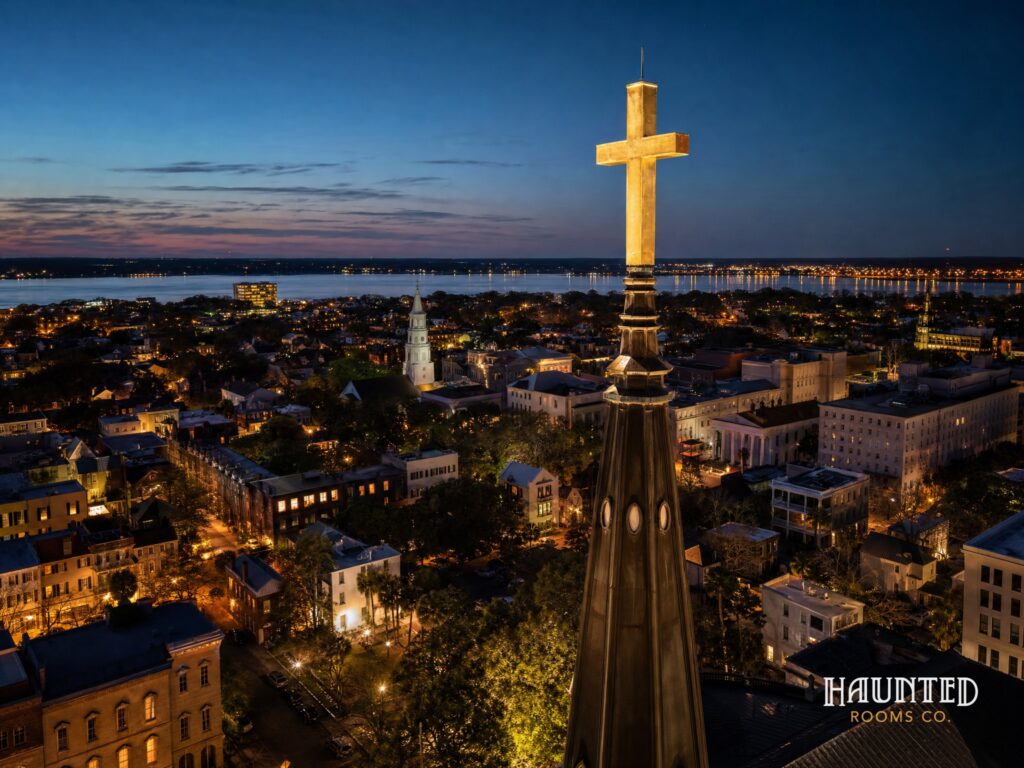
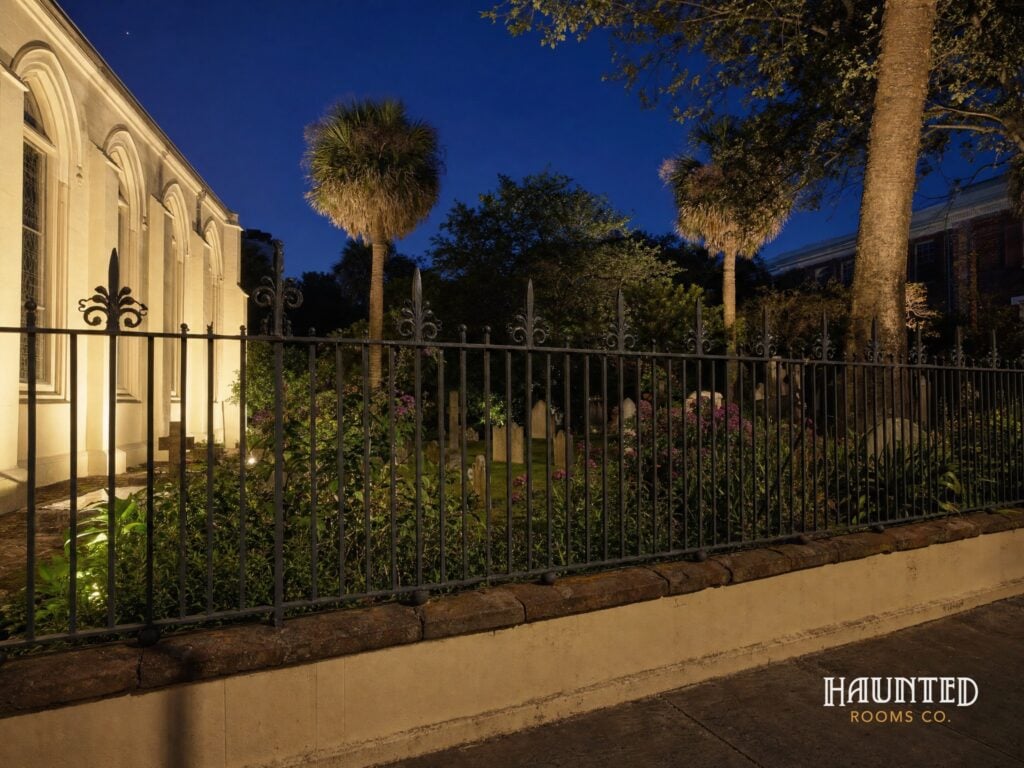
Charleston’s oldest congregation dates to 1680, and its present church, built after a fire in 1835 with a steeple added by 1850, is a National Historic Landmark. Its churchyards hold over 3,000 burials, among them John C. Calhoun, Christopher Gadsden, Charles Pinckney and Edward Rutledge.
On June 10, 1987, local resident Harry Reynolds tested a new camera by photographing through the gate. The print showed a figure crouched over a grave in mourning. The grave belongs to Sue Howard Hardy, who died in 1888 six days after a stillborn birth, and the photo was said to fall on the anniversary. Tours stop at the gate, where the church has posted a sign: the only ghost at St. Philip’s is the Holy Ghost.
Haunted Rooms tip: It is an active church: view the churchyard from the gate at night and visit inside only at service or open times.
Where to look The rear lobby late at night and the upper hallways
Reported ghosts A woman in a purple dress, Confederate soldiers, a figure said to resemble Robert E. Lee
Visiting A working hotel: book a room to stay the night
Ghost hunting No public ghost hunts; stay the night instead
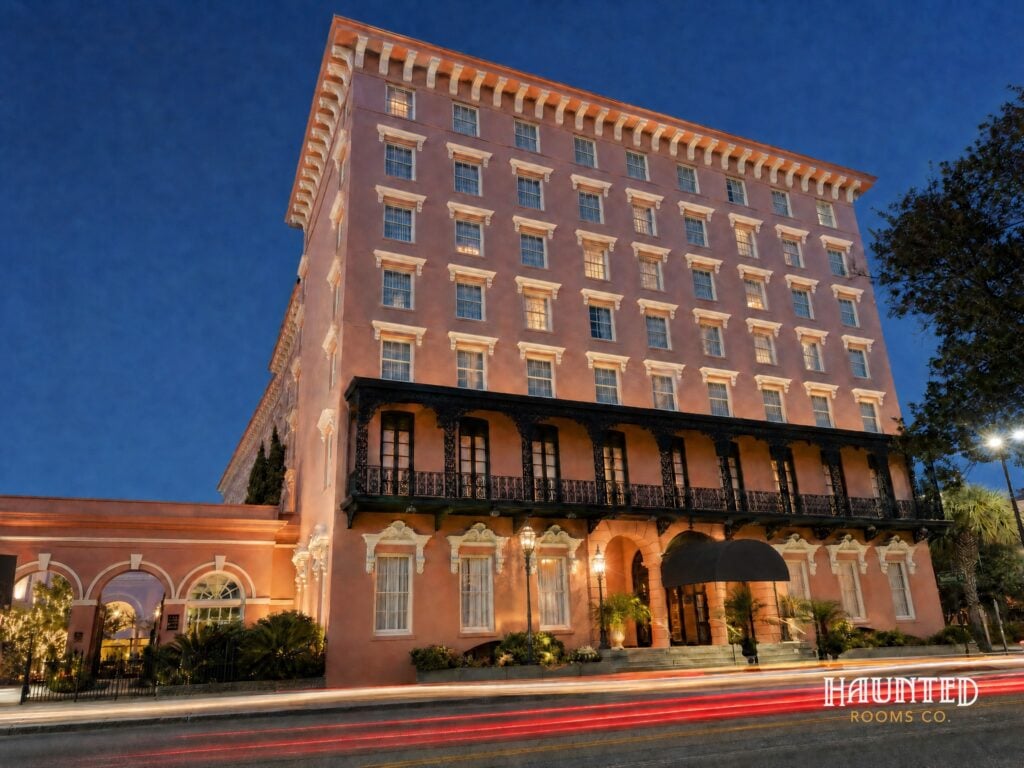
Otis Mills opened his hotel on Meeting Street in 1853, and it was soon called the finest hotel south of New York. It survived the great fire of 1861, when guests fought the flames from its windows, and the Civil War. The original was taken down in 1968 and rebuilt as a near replica, two stories taller, that opened in 1970. Since 2022 it has been part of Hilton’s Curio Collection.
Guests have reported Confederate soldiers running through the halls as if hunting for water to fight a fire, and one figure said to look like Robert E. Lee. The hotel’s own ghost story is a woman in a purple dress, said to have been hurt in the 1861 fire, who glides through the rear lobby between 11 p.m. and 1 a.m.
Haunted Rooms tip: Have a nightcap near the rear lobby between 11 p.m. and 1 a.m., the hour the lady in purple is said to appear.
Reported ghosts Cadets and officers, including a cadet nicknamed Half-head
Visiting A working hotel: book a room to stay the night
Ghost hunting No public ghost hunts; stay the night instead
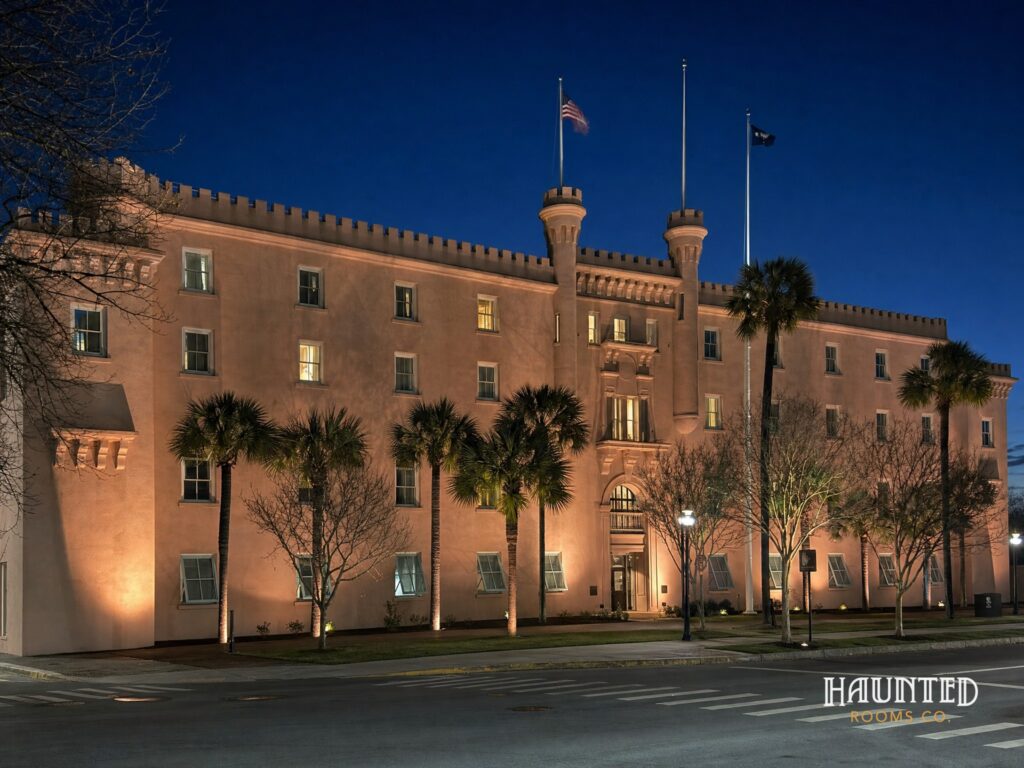
This castle-like pink building on Marion Square was built in 1829 as the South Carolina State Arsenal. From 1843 it housed the South Carolina Military Academy, better known as The Citadel, until the school moved in 1922, and it was renovated as a hotel in 1994. It is now the Embassy Suites by Hilton Charleston Historic District, with battlements and gun ports still in place.
Guests and housekeepers have long reported cadets and officers on the top floor, especially in the corner suites. The best-known figure is a cadet with the top of his head missing, nicknamed Half-head by researchers, who badly frightened at least one early-morning guest. The Huffington Post once named it the most haunted hotel in the South.
Haunted Rooms tip: Ask for a top-floor corner suite, where most of the cadet sightings are reported.
Where to look The overgrown churchyard paths off Archdale Street and the Gateway Walk
Reported ghosts The Lady in White, said to be Anna Ravenel
Visiting Active church; churchyard open set daytime hours
Hours and season Churchyard Monday to Saturday, 10 AM to 2 PM
Ghost hunting No ghost hunting; walking ghost tours stop outside
The oldest Unitarian church in the South was begun in 1772, dedicated in 1787 and remodeled in Gothic Revival style by Francis D. Lee and Edward C. Jones from 1852. Its churchyard, shaped by Caroline Howard Gilman in the 1830s, is kept deliberately wild, and it is part of Charleston’s Gateway Walk. The church is a National Historic Landmark.
Tour guide Randy Neale told Live 5 News that guests have seen a woman in a wedding dress standing behind them several dozen times. Guides say she is Anna Ravenel, whose father split her from a soldier at Fort Moultrie said to be Edgar Allan Poe, and buried her in an unmarked grave. Poe did serve at Fort Moultrie in 1827 and 1828, but nothing ties him to Anna, and no famous person is buried here.
Haunted Rooms tip: The churchyard is open Monday to Saturday, 10 AM to 2 PM; come back at dusk with a walking ghost tour, which stops at the gate.
Where to look The tenth floor, Room 1010 and the windows overlooking King Street
Reported ghosts Ned Cohen, a heartbroken New Yorker said to have fallen from a tenth-floor window
Visiting A working hotel: book a room to stay the night
Ghost hunting No public ghost hunts; stay the night instead
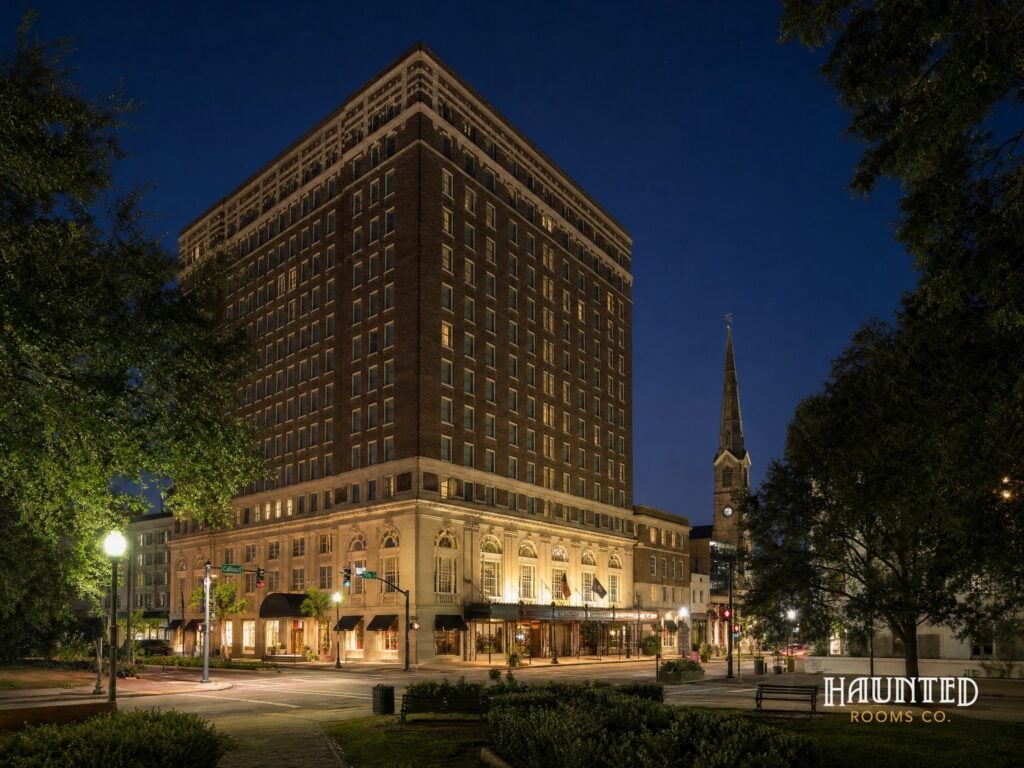
When the Francis Marion opened on Marion Square in February 1924 it was the largest and grandest hotel in the Carolinas, a 12-story brick tower designed by New York architect William Lee Stoddart and named for the Revolutionary War’s Swamp Fox. A $12 million restoration in 1996 won a National Trust award, and today it is an independent historic hotel with 235 rooms, the Swamp Fox restaurant and a spa.
Its ghost is Ned Cohen, a New Yorker who came to Charleston around 1929 or the early 1930s to see a woman he loved and was found dead on King Street below the hotel. Guests on the tenth floor report windows that will not stay shut, drapes rustling in still air, and a man in shirtsleeves or a dinner jacket who seems to be talking to himself before he fades away.
Haunted Rooms tip: Ask for Room 1010 or any room on the tenth floor facing King Street, then watch the windows.
Where to look The upstairs windows, the upstairs ladies' room mirror and the front door
Reported ghosts Zoe St. Amand, an elderly woman in black; Poogan the porch dog
Visiting Working restaurant
Hours and season Brunch 9 AM to 3 PM and dinner 4:30 to 9:30 PM daily
Ghost hunting No ghost hunts; a stop on many walking ghost tours
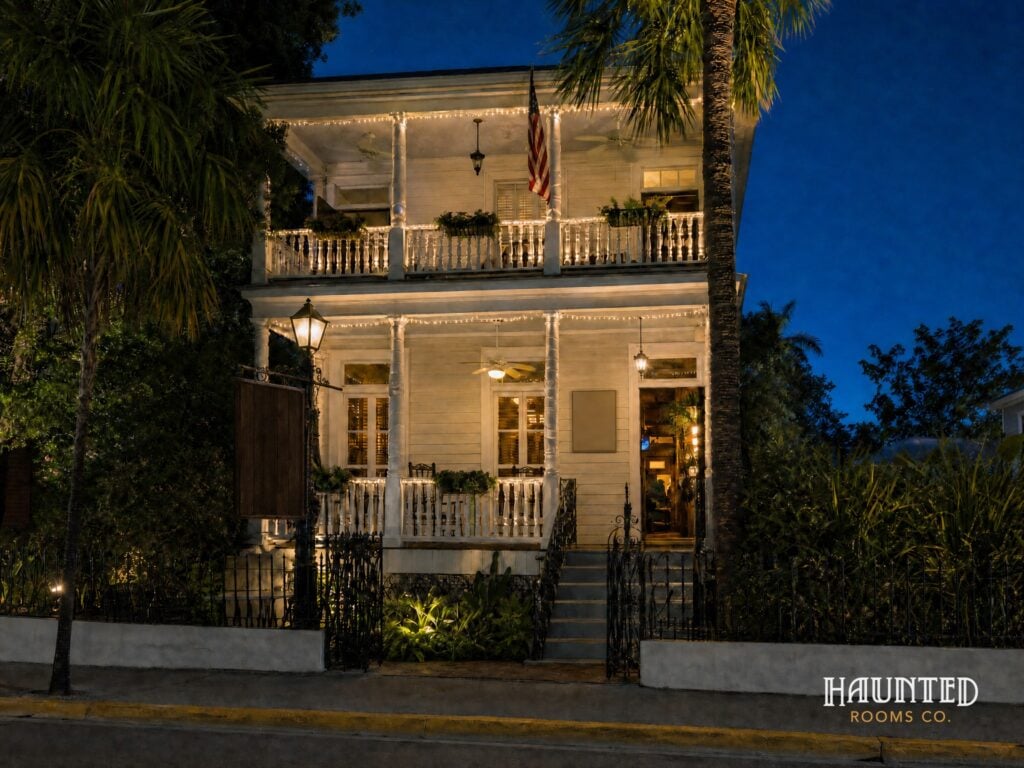
This two-story Victorian house on Queen Street was built in 1888 and was home for more than 60 years to sisters Zoe and Elizabeth St. Amand. Elizabeth died around 1945, and Zoe, a retired schoolteacher, was taken from the house by worried neighbors and died in 1954. The house became a restaurant in 1976, named for Poogan, a stray dog who adopted its porch and died in 1979.
Zoe is Charleston’s most famous restaurant ghost. Staff have told local press of doors that swing open, faucets and lights turning on, and a woman seen in a mirror. Guests at the Mills House across the street have reported an old woman in black at an upstairs window after closing, and some called police. She is described as harmless, and the brunch menu even has a Zoe’s Iced Coffee.
Haunted Rooms tip: Ask for a table upstairs and look at the windows from Queen Street on your way out.
Address Charleston Harbor (ferries from 340 Concord Street and Patriots Point)
Where to look The parade ground and the casemates
Reported ghosts A Union soldier, said to be Private Daniel Hough, with the smell of gunpowder
Visiting National historical park reached by concession ferry (about 30 minutes)
Tickets No park fee; ferry ticket required
Ghost hunting No ghost hunting in the national park
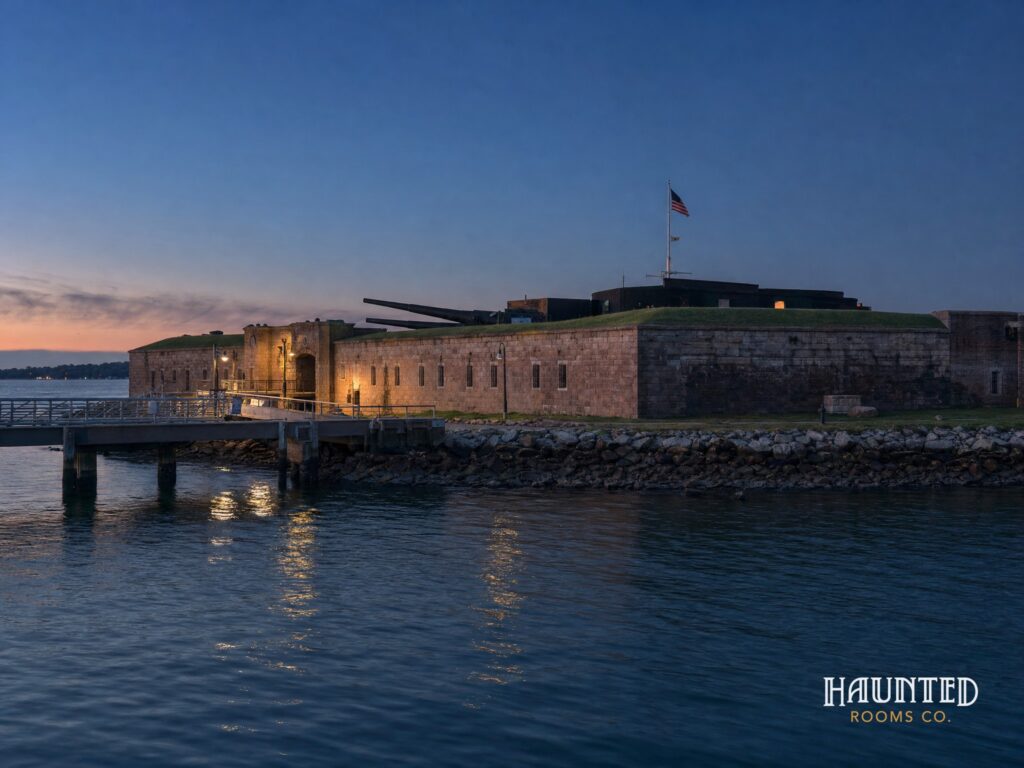
Work on this brick fort on a man-made island began in 1829. Confederate guns opened fire on it on April 12, 1861, starting the Civil War, and the garrison surrendered after 34 hours. During the 100-gun salute allowed at the surrender, a spark set off a charge and killed Private Daniel Hough, an Irish-born gunner, the first man to die in the war. Edward Galloway died of his wounds days later.
Hough was buried on the parade ground, and no one now knows where his remains lie. The story told on Charleston’s ghost walks is that soldiers saw a Union man walking the fort soon afterward, and visitors since have described a soldier in blue and a sudden smell of gunpowder and smoke. Some see a face in the faded storm flag he was saluting. These are stories, not records.
Haunted Rooms tip: Take an early ferry for the quietest time on the parade ground; the boat is the only way out.
Where to look The iron Sword Gates on Legare Street and the high garden walls
Reported ghosts Madame Talvande, the strict schoolmistress, said to watch from inside the gates
Visiting Private residence; view the gates from Legare Street
Ghost hunting Private home: no entry and no ghost hunting
The main house at 32 Legare Street dates to around 1803, and its brick wing, now 109 Tradd Street, to about 1818. From 1819 Andre Talvande, a refugee from the Saint-Domingue revolt, and his wife, Madame Talvande, ran a French boarding school here for the daughters of Charleston’s elite and raised the high walls around it. The famous gates, two crossed swords in wrought iron, were made by Christopher Werner in the 1830s; he made one pair too many, and British consul George Hopley bought the spare set for this house around 1849.
The school’s great scandal is real: in 1828 a pupil, Maria Whaley, slipped out and eloped with George Morris of New Jersey. Walking tours add that Madame Talvande still stands just inside the gates, glaring at passers-by, but we found no published record behind the ghost; it is tour lore. The house is a private home, sold for $10 million in 2020, so see the gates from the sidewalk.
Haunted Rooms tip: Come on a South of Broad walking tour and photograph the gates from the sidewalk; do not enter the property.
Reported ghosts A former owner who locks guests out of Room 303, a woman at the foot of the bed in Room 107
Visiting A working hotel: book a room to stay the night
Ghost hunting No public ghost hunts; stay the night instead
This three-story building on Meeting Street stands on the site of the 1837 Charleston Theatre, which burned in the great fire of 1861. The present brick building went up in 1874, with a German immigrant’s restaurant and saloon on the ground floor, and it became a 56-room inn in 1981, wrapped around a courtyard with tiered piazzas, a pool and a hot tub.
Two rooms carry the stories, as Charleston ghost tour guides tell them. In Room 303, the spirit of the building’s German former owner is said to prefer locking guests out to sharing the room; a German immigrant, Adolph Tiefenthal, did run a saloon here from 1874. In Room 107, a woman is said to stand at the foot of the bed at night. The inn does not promote the stories, and no death at the site is recorded.
Haunted Rooms tip: Ask for Room 303 if you want the locked-door story, or Room 107 for the lady at the foot of the bed.
Where to look The main bar room and the back patio
Reported ghosts A woman in black who crosses the bar; unseen hands that pull hair
Visiting Working pub, open daily
Hours and season Daily 11 AM to 1:30 AM
Ghost hunting No ghost hunts; it is a working bar. Several haunted pub crawls stop here
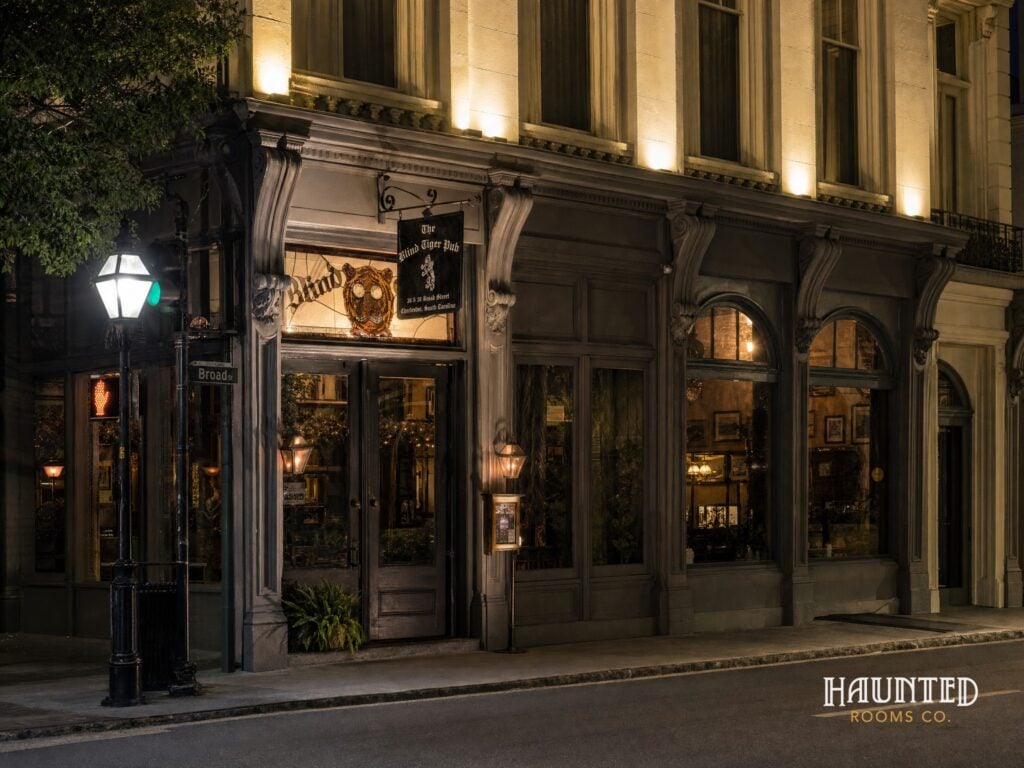
Blind Tigers were the illegal bars that sprang up in Charleston from 1893, when Governor Ben Tillman’s state dispensary law tried to control the sale of liquor, and this Broad Street pub takes its name from them. It occupies a building of nearly 200 years on one of downtown’s oldest business streets. The pub does not promote its ghosts, but its stories are well known around town and several haunted pub crawls stop here.
Staff and patrons have described a woman in black who floats across the bar floor and disappears, and a run of guests, mostly women, who say their hair was pulled hard when nobody was near them. Ghost tour companies now joke that visitors should tie their hair up before going in. Local writers tie her to the speakeasy days, but there is no record of who she might be.
Haunted Rooms tip: Go late on a quiet weeknight, sit near the bar and ask the staff what they have seen.
Where to look The upstairs hallways, the Signers Ballroom and its balcony, Room 11
Reported ghosts A little girl remembered by the smell of smoke, a lady in an 18th-century gown, a Confederate soldier at a window
Visiting A working hotel: book a room to stay the night
Ghost hunting No public ghost hunts; stay the night instead
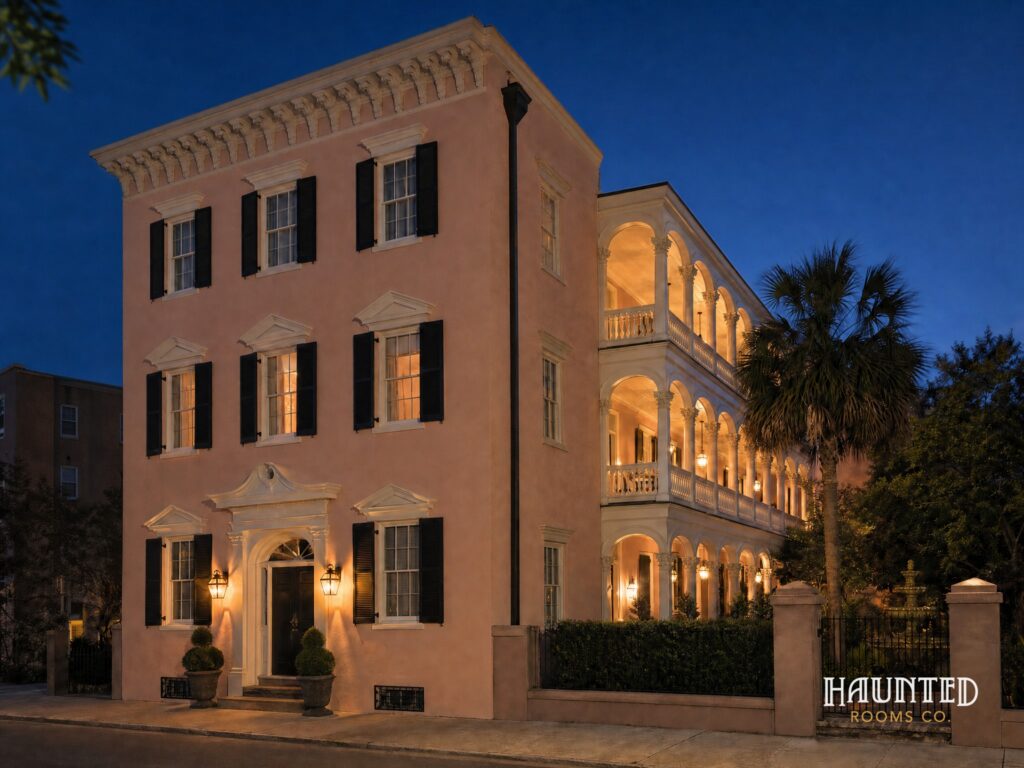
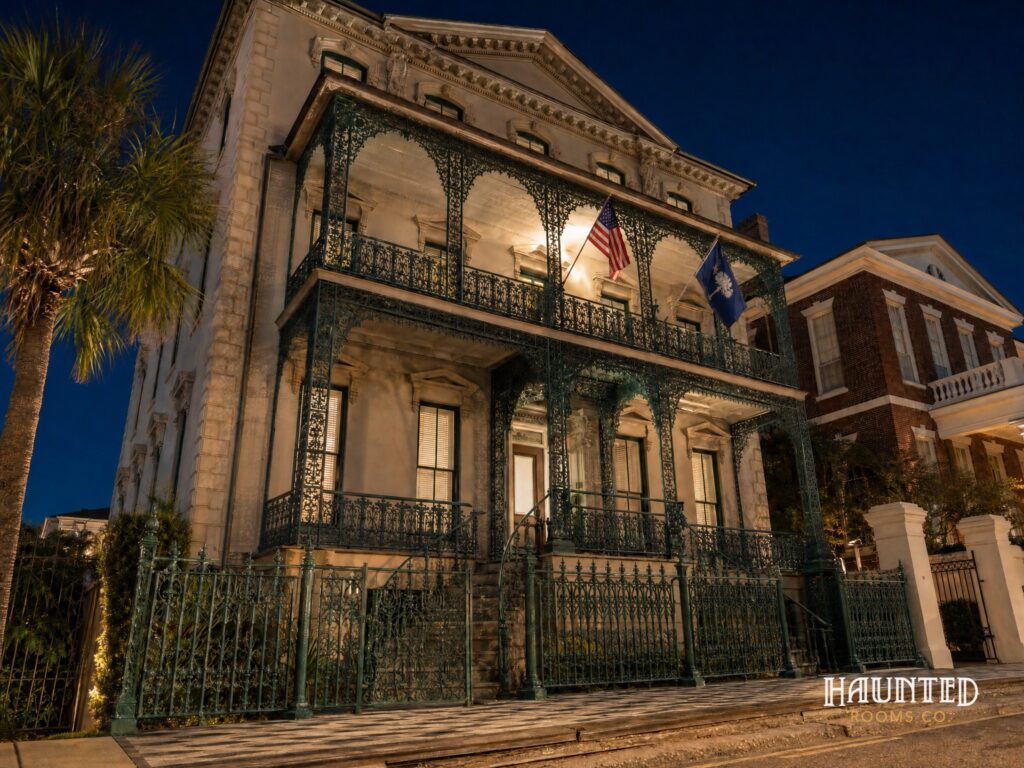
John Rutledge built this Broad Street house in 1763, and the inn says he wrote drafts of the U.S. Constitution in its second-floor drawing room, now the Signers Ballroom. Thomas Gadsden added a third story and the famous ironwork in 1853, Mayor Robert Goodwyn Rhett entertained President Taft here, and since 1989 it has been a 19-room inn and a National Historic Landmark.
The inn does not tell ghost stories, but travel writers do. The best-known is a little girl, said to have died in a fire, who runs through the halls, flicks lights and pulls pillows from under sleeping guests, with a smell of smoke when she is near. Others describe a lady in an 18th-century gown crossing the ballroom and a Confederate soldier at a window in Room 11.
Haunted Rooms tip: Take the afternoon tea in the Signers Ballroom, then step out on the iron balcony over Broad Street after dark.
Reported ghosts An older man who crosses the room and vanishes into the closet
Visiting A working hotel: book a room to stay the night
Ghost hunting No public ghost hunts; stay the night instead
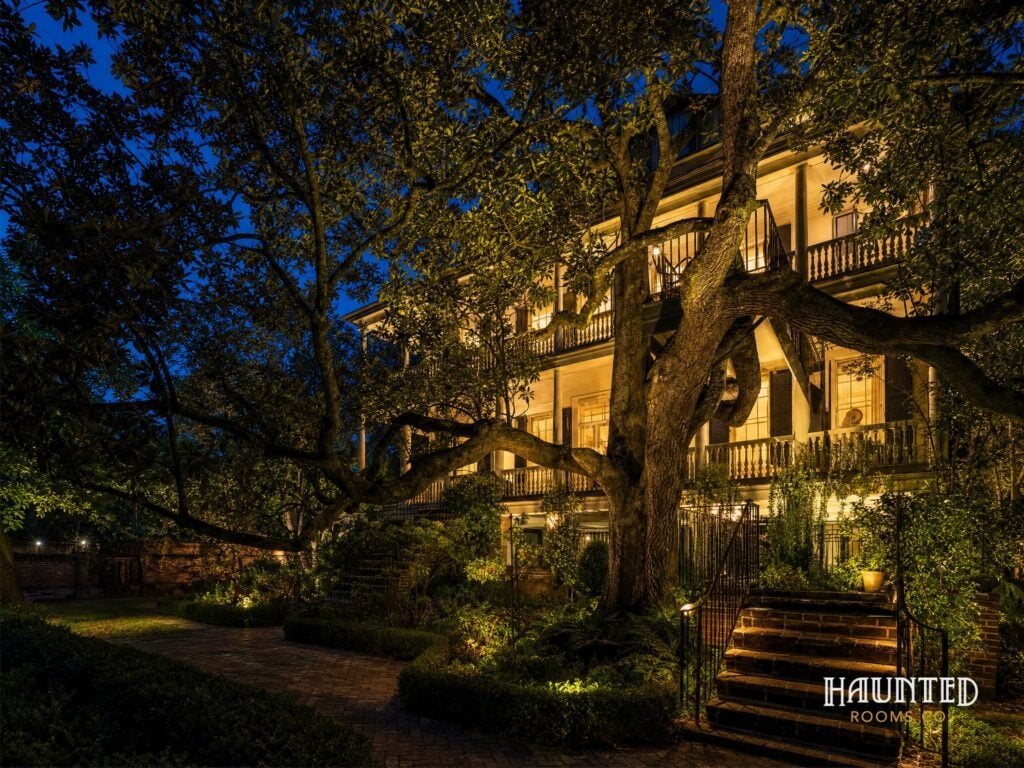
The Barksdale House Inn stands on land George Barksdale bought in 1778 on George Street in Ansonborough, a few blocks from the College of Charleston and the City Market. The house was probably built by his nephew Thomas before 1817 and gained its Victorian bay windows and mansard roof around 1902. Today it is a 14-room inn with private baths, breakfast included and iced tea in the afternoon.
Its ghost story is a quiet one. Guests and staff have described a man who looks to be in his sixties walking across a guest room and disappearing into the closet. Nobody has put a name to him; the usual guess is a former guest who liked the place enough to come back.
Haunted Rooms tip: Room 9 is the one room that sleeps four, which makes it the easiest pick for a group who want to keep each other company.
Reported ghosts A woman who did not want a guest to leave and shredded his newspaper
Visiting A working hotel: book a room to stay the night
Ghost hunting No public ghost hunts; stay the night instead
The Jasmine House is an 1843 Greek Revival mansion on Hasell Street in Ansonborough, one of downtown Charleston’s oldest neighborhoods, with tall columned piazzas and a quiet courtyard. It is a small bed and breakfast a short walk from the City Market.
Its best-known story comes from the Chrysanthemum Room. A guest woke to find a woman standing near his bed and had the strong sense she did not want him to leave. When he checked out anyway, the story goes, he found his morning newspaper torn into tiny pieces and scattered across the floor.
Haunted Rooms tip: Ask for the Chrysanthemum Room, and keep your newspaper somewhere safe.
This story still appears on older lists, but the building is long gone and its site is a private dormitory.
Charleston Orphan House, Calhoun Street
Founded in 1790 as the first municipal orphanage in the country, the Orphan House opened its first permanent building in 1794, moved out in 1951 and was demolished in 1956 for a Sears store. The College of Charleston’s Berry Residence Hall now stands on the site. Older lists say a 1918 fire burned the building and killed the children inside; the building stood for almost 40 more years, and we found no record of such a fire. Historian Ed Macy has told of a smaller 1918 playground fire and of students hearing girls chanting rhymes, but the dorm is private.
Changes to this guide: We removed Bocci’s Italian Restaurant on Church Street: we could not find any published source for its ghost story or confirm the restaurant is still trading. The Charleston Orphan House is now listed as gone; older versions said a 1918 fire destroyed it, but it stood until 1956. The Old City Jail is no longer the American College of the Building Arts; it is the Twenty-One Magazine event venue, still toured at night. The Battery Carriage House Inn now trades as 20 South Battery. New to this guide: White Point Garden, St. Philip’s churchyard, the Unitarian churchyard, the USS Yorktown and eight haunted hotels and inns.
Visited one of these places? Tell us what happened
We collect first-hand accounts from visitors and add the best ones to our guides, with your first name and the date of your visit. We read every story before it’s published.
Frequently asked questions
What is the most haunted place in Charleston?
The Old City Jail on Magazine Street has the biggest reputation. It held prisoners from 1802 to 1939, including John and Lavinia Fisher, and guides on the nightly tours report footsteps, scratches and a guard on the third floor. The Provost Dungeon, Poogan’s Porch and the Dock Street Theatre follow close behind.
Can you go inside the Old Charleston Jail?
Yes, on a guided night tour. The building is now the Twenty-One Magazine event venue with offices upstairs, and Bulldog Tours runs about 45-minute haunted tours of the ground floor most evenings.
Was Lavinia Fisher really a serial killer?
There is no record that she was. Lavinia and John Fisher were convicted of highway robbery, then a hanging offense, and executed at the Old City Jail on February 18, 1820. The poisoned tea and murdered travelers are legend.
Which Charleston hotels are haunted?
The best known are 20 South Battery, the former Battery Carriage House Inn (Rooms 8 and 10), the Mills House, the Francis Marion, the Embassy Suites in the Old Citadel and the John Rutledge House Inn. See our guide to Charleston’s haunted hotels for the rooms to ask for.
Is the Charleston Orphan House still there?
No. The orphanage closed in 1951 and the building was demolished in 1956 for a Sears store. A College of Charleston dorm now stands on the site, and students there tell their own ghost stories.
Are Charleston ghost tours worth it?
Yes, if you pick one that goes inside. The Old City Jail tour and the after-hours ghost tour aboard the USS Yorktown take you into the buildings; most others are walking tours past churchyards and houses you can only see from outside.
Sources and how we research
Every place in this guide is checked against its official website, historic register listings and news coverage, and we confirm whether it is open, closed, private or gone before we list it. Ghost stories are reported as staff, visitors and local historians tell them; we say so where records contradict a story. Each place shows how many independent sources we checked it against; our own Haunted Rooms pages are not counted.
New guides, haunted places to visit and ghost hunt dates near you. No spam, unsubscribe any time.
About the authors
The Haunted Rooms Team runs public ghost hunts and overnight investigations at historic venues across the United States. We research every place in our guides using official sites, historic registers, local archives and news coverage, and we report ghost stories as the stories they are. We review each guide regularly so you are not sent to a place that has closed, changed hands or banned visitors. Spotted something out of date? Let us know.