Haunted Places in Columbia, SC: 9 Places to Visit and the Legends Behind Them
An asylum designed by the architect of the Washington Monument, a theater that was a Civil War morgue, a museum ghost in overalls and a president who never left his campus. These are Columbia’s most haunted places, checked against the records.
Sherman’s army burned much of Columbia in February 1865, and the buildings that survived, from Robert Mills’s asylum on Bull Street to the Horseshoe at the University of South Carolina, carry most of the city’s ghost stories. We have checked every place below against current sources, so you know what is open, what you can tour and what you can only see from the street. The old asylum is now apartments and offices, and we say so plainly.
Where to look The lighting grid over the stage, the dressing rooms and the lounge under the steps that was once the morgue
Reported ghosts Footsteps on the catwalk, a figure in a flowing white shirt, soldiers said to be from the Civil War
Visiting University theater; open for performances
Ghost hunting No ghost hunting; USC’s October ghost tour passes by
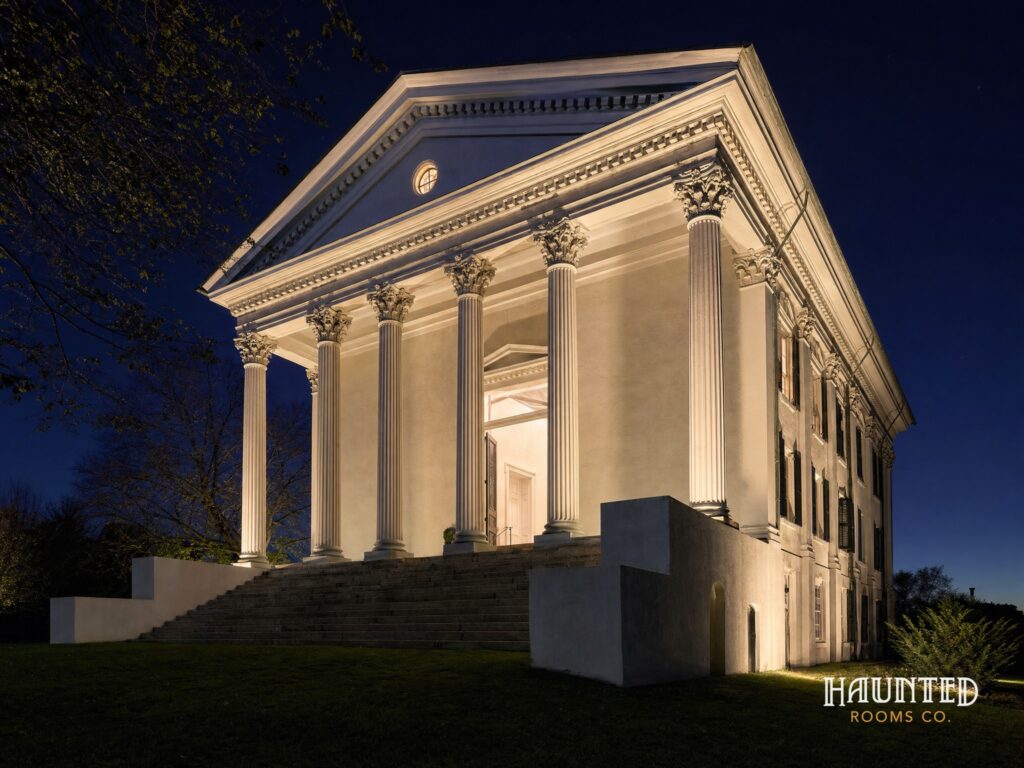
Built in 1855 as College Hall, a chapel and auditorium with famously bad acoustics, this temple-fronted building became a Confederate hospital in the Civil War, with a morgue in the basement. It later held science labs, a gym and a WPA swimming pool, was named for president Augustus Baldwin Longstreet in 1968 and has been a theater in the round since 1977.
Theater professors have spoken openly about their ghosts. Ann Dreher told WIS she believed Confederate soldiers stayed on, “real friendly unless you’re a Yankee.” Lisa Gavaletz told The Daily Gamecock that things move overnight and she says goodnight to the ghosties after rehearsals. Performers describe heavy footsteps on the empty catwalk, doors slamming, an elevator that opens on its own and cold spots under hot lights.
Haunted Rooms tip: See a USC Theatre production; the university’s student ambassadors also run a campus ghost tour each October.
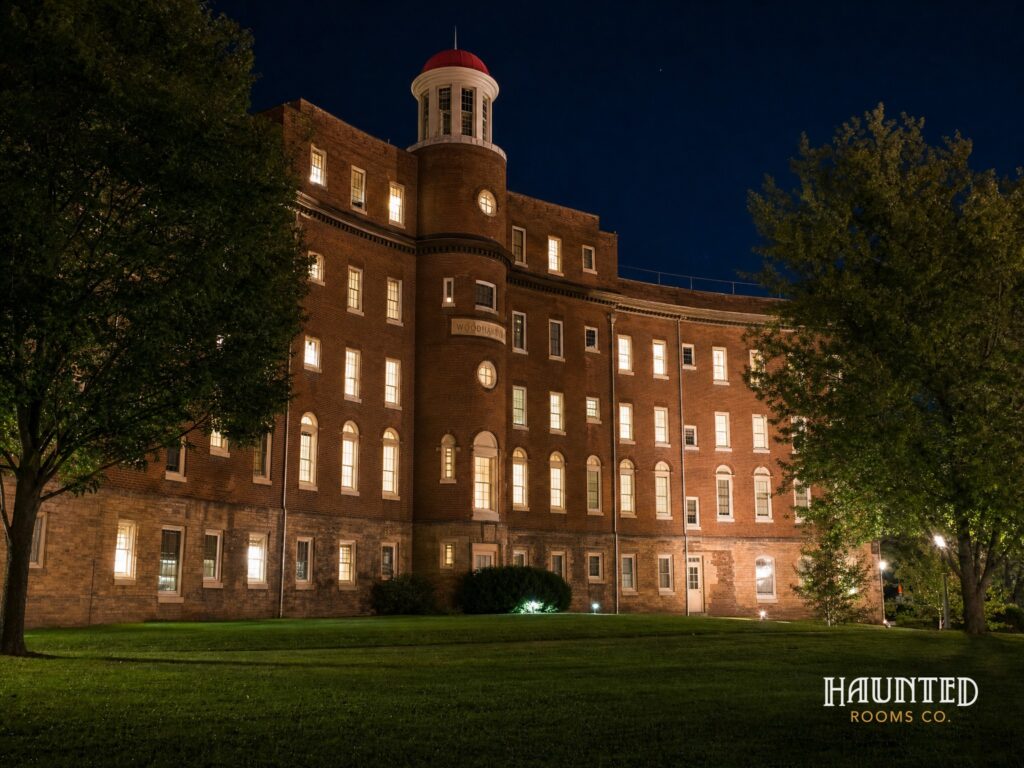
Where to look The Robert Mills Building and the red-domed Babcock Building, seen from the BullStreet District
Reported ghosts Cries, shadow figures and footsteps told of the empty wards before redevelopment
Visiting Buildings are apartments and offices; view from the public streets and green
Ghost hunting No ghost hunting: private homes and state offices
Robert Mills designed the first building of the South Carolina Lunatic Asylum, built from 1822 to 1827 and one of the first state-run mental hospitals in the country. The campus grew into a small town on Bull Street, held Union officers as Camp Asylum in the Civil War and, as the State Hospital, housed about 1,000 patients a year in the early 1900s, a third of whom died in state care. The state closed it in 2003.
For years its empty wards drew trespassers and stories of cries, footsteps and shadows at the windows. Those stories have never been documented, and both great buildings are now in use: the red-domed Babcock Building, rebuilt after a 2020 fire, reopened as apartments in 2022, and the Mills Building houses a state office. Walk the BullStreet District at night and see them from the street.
Haunted Rooms tip: Park at the BullStreet District, take in the Babcock dome from the green, and respect the residents: the buildings are homes and offices now.
Grounds open to visitorsGhost toursNo ghost hunting
Address The Horseshoe, Sumter Street at Greene Street, Columbia, SC 29208
Where to look President McKissick's grave by the South Caroliniana Library, McKissick Museum and DeSaussure College
Reported ghosts President James Rion McKissick; Miss Black at DeSaussure; footsteps in the library stacks
Visiting Campus lawn open to visitors; dormitories are private
Ghost hunting No ghost hunting; student ambassadors run an October ghost tour
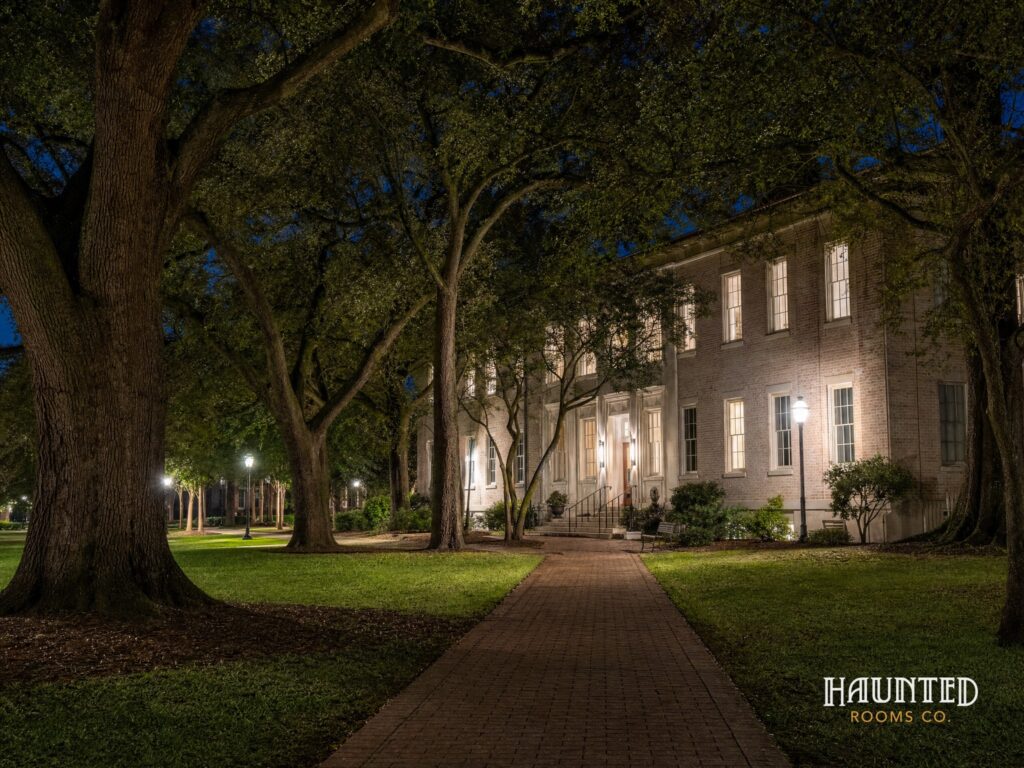
The brick dormitories and shady lawn of the Horseshoe are the original campus of South Carolina College, founded in 1801 and opened in 1805, with buildings by Robert Mills among others. DeSaussure College served as a Civil War hospital and a Reconstruction military prison, and in 2010 a burst steam line behind it exposed bones from an 1875 anatomy class.
James Rion McKissick, a well-loved president, died in office in 1944 and lies outside the South Caroliniana Library, the only grave on campus. Staff at the museum named for him report footsteps and crooked pictures, and contractors renovating the library from 2017 to 2023 heard steps in empty stacks. DeSaussure’s ghost, Miss Black, who poisoned her father’s killers, is folklore. The Third Eye Man is a story the archivist says began in a class.
Haunted Rooms tip: Walk the Horseshoe at dusk from the Maxcy Monument to the library, and visit McKissick Museum by day.
Address 1615 and 1616 Blanding Street, Columbia, SC 29201
Where to look The Hampton-Preston sitting room and a second-floor bedroom in the Robert Mills House
Reported ghosts Candles that relit in a locked house; Sarah Hall, who lost both houses
Visiting Guided house tours; gardens free and open daily
Hours and season Tours Wednesday to Sunday; gardens daily
Ghost hunting No public ghost hunts
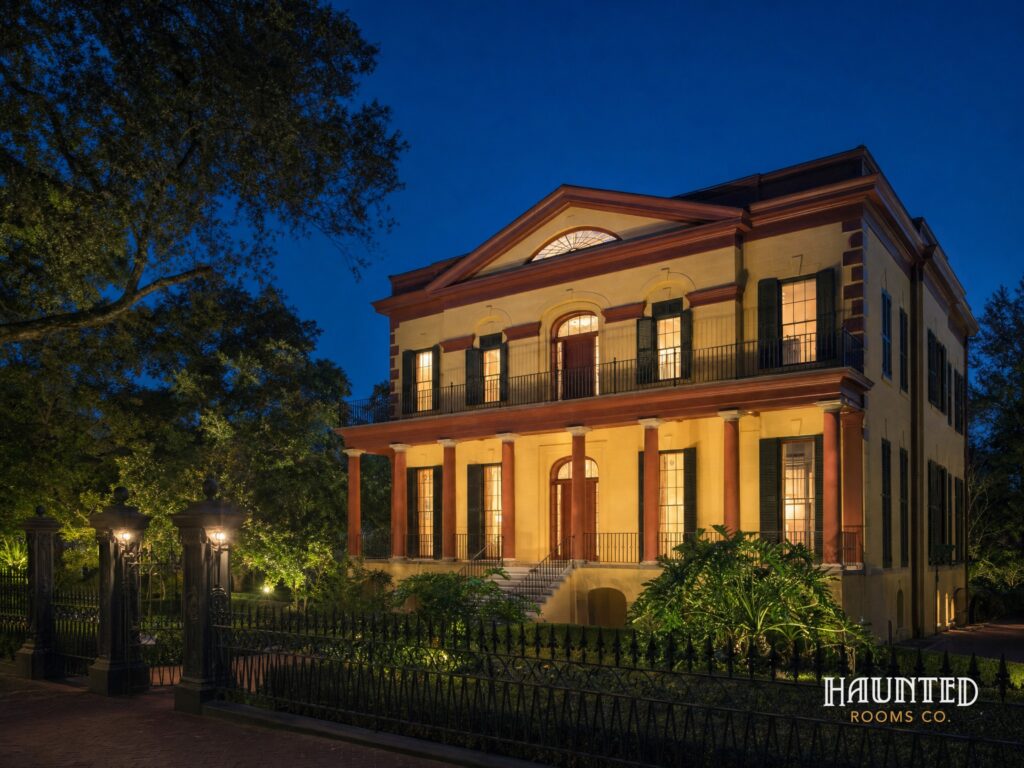
Merchant Ainsley Hall built the Hampton-Preston Mansion in 1818 and sold it in 1823 to Wade Hampton I. Union General John A. Logan made it his headquarters during the 1865 occupation. Across the street, Robert Mills designed a grander house for Hall from 1823; Hall died before it was finished and his widow Sarah had to sell. Historic Columbia runs both as museums.
During the 1982 Christmas candlelight tours, the story goes, docents put out every candle and locked and alarmed the house, then saw candles burning in the sitting room. Police found the house still locked. Staff describe a feeling of being watched after hours. In the Robert Mills House, Sarah Hall is said to leave the impression of someone sitting on a bed upstairs. These accounts come from local ghost writers, not the museum.
Haunted Rooms tip: Book the guided tours of both houses on the same afternoon, and come back in December for the candlelight tours.
Where to look The elevators, the old country store exhibit and the Hunley replica
Reported ghosts Bubba, a mill worker in overalls and boots
Visiting Public museum
Hours and season Tuesday to Saturday 10 AM to 5 PM, Sunday noon to 5 PM, closed Monday
Ghost hunting No public ghost hunts
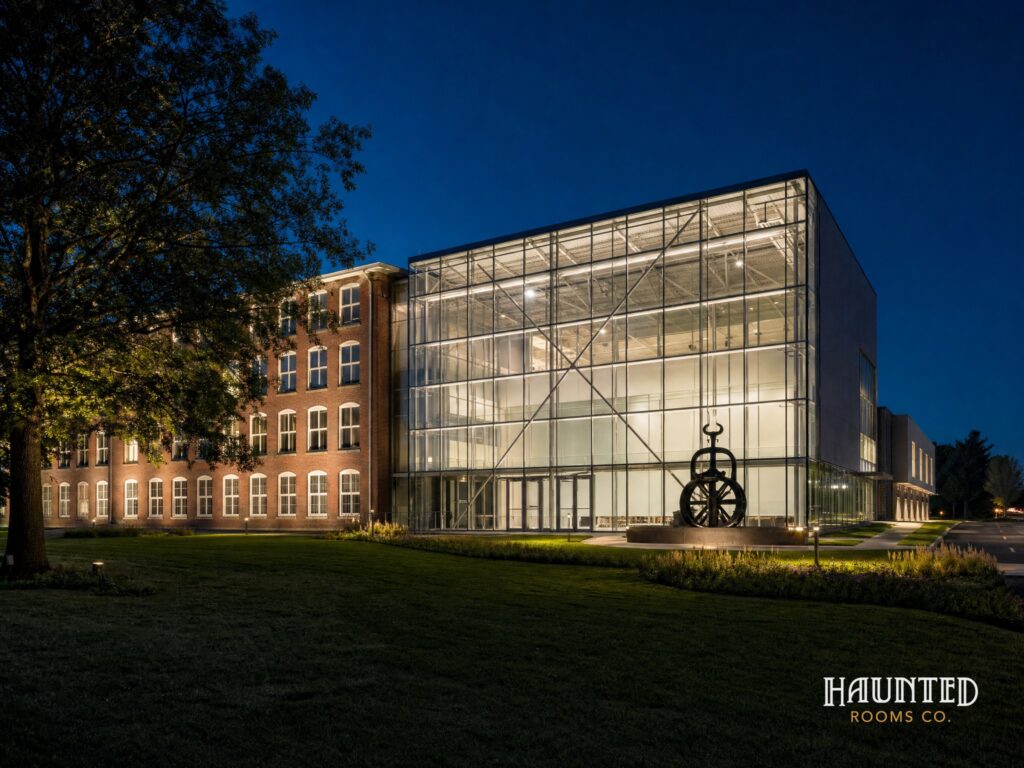
The Columbia Mills building opened in 1894 to weave cotton duck cloth and was the first textile mill in the world run entirely on electric power, General Electric’s first big industrial installation. It closed in 1981, was given to the state and reopened as the South Carolina State Museum on October 29, 1988.
Staff call their ghost Bubba, said to be a mill hand killed in an accident. Two visitors told of a man in overalls who stepped into an elevator ahead of them and was gone when they followed, and another rode up with him and watched him walk down a hall into a wall. Museum employee Bemo Prince told WIS he saw legs and boots slip into the shadows by the Hunley exhibit. Accounts differ on which floor Bubba favors.
What investigators report
Staff say activity seems to follow the ghost-tour talks: lights reportedly swayed during the Lady in Black story, and the volunteer coordinator felt an unexplained knock on her desk after leaving the fourth-floor spirit known as Bubba out of her script. The old mill elevator is another focus.
Where to look The wooded old section and the Confederate plot
Reported ghosts A bride said to have died the night before her wedding
Visiting Cemetery open to visitors by day
Ghost hunting No ghost hunting; leave before closing
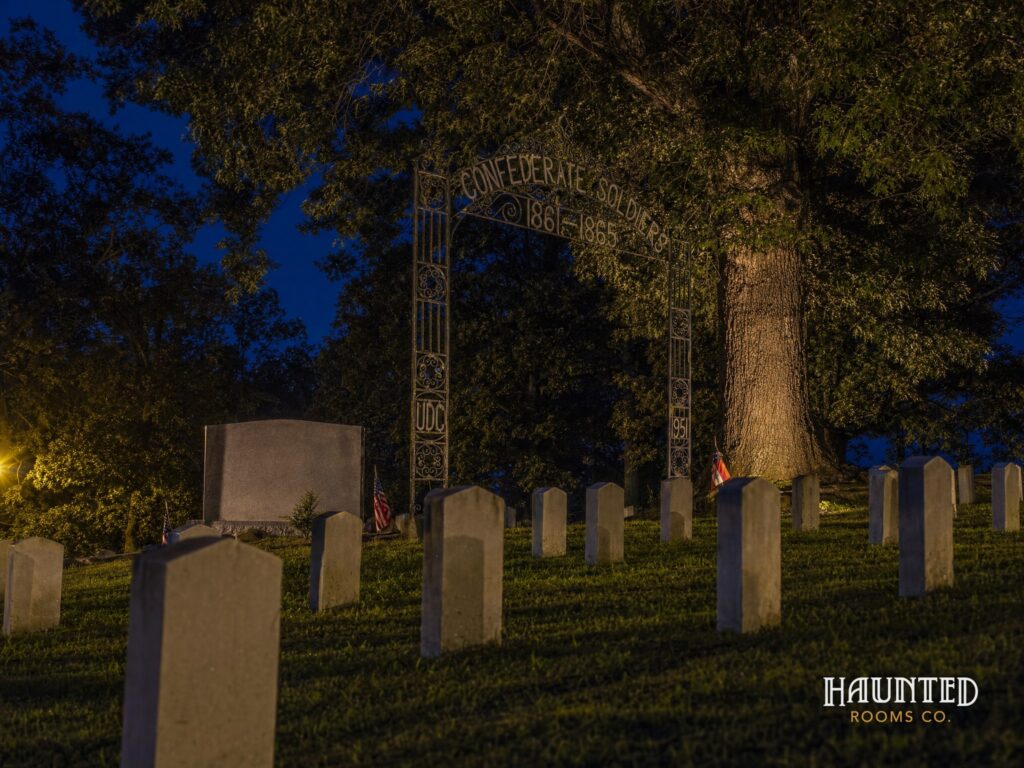
Founded in 1854 and enlarged in 1921, Elmwood is Columbia’s grand Victorian rural cemetery, about 168 acres of mausoleums, iron gates and old trees beside the river. More than 25,000 people are buried here, including about 500 Confederate soldiers in a section in the older, wooded part, reached through a wrought iron arch. It joined the National Register in 1996, and its graves include two U.S. senators and a young couple lost in Boston’s Cocoanut Grove fire of 1942.
Fox News put it on a list of America’s spookiest cemeteries in 2014, and local guides point to the grave of a young bride said to have died the night before her wedding. Historic Columbia and the cemetery have run costumed Spirits Alive! tours by flashlight in October. Beyond atmosphere and that story, there are no specific documented sightings.
Haunted Rooms tip: Go on a guided Historic Columbia walk, and leave before the gates close.
Visiting a haunted place by day is one thing. Investigating one after dark is another. On a Haunted Rooms ghost hunt our team takes you through a historic building with professional ghost hunting equipment, runs EVP sessions and vigils, and gives you time to explore on your own. These are the nearest ones we run.
Where to look The churchyard graves facing the State House
Reported ghosts A man said to visit the grave of the couple from a deadly love triangle
Visiting Active cathedral; churchyard open by day
Ghost hunting No ghost hunting; an active church
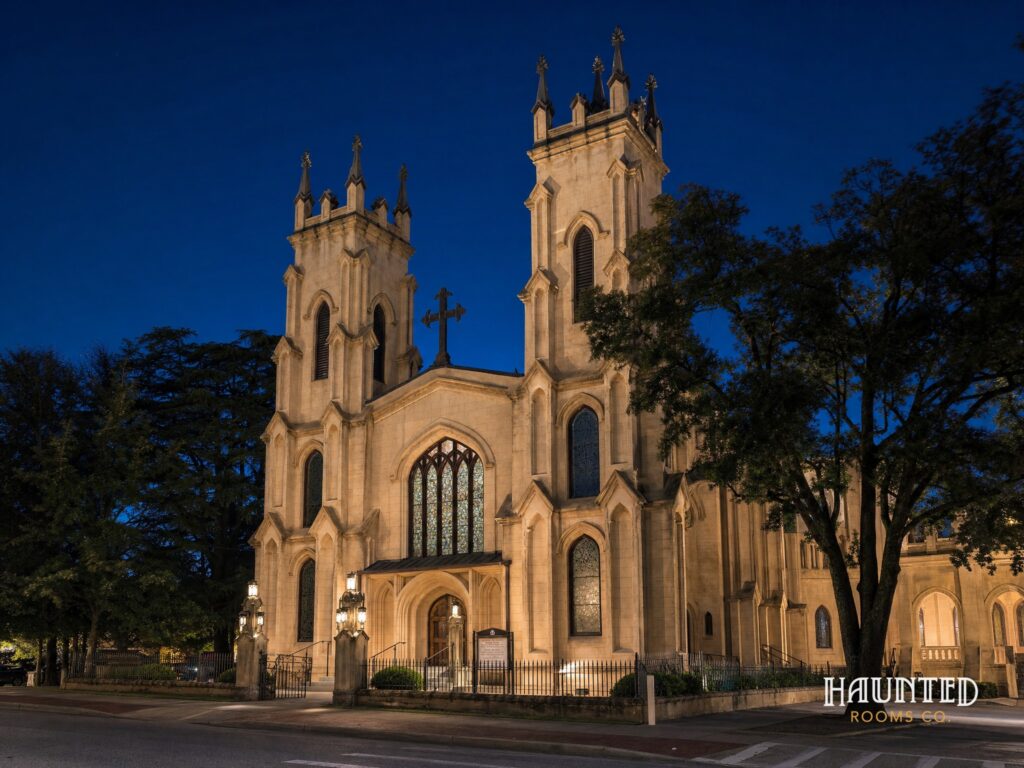
Charleston architect Edward Brickell White modeled this Gothic Revival church on York Minster. Begun in the mid-1840s across Sumter Street from the State House, it was consecrated in 1847; the parish itself dates to 1812. Its lead finials were melted into bullets in 1862, and its metal roof helped it survive the fire that swept Columbia when Sherman’s army occupied the city in 1865, making it the oldest church sanctuary still standing in the city. It became the cathedral of the Diocese of Upper South Carolina in 1977.
Its churchyard, in use since 1814, holds the Revolutionary War general Wade Hampton I and his grandson Wade Hampton III, Peter Horry, poet Henry Timrod, six governors and eight bishops. Jody Donnelly of the Spirits and Spectres of Columbia tours told of a love triangle that ended when one man shot the other; the woman nursed the wounded man, they married, and both lie here. The shooter is said to visit their grave. The story names no names, and we found no record of it.
Haunted Rooms tip: Walk the churchyard by day and look across to the bronze stars on the State House that mark where Sherman’s shells hit.
Address Gervais Street (US 1 and US 378) over the Congaree River, Columbia, SC
Where to look The approaches and sidewalks at night
Reported ghosts A girl hitchhiker who vanishes from the car
Visiting Public road bridge with sidewalks
Ghost hunting A public road: do not stop vehicles on the bridge
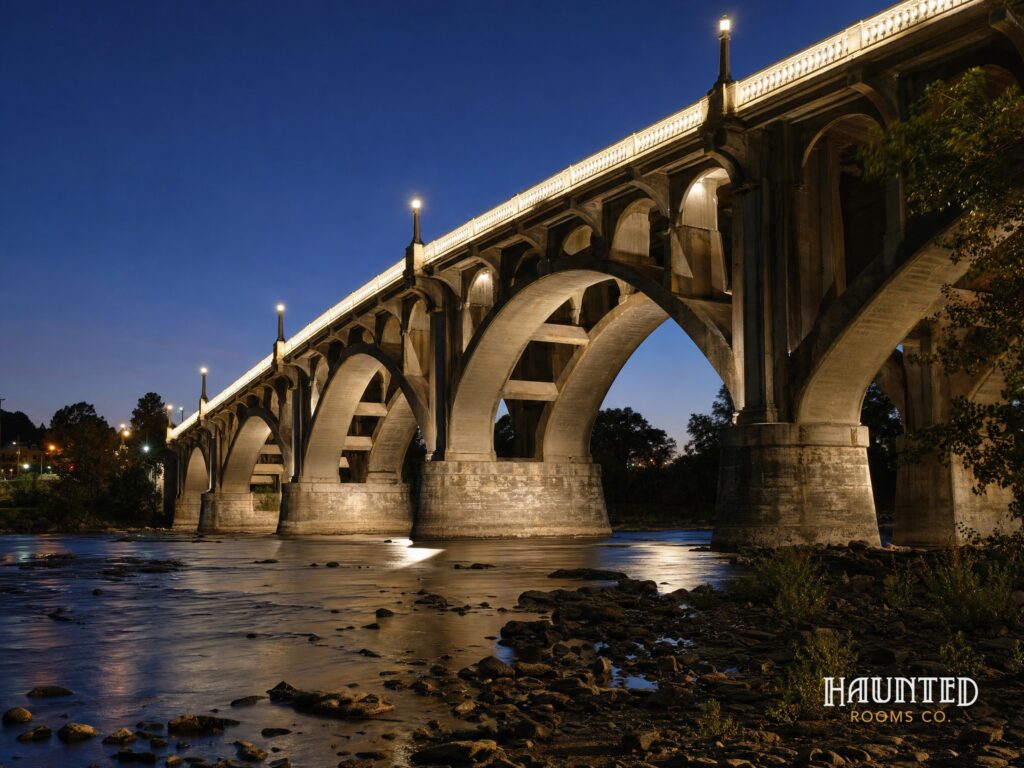
This concrete arch bridge carries Gervais Street across the Congaree River between Columbia and West Columbia. It was built from 1926 to 1928 for about $597,000 and was the widest road in South Carolina when it opened. The first crossing here, a wooden bridge of about 1827, was burned by Confederate troops in 1865 to slow Sherman’s army, and its old foundations can still be seen under the current spans. The 1,415-foot bridge, with green cast iron lamps along its balustrades, has been on the National Register since 1980.
Its ghost is the classic vanishing hitchhiker: a young girl by the road who asks drivers to take her home, then disappears from the car partway there. The same tale is told of roads across America, and there is no record of who she might be. The bridge is still a busy road, so enjoy the river views from the sidewalk or from the riverwalk below.
Haunted Rooms tip: Walk across at sunset from the Vista and back along the Three Rivers Greenway.
Address Scape Ore Swamp and Browntown Road area, near Bishopville, SC 29010
Where to look The back roads along the edge of Scape Ore Swamp near Browntown
Reported ghosts The Lizard Man, a green, seven-foot reptile man with red eyes
Visiting Public roads only; the swamp itself is private land and wetland
Ghost hunting No organized hunts; stay on public roads
In July 1988 the Lee County sheriff’s office looked into damaged cars near Browntown, outside Bishopville. Then 17-year-old Christopher Davis said that a creature, green, wet and about seven feet tall, had come out of Scape Ore Swamp and attacked his car while he was changing a tire. Sheriff Liston Truesdale’s investigation made the Lizard Man a national story, and at one point a $1 million reward was offered for its capture.
Reports came back in 2008, when CNN covered a couple’s damaged car (lab tests found dog blood), and in 2015, when WCIV aired photos said to show it. Skeptic Ben Radford points out that Davis’s story changed over the years. Whatever came out of the swamp, the Lizard Man is now a beloved local icon: the South Carolina Cotton Museum in Bishopville shows plaster casts of the three-toed footprints, and the town has held a Lizard Man Stomp festival downtown since 2022.
Haunted Rooms tip: Pair a drive past the swamp with the South Carolina Cotton Museum in Bishopville, and do not walk into the swamp at night.
These places appear on older lists of Columbia ghosts, but you cannot or should not visit them.
Fort Jackson
An active U.S. Army training post named for Andrew Jackson. Its stories, a female soldier with a hole in her helmet seen in a latrine and a shadow that walks the B Company barracks of the 369th Adjutant General Battalion at night, come from soldiers and have never been documented. The post is closed to the public without authorization.
Mill Creek Elementary School
Older lists say neighbors saw a shadow figure at the gym doors at night. We found no published source for the story, and it is a working elementary school: do not go onto school grounds after hours.
Changes to this guide: The old asylum is no longer abandoned: the Babcock Building is apartments and the Mills Building a state office. Fort Jackson and Mill Creek Elementary moved to the off-limits list. New to this guide: Elmwood Cemetery, Trinity Cathedral churchyard, the Hampton-Preston Mansion and Robert Mills House, and the Lizard Man of Scape Ore Swamp.
Visited one of these places? Tell us what happened
We collect first-hand accounts from visitors and add the best ones to our guides, with your first name and the date of your visit. We read every story before it’s published.
Frequently asked questions
What is the most haunted place in Columbia, SC?
The former South Carolina Lunatic Asylum on Bull Street has the biggest reputation, but it is now the BullStreet District, with apartments in the Babcock Building and a state office in the Mills Building. For a place you can walk into, Longstreet Theatre and the South Carolina State Museum have the best documented staff stories.
Can you go inside the Bull Street asylum?
No. The Babcock Building reopened as apartments in 2022 and the Robert Mills Building is a state office, so both are private. You can see them from the streets and green of the BullStreet District.
Who is Bubba at the South Carolina State Museum?
Staff nickname for a ghost said to be a mill hand killed in an accident when the building was the Columbia Mills. Visitors describe a man in overalls who steps into an elevator and vanishes, and a staff member saw boots disappear by the Hunley replica.
Is the University of South Carolina haunted?
Its ghost stories are some of the best documented in the state: theater faculty at Longstreet Theatre talk openly about footsteps on the catwalk, and staff at McKissick Museum and the South Caroliniana Library report footsteps and moved objects. The Third Eye Man, the university archivist says, began as a class project.
Are there ghost tours in Columbia?
Historic Columbia runs tours of Elmwood Cemetery and the historic houses, the university’s student ambassadors run a campus ghost tour each October, and the Hampton-Preston Mansion holds candlelight tours in December.
Sources and how we research
Every place in this guide is checked against its official website, historic register listings and news coverage, and we confirm whether it is open, closed, private or gone before we list it. Ghost stories are reported as staff, visitors and local historians tell them; we say so where records contradict a story. Each place shows how many independent sources we checked it against; our own Haunted Rooms pages are not counted.
New guides, haunted places to visit and ghost hunt dates near you. No spam, unsubscribe any time.
About the authors
The Haunted Rooms Team runs public ghost hunts and overnight investigations at historic venues across the United States. We research every place in our guides using official sites, historic registers, local archives and news coverage, and we report ghost stories as the stories they are. We review each guide regularly so you are not sent to a place that has closed, changed hands or banned visitors. Spotted something out of date? Let us know.