Haunted Places in Pittsburgh: 12 to Visit and 4 Legends to Know
A Richardson jail with a Bridge of Sighs, blast furnaces that ran on dangerous work, a church where a painter saw a ghost at the altar and a university tower with a haunted bed. Here is haunted Pittsburgh, with what is true, what is legend and how you can visit.
Pittsburgh’s ghost stories grow out of its steel and its fortunes: the mill towns along the Monongahela, the jail that held the city’s accused killers, the immigrant churches on its hillsides and the mansions built with Frick and Carnegie money. We have checked every place on our older list against current sources and added four more with well-documented stories. Twelve you can visit or see, from a free Monday museum inside the old county jail to an adults-only paranormal tour at Carrie Furnace, a brewpub in a former church and the murals in Millvale where Maxo Vanka saw an apparition in 1937. Four of the city’s most famous legends are on private land, unsafe, or simply gone, so we explain those at the end rather than sending you to them.
Ghost hunting Yes, at the library’s own October events
Andrew Carnegie paid for this red-brick library above the Homestead steel works, and it opened on November 5, 1898, only six years after the Homestead Strike in which 16 people died. It still works as a library, a 1,000-seat Music Hall and an athletic club with an indoor pool. In November 1899 a 25-year-old man, Robert Peebles, was found dead in that pool.
Syfy’s Ghost Hunters made its first Pittsburgh-area episode here in 2011. Staff told local TV about a book falling from a shelf after a joke about Carnegie, a glimpse of someone who was not there, and a shadow moving on the back steps of the Music Hall. The library has run Halloween ghost tours with a local paranormal group. Its overnight investigation runs from midnight to 3 AM.
What investigators report
When TAPS investigated for Ghost Hunters, they reported K2 meter spikes and a door opening on the music hall stage, and an audio recorder picking up a woman’s laugh in the old athletic club locker room.
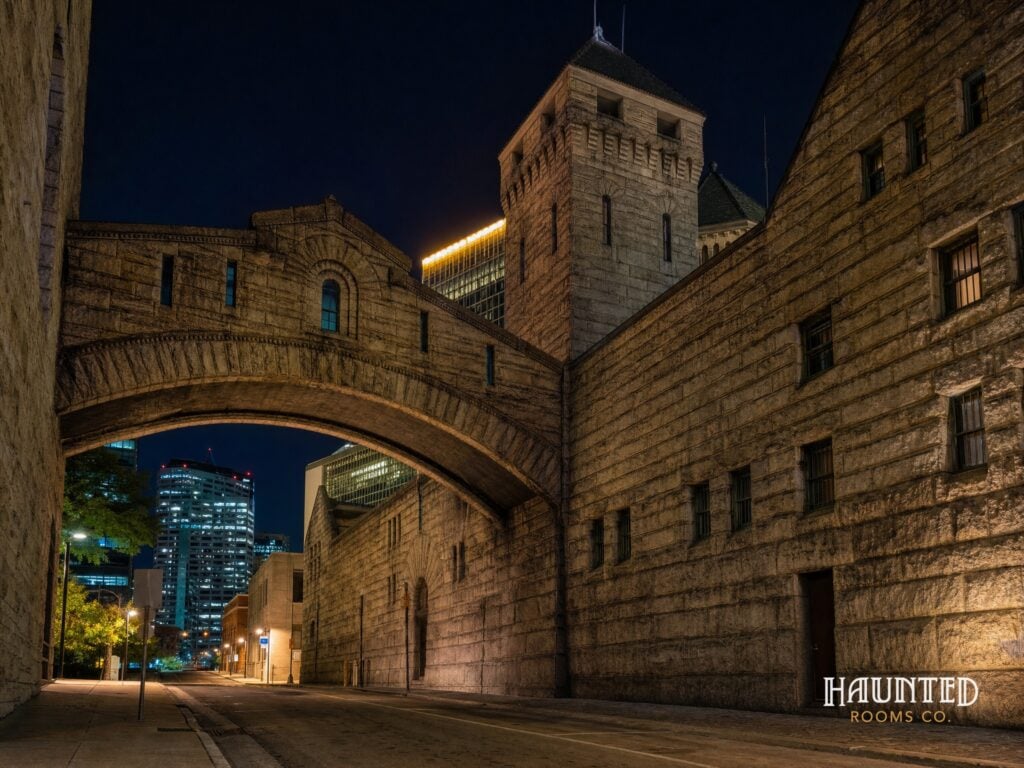
Where to look Murderer's Row and the Bridge of Sighs
Reported ghosts William A. Culp, who died in his cell in 1907
Visiting Inside the Family Court building; enter on Ross Street through security
Tours Free drop-in visits with Pittsburgh History & Landmarks Foundation docents
Hours and season First and third Mondays of the month, 11:30 AM to 1 PM, except court holidays
Tickets Free
Ghost hunting No: it is a working courthouse and cameras are not permitted
H. H. Richardson’s granite jail was completed in 1886 and linked to his courthouse by a stone Bridge of Sighs, which prisoners crossed to their cells. It held inmates until July 27, 1995, then was rebuilt as the Family Division of the Allegheny County Court of Common Pleas. A section of one cell block survives as the Old Allegheny County Jail Museum, opened in 2005.
Its best-known ghost story is William A. Culp, an accused killer who took his own life in his cell on Murderer’s Row in 1907 while awaiting trial. Pittsburgh Magazine retells the story that his ghost was seen so often that prisoners in nearby cells demanded to be moved. The museum is free and staffed by docents on set Mondays. Visits are drop-in between 11:30 AM and 1 PM.
Haunted Rooms tip: You go through court security to reach the museum and cameras are not allowed, so leave the ghost hunting kit at home.
Address 801 Carrie Furnace Blvd, Pittsburgh, PA 15218
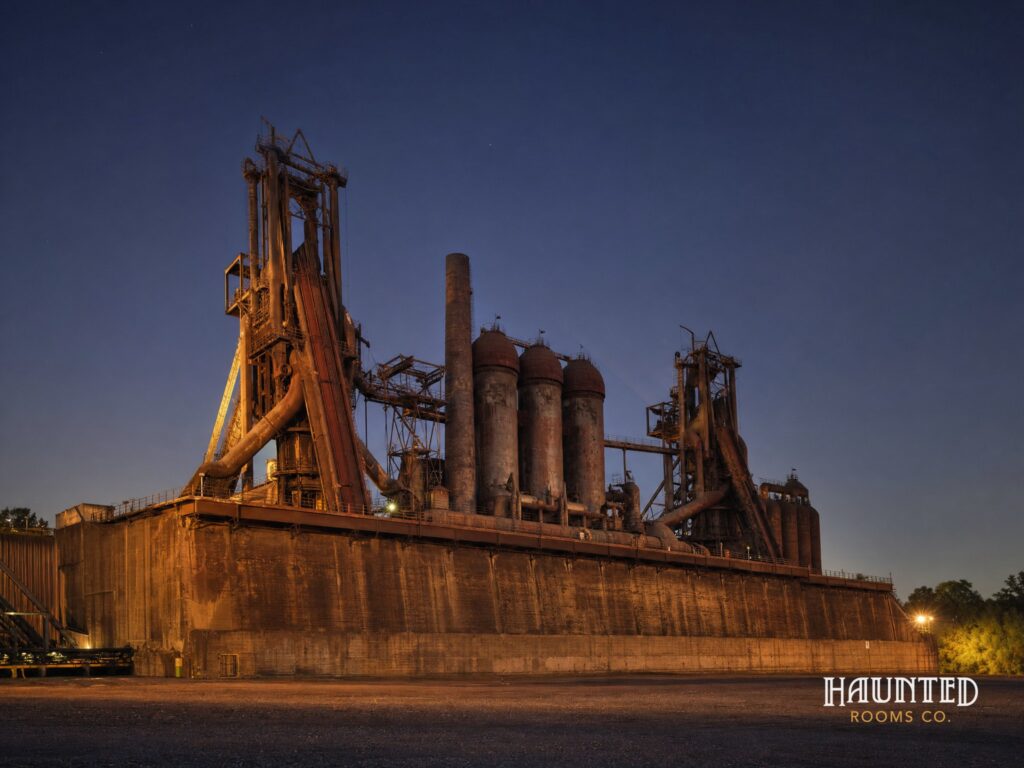
Where to look The base of Furnaces 6 and 7 and the ore yard
Reported ghosts Shadow figures and noises, linked to workers killed on the job
Visiting Guided tours only; the site is under restoration
Tours Industrial tour, Arts and Grounds tour, graffiti tour, and Carrie: After Dark (paranormal and history, fall evenings)
Hours and season Seasonal tours; Carrie: After Dark runs on select October evenings
Tickets Carrie: After Dark was $38 in recent seasons; adults 18+ only
Ghost hunting No open investigations; the After Dark tour shares investigators’ accounts
Carrie Furnaces 6 and 7 made iron for the Homestead Steel Works from 1907 until 1978, on the north bank of the Monongahela between Rankin and Swissvale. They are the only non-operating blast furnaces left standing in the Pittsburgh district. They became a National Historic Landmark in 2006, Allegheny County bought the land, and the nonprofit Rivers of Steel now runs tours.
Blast furnace work was some of the most dangerous in America, and men were killed and maimed at furnaces like these. Rivers of Steel leans into that with Carrie: After Dark, an 18-and-over October evening tour for about 40 guests that mixes the history of deaths on the job with paranormal investigators’ own accounts. Visitors and investigators talk of shadow figures and unexplained sounds around the furnaces. The site is still under restoration, so some areas can be closed on any given night.
What investigators report
Ghost hunt guests report using K2 meters, motion detectors and flashlight question-and-answer sessions in the tunnels and the old locker room, with trigger objects such as whisky, cigarettes and toys. One write-up describes two flashlights switching on and off in reply to questions and footsteps heard in an empty tunnel.
Where to look The altar and the scaffolding-height walls Vanka painted at night
Reported ghosts A black-robed figure, said to be a former priest
Visiting Working parish church; mural visits by booked tour
Tours Docent-led public tours on set days, plus private and group tours
Tickets Book online through the Society (tickets were $15 on Atlas Obscura’s listing)
Ghost hunting No investigations; an active church
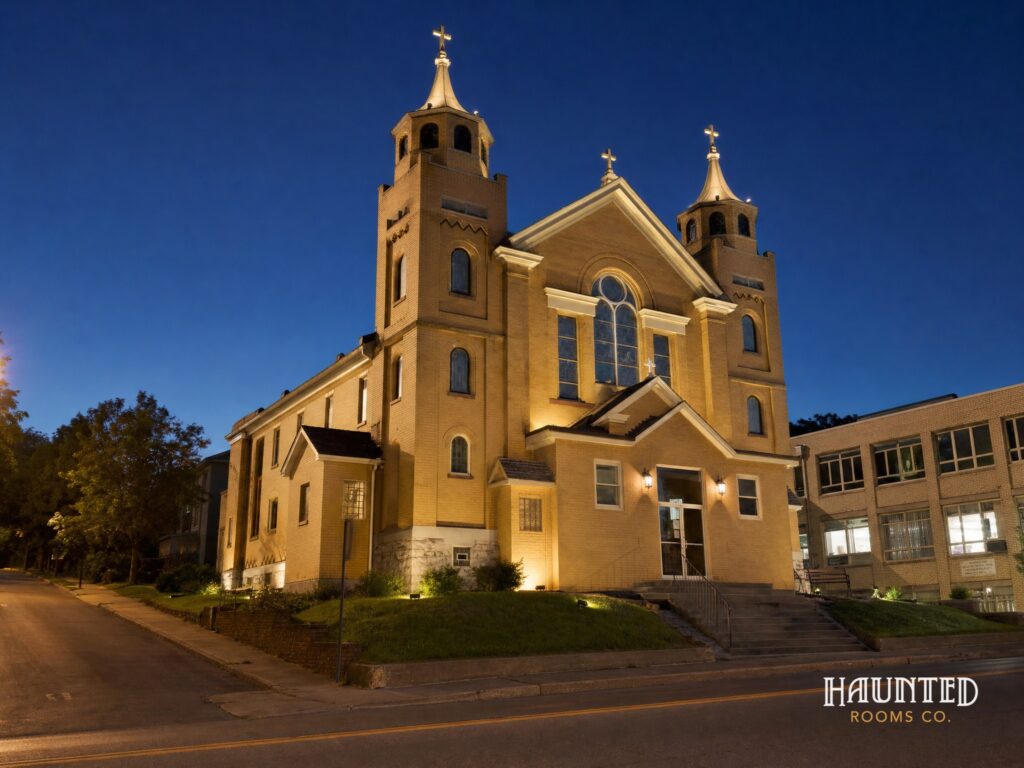
Croatian immigrants built St. Nicholas on the hill above Millvale, just across the Allegheny from Lawrenceville. The first church of 1900 burned in 1921 and the present one was dedicated in 1922. Croatian artist Maxo Vanka painted its 25 murals in two intense periods, in 1937 and 1941, and they are now being conserved by a society that runs tours of the church.
This is one of the best-documented ghost stories in Pittsburgh because the witness wrote it down. Painting alone at night in 1937, Vanka told his friend the writer Louis Adamic that he heard mumbling and saw a black-robed figure making gestures at the altar, while Father Albert Zagar, who kept him company, saw nothing. Adamic published it in Harper’s as “The Millvale Apparition.” Folklore makes the ghost a former pastor doing penance.
Haunted Rooms tip: Book a docent tour through the Society for the Preservation of the Murals of Maxo Vanka; the murals are the reason to go, and the guides tell the apparition story.
Where to look The children's rooms and Henry Clay Frick's study
Reported ghosts Young Martha Frick, Adelaide Frick, cigar smoke
Visiting House by guided tour only; grounds open
Tours Docent-led Clayton tours; upper-floors tour on some Wednesdays (18+)
Hours and season Closed Mondays; grounds 8 AM to 5 PM Tuesday to Sunday
Tickets See The Frick Pittsburgh website; upper-floors tour $95
Ghost hunting No paranormal investigations
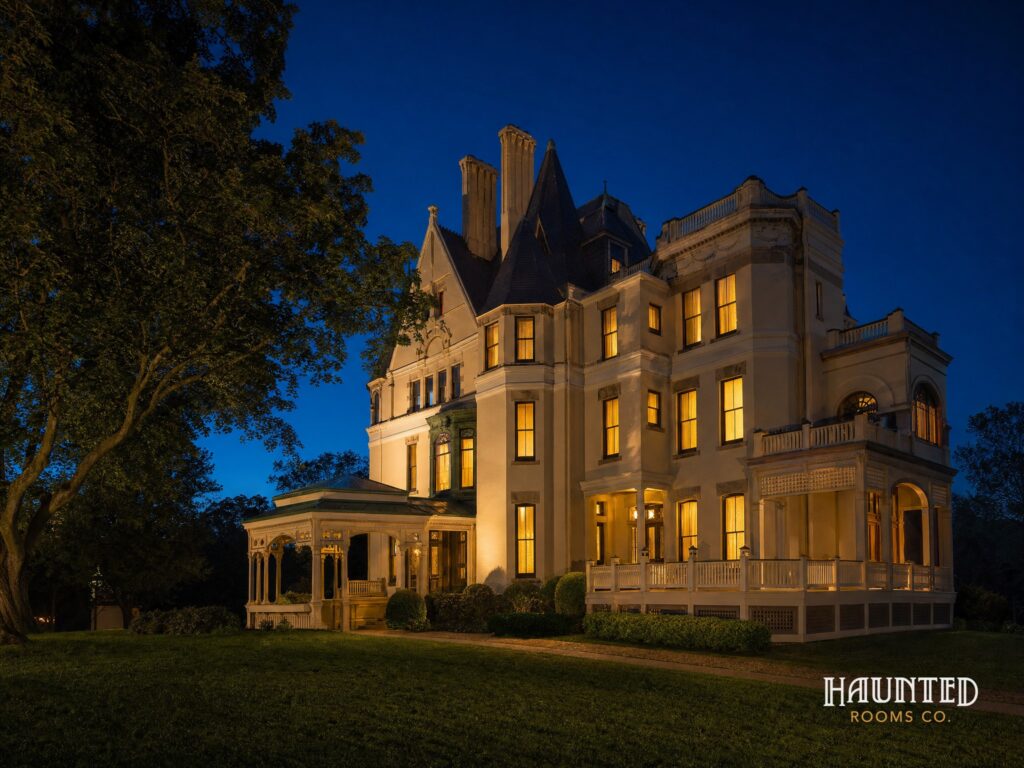
Henry Clay Frick and his wife Adelaide bought an 11-room house in Point Breeze in 1882 and by 1891 had turned it into this 23-room chateau. The family lived here until 1905. Their daughter Helen returned in 1981 and died here in 1984, and Clayton opened as part of The Frick Pittsburgh in 1990, still filled with family belongings. A rarer tour now takes small groups to the unrestored upper floors.
The family knew grief here: Martha Frick died in August 1891, days before her sixth birthday, and an infant son died in 1892. Ghost stories told about Clayton include a little girl’s laughter and footsteps upstairs, a sad presence near the rooms Adelaide used, and cigar smoke in Frick’s study. Staff accounts are anecdotal and unnamed. Clayton has never been formally investigated, and the museum does not promote ghost stories.
Haunted Rooms tip: For the most atmosphere, book the small, 18+ upper-floor tour of the unrestored servants’ and children’s rooms, if it is running.
Where to look The upper floors, the ballroom and the elevators
Reported ghosts Ruth Harkness, a woman in white, Henry Clay Frick
Visiting Working hotel; lobby and restaurants open to the public
Hours and season Open daily
Ghost hunting No ghost hunting; guest rooms are for hotel guests
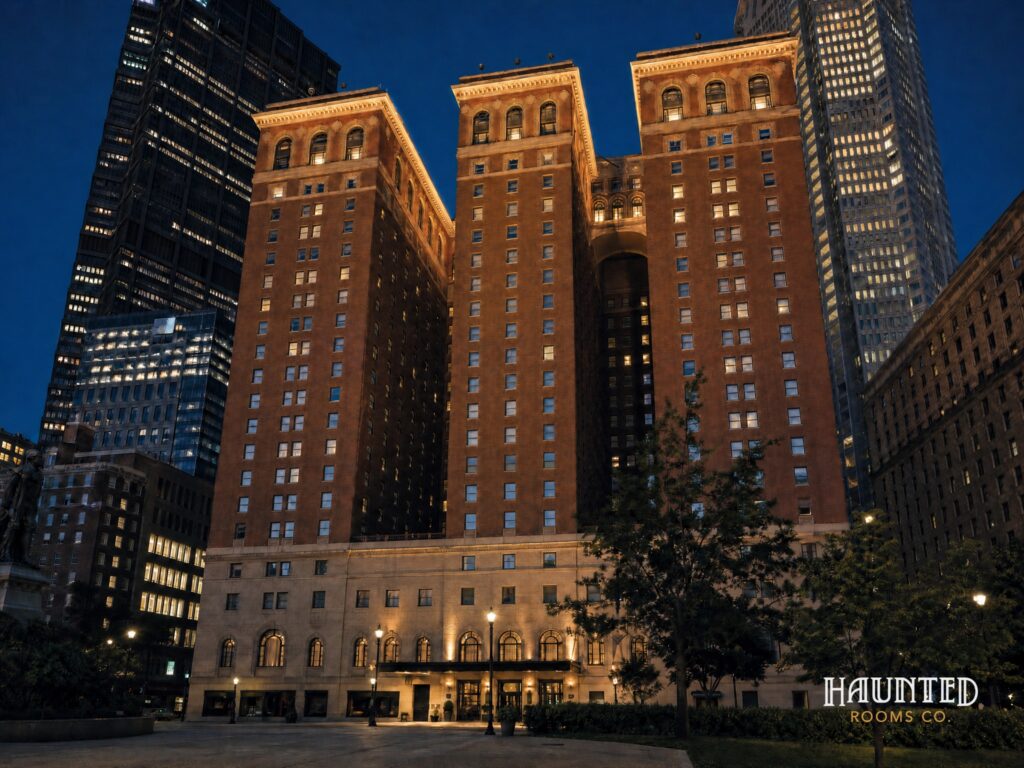
Henry Clay Frick backed this grand hotel on Mellon Square, which opened in 1916 and is a member of Historic Hotels of America. Bob Hope proposed here in 1934, John F. Kennedy stayed here, and hotel staff helped build Lawrence Welk’s bubble machine. Explorer Ruth Harkness, who brought the first giant panda to the United States, died at the hotel on July 20, 1947.
Local ghost tours say the hotel has more stories than they can fit in. Pittsburgh Magazine retells reports of ghostly panda bleats tied to Harkness, and tour companies add a woman in white near the grand staircase and an elevator that stopped for a figure in a bowler hat. Older claims that two upper floors are sealed off because of ghosts have no source we could find.
Haunted Rooms tip: Have a drink in the Palm Court lobby, which is open to non-guests, before a downtown ghost walk.
Visiting a haunted place by day is one thing. Investigating one after dark is another. On a Haunted Rooms ghost hunt our team takes you through a historic building with professional ghost hunting equipment, runs EVP sessions and vigils, and gives you time to explore on your own. These are the nearest ones we run.
Where to look The Early American Nationality Room and the Croghan-Schenley Ballroom
Reported ghosts Martha Jane Poe, Mary Schenley
Visiting University building open to the public; Nationality Rooms by guided tour
Tours Guided Nationality Rooms tours; book at least three days ahead
Hours and season Tour times vary; rooms are used as classrooms on weekdays
Tickets Tours $10 adults, $6 up to 18
Ghost hunting No investigations; working classrooms
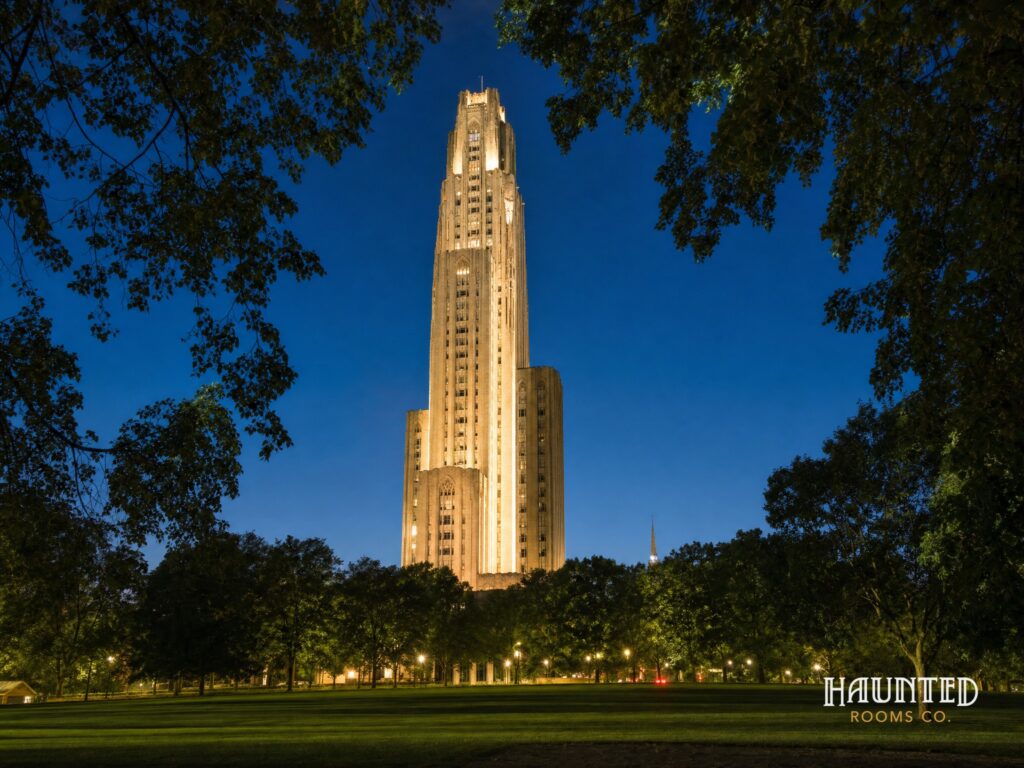
The University of Pittsburgh’s 42-story Gothic Revival tower, designed by Charles Klauder, rose between 1926 and 1937 and holds 31 Nationality Rooms, classrooms decorated in the styles of the city’s immigrant communities. Two of its rooms carry ghost stories. The Early American Room holds a bed, quilt and other pieces donated by Maxine Bruhns, who directed the Nationality Rooms for 54 years, and her mother.
Bruhns said that after she straightened the quilt she heard a swoosh, turned, and found it turned down with a head-shaped dent in the pillow; she believed it was her grandmother, Martha Jane Poe, a relative of Edgar Allan Poe. Later tellings add a rocking cradle and cold spots, and the current tour coordinator told The Pitt News in 2022 that Bruhns embellished the story over time. In the Croghan-Schenley Ballroom, rebuilt from an 1830s mansion, Mary Schenley, who eloped at 15, is said to appear.
What investigators report
Pitt opens the Early American Nationality Room (Room 328) to ghost seekers on Halloween night, and visitors climb its hidden staircase to the upstairs bedroom, where some report the quilt on the four-poster bed has moved.
Where to look The Wetlands room, the kitchen and the basement
Reported ghosts Confederate prisoners of 1863 and 1864, shadow figures
Visiting Indoor zoo open to the public; admission charged
Hours and season Daily 10 AM to 5 PM, closed Tuesdays
Tickets See aviary.org; parking $7
Ghost hunting No public investigations
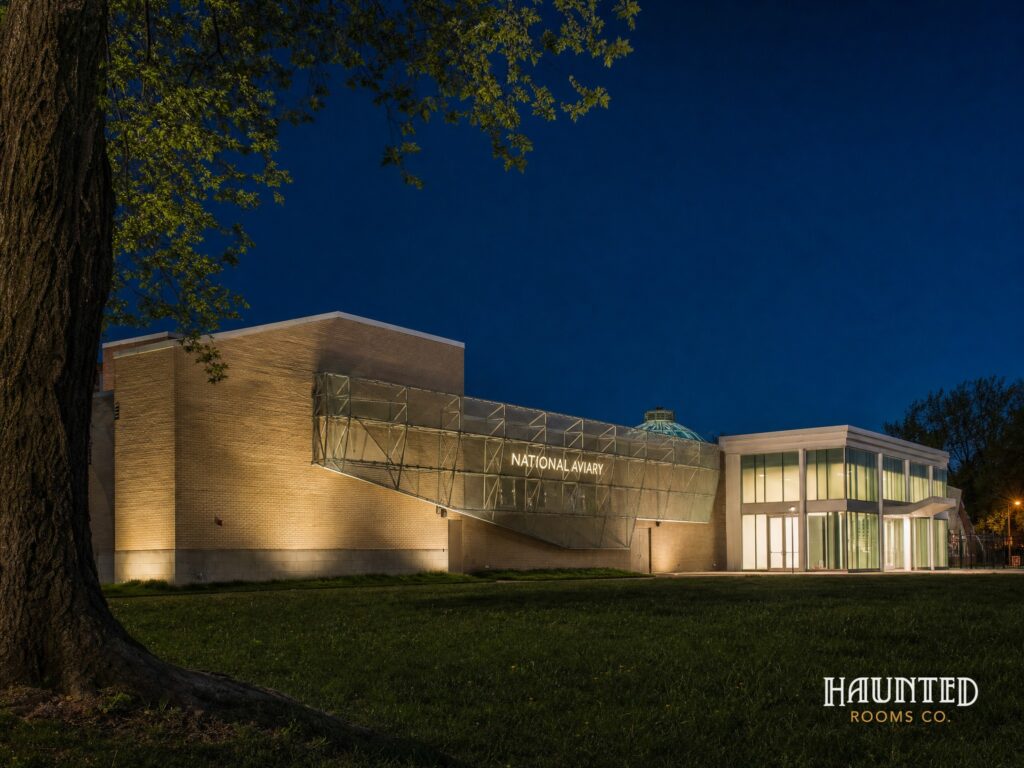
The aviary stands in Allegheny Commons on the North Side, on the site of the Western Penitentiary, which opened in 1826 as the sister prison of Eastern State and was torn down in 1880. Charles Dickens saw its shackled prisoners in 1842. From August 1863 to March 1864 it held 118 officers of Confederate General John Hunt Morgan’s cavalry, the only Confederate prisoners of war held in Pittsburgh. The city built a conservatory-aviary here in 1952, and it became the National Aviary in 1993.
Pittsburgh City Paper gathered the stories: Shawn Kelly of the Pittsburgh Paranormal Society calls it “extremely haunted” and says his team photographed a soldier’s shadow, author Patty A. Wilson wrote of staff seeing shadowy figures and hearing footsteps and banging in the basement, and a staff member saw a kitchen radio switch on and its dial turn by itself. Ghost tellers tie it to Morgan’s men, though the prisoners were held here only seven months.
Haunted Rooms tip: Go in the late afternoon and finish in the Wetlands room, where the Pittsburgh Paranormal Society says it recorded floating orbs.
Where to look The pipe factory ruins and the riverbank trail
Reported ghosts A hanged man, a drowned man, children's laughter
Visiting Public trails; main access from the Great Allegheny Passage
Hours and season Dawn to dusk year-round
Tickets Free
Ghost hunting No organized investigations
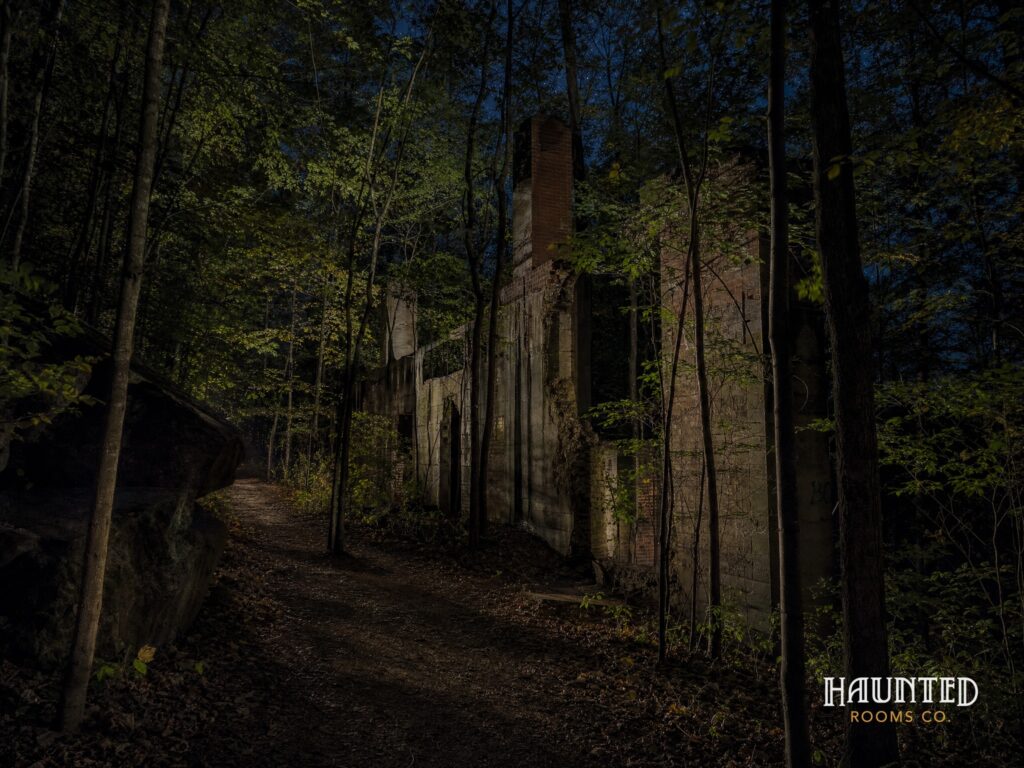
This 450-acre hollow above the Youghiogheny River is a conservation area owned by the Allegheny Land Trust. The story goes that it got its name in 1874, when boys found an unidentified man hanging by a noose; no one was ever charged. Later came shopkeeper Robert McClure, shot chasing robbers in 1881, a drowning in the river and industrial accidents at the Union Sewer Pipe works, which closed after a fire in 1920.
Its kilns and boiler house walls still stand among the trees. Local legend adds a drowned man who rises from the river, children’s laughter in empty woods and an old newspaper tale of a giant snake. Today it is a popular hiking spot with six to eight miles of trails, open dawn to dusk. Hikers come for Table Rock, the Enchanted Staircase and the ruins, and a few come hoping to hear the laughter.
Haunted Rooms tip: Go in daylight and park at the Great Allegheny Passage Boston lot; hunting is allowed in season, so wear orange in the fall.
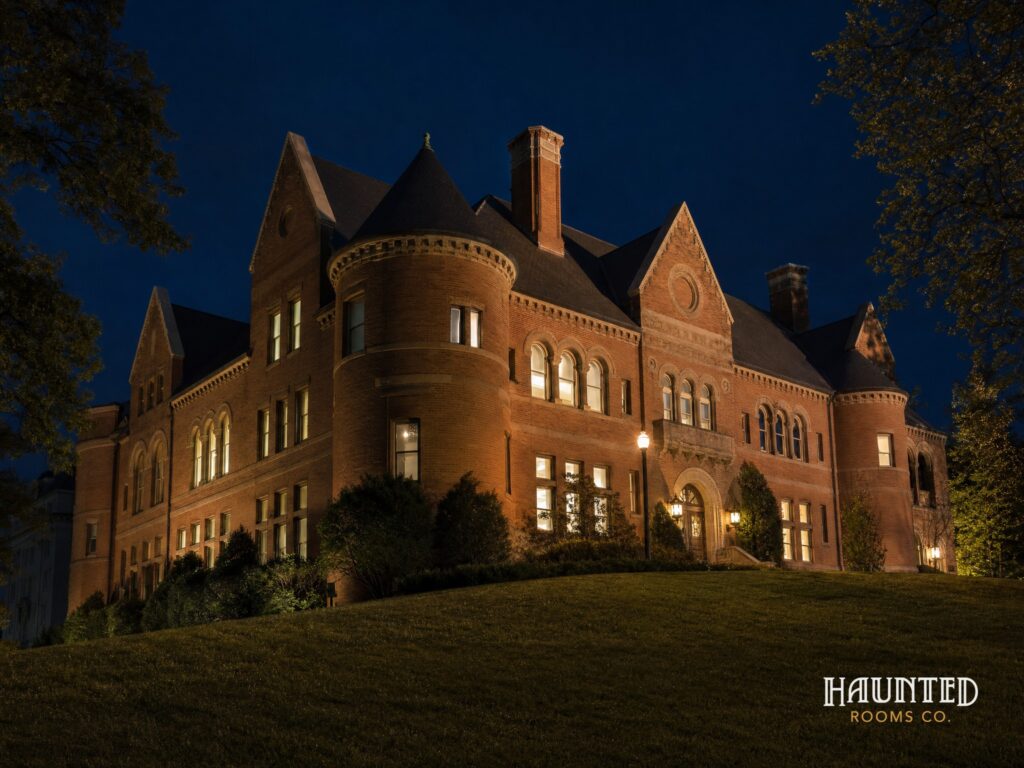
Where to look Woodland Hall, Mellon Hall, Fickes Hall and Laughlin House
Reported ghosts The Blue Lady, a ball-bouncing boy, Andrew Mellon
Visiting Campus grounds and arboretum; buildings and residence halls are not open to the public
Hours and season Grounds in daylight
Tickets Free
Ghost hunting No
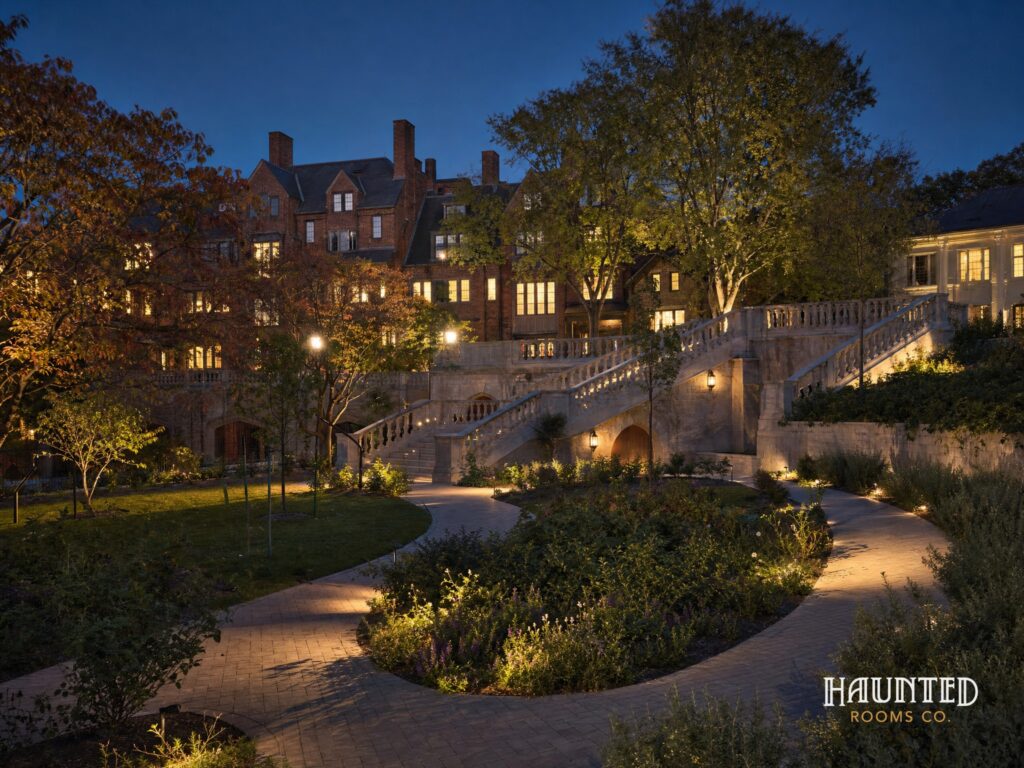
Chatham was founded in 1869 as the Pennsylvania Female College and grew across the mansions of Woodland Road in Shadyside, including Andrew Mellon’s former home. The 39-acre campus has been an arboretum since 1998. Older ghost lists say it was once an asylum; we found no record of that, and the student paper’s version is told as rumor. Woodland Hall dates from 1909 and Fickes Hall from 1927.
The university’s own blogs happily share the stories: the Blue Lady of Woodland Hall, a ball-bouncing little boy in Fickes Hall, cigar smoke in Mellon Hall, and a dark-haired woman and slamming doors in Laughlin House. Tales of affairs and deaths behind the Laughlin and Rea houses have no records behind them. Students also report a cold board room in Mellon Hall, once Andrew Mellon’s home.
Haunted Rooms tip: Walk the arboretum grounds in daylight; residence halls are for students only.
Where to look The altar, the old rectory stairs and the former school
Reported ghosts A young Lady in White
Visiting Restaurant and brewery open to the public
Hours and season Monday to Thursday 4 to 10:15 PM; Friday and Saturday 11:45 AM to 11 PM; Sunday 11:45 AM to 9 PM
Ghost hunting No public investigations
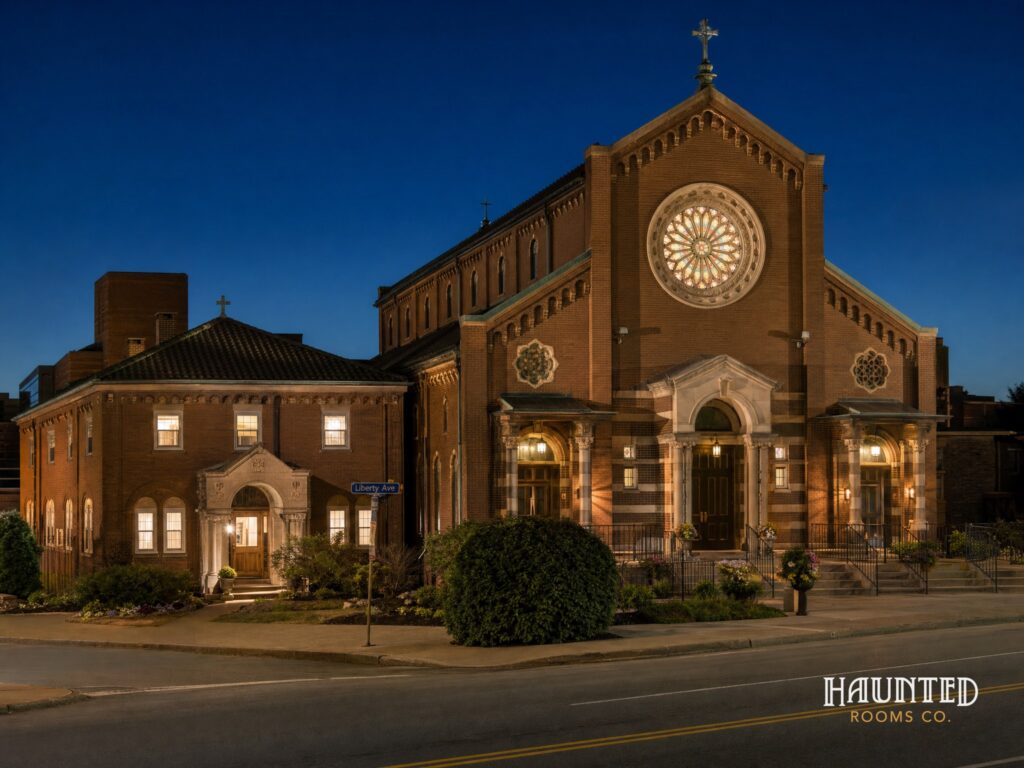
St. John the Baptist Church was built on Liberty Avenue in Lawrenceville in 1902 for the neighborhood’s Irish and Scottish Catholics. The Diocese of Pittsburgh closed it in 1993, and on August 1, 1996, it reopened as the Church Brew Works, a brewery and restaurant inside the old church. The rectory is now the kitchen.
Former head brewer Matt Moninger told Pittsburgh City Paper he saw a pale young woman in a long white dress four times around 2006 and 2007, first on the rectory steps and later among the tables, and that she held his gaze before vanishing. Staff describe footsteps, voices, a chair moving on its own and faint organ music. Owner Sean Casey invited Ghost Hunters, whose 2022 episode “The Haunted Brewery” was filmed here.
What investigators report
Staff sightings of a young woman in white center on the rectory steps leading to the kitchen and a table in the front apse behind the old altar, and the Ghost Hunters team, who spent three nights speaking to spirits here, said one recording caught a raspy voice saying “Jesus”.
Where to look The third floor and the front sitting room
Reported ghosts Unseen touches, voices on recordings
Visiting Private; owned by the Manchester Historic Society and awaiting restoration. Exterior only
Ghost hunting No current public investigations that we could confirm
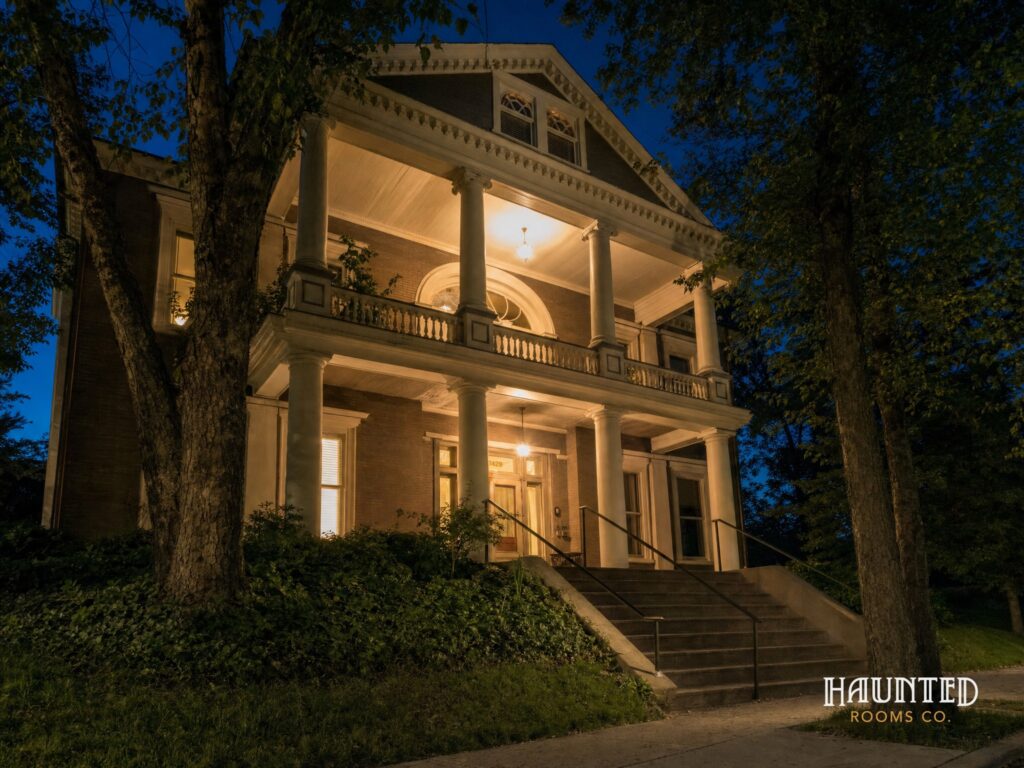
Colonel James Anderson, an iron manufacturer and War of 1812 veteran, built this Greek Revival house in Manchester around 1830, with additions in 1905. He opened his 400-book library to working boys on Saturday nights, and a young Andrew Carnegie was one of them. The house became a Pittsburgh Landmark in 1989 and later served as a hospice. It is a rare survivor from the days when Manchester was part of Allegheny City.
The Manchester Historic Society bought it in 2016 and has been raising money to restore it. A local paranormal group, Ghosts N’at, used to run small investigations here, and visitors reported being touched on the third floor and catching voices on recorders. There are no regular public tours now, so admire it from the street. The building needs major work, and no date has been set for it to reopen.
Haunted Rooms tip: Look for it during Manchester’s house and garden tours, when the neighborhood’s historic homes sometimes open.
These places appear in older lists of haunted spots. We keep them here so you know the facts before you go, but you cannot (or should not) visit them.
Green Man's Tunnel, South Park Township
An abandoned railroad tunnel beside Piney Fork Road, with a fenced entrance, where the Green Man or Charlie No-Face is said to glow in the dark. The real man behind the legend, Raymond Robinson, was badly burned by a trolley wire on a bridge near Beaver Falls in 1919, aged eight. He lived in Koppel, Beaver County, walked Route 351 at night, was remembered by those who met him as kind, and died in 1985. He had nothing to do with this tunnel. Old rail tunnels are unsafe and not open to the public, so do not go in.
The Congelier House, "The House the Devil Built"
The story of a cleaver murder, a head-collecting Dr. Brunrichter and a 1927 explosion at 1129 Ridge Avenue was first printed in a 1979 book. Pittsburgh City Paper found no records of the murders or the doctor and no Charles Congelier: the real owner was Jack Cancelliere, a bootlegger whose name police often misspelled. The only documented death tied to the house was his wife Mary’s, from injuries in the November 1927 gas tank explosion. The rowhouse is long gone and the site is a parking lot.
13 Bends Road, Harmar Township
Legend puts an orphanage fire on Campbell’s Run Road, with 13 bends going up and 12 coming down, and children’s handprints on dusty cars. Researchers could only find a dance hall that burned in the 1940s with no deaths. The road is private and ends at a CONSOL Energy mine site, so please do not drive it.
The old Pittsburgh Playhouse, Oakland
The ghosts of the Playhouse (John Johns, an actor who died there in 1963, a lady in white and Weeping Eleanor) belonged to the old Craft Avenue buildings, a 1930s complex that included the former Tree of Life synagogue. Point Park University moved the Playhouse to a new building at 350 Forbes Avenue downtown in 2018 and the old complex was demolished in 2019. The new Playhouse is a great place to see a show, but the ghost stories stayed behind.
Changed from our older guide: Green Man’s Tunnel, the Congelier House, 13 Bends and the old Pittsburgh Playhouse moved to the off-limits list (unsafe, private, demolished or unsupported by records). We corrected the Old Allegheny County Jail, which closed in 1995 and is now a courthouse with a free museum, not a working jail; removed the claim that Chatham was an asylum, which we could not trace; and dropped the story that two Omni William Penn floors are sealed off because of ghosts.
Visited one of these places? Tell us what happened
We collect first-hand accounts from visitors and add the best ones to our guides, with your first name and the date of your visit. We read every story before it’s published.
Frequently asked questions
What is the most haunted place in Pittsburgh?
The Old Allegheny County Jail downtown is the one with the best-documented story: accused killer William A. Culp died in his cell in 1907, and prisoners reportedly asked to be moved away from his ghost. Carrie Furnace and the Carnegie Library of Homestead are close behind, and both run their own paranormal events.
Can you tour the Old Allegheny County Jail?
Yes, for free. A preserved section of the cell block is a museum inside the Family Court building at 440 Ross Street, open on the first and third Mondays of the month from 11:30 AM to 1 PM, except court holidays. You pass through security, and cameras are not allowed.
Is there a ghost tour at Carrie Furnace?
Yes. Rivers of Steel runs Carrie: After Dark on select October evenings, a 2-hour adults-only tour that mixes the history of deaths at the furnaces with paranormal investigators’ accounts. Groups are small and it sells out, so book early and bring a flashlight.
Is Green Man's Tunnel real?
The tunnel is real, an abandoned railroad tunnel on Piney Fork Road in South Park Township, but the ghost is not tied to it. The legend grew from Raymond Robinson, a kind man disfigured in a 1919 accident who walked roads in Beaver County at night. The tunnel is unsafe and not open to the public.
Is the Cathedral of Learning haunted?
Two of its rooms have ghost stories. Maxine Bruhns, who ran the Nationality Rooms for 54 years, said the quilt on the Early American Room’s bed turned itself down and left a head-shaped dent in the pillow, and believed it was her grandmother, Martha Jane Poe. Mary Schenley is said to appear in the Croghan-Schenley Ballroom. You can see both rooms on a guided Nationality Rooms tour.
Where can I go ghost hunting near Pittsburgh?
The Carnegie Library of Homestead hosts an overnight investigation each Halloween season. Haunted Rooms runs public ghost hunts east of the city at Cresson Sanatorium near Altoona and the Grand Midway Hotel in Windber.
Sources and how we research
Every place in this guide is checked against its official website, historic register listings and news coverage, and we confirm whether it is open, closed, private or gone before we list it. Ghost stories are reported as staff, visitors and local historians tell them; we say so where records contradict a story. Each place shows how many independent sources we checked it against; our own Haunted Rooms pages are not counted.
New guides, haunted places to visit and ghost hunt dates near you. No spam, unsubscribe any time.
About the authors
The Haunted Rooms Team runs public ghost hunts and overnight investigations at historic venues across the United States. We research every place in our guides using official sites, historic registers, local archives and news coverage, and we report ghost stories as the stories they are. We review each guide regularly so you are not sent to a place that has closed, changed hands or banned visitors. Spotted something out of date? Let us know.