Haunted Places in Lancaster, PA: 10 of the Most Haunted to Visit
A theater built on the jail where the last Conestoga were murdered, a general’s mansion that barely changed in 150 years, and a brewery with dinner in its catacombs. These are Lancaster County’s best-known haunted places, with what is history, what is legend and how to visit.
Lancaster County’s ghost stories grow out of real and often hard history: the 1763 massacre of the Conestoga, public hangings on Gallows Hill, Revolutionary War families and 19th-century river towns. We have checked every place below against current sources, so you know which ones run ghost tours, which allow investigations, which you can only see from outside, and which stories we could not trace. Six are in or next to Lancaster city; the Lititz Springs Inn is 15 minutes north, and Bube’s Brewery, Chickies Rock, the Railroad House and the Haldeman Mansion are a short drive west toward the Susquehanna River.
Where to look The old spiral staircase, the gallery, the stage and the jail walls backstage
Reported ghosts Marie Cahill, the Whistler, the grandfather in the gallery
Visiting A working professional theater; see a show or ask about building tours
Tours Lancaster’s evening ghost walks stop outside; the theater lists its own building tours
Ghost hunting No public ghost hunts
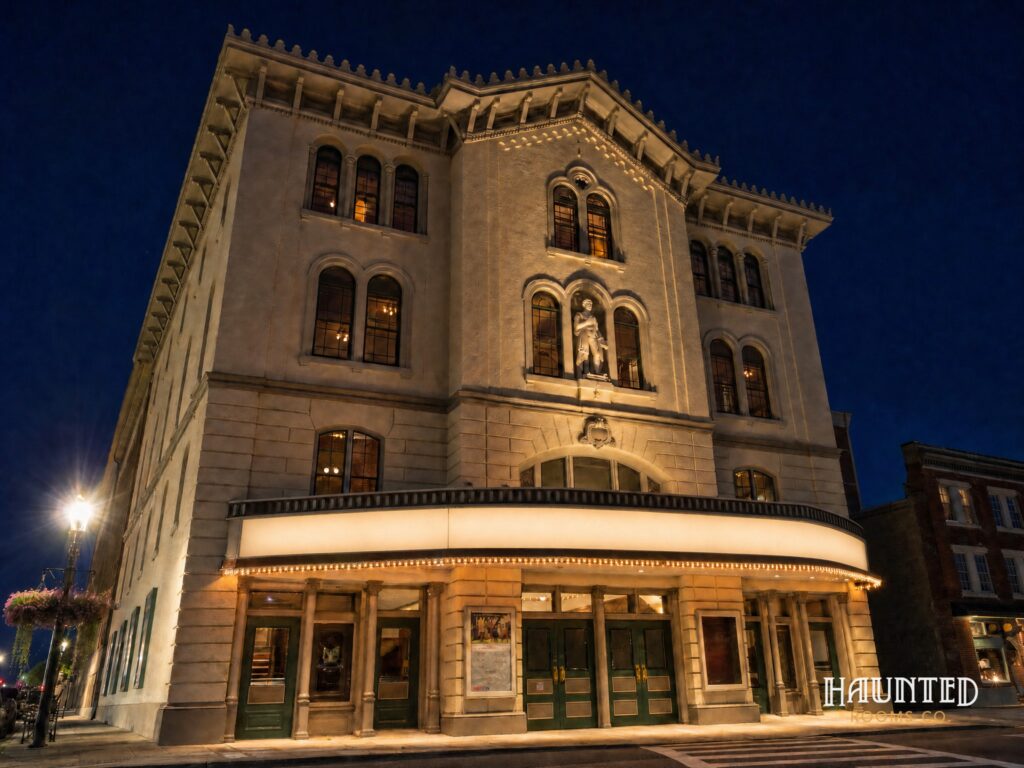
The Fulton opened in 1852 as Fulton Hall, built by Christopher Hager to designs by Samuel Sloan on the foundations of Lancaster’s colonial jail. It was in that jail yard, on December 27, 1763, that the Paxton Boys murdered the last 14 Conestoga people. The old courtyard wall is still the theater’s back wall. Rebuilt as an opera house in 1873, it is a National Historic Landmark and still stages shows.
The theater tells its own ghost stories: a woman in white at the foot of an old spiral staircase who gave her name as Marie, thought to be actress Marie Cahill; the Whistler, a man in a light suit and straw hat who asked a carpenter for a cigarette and vanished; and an old man in the gallery who came to see his granddaughter. Jack Osbourne’s Portals to Hell also filmed here.
What investigators report
On Portals to Hell, investigators left an offering in the tunnels beneath the theatre and set up a Geoport there, reporting an unexplained rumbling afterward. The fourth floor, a former Civil War hospital, is where a figure was reported walking out of a doorway.
Where to look The Unrestored Room, the Blue Parlor, the study and the basement kitchen
Reported ghosts General Edward Hand, John Hand, a girl in period dress, a running servant
Visiting Guided tours of the mansion in season; grounds sit inside Lancaster County Central Park
Tours Guided mansion tours; after-dark haunted tours in October (15 guests, not for under 12s)
Hours and season Tour season April to October; closed now until April 1, 2027
Ghost hunting No public ghost hunts; volunteers have supervised occasional investigations
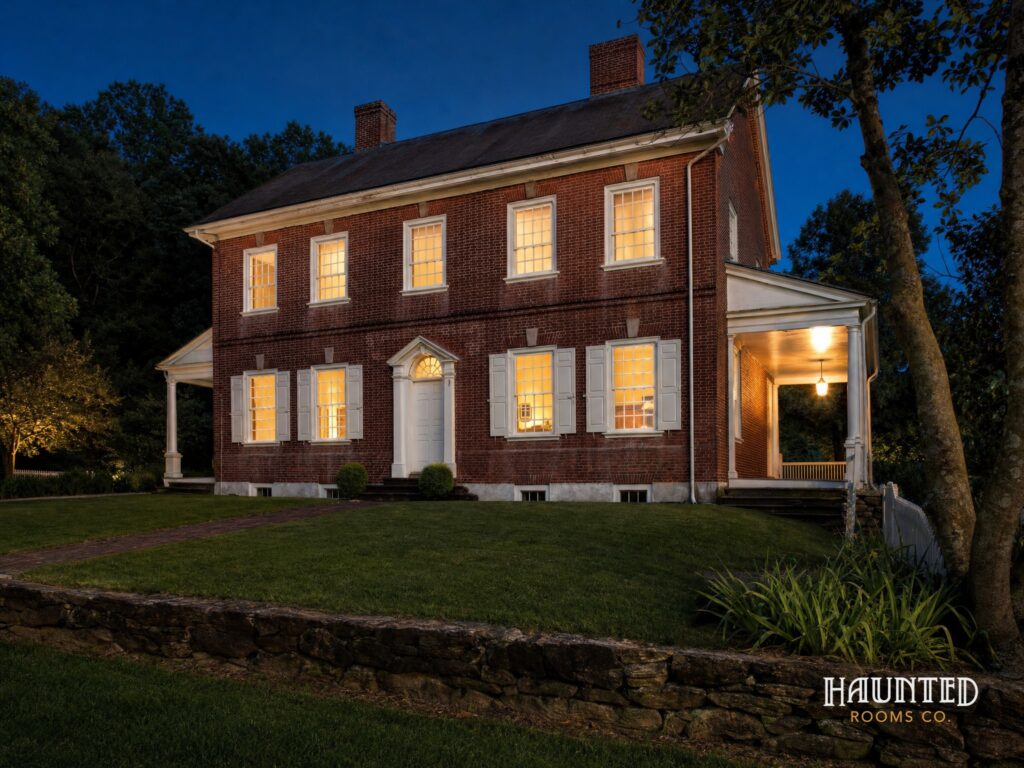
Rock Ford is the Georgian brick home of General Edward Hand, Washington’s adjutant general, built around 1794 on the Conestoga River and now surrounded by Lancaster County Central Park. Hand died in 1802 and his wife Katherine in 1805. In November 1807 their eldest son John died of a gunshot wound in the house. The estate was sold in 1810 and tenant farmers changed almost nothing for 150 years, which is why it survives so intact.
Staff, docents and visitors have told of footsteps and knocking in the Unrestored Room, a girl in period dress watching from the Blue Parlor door, a woman running toward the basement kitchen, and smells of pipe tobacco and apple pie when the hearth is cold. Rock Ford has run its own after-dark haunted tours each October.
Haunted Rooms tip: Book the October after-dark tour early: groups are capped at 15. The site is closed for tours until April 1, 2027.
Where to look The summer kitchen, the master bedroom and the parlor piano
Reported ghosts A grouchy man, a little girl, a teenage boy, a singing servant
Visiting Run by the all-volunteer Haldeman Mansion Preservation Society; open for tours and events
Tours Volunteer-led tours, traditionally Sunday afternoons in summer and fall
Ghost hunting The society has hosted booked paranormal investigations and TV crews; ask it directly
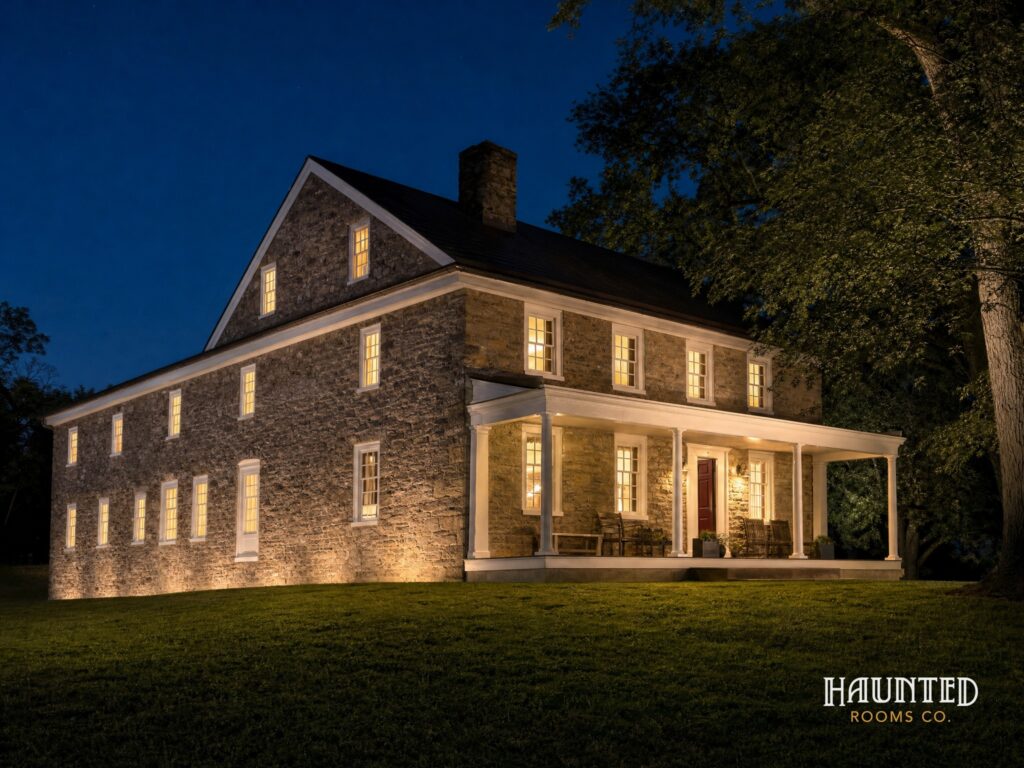
The Haldeman Mansion stands at Locust Grove on a terrace above the Susquehanna near Bainbridge, on land warranted to John Galbraith in 1738. Its Federal-style section was finished in 1811, and naturalist Samuel S. Haldeman, whose work Darwin cited, was born here in 1812. A volunteer society has saved it since 1967. The site sits within a documented Native American village area, listed as an archaeological district in 2020.
Its ghost list is long: a grouchy man who follows visitors around, a little girl, a teenage boy and a cheerful servant who sings in the summer kitchen. Investigators have reported children’s voices and footsteps, and Ghost Detectives filmed here in 2015. A story of more than 90 unmarked graves found during utility work is often repeated, but we found no record of it.
What investigators report
Off the Trails Paranormal reported spirit box sessions in the summer kitchen and office returning names and short phrases, plus a light going off on request in the summer kitchen. The team also played piano music to try to encourage a response, and logged EVPs in the parlor, master bedroom and cellar.
Where to look The Catacombs, the hotel corridors and stairs, the Bottling Works
Reported ghosts Alois Bube, Pauline Engle, a woman in a long gown
Visiting Restaurants and bars open to the public; ghost tours meet in the Bottling Works lobby
Tours Regular evening ghost tours (from about $10; not recommended for under 12s) and brewery tours
Hours and season Check the official site for tour dates
Ghost hunting Ghost tours only; ask the brewery about anything more
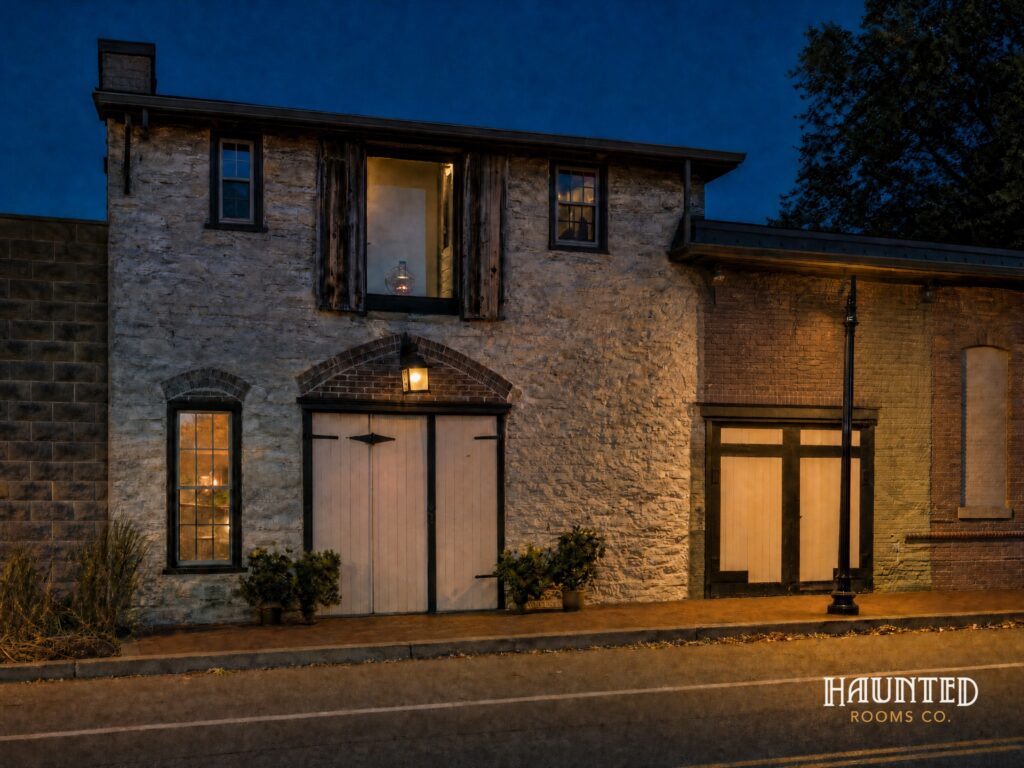
German immigrant Alois Bube bought a small Mount Joy brewery in 1876 and built it into a lager brewery with a Victorian hotel, the Central Hotel, and stone aging cellars 43 feet below the street. Prohibition shut it down, but the buildings survived almost untouched and were listed on the National Register in 1973. Today it is three restaurants, including dinner in the Catacombs, and a working brewery in the old ice house.
Staff talk about Alois himself, who died suddenly in 1908, and about a woman in a long gown seen in the art gallery and on the stairs, often linked to his granddaughter Pauline Engle. SyFy’s Ghost Hunters filmed here in 2012 and reported an oil lamp going out and a whispered voice in German. Bube’s runs its own ghost tours.
What investigators report
During a Ghost Hunters investigation in the Alois barroom and ballroom, the team placed two oil lamps on a table and asked aloud for a sign; one lamp reportedly flickered out. A recorder there also picked up what sounded like a German voice saying “Blow it out.”
Address Old Main Dr, Franklin & Marshall College, Lancaster, PA 17603
Where to look The bell tower and the lawn in front of Old Main
Reported ghosts A bell that rings by itself; spirits linked to Gallows Hill
Visiting Campus grounds open to visitors; the building is college offices and classrooms
Ghost hunting No ghost hunting: it is an active college building
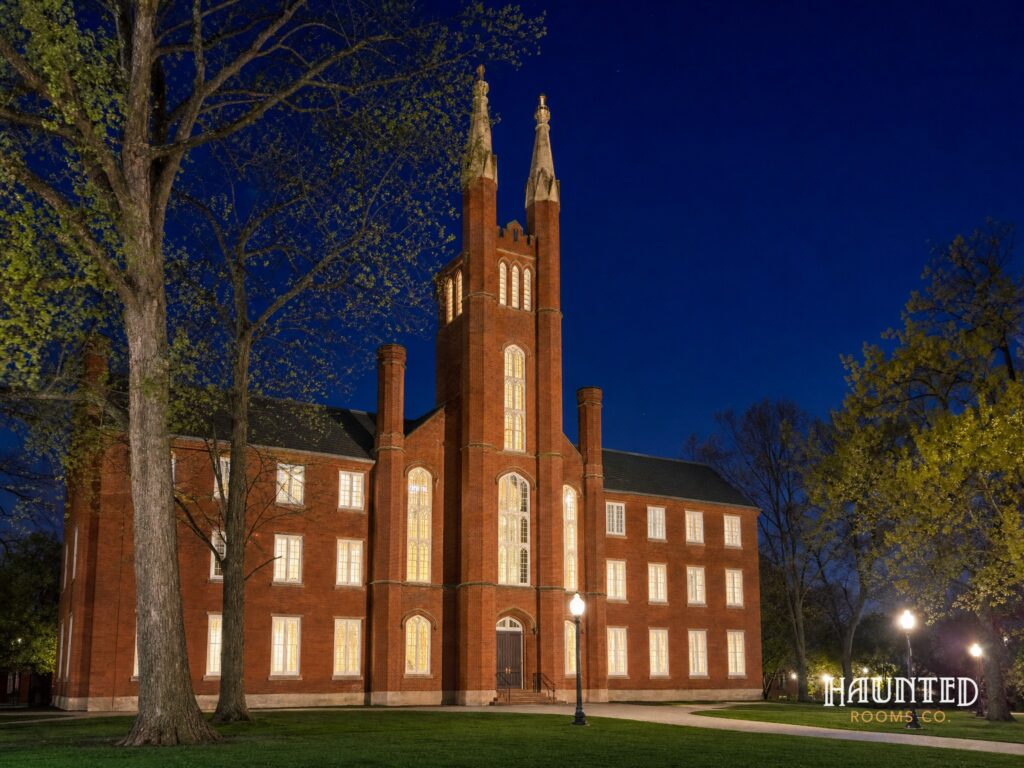
Old Main was built between 1854 and 1856 as the first building of the newly merged Franklin and Marshall College, a red brick Gothic Revival hall by the Baltimore firm Dixon, Balbirnie and Dixon. After the Battle of Gettysburg it served as a military hospital. It stands on the highest ground in Lancaster, which tradition says was the city’s Gallows Hill, where public hangings took place before Pennsylvania ended them in 1834.
The college’s own archives say the Gallows Hill story may be true. The best-known ghost story is the bell: in 1990 the campus paper reported that the bell of Old Main rings randomly in the middle of the night, and students still tell it. Old Main is a working college building, so enjoy it from the lawn.
Haunted Rooms tip: Walk up College Avenue after dark and listen for the bell, then look at Goethean and Diagnothian Halls on either side, built in 1857.
Where to look The General Sutter portrait above the fireplace, the halls and the stairs
Reported ghosts Children running in the halls, footsteps and whispers, flying kitchenware
Visiting A working inn with a pub, open to diners and overnight guests
Ghost hunting No ghost hunts; the stories come from staff and guests
The inn on the square in Lititz opened in 1764 as Zum Anker, the Sign of the Anchor, and was later the Lititz Springs Hotel. In 1930 it was renamed the General Sutter Inn for John Sutter, of California Gold Rush fame, who lived across the street for several years. In 2020 owner David Stoudt dropped Sutter’s name over his treatment of Native Americans, and the inn went back to Lititz Springs. It has more than a dozen rooms and the Bulls Head Public House.
A former manager told Lancaster County Magazine that the hotel has “little children” running around, and guests describe children darting into rooms and footsteps in empty halls. An investigator from the Spirit Society of Pennsylvania said her recorder caught a little girl’s laughter while her dog growled in a corner. The best-known legend is the Sutter portrait over the fireplace: move it, the story goes, and footsteps, whispers and flying plates follow.
Haunted Rooms tip: Have a drink in the Bulls Head, then look for the Sutter portrait over the sitting-room fireplace. Longtime staff, the story says, will not touch it.
Visiting a haunted place by day is one thing. Investigating one after dark is another. On a Haunted Rooms ghost hunt our team takes you through a historic building with professional ghost hunting equipment, runs EVP sessions and vigils, and gives you time to explore on your own. These are the nearest ones we run.
Where to look Room 6, Room 8, the bar and the gardens
Reported ghosts Anne Marie, a little girl in Victorian dress, Thomas Scott
Visiting A working inn; the restaurant (seasonal) and bars are open to the public
Ghost hunting No organized ghost hunts; stay the night instead
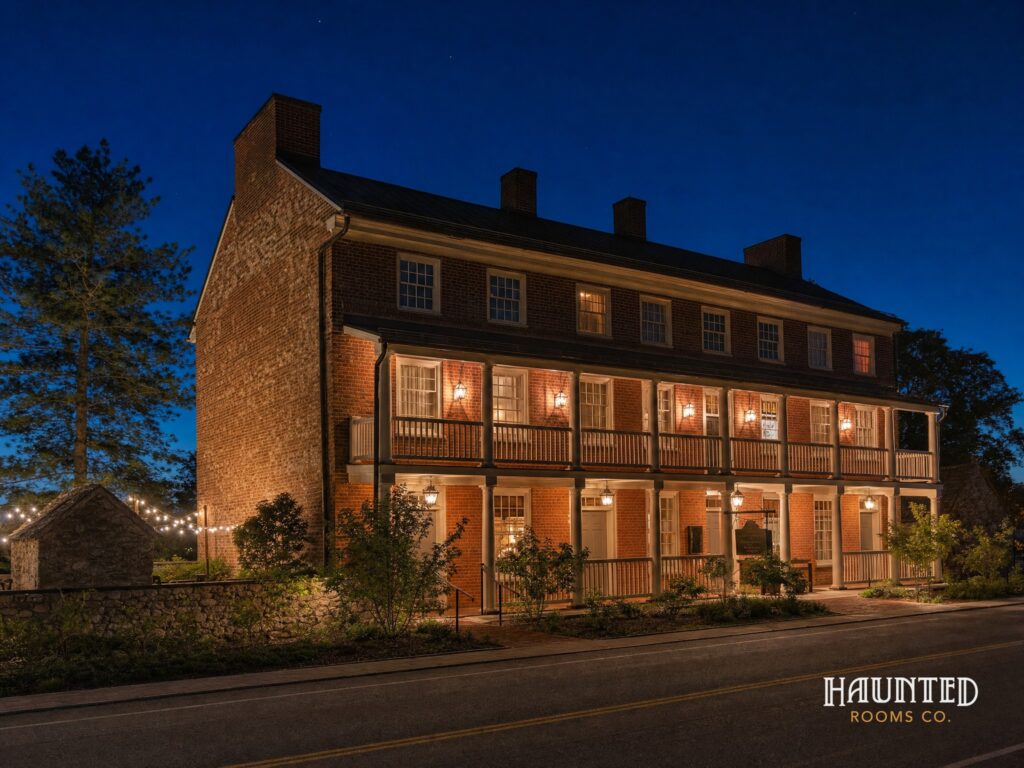
The Railroad House was built in 1823 as a brick boarding house on Front Street in Marietta, beside the canal and across from the station. Railroad executive Thomas Scott owned it in the late 1800s, and it has since been a boarding house, a coffee house, a disco and a Victorian restaurant. Its current owners reopened it in fall 2020 with nine rooms, a restaurant and two bars.
Staff and guests describe a woman in a Victorian dress called Anne Marie in the gardens, a little girl seen in the mirror over the bar and on the stairs, and a man at the bar who may be Scott. Room 6 has banging, cold spots and a presence on the bed. You can eat here or book a room.
Haunted Rooms tip: Have dinner in the bar, then ask for Room 6 if you want to stay the night.
Address Route 441, between Columbia and Marietta, PA
Where to look The summit overlook and the old trolley tunnel
Reported ghosts Lover's Leap lovers, a tall man in a hat, phantom drumming
Visiting A free county park with trails and overlooks; parking off Route 441 and Old Chickies Hill Road
Hours and season Daylight use is best; check Lancaster County Parks for current rules
Ghost hunting No organized ghost hunts; the cliff edge is dangerous after dark
Chickies Rock is a quartzite outcrop high above the Susquehanna River between Columbia and Marietta, and the heart of Lancaster County’s second-largest park. Its name comes from Chiquesalunga, place of the crayfish. In 1863 Union troops used it as a lookout over Wrightsville, and a trolley park once stood on top. Furnace ruins, canal walls and trolley grades still line the trails.
The best-known legend is Lover’s Leap, told in several versions about a Susquehannock couple and a white settler who fell from the cliff. Hikers report screams, phantom drumming and, since 2004, a tall figure in a hat and cape. The real danger is the drop: people have died falling from the edge, so stay behind the rail.
Haunted Rooms tip: Go in daylight and stay behind the summit fence. The Breezyview overlook has the classic view of the rock.
Where to look Augusta Bitner's statue in the northeast corner
Reported ghosts The wandering, weeping statue of Augusta Bitner
Visiting A historic city cemetery; visit in daylight and respect the graves
Ghost hunting No ghost hunts
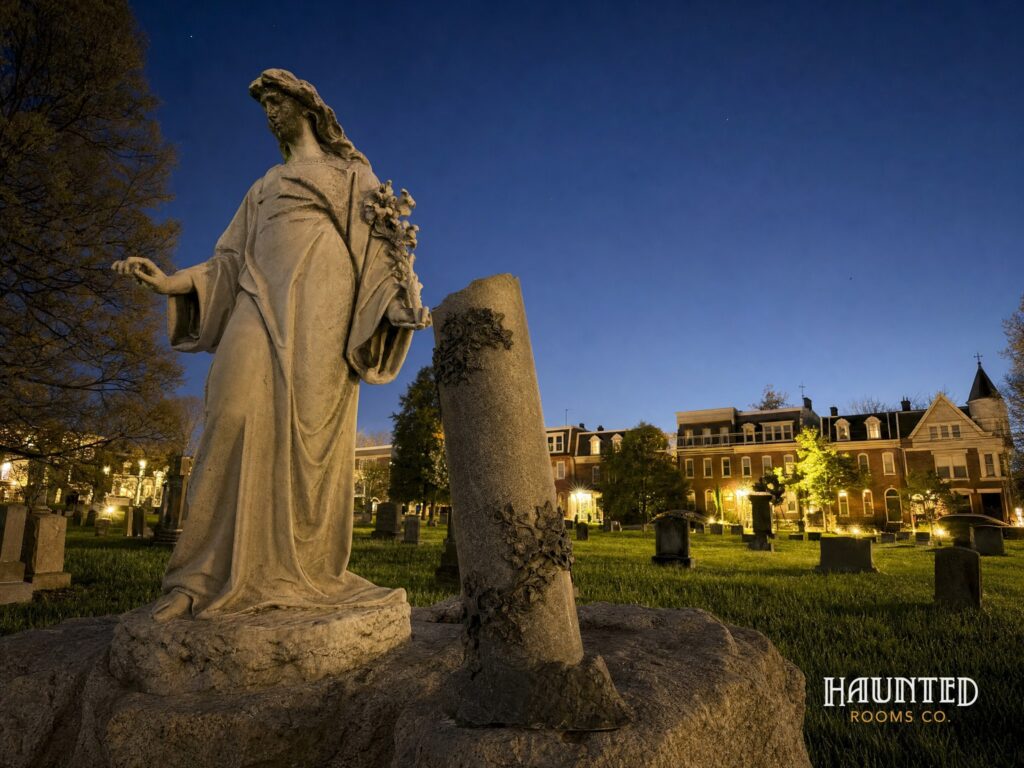
Lancaster Cemetery began in 1846, when the vestry of the German Reformed Church bought ten acres on the New Holland Turnpike, north of the city; a state charter the next year promised the dead “perpetual occupancy.” In its northeast corner stands a granite statue about six and a half feet tall of a young woman in a flowing gown, beside a broken column wrapped in bronze ivy. The inscription asks: “Could love have kept her?”
She is Augusta Bitner. Legend says she died on her wedding day after tripping on her gown, and that her statue weeps real tears and wanders the cemetery at night, earning the name the Walking Ghost of Lancaster County. The records tell a quieter story: Augusta, born in 1884, married Stanley Tevis, had a child and died of typhoid fever on June 1, 1906, about a year after the wedding. Local historians have long since debunked the tale.
Haunted Rooms tip: Go in daylight and head for the northeast corner; the statue is easy to spot from the paths.
Where to look The upper parking decks and stairwells
Reported ghosts Shadowy figures said to be the murdered Conestoga
Visiting A public parking garage, open around the clock; please respect it as a working garage
Ghost hunting No organized ghost hunts; it is a working city garage
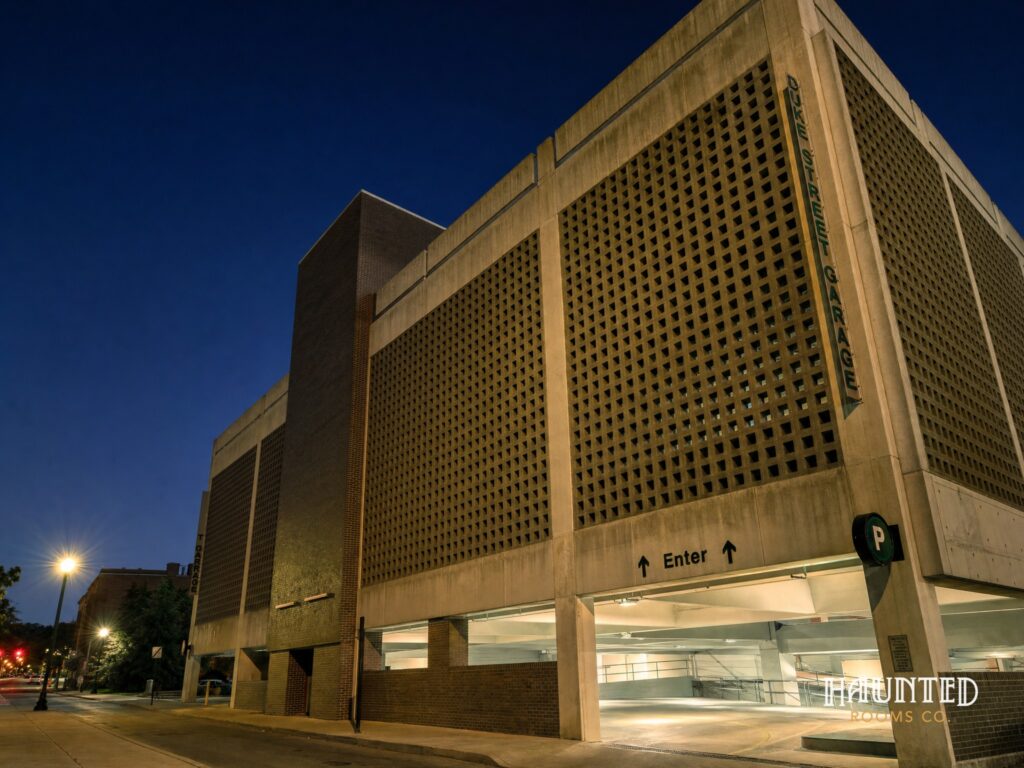
On December 27, 1763, the vigilantes known as the Paxton Boys broke into the Lancaster workhouse and killed the 14 Conestoga people sheltering there, two weeks after they had killed six others at Conestoga Town. Local tradition says the victims were buried near the corner of Chestnut and Duke Streets, outside a Mennonite burial ground, and that their remains were moved in 1833 when a railroad came through.
The Lancaster Parking Authority’s Duke Street Garage now stands on that corner, and people say they have seen shadowy figures darting across its decks. We could not find a record that confirms the burial site, so treat this one as a local legend. The massacre itself is well documented, and the place where it happened is the Fulton Theatre, a few blocks away.
Haunted Rooms tip: Pair it with the Old Jail marker on West King Street and the plaque behind the Fulton Theatre, which mark the real site of the 1763 killings.
These places appear in older lists of haunted spots. We keep them here so you know the facts before you go, but you cannot (or should not) visit them.
The Gonder Mansion, 130 West Main Street, Strasburg
Railroad businessman Benjamin B. Gonder finished this mansion in 1905. His unmarried sister Annie was not allowed to live there; after he died in 1916 she drowned herself in Pequea Creek in 1918 and was buried at the edge of the family plot, her stone turned away from theirs. Local legend says her laughter is heard in the house, usually by men. It is a private residence: look from the sidewalk only, and do not knock or go onto the property.
The Shenks Ferry tunnel, Green Hill Road, Conestoga Township
The legend is of a woman in white at a railroad underpass near the Shenks Ferry Wildflower Preserve, and of a midnight ritual of parking in the tunnel and circling the car three times. Part of it rests on a real tragedy: a retired Conrail engineer said a young woman was killed by a freight train above the underpass in 1974, and crews later spoke of a “White Angel” on the line. Today Green Hill Road south of the preserve is closed, the township has gated the turn by the tracks, and the Lancaster Conservancy has closed the preserve’s trails for work until about March 2027. Do not drive past the gate or walk the tracks.
Changed from our older guide: we removed stories we could not trace to any source: a 16-foot creature with a bandaged head said to have been seen at Chickies Rock in 1946, a haunted stone farmhouse in the same park, reports of hauntings at the Fulton site before the theater was built, and Sarah Bernhardt as one of its ghosts. Rock Ford Plantation now goes by Historic Rock Ford, and the Haldeman Mansion’s story of 90 unmarked graves is flagged as unconfirmed. New in this update: Lancaster Cemetery and the Lititz Springs Inn, the former General Sutter Inn, plus the Gonder Mansion and the Shenks Ferry tunnel in the off-limits list.
Visited one of these places? Tell us what happened
We collect first-hand accounts from visitors and add the best ones to our guides, with your first name and the date of your visit. We read every story before it’s published.
Frequently asked questions
What is the most haunted place in Lancaster, PA?
The Fulton Theatre is the one most often named. It stands on the foundations of the colonial jail where the Paxton Boys killed the last 14 Conestoga people in 1763, and the theater itself tells stories of a woman in white called Marie, a whistling man in a straw hat and an old man in the gallery.
Are there ghost tours in Lancaster?
Yes. Evening ghost walks in Lancaster city stop outside the Fulton Theatre, Bube’s Brewery in Mount Joy runs regular ghost tours, and Historic Rock Ford has run small after-dark haunted tours each October. Check each site for current dates.
Can you go ghost hunting in Lancaster County?
The Haldeman Mansion near Bainbridge has hosted booked paranormal investigations, so ask its preservation society. The other places here allow tours rather than investigations. The nearest Haunted Rooms ghost hunts are in Gettysburg and at Fort Mifflin in Philadelphia.
Is Franklin & Marshall's Old Main really on Gallows Hill?
Probably. The college’s own archives say the Gallows Hill story may be true: Old Main stands on the highest ground in Lancaster, and executions were usually held on the highest point outside town before Pennsylvania ended public hangings in 1834.
Where were the Conestoga killed in Lancaster?
In the yard of the old jail and workhouse on what is now the Fulton Theatre site, on December 27, 1763. A state marker on West King Street and a plaque behind the theater mark it. The idea that the victims were buried under today’s Duke Street Garage is local tradition we could not confirm.
Is the walking statue in Lancaster Cemetery real?
The statue is real: a granite figure of Augusta Bitner in the cemetery’s northeast corner, beside a broken column and the words “Could love have kept her?” The legend is not. She did not die on her wedding day; she married Stanley Tevis, had a child and died of typhoid in 1906, about a year later. Chickies Rock has its own legends, but visit that cliff in daylight and stay behind the fence.
Sources and how we research
Every place in this guide is checked against its official website, historic register listings and news coverage, and we confirm whether it is open, closed, private or gone before we list it. Ghost stories are reported as staff, visitors and local historians tell them; we say so where records contradict a story. Each place shows how many independent sources we checked it against; our own Haunted Rooms pages are not counted.
New guides, haunted places to visit and ghost hunt dates near you. No spam, unsubscribe any time.
About the authors
The Haunted Rooms Team runs public ghost hunts and overnight investigations at historic venues across the United States. We research every place in our guides using official sites, historic registers, local archives and news coverage, and we report ghost stories as the stories they are. We review each guide regularly so you are not sent to a place that has closed, changed hands or banned visitors. Spotted something out of date? Let us know.