Haunted Springfield, MO: 9 of the Most Haunted Places to Visit
A castle where the Army held prisoners of war, two old theaters on Route 66, a Civil War battlefield and a bride under a park bridge. These are the most haunted places in Springfield, with what is history, what is legend and how you can visit.
Springfield was founded in 1833, fought over in the Civil War and later became a Route 66 town, and its ghost stories follow that history. We have checked every place below against current sources and labeled the campus and park legends as the stories they are. Two of the places, the Walnut Street Inn and the University Plaza Hotel, take overnight guests, and Pythian Castle runs its own ghost tours and investigations. For more on the old highway, see our haunted places along Route 66.
Visit on a tourGhost toursParanormal investigations allowed
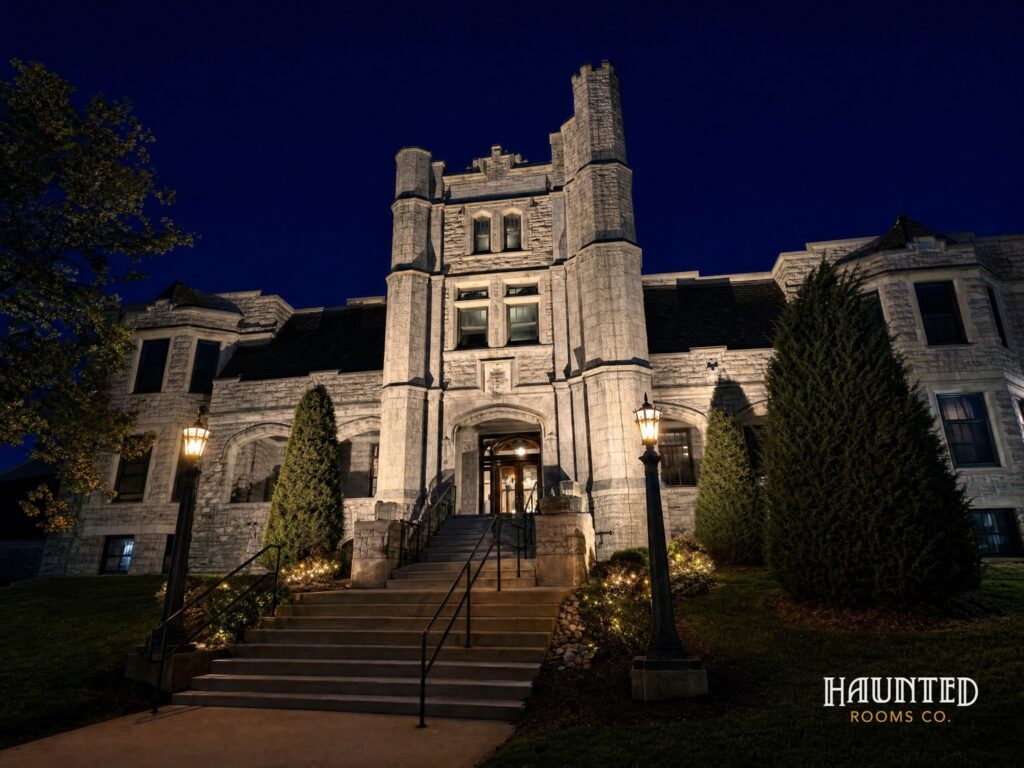
Address 1451 E Pythian St, Springfield, MO 65802
Where to look The basement cells, the sealed tunnel, the stairs and the upstairs rooms
Reported ghosts Children upstairs, a woman in white, a soldier in fatigues and a shadow in the tunnel
Visiting Privately owned; visits only on scheduled tours and events
Tours History tours, ghost tours, escape rooms and murder mystery dinners
Ghost hunting Ghost investigations can be booked through the castle
The Knights of Pythias built this stone castle in 1913 as an orphanage and home for elderly members, after Springfield sold them 53 acres for $1. In the 1940s the Army took it over for the neighboring O’Reilly General Hospital, as a service club and recreation spot, and German and Italian prisoners of war were held in its basement cells. It later served as an Army Reserve center, and owner Tamara Finocchiaro opened it to the public as an events venue around 2009.
It is one of the best-known haunted buildings in the Ozarks. Finocchiaro, who lives on site, estimates about a dozen ghosts: children upstairs, a woman in white near the restrooms, a woman’s voice by the stairs, and a man in army fatigues she says she once woke to find standing over her. A shadowy figure is reported in the basement cells and the sealed tunnel. These are her and visitors’ accounts, not documented history.
What investigators report
Visitors report capturing EVPs here, some said to be in foreign languages, and the tunnel system beneath the castle is a focus where a dark shape has been reported.
Address Near Republic, MO, southwest of Springfield
Where to look Bloody Hill and the Ray House
Reported ghosts Soldiers on Bloody Hill; the Ray House, where General Lyon's body was laid
Visiting A national battlefield park
Hours and season Daily, 8 AM to 5 PM; the Ray House opens limited summer hours
Ghost hunting Not permitted
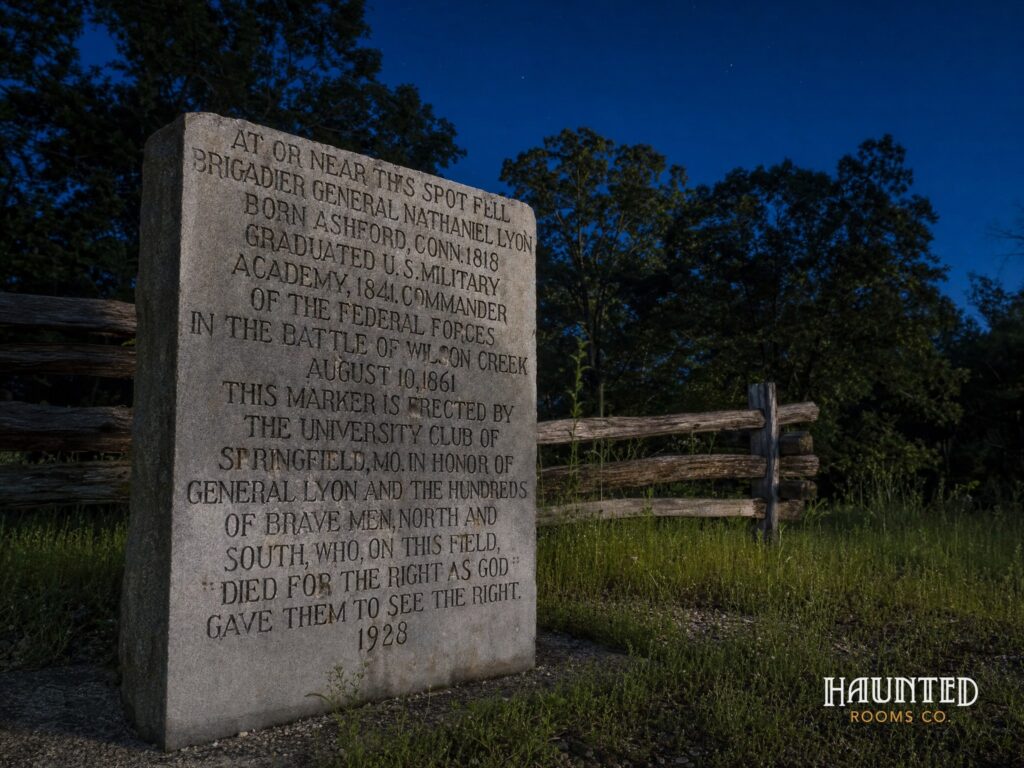
On August 10, 1861, Union and Confederate forces fought here, southwest of Springfield, in the first big battle of the Civil War west of the Mississippi; about 2,500 men were killed, wounded or captured. Union General Nathaniel Lyon was killed on Bloody Hill, and his body was carried to the Ray House, a farmhouse finished around 1852 that served as a field hospital while the Ray family sheltered in the cellar. Roxanna Ray’s bed cover was laid over him.
Visitors tell of soldiers seen on Bloody Hill, the sound of gunfire and cannon, cold spots, and men heard walking and talking in the woods at night. These are anonymous accounts; the National Park Service tells the history, not the ghost stories. Both Bloody Hill and the Ray House are on the park’s five-mile tour road, and the park closes in the evening.
What investigators report
Investigators report running Phasma Box and spirit box sessions at the bottom of Bloody Hill, logging battle-themed phrases and the answer “August” when asked what month it was.
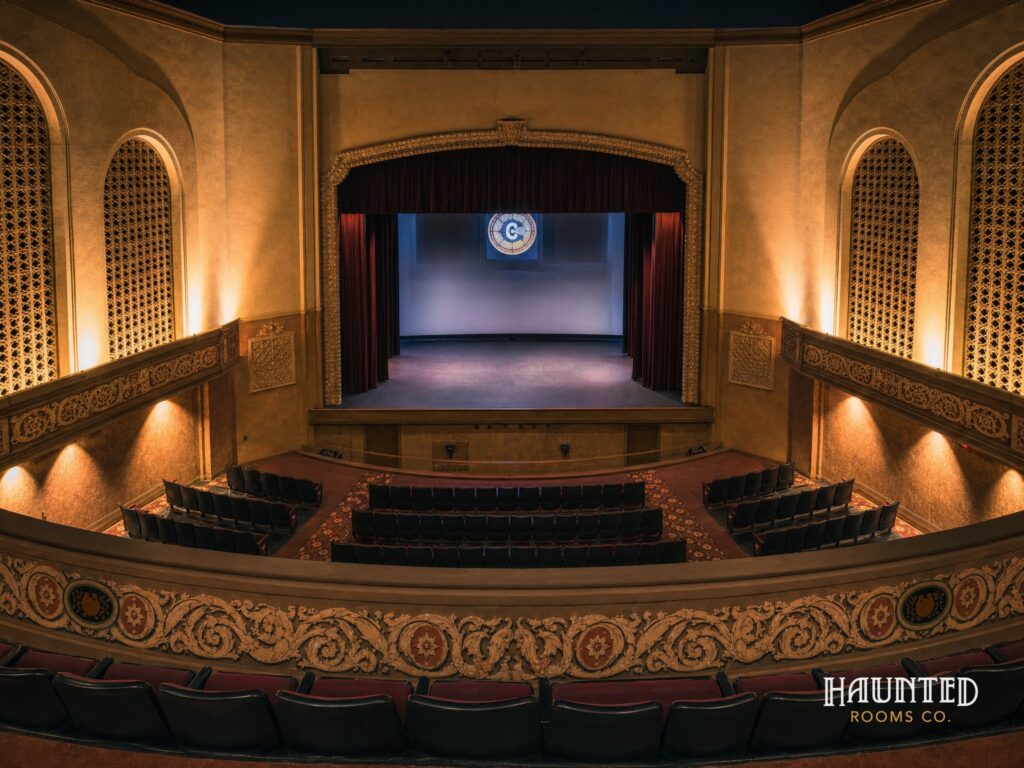
Where to look The balcony, the balcony restroom area and the former manager's office
Reported ghosts Projectionist Martin Kirschner; a newsboy-like little boy; a woman in a yellow dress
Visiting A working theater; open for shows
Ghost hunting No public ghost hunts
Bridge builder M.E. Gillioz opened his theater on October 11, 1926, and leased a strip of land to reach Route 66 so passing travelers would see it. It closed in 1980 after a final opera, was listed on the National Register in 1989, and reopened in October 2006 after a long restoration brought the lobby and auditorium back to their 1926 look. It is now a nonprofit concert and arts center marking its centennial in 2026.
Projectionist Martin Kirschner worked here from 1926 until New Year’s Eve 1962, when he died of a heart attack at his post just before a midnight show. Staff have told local TV they credit him with lights switching on and off and touches in the balcony. A little boy dressed like a newsboy has been reported near the old balcony restrooms since the 1960s, and a woman in a yellow dress is said to peek out of the former manager’s office.
Haunted Rooms tip: Catch a concert or film night and sit in the balcony.
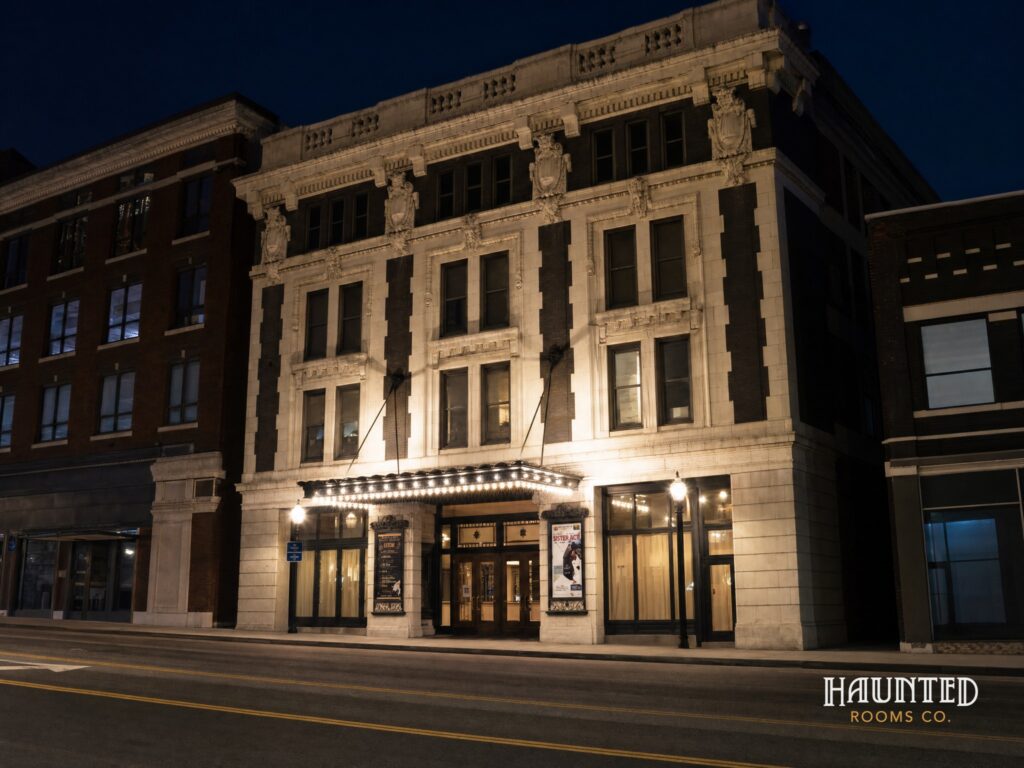
Where to look The fourth floor windows, the second balcony and the lobby
Reported ghosts A man in Shakespearean costume; a green orb; crying babies; high heels in the lobby
Visiting A working theater; open for performances
Ghost hunting No public ghost hunts
The Landers opened on September 18, 1909, after the Baldwin Theatre burned, and has been a working theater ever since; Springfield Little Theatre bought it in 1970. A December 1920 fire that started in the basement gutted the stage, but an asbestos curtain saved the house. It was among the first theaters in the country to show talking pictures, and in 1961 NBC broadcast Five Star Jubilee live from its stage.
Theater staff tell of a man in Shakespearean costume pacing the fourth floor windows, a green orb in the second balcony, babies heard crying and an angry spirit in clicking high heels in the lobby. The popular tale of a janitor killed in the 1920 fire is not true: no one died, and a longtime designer admits some stories were embellished for tour groups.
What investigators report
Staff report activity in the lobby and auditorium, and say loud banging at the front doors stopped when someone addressed the late director by name with “Well, Mick.”
Where to look Clara Thompson Hall, Smith Hall and the Wilhoit Theatre
Reported ghosts Clara Thompson at the piano; a girl in pink in Smith Hall (a story the archivist says was made up)
Visiting A working university; walk the grounds, buildings are for students and staff
Ghost hunting Not permitted
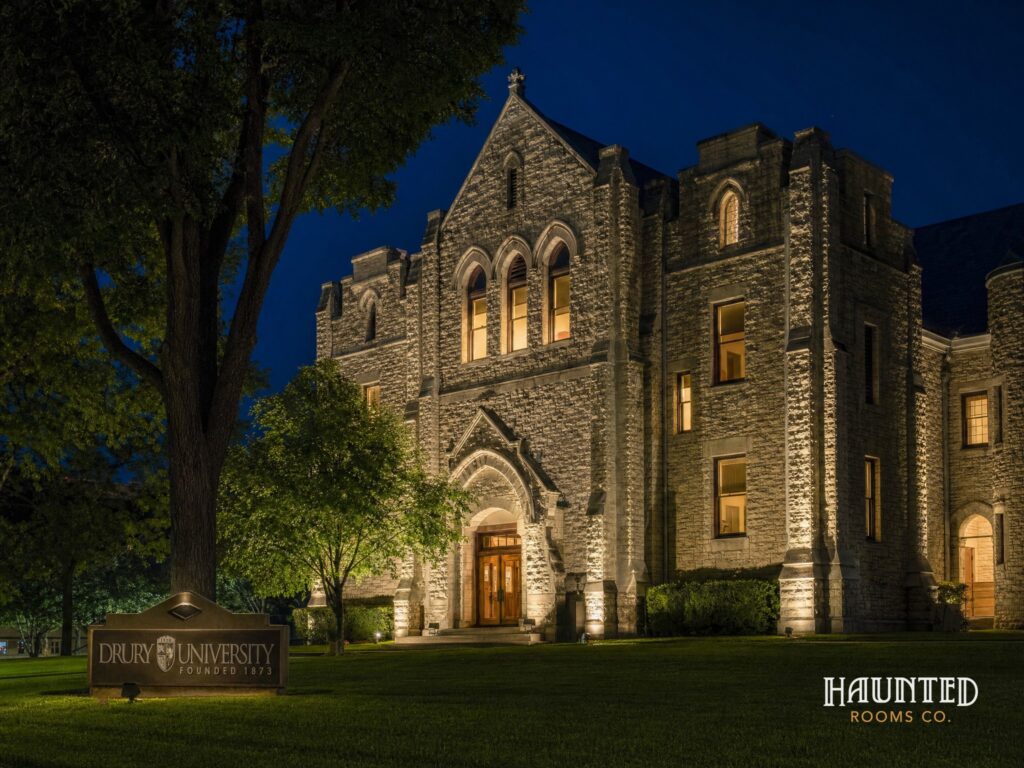
Drury opened in September 1873 as Springfield College and has grown into a campus of about 88 acres in central Springfield. Its oldest ghost story belongs to Clara Thompson Hall, dedicated in 1926 to Clara Wallace Thompson, a music lover who died at 21 in 1895, weeks after losing her baby daughter. Late night piano music, theater seats that rise on their own and the rustle of a long dress are blamed on her, and the university says these stories go back before 1950.
Other campus tales are shakier. The story of a girl in a pink dress who died in a fire and haunts Smith Hall looking for her teddy bear is widely repeated online, but Drury’s archivist says a high school student made it up for an urban legends project. He says the Wilhoit Theatre ghost was invented for a Halloween campus tour, and that the campus is not on a burial ground.
Haunted Rooms tip: The campus grounds are open to walk, but the residence halls are for students only.
Where to look The Rosen Room, the second-floor parlor and the main house hallways
Reported ghosts An elderly woman who tells guests the Rosen Room is hers
Visiting A bed and breakfast for overnight guests
Ghost hunting No ghost hunts; stay the night instead
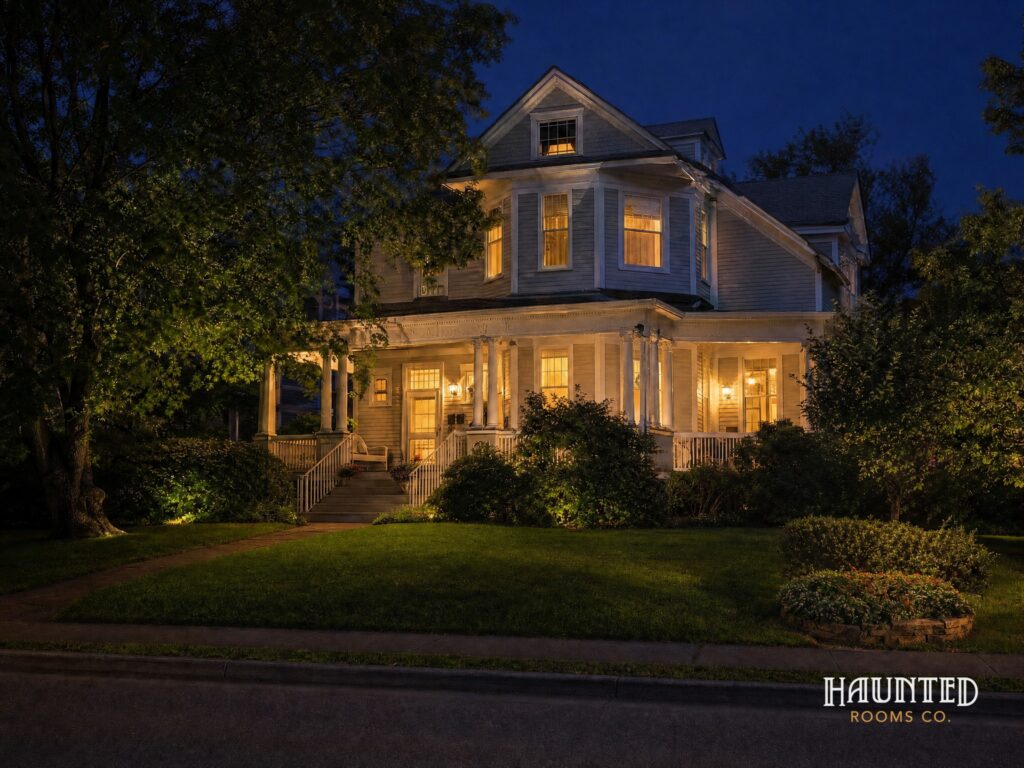
Springfield grocer Charles McCann built this Queen Anne Victorian house in the mid-1890s, with 20 cast iron Corinthian columns on the porches. Newspaper owner Harry S. Jewell bought it in 1917, Dr. Max and Barbara Rosen raised five children here from 1953, and in May 1988 it opened as Springfield’s first bed and breakfast. The Faucett family has owned it since 2021.
Its ghost story belongs to the Rosen Room, on the second floor of the main house. A guest said he was lying on the bed when he saw an elderly woman sitting at the little table by the wall. He told her it was his room; she answered that it was hers, then vanished. Staff have long said she seems to watch over sleeping guests.
Haunted Rooms tip: Book the Rosen Room directly with the inn, and spend the evening in the shared second-floor parlor with its gas fireplace, right outside the door.
Visiting a haunted place by day is one thing. Investigating one after dark is another. On a Haunted Rooms ghost hunt our team takes you through a historic building with professional ghost hunting equipment, runs EVP sessions and vigils, and gives you time to explore on your own. These are the nearest ones we run.
Where to look The Civil War sections and the Confederate section
Reported ghosts Civil War soldiers; glowing headstones and mists in photographs
Visiting An active national cemetery; open to visitors
Ghost hunting Not permitted
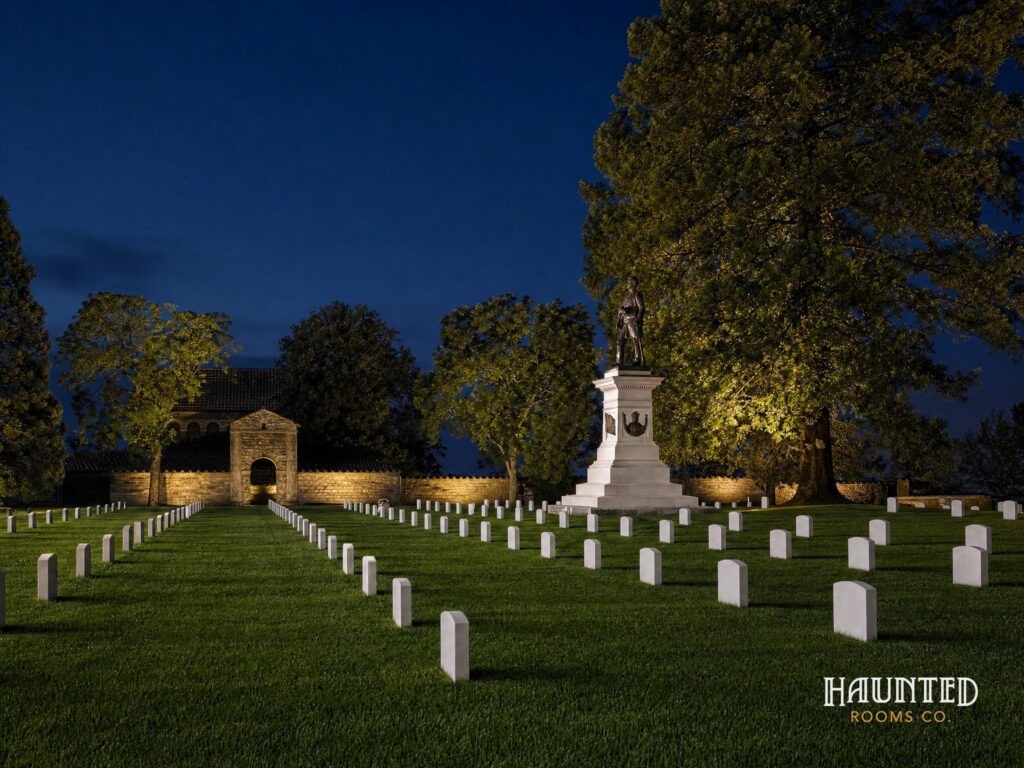
Springfield National Cemetery was established in 1867 for the Union dead of the Civil War battles around the city, especially Wilson’s Creek. The Confederate Cemetery Association laid out a six-acre section beside it in 1871, and Congress folded it into the national cemetery in 1911. More than 15,000 veterans and family members are buried here, including five Medal of Honor recipients, and there are monuments to the generals Nathaniel Lyon and Sterling Price.
Visitors have reported apparitions of soldiers among the rows, headstones that seem to glow at night, and mists and orbs in their photographs. These are anonymous accounts. It is an active national cemetery, so visit quietly and in daylight.
Haunted Rooms tip: Visit after Wilson’s Creek National Battlefield, where many of the soldiers here fought.
Address S Clay Ave and E Catalpa St, Springfield, MO 65804
Where to look Under the third bridge in the evening
Reported ghosts The Bride Under the Bridge, a faceless woman in a wedding gown
Visiting A public city park
Ghost hunting Not offered
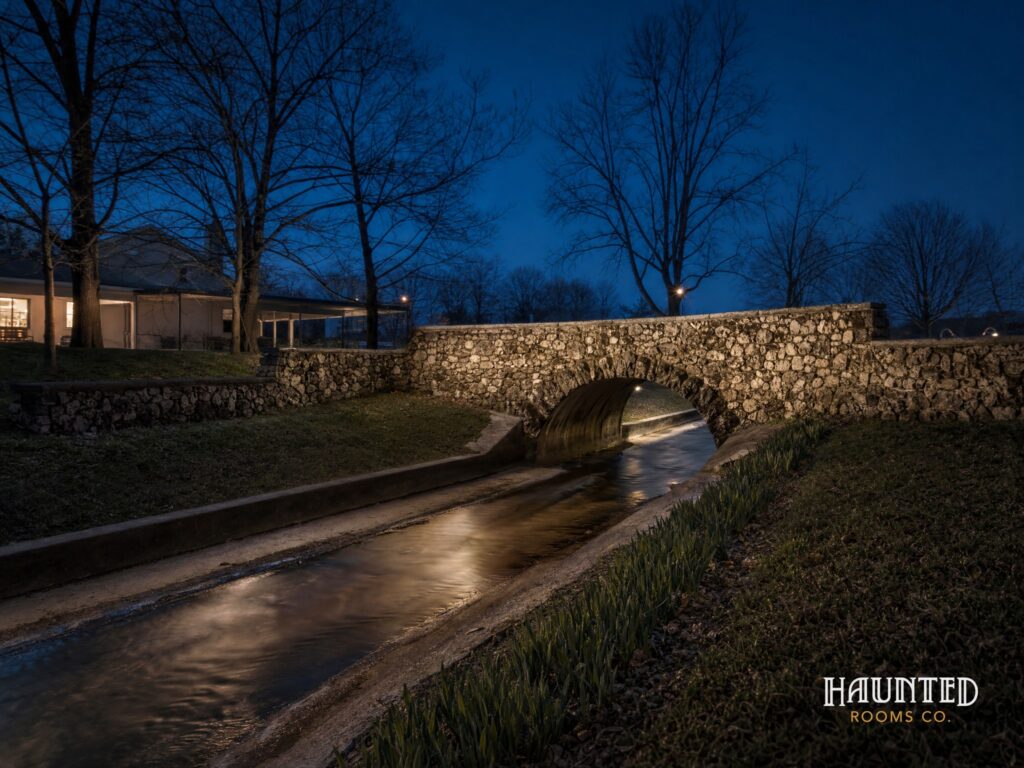
Phelps Grove Park is named for the family of John Phelps, a Civil War era congressman whose wife, Mary, nursed wounded soldiers and ran orphanages here after the war. It became one of Springfield’s first two city parks after the park board formed in 1913, and its little stone bridges went up in 1914. The concrete slab of the city’s first zoo still sits near the tennis courts.
Local legend says a newly married couple were killed crossing a bridge here, in a car or a carriage depending on who tells it, and that the bride now appears in the evening under the third bridge, holding her gown, with only darkness where her face should be. No record of the crash has turned up, so treat it as a campfire story you can check for yourself before dark.
Haunted Rooms tip: Walk the park in the early evening and find the third bridge; respect posted park hours.
Address 333 S John Q Hammons Pkwy, Springfield, MO 65806
Where to look The ballroom and back hallways, between midnight and 4 am
Reported ghosts The Colonel, an older gentleman dressed all in black
Visiting A working hotel and convention center
Ghost hunting No ghost hunts; the hotel does not promote its ghost
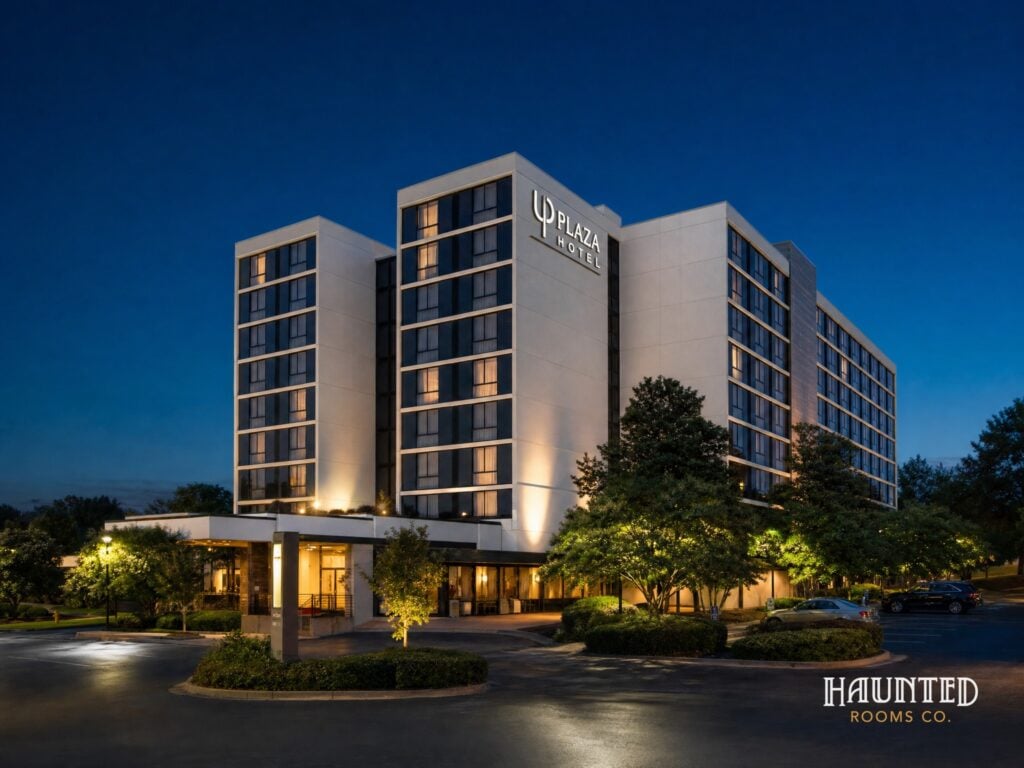
University Plaza is downtown Springfield’s big convention hotel, a nine-story building from 1984 with 267 rooms, a short walk from Missouri State University and about half a mile from the Walnut Street Inn. It is a modern building, so its ghost story is about the land rather than the hotel.
Staff call the ghost the Colonel. He is described as an older gentleman dressed all in black, most often seen between midnight and 4 am in the ballroom and back hallways. Local lore says the land was once a plantation owned by a Civil War hero, but no record confirms it, so treat the Colonel as a Springfield legend.
Haunted Rooms tip: If you want old-house atmosphere, sleep at the Walnut Street Inn and walk over to University Plaza for a late drink; it is a few blocks away.
These places appear in older lists of haunted spots. We keep them here so you know the facts before you go, but you cannot (or should not) visit them.
The Albino Farm (Springlawn)
The legend began with the Sheedy family’s Springlawn estate: a violent albino caretaker, and later a colony of albino children said to live in the woods. There is no evidence for any of it. The house burned in 1988 and the land is private, so please do not trespass looking for it.
Removed from this guide: the Freudenberger House at Missouri State University, a student residence hall that is not open to visitors and whose “Dorm Mom” story we could not trace to any published source, and the Campus Inn, also called the Bass Country Inn, because we could not confirm which hotel the story refers to today. New in this update: Wilson’s Creek National Battlefield. The Albino Farm is now listed as off-limits.
Visited one of these places? Tell us what happened
We collect first-hand accounts from visitors and add the best ones to our guides, with your first name and the date of your visit. We read every story before it’s published.
Frequently asked questions
What is the most haunted place in Springfield, MO?
Pythian Castle, built in 1913 by the Knights of Pythias and used by the Army in World War II, is the best known. It runs ghost tours and ghost investigations, and you can only visit on a scheduled event.
Can you go ghost hunting in Springfield?
Yes, at Pythian Castle, which books ghost tours and investigations. Haunted Rooms’ nearest ghost hunts are listed above.
What is the Albino Farm?
Springlawn, an old estate near Springfield, is the subject of a long-running urban legend about an albino caretaker and his family. The house burned in 1988, the land is private, and the story has no evidence behind it, so we do not send readers there.
Are there haunted hotels in Springfield?
Yes: the Walnut Street Inn, a Victorian bed and breakfast, and the University Plaza Hotel, whose staff tell of a man in black called the Colonel. See our guide to haunted hotels in Springfield.
Sources and how we research
Every place in this guide is checked against its official website, historic register listings and news coverage, and we confirm whether it is open, closed, private or gone before we list it. Ghost stories are reported as staff, visitors and local historians tell them; we say so where records contradict a story. Each place shows how many independent sources we checked it against; our own Haunted Rooms pages are not counted.
New guides, haunted places to visit and ghost hunt dates near you. No spam, unsubscribe any time.
About the authors
The Haunted Rooms Team runs public ghost hunts and overnight investigations at historic venues across the United States. We research every place in our guides using official sites, historic registers, local archives and news coverage, and we report ghost stories as the stories they are. We review each guide regularly so you are not sent to a place that has closed, changed hands or banned visitors. Spotted something out of date? Let us know.