Haunted Louisiana: The 22 Most Haunted Places to Visit
From the French Quarter to the Cane River, Louisiana’s ghost stories sit on top of real and often painful history. These are the most haunted places in the state, with what is on record, what is legend and how you can visit each one.
Louisiana’s haunted places are shaped by its past: colonial fires and fevers in New Orleans, the sugar and cotton plantations that ran on enslaved labor along the Mississippi and the Cane River, the Civil War, and the political drama of Baton Rouge. We have checked every place below against current sources, so you know which are open, which you can only see from the road, and which stories hold up. Seven of them take overnight guests, including the Myrtles, often called one of America’s most haunted homes. For the city alone, see our guide to haunted New Orleans.
Address 7747 U.S. Highway 61, St. Francisville, LA 70775
Where to look The main staircase, the hall mirror, the front porch, the Judge Clarke Woodruff Suite and the Caretaker's Quarters
Reported ghosts Chloe, Sara Woodruff and her children, William Winter, the girl in the famous 1992 photo
Visiting A working hotel; book a room to stay the night
Tours Day and evening mystery tours run by the inn
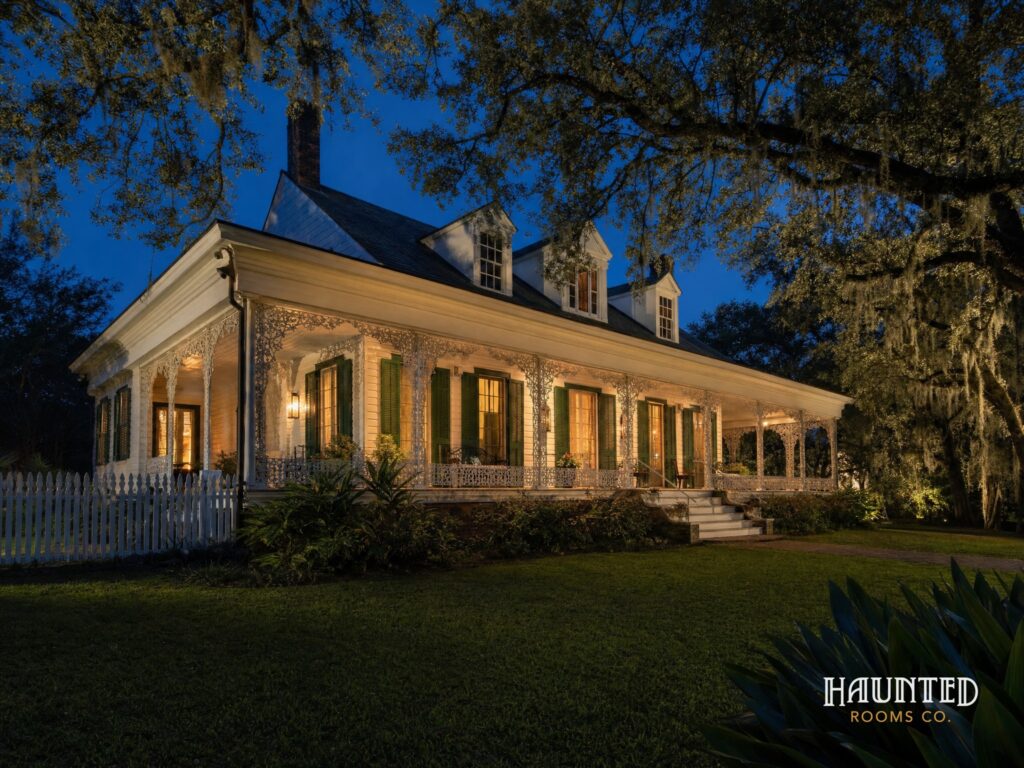
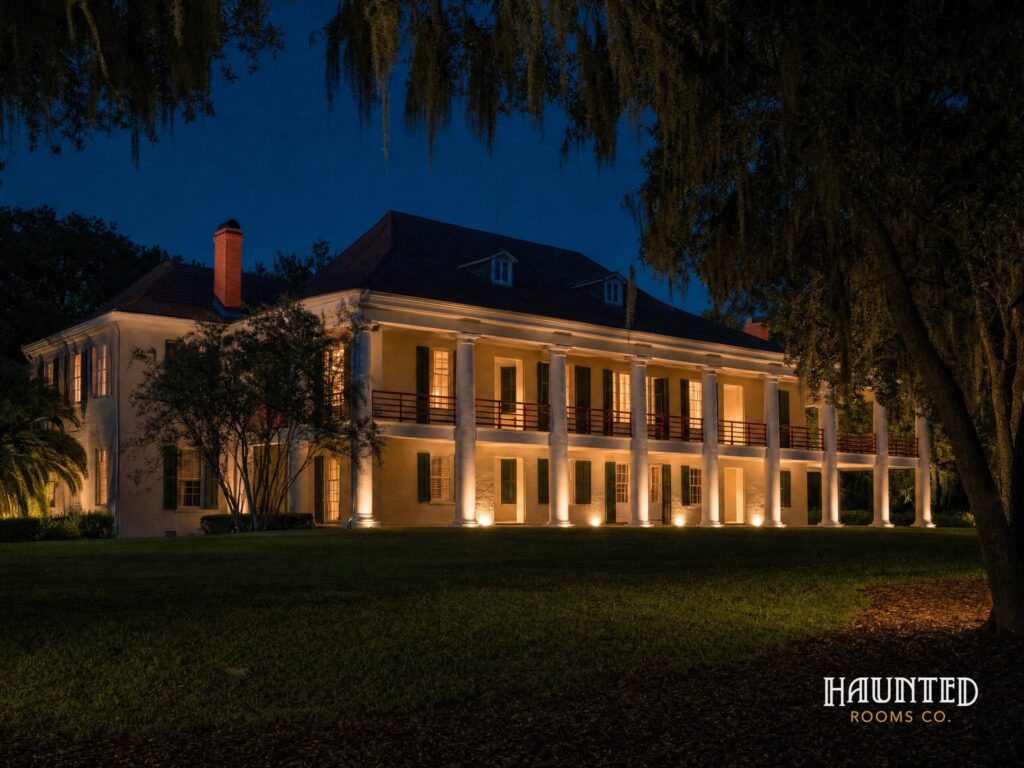
General David Bradford built Laurel Grove on a rise above Bayou Sara in 1796, and under the Stirling family it grew into the long, lace-ironed house now known as The Myrtles. It is often called one of America’s most haunted homes, and it has the TV credits to match: Unsolved Mysteries, Ghost Hunters and Ghost Adventures have all filmed here. Overnight guests sleep in six historic rooms inside the main house or in garden rooms and cabins on the grounds.
The best-known story is Chloe, an enslaved woman said to have poisoned the Woodruff family with an oleander cake. Records show Sara Woodruff and two of her children died of yellow fever, and no Chloe appears in the family’s papers, so treat it as legend. The one confirmed killing is William Winter, shot on the porch in 1871; guests still talk about footsteps that stop on the 17th stair and faces in the hall mirror.
What investigators report
On Ghost Hunters, investigators asked for a sign during an EVP session in the dining room and ballroom area and reported hearing a noise, and their thermal camera picked up a temperature change on the stairs.
Where to look The Royal Street corner, the upper windows and the balcony
Reported ghosts Enslaved people held in the upper rooms, a girl who fell from the roof, Delphine LaLaurie
Visiting Private residence; exterior only. No tours or investigations are allowed inside
Tours A stop on nearly every French Quarter ghost walk (outside only)
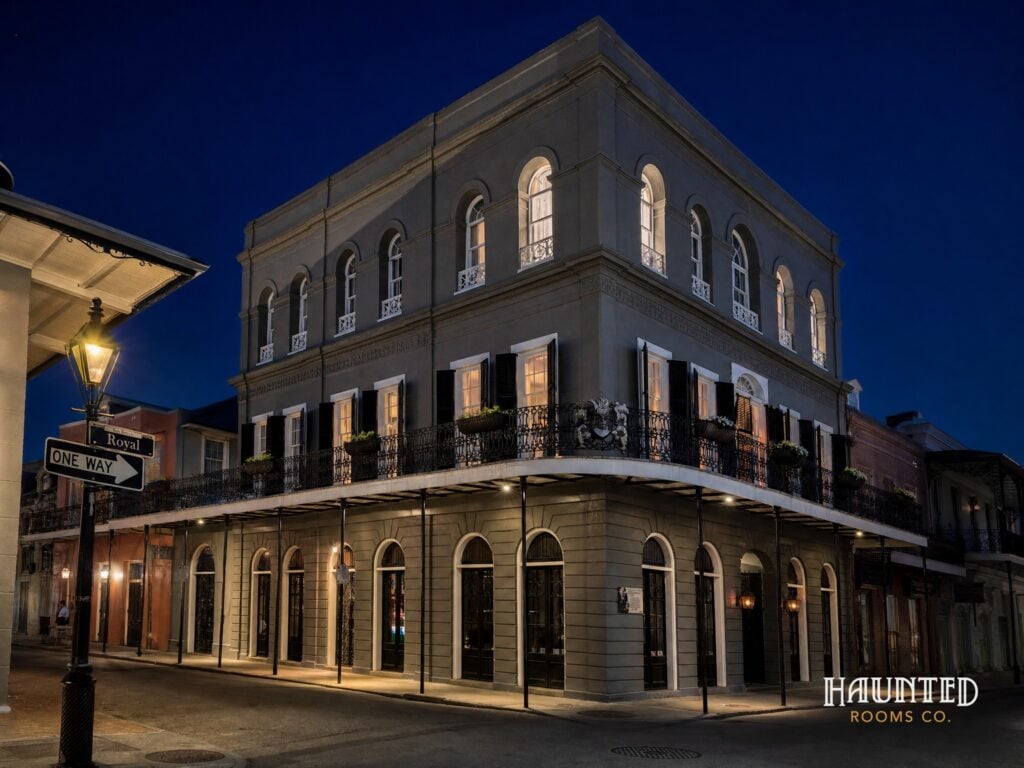
On April 10, 1834, fire broke out in the kitchen of Delphine LaLaurie’s mansion at Royal and Governor Nicholls. Responders found a 70-year-old cook chained to the stove, who said she had set the fire to end her life, and enslaved people starved and chained in the upper rooms. A mob wrecked the house, and LaLaurie fled to Paris and was never tried. The building you see was rebuilt after 1838 and has been a school, apartments, a furniture store and, for two years, Nicolas Cage’s home.
It is the most famous haunted house in New Orleans. People report moans and scratching from upstairs, footsteps and a heavy feeling, and tell of a girl, called Leah or Lia, who fell from the roof fleeing a whip. Records support the cruelty, but not the later tales of medical experiments, which trace to a 1946 book. It is a private home, recently listed for sale at $10.25 million, so you can only look from the street.
Haunted Rooms tip: View it from across Governor Nicholls Street and keep the sidewalk clear: people live here.
Where to look The Glapion family tomb of Marie Laveau and the narrow aisles between the tombs
Reported ghosts Marie Laveau, the sailor Henry Vignes, a lost spirit called Alphonse
Visiting Entry only on official guided tours (families with a pass excepted)
Tours Official walking tours of about 45 minutes, from Basin St. Station, 501 Basin St.
Tickets About $25 to $33 per adult
Ghost hunting No ghost hunting; tours are history tours with strict rules
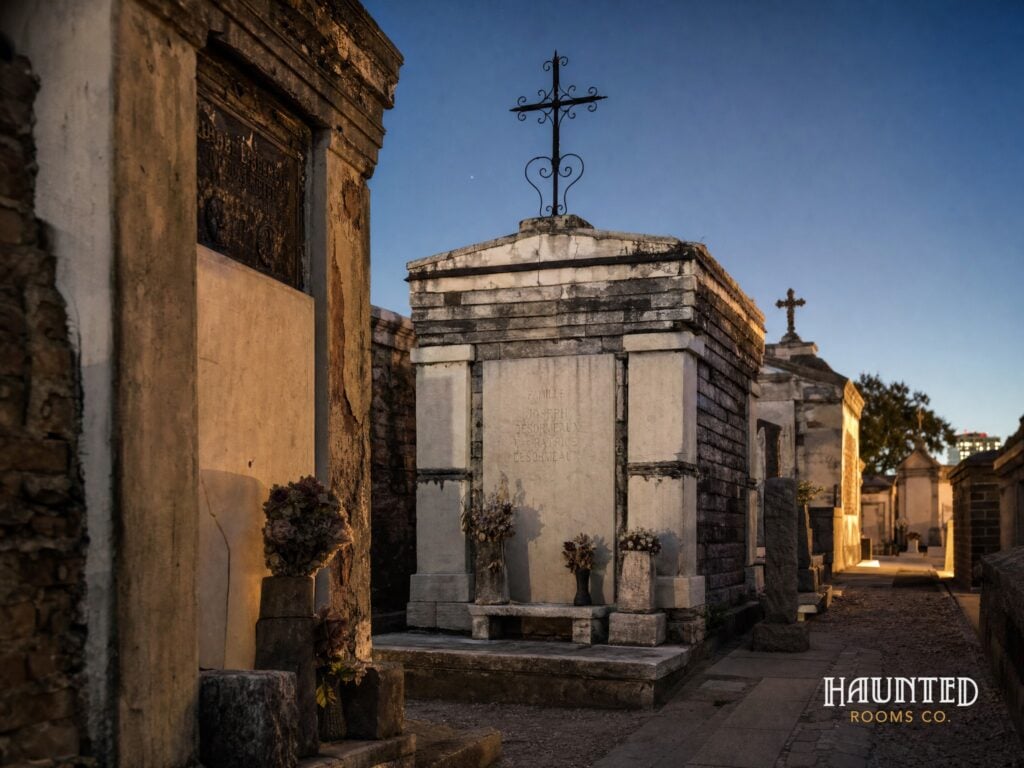
New Orleans’ oldest surviving cemetery was laid out by Spanish royal decree in 1789, after the Great Fire of 1788, just beyond the old city edge. More than 700 above-ground tombs crowd a single block. Among them are the Glapion family tomb where Voodoo priestess Marie Laveau is believed to rest, the grave of civil rights plaintiff Homer Plessy, and the white pyramid Nicolas Cage bought for himself in 2010.
It is also the city’s most famous haunted cemetery. Visitors talk of a woman in a red and white head wrap who walks the aisles and vanishes, said to be Laveau; of a sailor named Henry Vignes who asks where his family tomb is; and of a sad spirit called Alphonse who takes visitors’ hands. Since March 2015 the Archdiocese has let the public in only on licensed guided tours, after years of vandalism, including X marks scratched on Laveau’s tomb.
Haunted Rooms tip: Book the official tour ahead. It leaves from the Basin St. Station visitor center across the street, and you must not mark, touch or leave anything on the tombs.
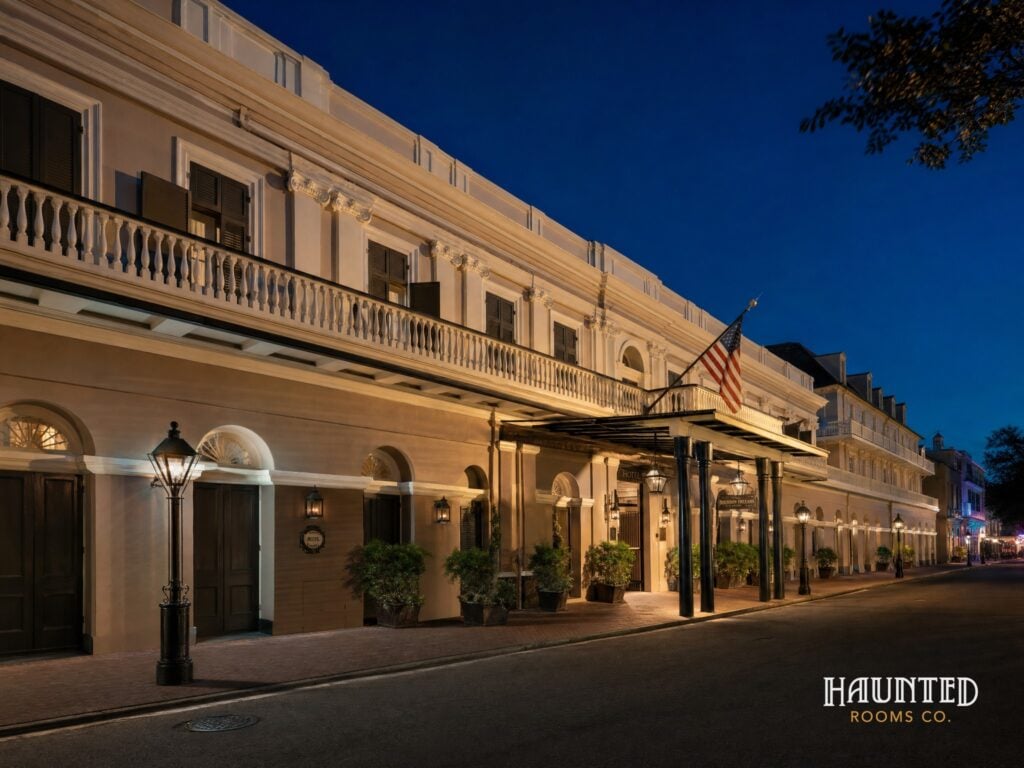
Where to look The 14th floor and Room 1462, the elevators, the lobby restaurant doors, the Carousel Bar, the rooftop, the lobby grandfather clock
Reported ghosts Maurice Begere, a toddler who died in the 1890s; a former employee known as Red; ghostly children
Visiting A working hotel; book a room to stay the night
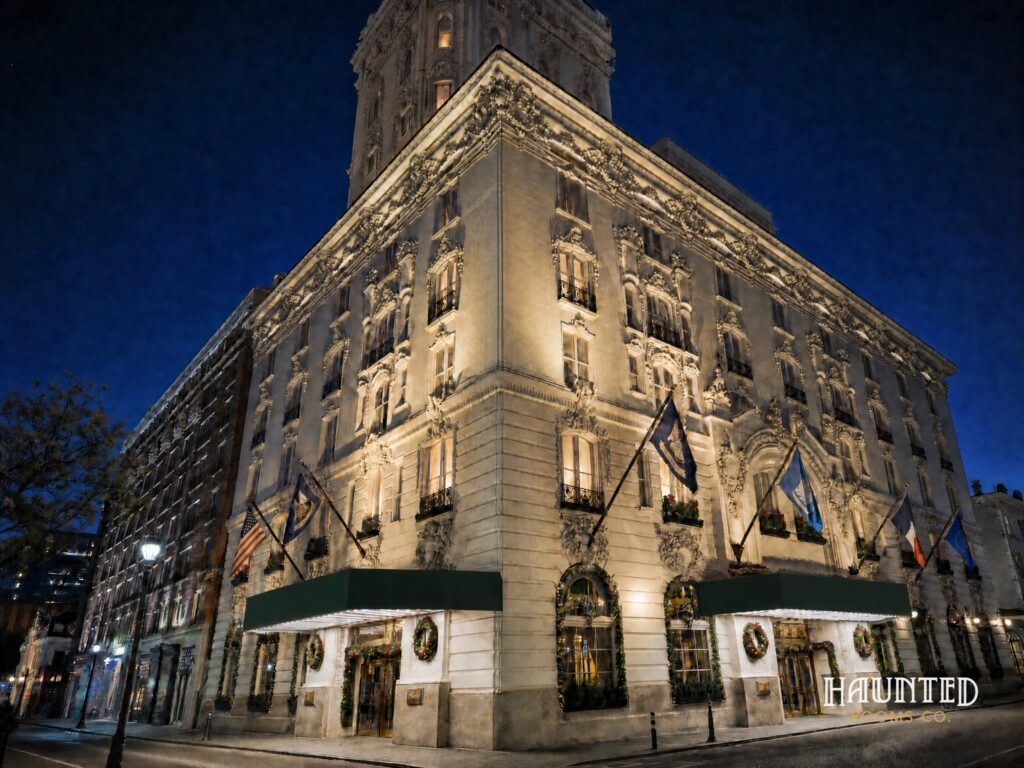
Family owned since 1886, the Hotel Monteleone on Royal Street is the grand dame of French Quarter hotels, home of the revolving Carousel Bar and a National Literary Landmark. It is also one of the most talked-about haunted hotels in America, and the hotel tells its ghost stories itself.
The best known is Maurice Begere, a toddler said to have died of a fever while his parents were at the opera in the 1890s. Guests report a small boy on the 14th floor (really the 13th), especially near Room 1462. In 2003 the International Society for Paranormal Research reported more than a dozen spirits here, and staff talk of doors that open by themselves and elevators that stop on 14.
What investigators report
A family investigation team that stayed on the 14th floor reported EMF meter spikes when they sat on the steps in the main hallway and asked questions aloud, and an EVP of a young male voice saying “What?”. They also described heavy feelings in the side hall toward the Mr. Monteleone suite.
Where to look The Orleans Ballroom, Room 644, the sixth and third floors, the lobby
Reported ghosts A dancer in the ballroom, a nun, children from the old orphanage, a wounded soldier
Visiting A working hotel; book a room to stay the night
The Bourbon Orleans wraps around the 1817 Orleans Ballroom, where Creole society once danced, and the convent and school of the Sisters of the Holy Family, who owned the property from 1881 until it became a hotel in 1964. The hotel’s own history page names its ghosts: a Confederate soldier, nuns, children and a lonely dancer.
Guests describe a woman in a gown dancing alone under the ballroom chandeliers, children laughing and tugging at clothes on the upper floors, and a limping soldier in the halls. Room 644 is the room most often linked to a ghostly nun. It sits one block off Bourbon Street, behind St. Louis Cathedral.
What investigators report
One visiting investigator reports EMF readings spiking while filming in the second-floor ballroom beneath the crystal chandelier, where they also took full spectrum photos. The sixth-floor hallway is another spot visitors focus on.
Where to look The fireplace in the front room and the upstairs rooms
Reported ghosts A man in sailor's dress by the fireplace, a woman who whispers names upstairs, glowing eyes in the grate
Visiting A working bar, open to the public
Tours A regular stop on French Quarter ghost walks
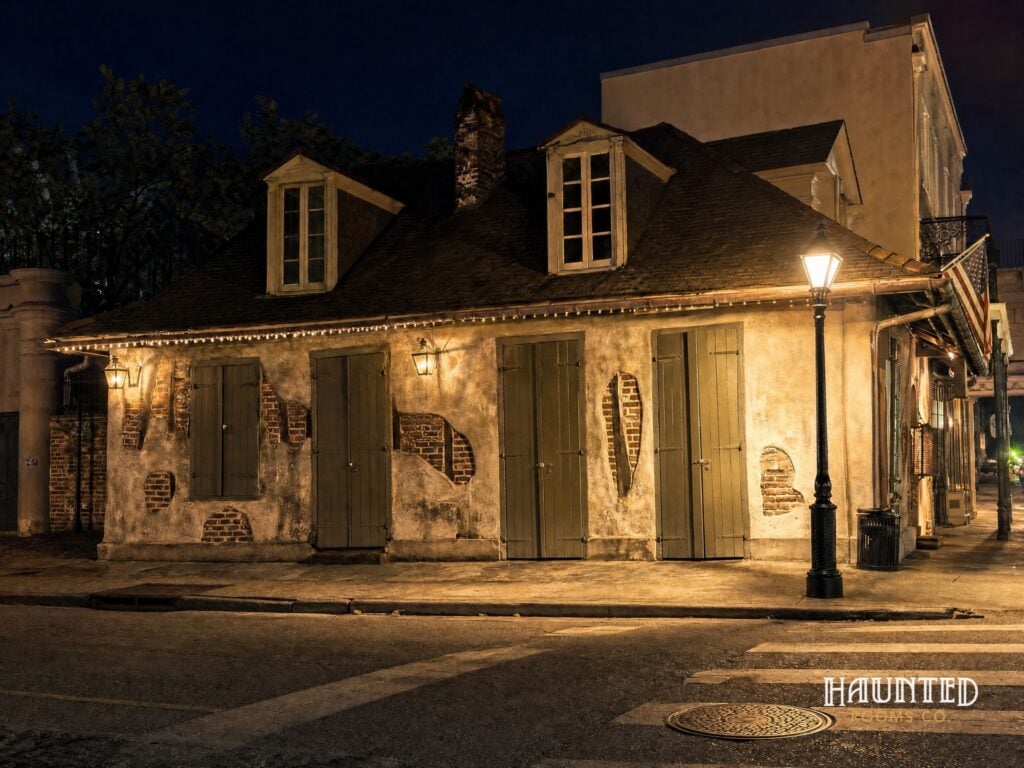
This low, battered cottage on the corner of Bourbon and St. Philip, with soft brick showing through worn plaster, is one of the oldest buildings in the French Quarter and a National Historic Landmark. It was most likely built as a house in the Spanish colonial years, and the bar’s own claim of 1722 is not backed by records. Legend says the privateer Jean Lafitte and his brother Pierre ran a smithy here as a front for smuggling. No document proves it, but the name stuck.
Today it is a dim bar with a piano, and its ghost stories are told over drinks. Regulars describe a man in old sailor’s dress standing by the fireplace in the front room who fades when someone notices him, and a pair of eyes glowing in the dark grate. Upstairs, a woman is said to whisper visitors’ names. Even the ghost tour writers admit none of this ties to a recorded death, so treat it as the bar’s own folklore.
Haunted Rooms tip: Go late in the evening, when the room is at its darkest, and take a seat near the fireplace.
Visiting a haunted place by day is one thing. Investigating one after dark is another. On a Haunted Rooms ghost hunt our team takes you through a historic building with professional ghost hunting equipment, runs EVP sessions and vigils, and gives you time to explore on your own. These are the nearest ones we run.
Where to look The shuttered third-floor windows and the front garden
Reported ghosts The Casket Girls legend of the sealed third floor
Visiting Museum with set opening hours; check before you go
Tours A stop on most French Quarter ghost and vampire tours
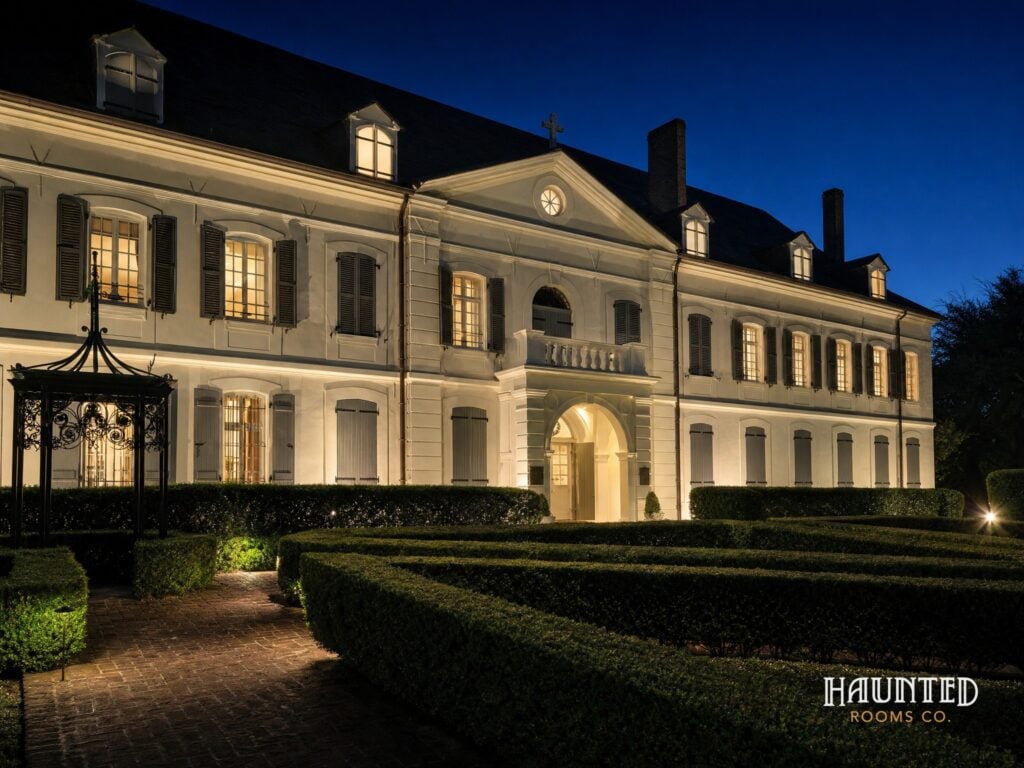
The Ursuline nuns arrived from France in 1727. Their first convent went up in 1734, and the building you see replaced it around 1752, which makes it, by many accounts, the oldest building in the Mississippi Valley. It survived the Great Fire of 1788 because it stood well away from where the fire began. Today it is a museum, set behind a formal boxwood garden on Chartres Street.
Its legend is the Casket Girls, the young French women who came to the colony around 1728 and lodged with the nuns until they married. Their coffin-shaped chests, the story goes, were stored on the third floor and later found empty, so the nuns sealed the floor and nailed the shutters with blessed nails to keep vampires in. The archdiocese’s archivist says the third floor holds archives and storage, the chests were ordinary trunks, and the vampire twist is modern.
Haunted Rooms tip: Look up at the shuttered third-floor windows from Chartres Street after dark; the shutters are modern hurricane shutters, not seals.
Address Jackson Square, Chartres St between St. Peter and St. Ann, New Orleans, LA 70116
Where to look The altar and balconies, and the alley beside the cathedral at dawn
Reported ghosts Pere Antoine, Pere Dagobert
Visiting A working cathedral; visitors welcome outside services
Tours A stop on French Quarter ghost walks
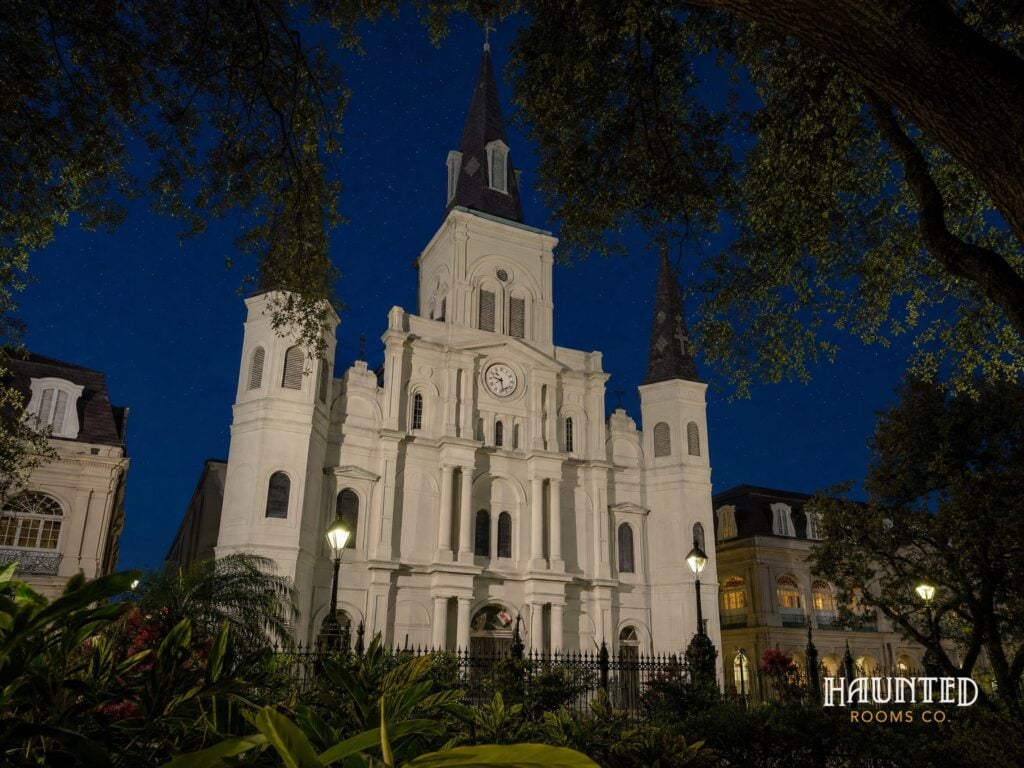
A church has faced the old parade ground, now Jackson Square, since 1718. The Cathedral-Basilica of St. Louis, King of France, is the fourth church on the site: its predecessor was lost in the Great Fire of 1788, the replacement went up from 1789 to 1794, and that church was largely rebuilt in the 1850s into the three-spired cathedral on every postcard. Prominent early residents were buried beneath it.
Its ghosts are clergy. Pere Antoine, a Capuchin friar who arrived in 1774 and was loved for his charity, died in 1829, and people report a robed figure near the altar, on the balconies and in the narrow alley beside the cathedral that bears his name, especially early in the morning. Pere Dagobert, pastor from 1745, is said to walk the aisles on quiet evenings with his head bowed. It is a working church, so visit respectfully.
Haunted Rooms tip: Walk Pere Antoine’s Alley early in the morning, before the square fills, when he is said to appear.
Where to look The drive, the main staircase and the nursery
Reported ghosts A man in white, a one-armed man on the stairs, a girl called Lydia, a child in the nursery
Visiting Museum open daily
Tours Daytime guided tours; evening haunted tours on set nights
Hours and season Daily, 9 a.m. to 5:30 p.m.
Charles Pacquet, a free man of color, built this house in 1787 to 1790 for Robin de Logny, and it is called the oldest documented house in the lower Mississippi River Valley. Jean Noel Destrehan, later briefly Louisiana’s first U.S. senator, bought it in 1792. After the 1811 German Coast uprising of enslaved people, one of the tribunal’s trials was held here, and 18 rebels were executed. Guided tours now tell the story of both the free and the enslaved people who lived here.
Executive director Tracy Smith told the St. Charles Herald Guide in 2024 that she started out a skeptic and is now a believer. Visitors describe a man in white on the drive, a one-armed man on the stairs said to be Nicholas Destrehan, a little girl playing in the nursery, and a 17-year-old named Lydia who died of yellow fever. Legend also says Jean Lafitte hid treasure in the walls, and treasure hunters damaged them looking.
What investigators report
The plantation’s night haunted tours, run with NOLA Ghost Riders, bring out dowsing rods, K2 meters and spirit boxes for ghost hunting outside the main house. A guide says one mischievous spirit inside the house is drawn to shiny things, long hair and purses.
Address 705 Elvis Presley Ave, Shreveport, LA 71101
Where to look The lobby balcony door, the basement restrooms and the stage
Reported ghosts A girl in a blue dress, a moaning woman in the basement, Hayride stars
Visiting A working concert hall; open on show nights and for tours
Tours Historical tours, plus haunted tours in October in some years
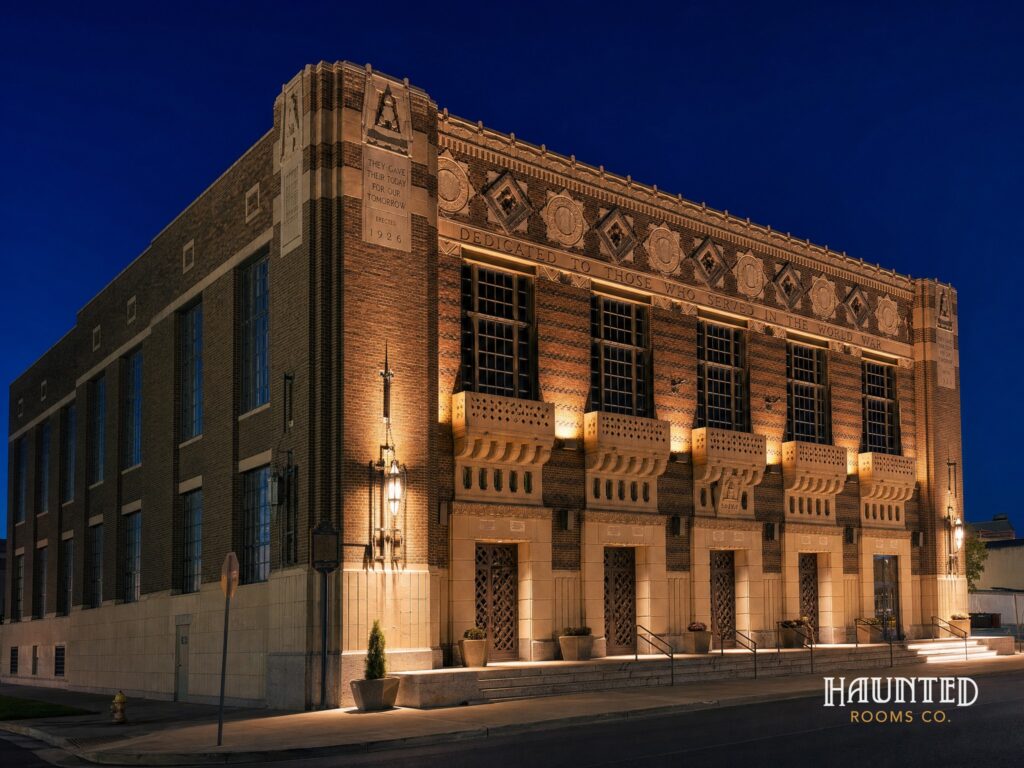
Built from 1926 to 1929 as a memorial to the men who served in World War I, the ‘Muni’ is a 3,200-seat Art Deco hall of patterned brick. From 1948 to 1960 it was home to the Louisiana Hayride radio show, where Hank Williams, Johnny Cash and a young Elvis Presley played. It became a National Historic Landmark in 2008 and still hosts concerts, boxing and touring shows.
Guides and staff tell of a door off the lobby balcony that opens and shuts by itself, a little girl in a blue dress running through the building, and a woman heard moaning in a basement restroom, said to have given birth there during a Hayride night. For a short time the basement served as the city morgue. Ghost Hunters and Ghost Lab both investigated, and the auditorium has run its own Halloween ghost tours.
Haunted Rooms tip: Watch for the auditorium’s October haunted tours: tickets are sold in advance only, with no walk-ups.
Where to look The Seance Lounges upstairs and the Courtyard Bar
Reported ghosts Pierre Antoine Lepardi Jourdan, a glass-throwing spirit in the bar
Visiting A working restaurant and bar
Tours A stop on French Quarter ghost walks
Hours and season Dinner nightly from 5 p.m.; bar from 3 p.m.; weekend brunch
After the Great Fire of 1788, Pierre Antoine Lepardi Jourdan built his home on this corner of Jackson Square. The restaurant’s own history says he loved it, gambled it away in a poker game in 1814, and took his own life on the second floor, in the rooms now called the Seance Lounges, before he had to move out. Muriel’s opened here in 2001 and serves Creole dinners and weekend jazz brunch.
Muriel’s tells the ghost story itself. Jourdan is said to show himself as a sparkle of light upstairs, knocks are heard on the brick walls, and a table is kept set with bread and wine for him. Downstairs, a livelier spirit in the Courtyard Bar is blamed for glasses that fly across the room and shatter, which the restaurant says has happened three times since March 2001.
What investigators report
Staff reserve a table each night in the second-floor seance room for the ghost of former owner Pierre Antoine Lepardi Jourdan, set with an offering of bread and wine. Patrons and employees there have described glasses shattering, objects moving and unexplained voices upstairs.
Where to look The upstairs windows, the galleries and the alley of oaks
Reported ghosts A watcher at an upstairs window, a woman in black, a phantom carriage
Visiting Museum and grounds open daily
Tours Guided tours of the Big House plus self-guided grounds and exhibits
Hours and season Daily, 8:30 a.m. to 4:45 p.m.
Ghost hunting No ghost hunts; daytime tours only
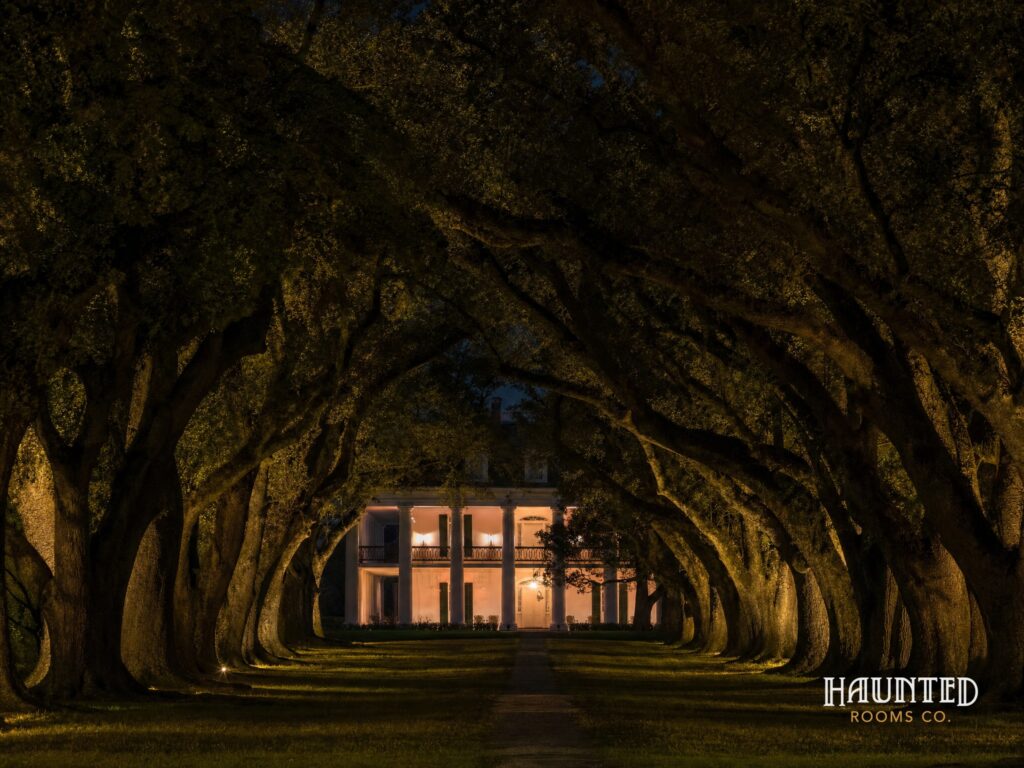
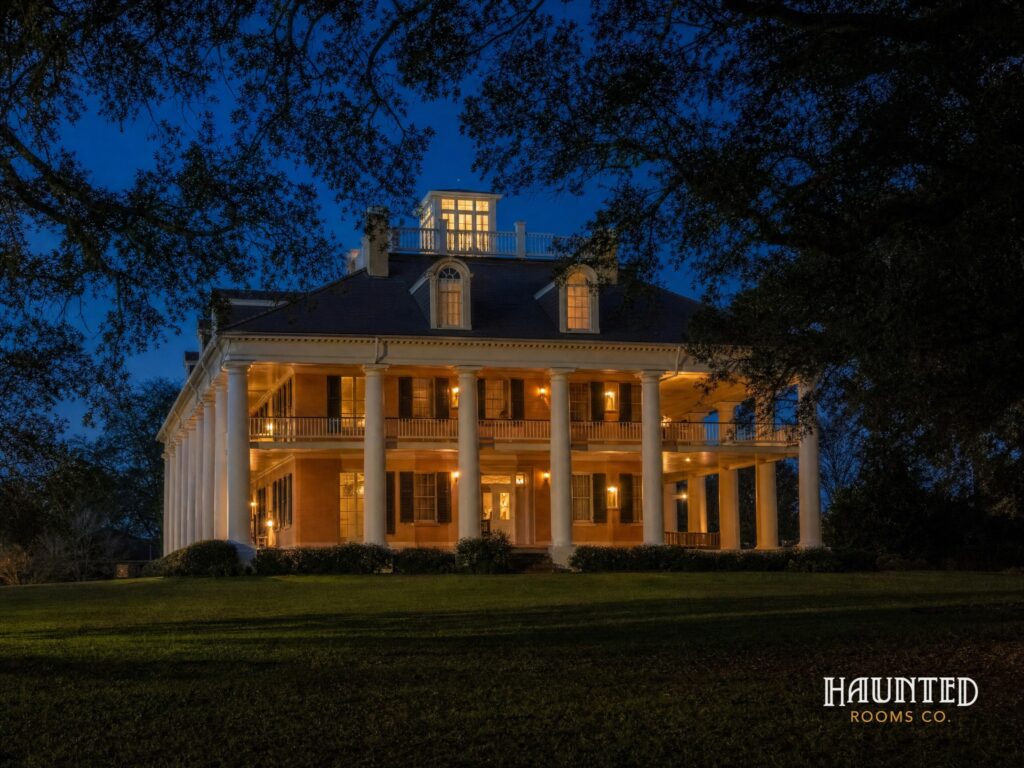
Enslaved people built this Greek Revival mansion in 1837 to 1839 for sugar planter Jacques Telesphore Roman, at the end of an 800-foot double row of 28 live oaks planted in the early 1700s. In 1846 an enslaved man named Antoine grafted the first named pecan variety here. Andrew and Josephine Stewart bought the decaying house in 1925 and restored it, and Josephine left it to a foundation when she died in 1972.
Staff and visitors tell of a figure watching from a lit upstairs window after closing, some say Josephine Stewart; a dark-haired woman in black on the galleries or riding beneath the oaks; the sound of a carriage coming up the drive with nothing there; weeping in the halls; and rocking chairs that move on their own. These are stories, not records. The foundation’s exhibits tell the harder history of the people enslaved here.
What investigators report
A family investigation team staying overnight in one of the cottages reported a K2 meter placed on the bed spiking repeatedly to red during an EVP session in the back bedroom, and sounds like shuffling feet in the cottage living room.
Where to look The freestanding spiral staircase and the front hall
Reported ghosts A little girl in a blue dress, shadow figures, soldiers
Visiting Museum, gardens, restaurants and inn
Tours Guided mansion tours daily
Tickets Mansion and gardens tour from $35
Land bought from the Houma people in 1774 became one of the richest sugar estates in Louisiana. The Prestons are credited with the main house of about 1840, and in 1857 they sold it, some 12,000 acres and 550 enslaved people to John Burnside for $1 million; by 1860 he held 753 people across his Ascension Parish plantations. Dr. George Crozat restored the house from 1940, and since 2003 Kevin Kelly has run it as a museum, gardens, restaurants and inn.
During the 2003 renovations, a worker saw a dark-haired girl of about 7 to 10 in a blue dress looking down from the freestanding staircase; she vanished when he went to her, and two other workers later said they saw her too. Guides and guests still report her near the stairs, mostly early in the morning and late in the afternoon. Other tales tell of shadow figures in the halls and young men in Civil War uniform.
Haunted Rooms tip: Take one of the first mansion tours of the morning, when the girl is said to appear near the staircase.
Where to look The balcony above the House chamber, the basement and the spiral staircase
Reported ghosts Senator Pierre Couvillon, Sarah Morgan, a Civil War prisoner
Visiting Free museum
Hours and season Tuesday to Friday 10 a.m. to 4 p.m.; Saturday 9 a.m. to 3 p.m.
Tickets Free
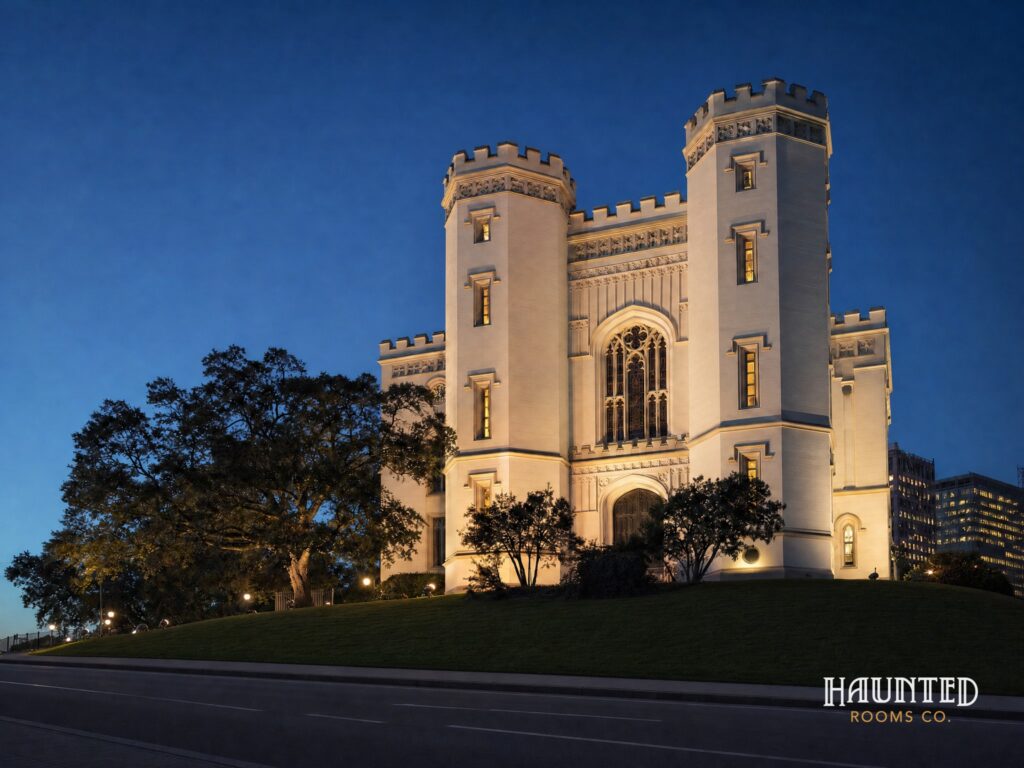
James Dakin’s Gothic ‘castle’ on the bluff above the Mississippi housed the legislature from 1852. In the Civil War, Union troops used it as a prison and then a garrison, and it burned twice, leaving a shell. William Freret rebuilt it by 1882, adding the stained-glass dome and spiral staircase. Mark Twain mocked it as a whitewashed castle; it is now the free Museum of Political History.
Security officer Tom Clarke told WAFB that at about 2:15 one morning he collided with something unseen on the balcony above the House chamber and cut his rounds short. Staff report slamming doors, footsteps and motion sensors tripping in the empty building. The ghost most often named is Senator Pierre Couvillon, said to have died after a fiery speech, though museum staff say he died at home in Avoyelles Parish.
Haunted Rooms tip: Watch the free ‘Ghost of the Castle’ show, narrated by the ghost of diarist Sarah Morgan, then stand under the stained-glass dome.
Where to look The corridor behind the House chamber, the House chamber and Huey Long's grave in the gardens
Reported ghosts Huey P. Long, lights in the empty House chamber
Visiting A working capitol, open to visitors on weekdays
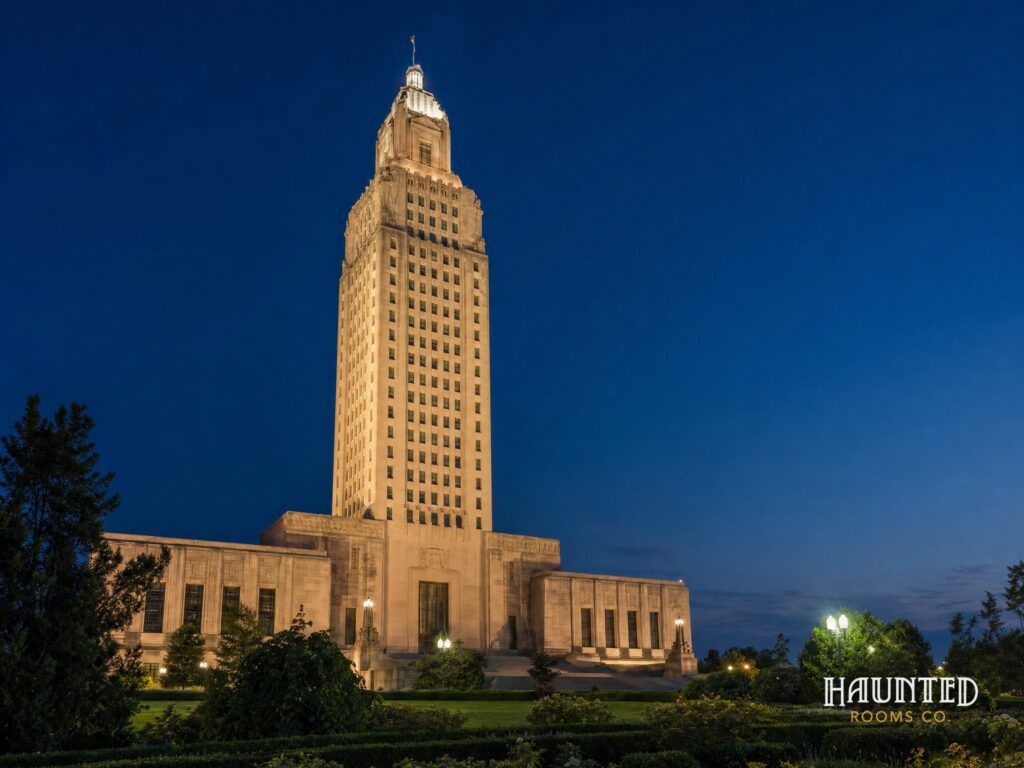
Huey P. Long drove the building of this 450-foot, 34-story Art Deco tower, dedicated on May 16, 1932. On September 8, 1935, Long, by then a U.S. senator, was shot in a corridor just after leaving the House chamber, and he died two days later. The official account blames Dr. Carl Weiss, who was killed on the spot by Long’s bodyguards, though that version has long been disputed. Long is buried in the gardens out front, under a bronze statue.
Capitol staff blame ‘Huey’s ghost’ when things go missing, and a Senate communications officer told folklorists that nobody sober has seen him. A tour guide described night security hearing doors open and close, and a film of the House chamber lights switching on and off around midnight. The building is open to visitors, and the 27th-floor observation deck looks out over the river.
Haunted Rooms tip: Find the corridor behind the House chamber where Long was shot, then ride up to the 27th-floor observation deck.
Address 5487 Louisiana Highway 119, Derry, LA (Natchitoches Parish)
Where to look The brick cabins, the slave hospital and the gin barn
Reported ghosts People once enslaved here, soldiers, a face at a window of the main house
Visiting Outbuildings open as part of a national park; the main house is private
Tickets Free
Ghost hunting No ghost hunts; the main house is a private residence
Ambrose LeComte II and his wife Julia Buard founded Magnolia on the Cane River around 1830, and enslaved people cleared and worked its cotton fields. The big house was badly damaged in the Civil War and rebuilt in 1897 in its old style. The National Park Service bought the outbuildings in 1994: brick cabins, the slave hospital, the store, the blacksmith shop and a gin barn with the last wooden screw cotton press on its original site in the United States.
Ghost stories grew around the main house, still owned by the Hertzog family’s descendants and closed to the public, with tales of a ‘Dying Room’ and a face at its window. Ghost Adventures investigated in 2009, and visitors have long described chanting from the cabins, voices and lights. The park tells a documented story that is haunting enough: family journals describe hunting escaped slaves toward Texas, and leg stocks survive.
Haunted Rooms tip: Walk the free self-guided route through the cabins and gin barn late in the afternoon, then drive the Cane River road to Natchitoches.
Where to look The 500 Building, its second-floor elevator landing, guest-room beds
Reported ghosts Wounded soldiers and army surgeons, a young woman who nursed the sick
Visiting A working hotel; book a room to stay the night
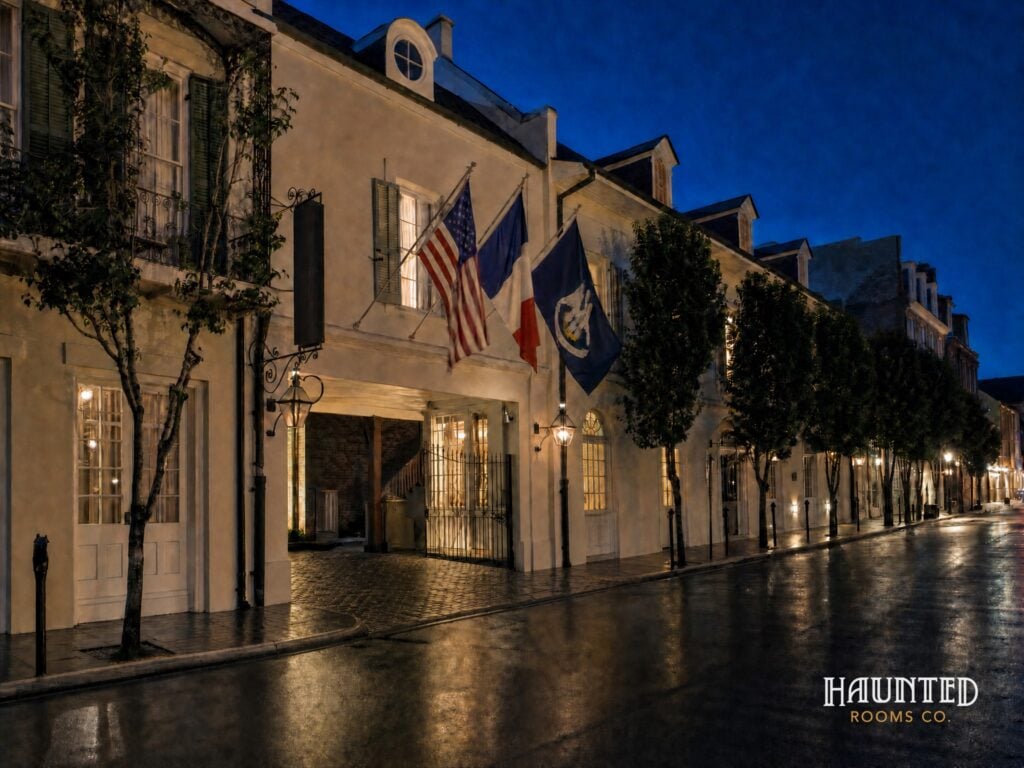
The family-run Hotel Provincial is a cluster of restored Creole townhouses and courtyards on Chartres Street, a few steps from the Old Ursuline Convent. Its buildings are on the National Register of Historic Places, and the land was once part of the French colony’s Royal Hospital grounds and herb garden. The hotel itself says one building stands where a military hospital once stood.
That is Building 500, the heart of its ghost stories. Guests describe walking in to see wounded soldiers moaning on the beds, who vanish when the lights go on, and bloodstains that appear on sheets and fade away. One famous story says the elevator opened on the second floor onto a full hospital ward.
Haunted Rooms tip: Ask for a room in the 500 Building when you book.
Where to look Room 21, the mirror outside Room 21, the second-floor hallway
Reported ghosts Marie, a young daughter of the Gleises family, and her grieving mother
Visiting A working hotel; book a room to stay the night
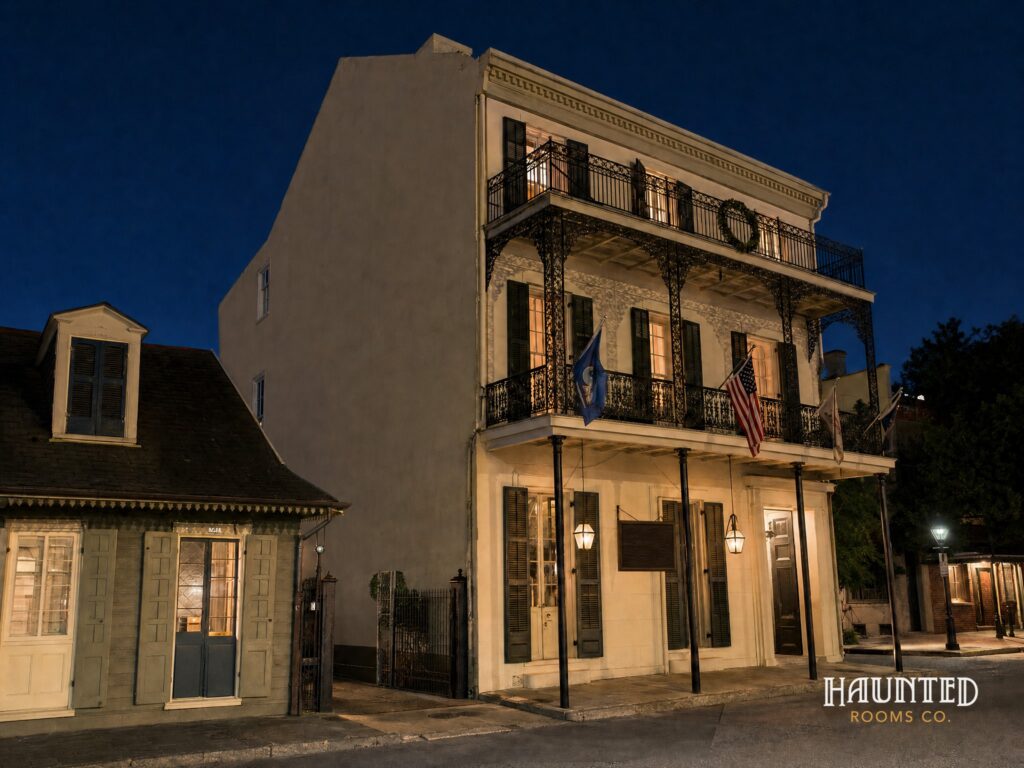
Built in 1849 as the family home of Paul Gleises, the Lafitte Guest House is a three-story Creole mansion with lacy cast-iron galleries at the quiet, residential end of Bourbon Street. It has just 14 rooms, filled with antiques, and some booking sites now list it as Lafitte Hotel & Bar.
Its ghost story centers on Room 21. Local legend says a young daughter named Marie died in the house, possibly of yellow fever, and that her mother never recovered and died in the same room. Guests report crying and sobbing in Room 21, and a little girl seen in the mirror outside it.
Haunted Rooms tip: Room 21 is the one to ask for. Call the hotel directly to request it.
Where to look Empty corridors, the elevators, the lobby
Reported ghosts Founder Joseph Bentley, a woman linked to the elevator shaft
Visiting A working hotel; book a room to stay the night
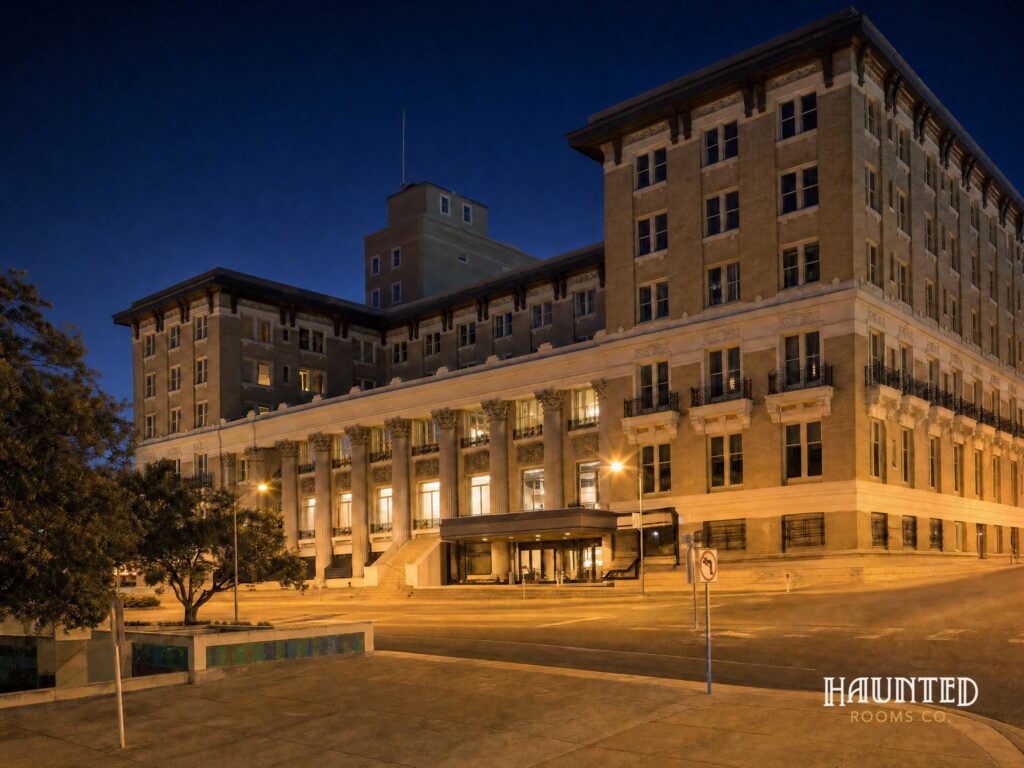
Lumberman Joseph Bentley built the Hotel Bentley in the center of Alexandria, and it opened in August 1908 as the grandest hotel in central Louisiana. Bentley lived there until his death in 1938. The Renaissance Revival hotel went on the National Register of Historic Places in 1979, closed in 2004, and reopened after Michael Jenkins bought and restored it from 2012.
It has a strong local ghost reputation. Wikipedia sums up the reports: footsteps in empty corridors, elevators moving with no one in them, doors opening and closing on their own, cigar smoke with no smoker, and a well-dressed figure people take to be Joseph Bentley himself. A Lafayette radio station adds the legend of a woman who fell down an elevator shaft and was never found.
Haunted Rooms tip: Have a drink in the lobby bar, then take the old stairs instead of the elevator.
Address State Capitol Dr at River Road, Baton Rouge, LA 70802
Where to look The columned galleries and the apartments
Reported ghosts A featureless 'Shadow Man'
Visiting State offices and private apartments; see the buildings from the Capitol grounds
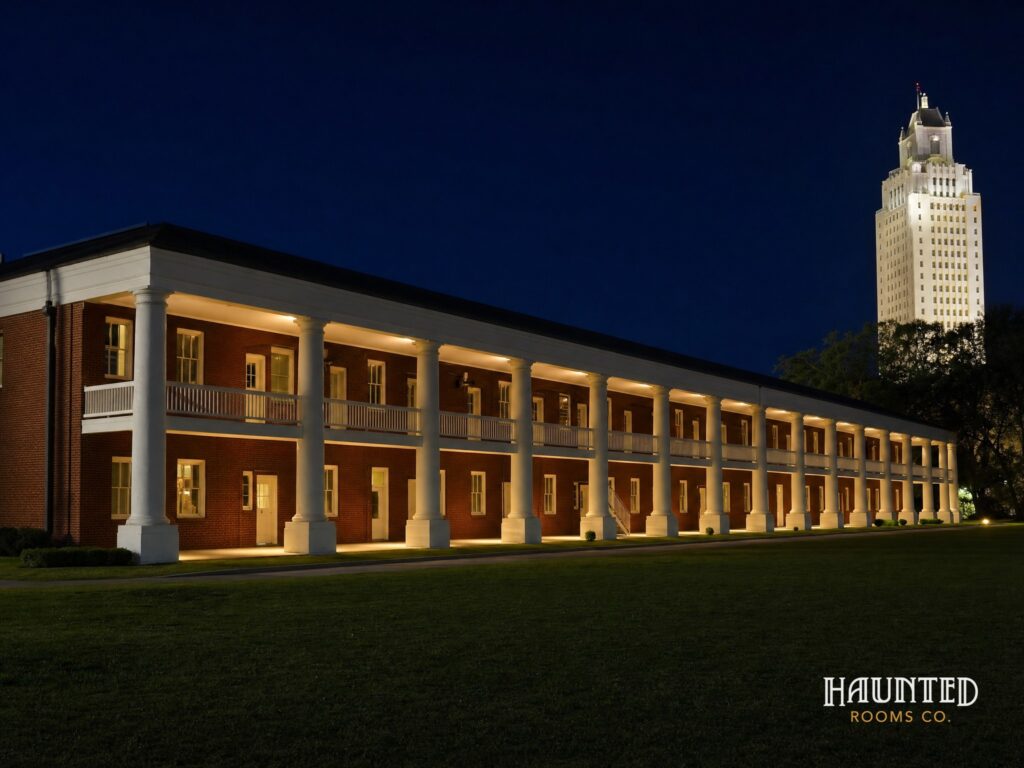
Four two-story brick barracks with deep columned galleries were built from 1819 to 1825 on the old Baton Rouge army post. Zachary Taylor commanded here and was living here when he was elected president in 1848, and Lafayette, Robert E. Lee and Jefferson Davis all passed through. Both armies held the post in the Civil War, LSU used the buildings as dormitories from 1886, and the state has owned them since 1951.
Today they hold the lieutenant governor’s office and apartments for legislators, and that is where the ghost story lives. Visit Baton Rouge tells of the Shadow Man, a featureless black figure seen moving through the apartments, who maintenance workers say confronted them, and says some legislators have moved out or refused to move in. The galleries are best seen from the Capitol lawn; the apartments are private.
Haunted Rooms tip: Walk the Capitol grounds at dusk from Huey Long’s grave to the barracks and the river levee.
Address 305 South River Road, Baton Rouge, LA 70802
Where to look Below decks, the crew berthing and the forward boiler room
Reported ghosts Sailors killed in the 1945 kamikaze attack, shadow figures below decks
Visiting Museum building open; the ship is away for repairs until her return, expected in 2027
Hours and season Museum daily, 9:30 a.m. to 3:30 p.m.
Tickets $8 for the museum only while the ship is away
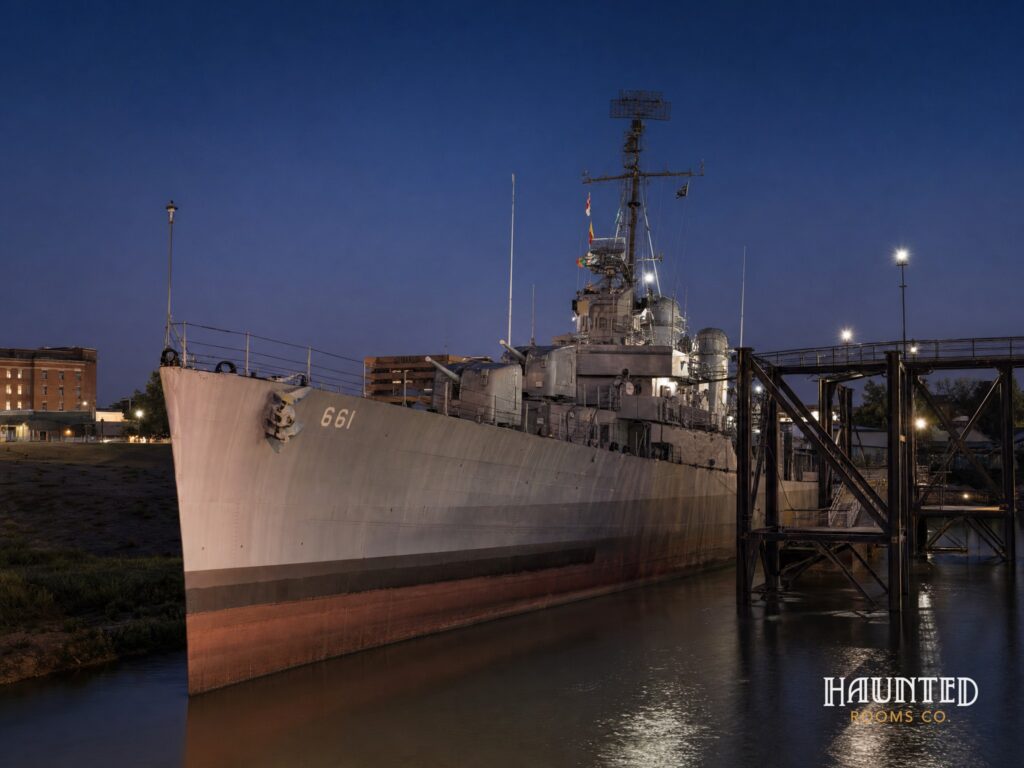
This Fletcher-class destroyer, commissioned in 1943 and nicknamed the Pirate of the Pacific for the Jolly Roger her crew flew, was hit by a kamikaze off Okinawa on April 11, 1945, killing 38 men and wounding 55. She arrived in Baton Rouge in 1982 as a memorial and was made a National Historic Landmark in 1986.
Visitors and overnight campers describe shadow figures below decks, sailors in 1940s uniform, voices near the old sleeping quarters, footsteps and slamming doors. Right now the ship is away: her $16 million overhaul at a Houma shipyard is done, and she is waiting for the Mississippi to rise high enough to bring her home, expected in 2027. The museum building on the riverfront stays open, and overnight camping is on hold.
Haunted Rooms tip: Check the museum’s website before you go: the ship’s homecoming date depends on the river level.
Visiting A working hotel; restaurant and bar open to the public
The Heidelberg Hotel, built in 1927, was Huey Long’s Baton Rouge base: he kept a three-bedroom suite here, and an underground passage still links it to the old Hotel King across the street. In 1931 it briefly served as the seat of state government during Long’s feud with his lieutenant governor, Paul Cyr. The hotel closed in 1985, sat derelict for two decades, and reopened in 2006 as the Hilton Baton Rouge Capitol Center after a $70 million renovation.
Employees have reported a figure on the tenth floor in a long coat and hat, holding a cigar, the look Long wore in the 1920s, and activity in the basement. Housekeepers say they smell cigar smoke in freshly cleaned rooms, although the hotel has been smoke-free since it reopened. It is a working hotel, so anyone can stay the night or drop in for a drink.
Haunted Rooms tip: Ask for a room on the tenth floor, where the cigar-smoking figure is said to walk.
These places appear in older lists of haunted spots. We keep them here so you know the facts before you go, but you cannot (or should not) visit them.
Charity Hospital, New Orleans
The huge 1939 Art Deco hospital on Tulane Avenue flooded in Hurricane Katrina in August 2005 and never reopened. Historians who worked with the makers of the film Renfield told them the building had a long haunted reputation, and urban explorers have been drawn to it for years. Do not try to get in: it is owned by LSU and is part of a long-delayed redevelopment into apartments and space for Tulane University, with completion expected in 2027.
Six Flags New Orleans (Jazzland)
Opened as Jazzland in 2000 and closed for good after Hurricane Katrina left it under several feet of water in 2005, the park became a famous abandoned site, and police arrested trespassers for years. It is gone now: demolition began in late 2024 and the park structures were cleared by March 2026 for the Bayou Phoenix redevelopment. There is nothing left to see, and the site is still off-limits.
Changed from our older guide: we rebuilt this page around places you can visit or see, and added Oak Alley, Destrehan, Houmas House, the Louisiana State Capitol, the USS Kidd, the Hilton Capitol Center and the Pentagon Barracks. The Old State Capitol’s architect was James Dakin, not “James Darkin”, and its girl ghost is diarist Sarah Morgan; museum staff say Senator Pierre Couvillon died at home, not in the chamber. Magnolia Plantation’s house was burned in the Civil War and rebuilt in 1897 (not burned in “1897”), and its main house is private. The Myrtles’ Chloe story does not match the records. The Shreveport Muni ghost of a woman giving birth is a legend.
Visited one of these places? Tell us what happened
We collect first-hand accounts from visitors and add the best ones to our guides, with your first name and the date of your visit. We read every story before it’s published.
The Myrtles in St. Francisville is the name most often given, and you can stay the night there. In New Orleans, the LaLaurie Mansion and St. Louis Cemetery No. 1 have the strongest reputations.
Can you stay overnight in a haunted plantation in Louisiana?
Yes. The Myrtles takes overnight guests in its main house and cottages, and Houmas House runs an inn on its grounds. See our guide to haunted hotels in Louisiana.
Is the Myrtles Plantation story true?
Parts of it. The Myrtles was built in 1796 and William Winter really was shot on its porch in 1871. The famous story of Chloe poisoning the family with a cake does not match the records: Sara Woodruff and two children died of yellow fever. See our Myrtles guide.
Is the Old State Capitol in Baton Rouge haunted?
Staff say so. A security officer described colliding with something unseen on the balcony above the House chamber at 2:15 a.m., and motion sensors trip in the empty building. Admission is free, and its own show is narrated by the ghost of diarist Sarah Morgan.
Does Haunted Rooms run ghost hunts in Louisiana?
Not at the moment. Our nearest public ghost hunts are in Tennessee and Kentucky; see all Haunted Rooms ghost hunts for dates.
Is the USS Kidd open?
The museum building in Baton Rouge is open daily, but the ship itself is away after a $16 million overhaul in Houma and is expected home in 2027, once the Mississippi is high enough.
Sources and how we research
Every place in this guide is checked against its official website, historic register listings and news coverage, and we confirm whether it is open, closed, private or gone before we list it. Ghost stories are reported as staff, visitors and local historians tell them; we say so where records contradict a story. Each place shows how many independent sources we checked it against; our own Haunted Rooms pages are not counted.
New guides, haunted places to visit and ghost hunt dates near you. No spam, unsubscribe any time.
About the authors
The Haunted Rooms Team runs public ghost hunts and overnight investigations at historic venues across the United States. We research every place in our guides using official sites, historic registers, local archives and news coverage, and we report ghost stories as the stories they are. We review each guide regularly so you are not sent to a place that has closed, changed hands or banned visitors. Spotted something out of date? Let us know.