Haunted Places in Spokane: 9 to Visit and 3 to Leave Alone
A grand hotel where a guest fell through the skylight in 1920, mining mansions in Browne’s Addition and two old theaters joined by a tunnel. Here are Spokane’s ghost stories, with what is documented, what is legend and what is simply wrong.
Spokane’s haunted places cluster in two neighborhoods. Downtown has the Davenport Hotel, the Fox and Bing Crosby theaters and the Steam Plant, all on the Spokane Public Library’s free haunted walking tour, with the Monroe Street Bridge over the falls a few blocks north. Just west of downtown, Browne’s Addition has the Campbell House museum and the Patsy Clark Mansion. Gonzaga’s Monaghan Hall is a short drive away, and St. Ignatius Hospital in Colfax, the region’s best-known haunted building, is an hour south.
Visit on a tourGhost toursParanormal investigations allowedOvernight investigations
Address 1009 S Mill St, Colfax, WA 99111
Where to look Room 312, the fifth floor, the old emergency rooms, the TB porch and the nursing building
Reported ghosts Rose, Donald, F. E. Martin the railroad worker, a child calling for help
Visiting Only on a booked tour or investigation; waiver required
Tours Daytime history and photo tours; evening haunted tours; private investigations
Ghost hunting Yes: group ghost tours and private paranormal investigations on set dates
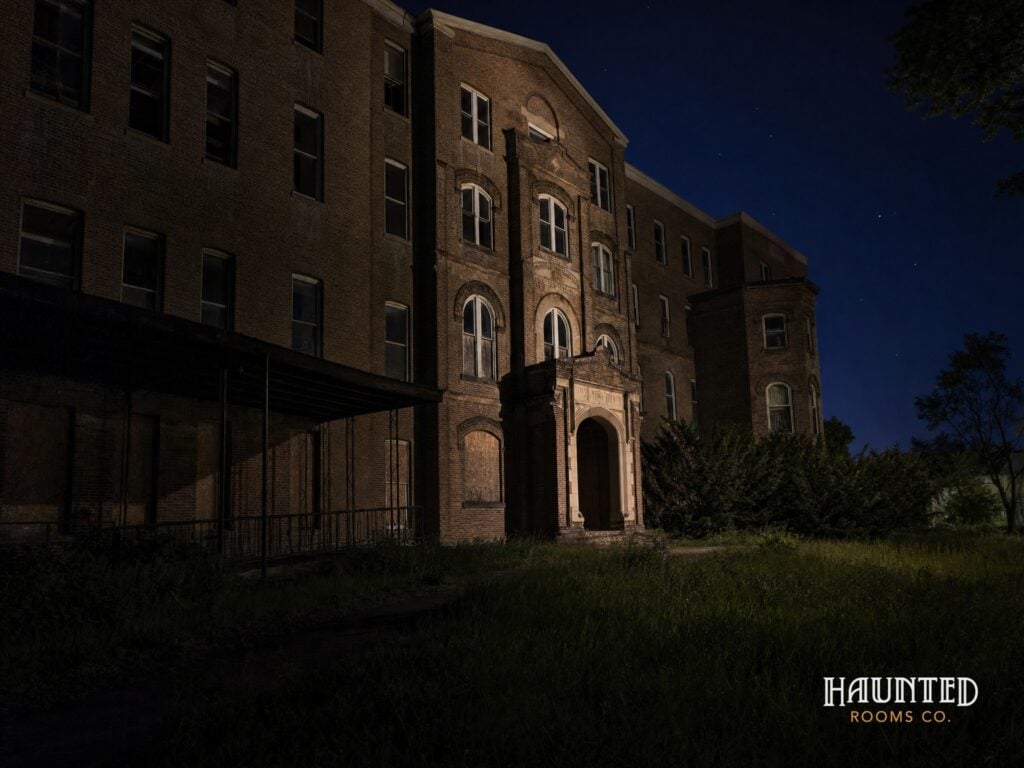
Mother Joseph Pariseau and the Sisters of Providence began this brick hospital on a hill above Colfax in 1893, the first to serve Whitman County. It treated patients until the 1960s, was sold in 1968 and became a home for adults with developmental disabilities until 2000, then stood empty and decaying. The Washington Trust put it on its most endangered list in 2015, the year tours began, and Austin and Laura Storm bought it in 2021 to restore it.
St. Ignatius is eastern Washington’s best-known haunted building, filmed for Paranormal Lockdown and Ghost Adventures. The stories name former residents: Rose, remembered locally as the finger lady, and Donald, who signed for the mail. Guides describe a child heard calling for help, motion cameras firing in empty rooms and an angry presence in Room 312. Tour proceeds pay for the roof and repairs.
What investigators report
On Paranormal Lockdown, investigators focused on Room 311, said to be linked to a former patient named Rose, and reported a GeoBox picking up what sounded like the name “Rose” and screams near the old lift shaft.
Where to look The lobby mezzanine and skylight, Louis Davenport's old suite, the Circus Room
Reported ghosts Ellen McNamara, founder Louis Davenport
Visiting A working hotel; public areas, restaurants and bars are open to visitors
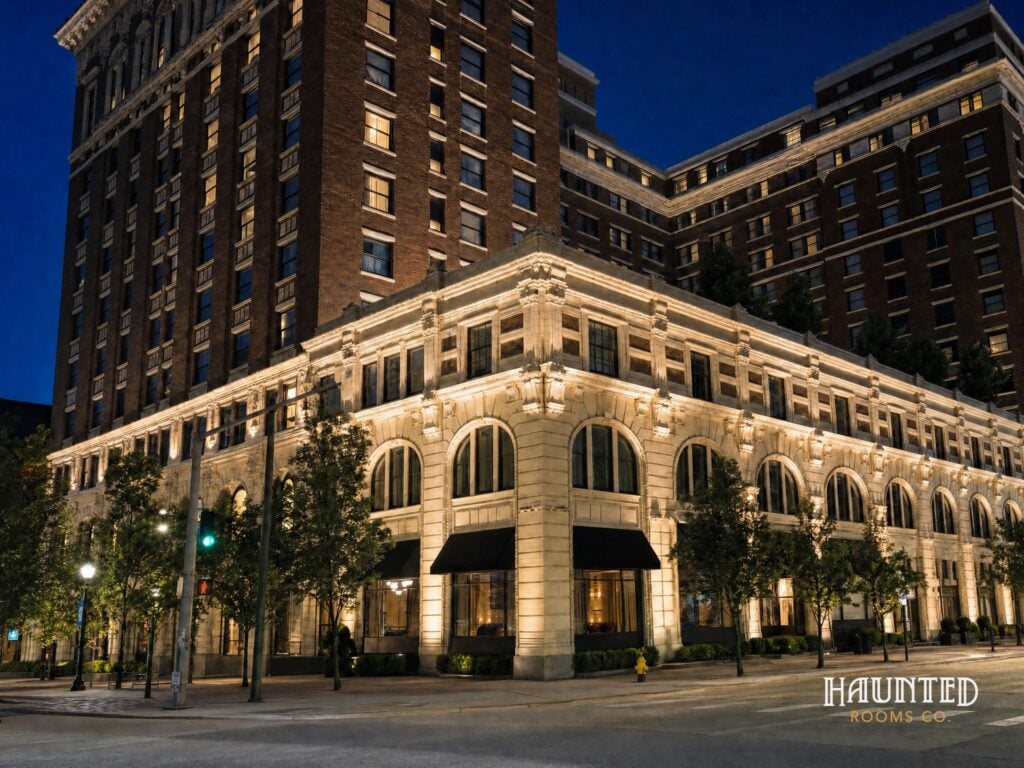
Louis Davenport’s grand hotel opened in 1914, designed by Kirtland Cutter, and was the social center of Spokane for decades. It closed in 1985, was nearly demolished, and reopened in 2002 after a $38 million restoration by Walt and Karen Worthy. It is on the National Register and runs as an Autograph Collection hotel. Its lobby and ballrooms were restored to their original 1914 look, and it remains the city’s grandest place to stay.
Its ghost story is rooted in a real death. On August 17, 1920, New York visitor Ellen McNamara fell through the glass skylight above the lobby and died about an hour later. Night staff still report a woman in 1920s dress on the mezzanine, and some guests say they have seen Louis Davenport, who died in his suite here in 1951. The hotel embraces the stories, describing its ghosts as playful and benevolent.
What investigators report
Staff say ghost seekers often book Louis Davenport’s old room and the Circus Room, and night-shift employees report a woman in white on the mezzanine above the lobby.
Where to look The main hall, the portrait of Amasa Campbell and the upstairs rooms
Reported ghosts A presence that follows visitors, a portrait whose eyes seem to follow you
Visiting Museum house; self-guided visits included with museum admission
Tours Self-guided visits; special guided tours, including after-hours Dark History tours
Hours and season Tuesday to Sunday, noon to 4pm
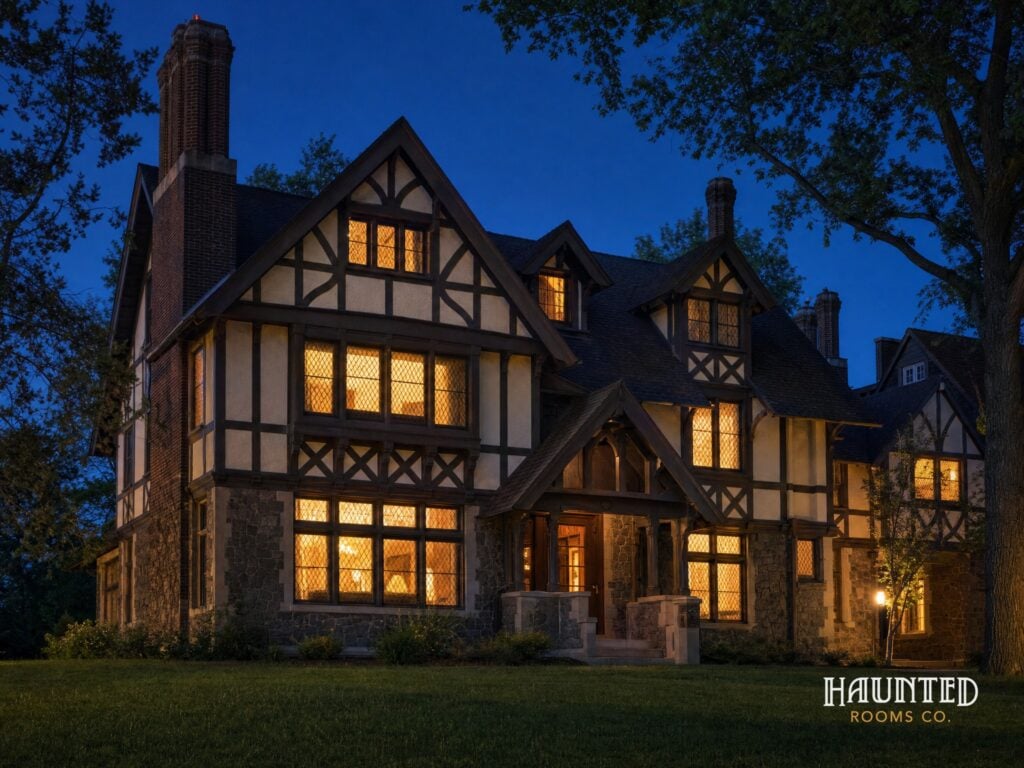
Kirtland Cutter, Spokane’s most fashionable architect, designed this Tudor Revival mansion in Browne’s Addition in 1898 for mining man Amasa B. Campbell, his wife Grace and their daughter Helen. After Grace died in 1924, Helen gave the house to the Eastern Washington State Historical Society in her memory. Restored between 1984 and 2001, it is now part of the Northwest Museum of Arts and Culture and open for self-guided tours.
Visitors say they feel followed through the rooms, and some say the portrait of Amasa Campbell watches them. You may also read that Campbell children were murdered here and one kidnapped. That story is false: the Campbells had one child, Helen, who lived to 1964, and nobody knows where the rumor began. The museum leans into the house’s darker gossip with after-hours Dark History tours.
Haunted Rooms tip: Book one of the museum’s after-hours Dark History tours in the fall; otherwise the house is open Tuesday to Sunday afternoons.
Where to look The basement wine cellar and the main staircase
Reported ghosts Mary Clark on the stairs dressed for a party, pranksters in the wine cellar
Visiting Offices and a private event venue; view from the street unless you are attending an event
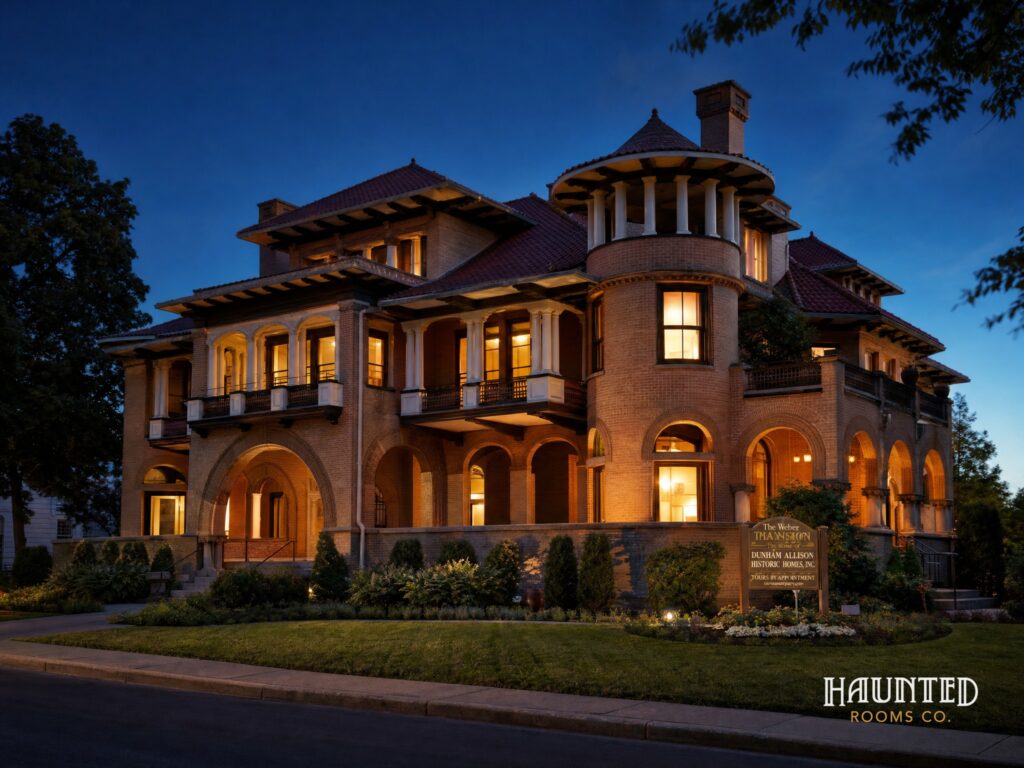
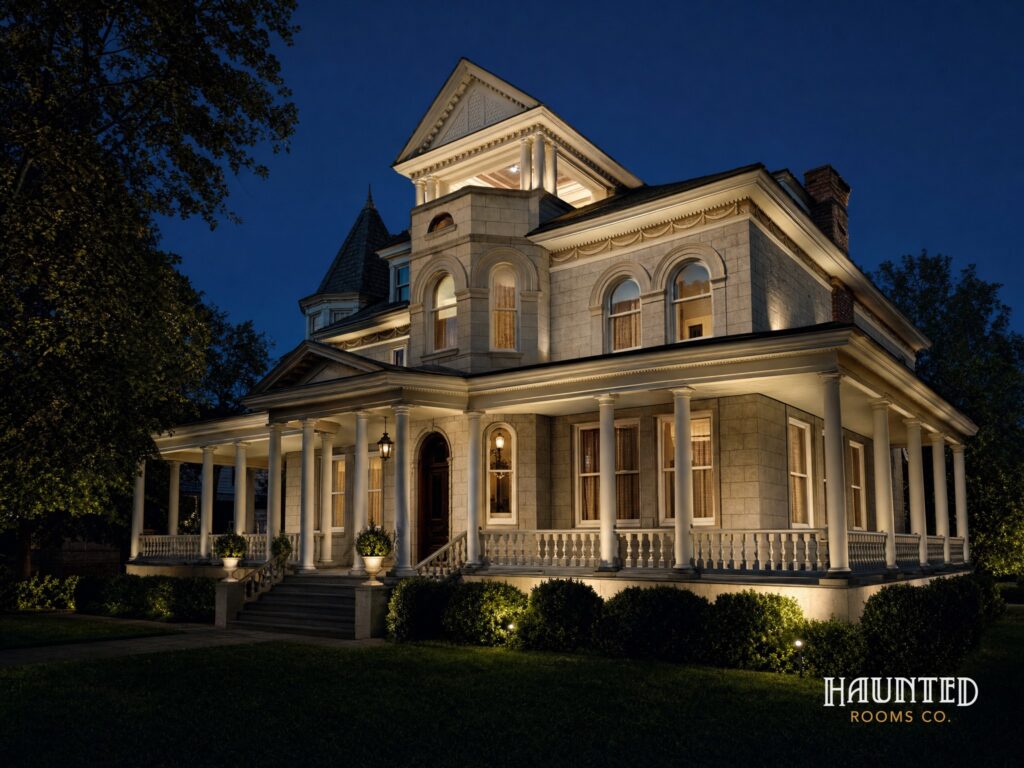
Mining millionaire Patrick ‘Patsy’ Clark sent Kirtland Cutter abroad for ideas, and in 1898 got a Spanish and Moorish style mansion with Tiffany glass and onyx fireplaces in Browne’s Addition. Patsy died in 1915 and his wife Mary in 1926. The house later became the Francis Lester Inn, then Patsy Clark’s restaurant, then a law office, and since 2020 it has belonged to a Spokane investor group that rents its first floor for weddings and events.
The hauntings seem to have begun in the restaurant years. Staff told of bottles thrown across the basement wine cellar, voices, cold drafts and a busboy who saw a figure float down the main staircase toward him, and Mary Clark is said to appear on the stairs dressed for a party. An attorney in the building told KXLY she had not been seen in years, and no tragedy is recorded in the house.
Haunted Rooms tip: View it from Second Avenue on a Browne’s Addition walk with the Campbell House; inside is for private events only.
Where to look The catwalks above the stage and the tunnel to the Bing Crosby Theater
Reported ghosts Otis, said to be a worker who fell from a catwalk
Visiting Owned by the Spokane Symphony; open for ticketed concerts and shows
Tours A stop on the Spokane Public Library’s haunted downtown walking tour
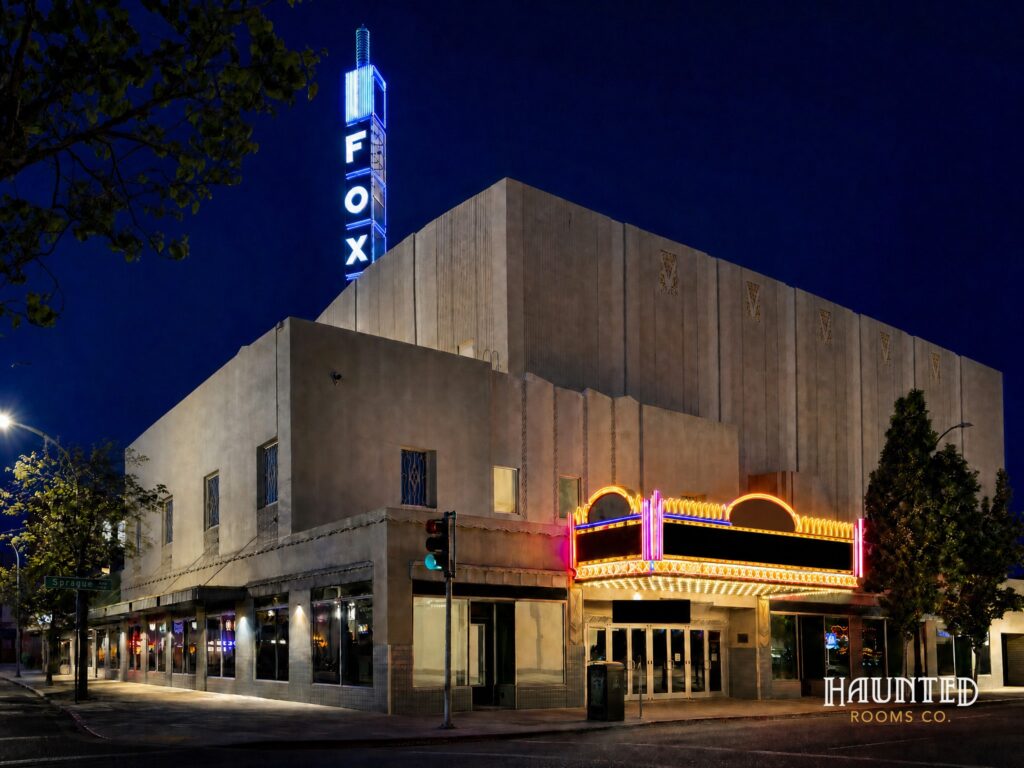
Robert Reamer designed Spokane’s art deco Fox, which opened as a movie palace on September 3, 1931. It closed in 2000 after a last screening of Gladiator, was bought by the Spokane Symphony and reopened in November 2007 after a 31 million dollar restoration, helped by Myrtle Woldson’s gift in her father’s name. It is on the National Register, and a tunnel links it to the Bing Crosby Theater across the street.
Its ghost is Otis. During the restoration, workers blamed missing tools and failing equipment on him, and some versions say he was a worker who fell from a high catwalk during construction. Not everyone is a believer: in 2022 the box office manager told the Spokesman-Review the stories were made up, and that the only ghost is the ghost light left burning on the stage.
Haunted Rooms tip: See a symphony concert and look up at the catwalks; Spokane’s downtown haunted walking tour starts nearby.
Reported ghosts A young woman in 1920s clothes on the balcony, a stage manager in the green room
Visiting Open for ticketed shows and events
Tours A stop on the Spokane Public Library’s haunted downtown walking tour
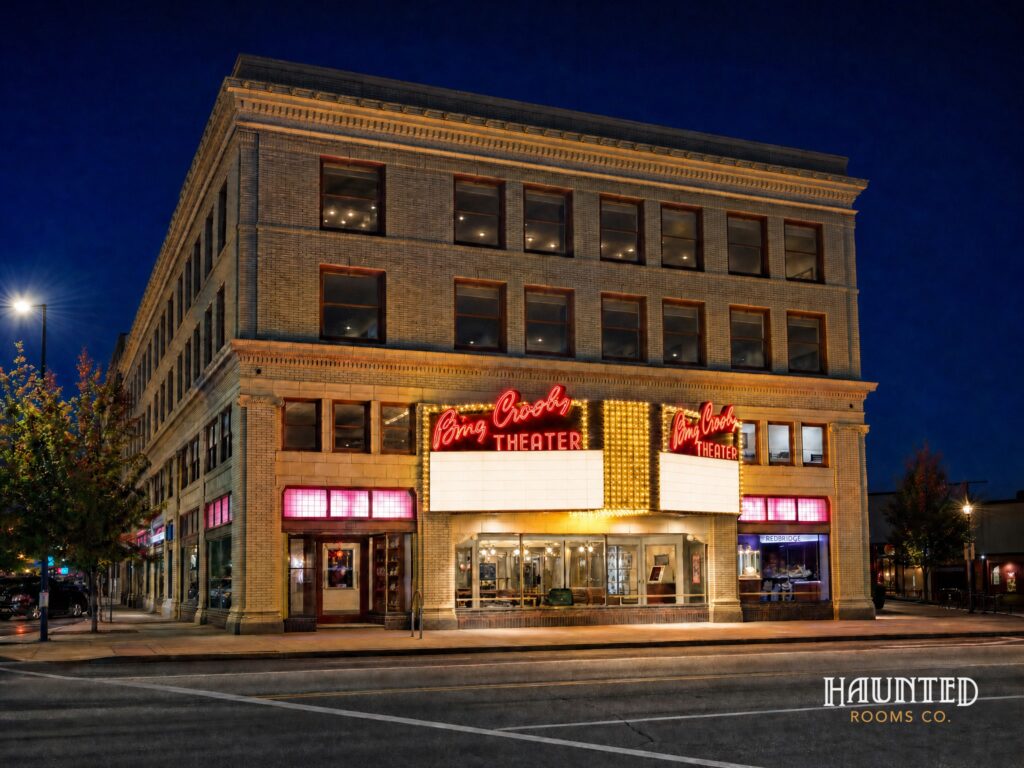
This theater opened in 1914 as the Clemmer, an 800-seat movie house where a young Bing Crosby performed in the early 1920s. It later became the State Theater, then the Met after a 1988 refurbishment, and was renamed for Crosby in 2006. It has been on the National Register since 1988 and is run today by the nonprofit Friends of the Bing.
Two ghosts are told of here. A young woman in 1920s clothes is said to pace the balcony, waiting for a lover who never came; in one version she jumped, in another she died of a broken heart. A stage manager who died of a heart attack after a long shift is said to sit on the divan in the green room. The Spokesman-Review calls the balcony story widely told but unsupported, and staff prefer to think it is Bing who visits.
What investigators report
Staff say they once called on Bing Crosby by name before reconnecting a 1960s lighting component they thought was dead, and it worked; the balcony is the spot most often linked to the theater’s ghost story.
Where to look The old boiler rooms and the twin stacks
Reported ghosts Dark figures and cries reported by the workers who built it, a poltergeist
Visiting Restaurants and offices open to the public
Tours A stop on the Spokane Public Library’s haunted downtown walking tour
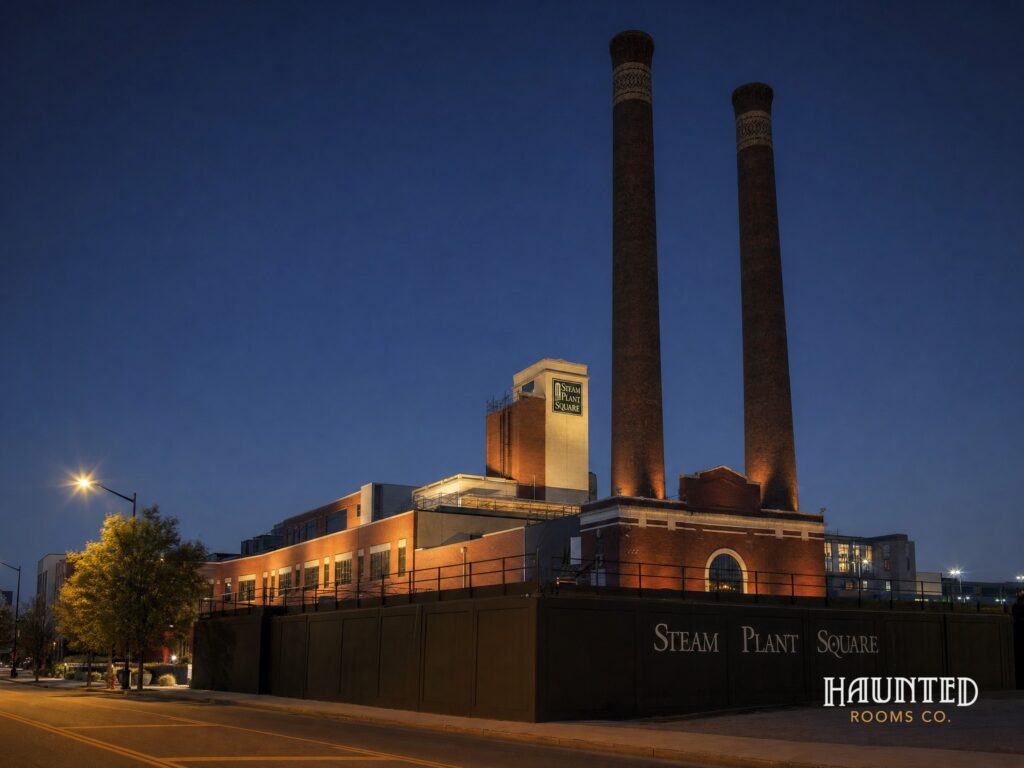
The Steam Plant was built in 1916 to pipe heat to more than 300 downtown buildings. Washington Water Power, later Avista, ran it from 1919 until the last boiler shut off in December 1986, and after a decade empty it reopened in the late 1990s as Steam Plant Square, with restaurants and offices among the old boilers under its twin stacks. It is on the National Register.
The story told on the library’s haunted walking tour is that the plant stands on the site of a passenger terminal destroyed in Spokane’s Great Fire of 1889, where some people did not escape, and that construction workers heard cries, saw dark figures and walked off the job. A medium who visited with local ghost writer Chet Caskey said she felt a presence. Treat the fire deaths as part of the legend; we found no list of victims for this site.
Haunted Rooms tip: Eat in one of the restaurants among the old boilers and ask for a table near the catwalks.
Where to look The basement, the stairs and the practice rooms
Reported ghosts Organ and flute music with no player, growling in the basement, doors flung open
Visiting A working university building; view from outside
James Monaghan, an early supporter of Gonzaga, built this three-story mansion with a turret and deep porch in 1898. Gonzaga bought it in 1942 and it has housed the university’s music department ever since. Some tellings say the ghost is his son John, killed in Samoa in 1899 and remembered by a statue downtown.
In the 1970s the building became famous. Music professor Father Walter Leedale described growling from the basement, doors flinging open, organ music with no organist and around 40 incidents in all, some too unpleasant to describe, and in early 1975 he announced that the spirits had been driven out after a series of blessings, reported as an exorcism. Gonzaga says today the building is not haunted and some incidents were student pranks.
Haunted Rooms tip: See it from the street on a walk around Gonzaga’s campus; it is a working music building, not open for ghost hunting.
Address Monroe St over the Spokane River, Spokane, WA 99201
Where to look The walkway over the gorge and the pavilions with their bison skulls
Reported ghosts A construction worker in old-fashioned clothes
Visiting A public bridge with sidewalks; free
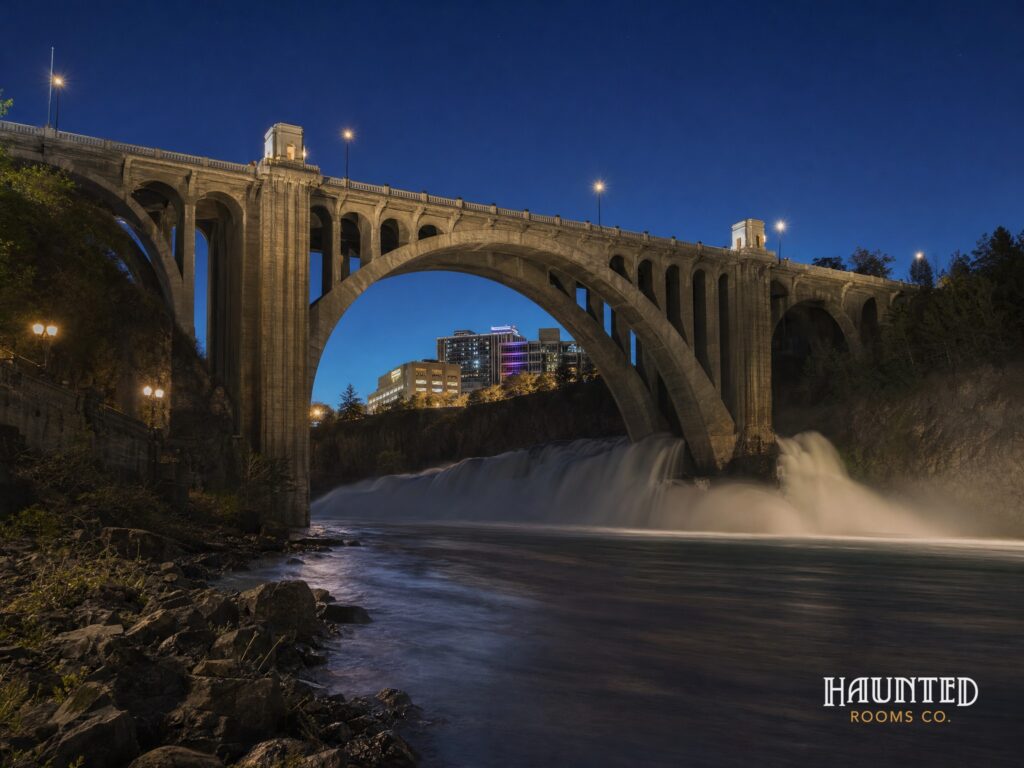
The third bridge on this site opened on November 23, 1911, and was then the largest concrete arch in the United States, spanning a gorge about 140 feet deep above Spokane Falls. Kirtland Cutter and Karl Malmgren designed its bison skulls and chain railings. A wooden bridge of 1889 burned and a shaky steel one followed; two laborers died building the concrete span. It was rebuilt to its 1911 look between 2003 and 2005.
The ghost story is old and thin. A worker who died building an earlier bridge is said to appear in old-fashioned clothes, ask where the Native people have gone, then leap from the rail and vanish before he hits the water. We found no record that names him. The bridge has also seen many suicides, and the stories about them are best left alone. If you or someone you know is struggling, call or text 988.
Haunted Rooms tip: Walk it at dusk in spring when the falls are loudest, and continue into Riverfront Park.
These places appear in older lists of haunted spots. We keep them here so you know the facts before you go, but you cannot (or should not) visit them.
The Thousand Steps, Greenwood Memorial Terrace
The overgrown stairs off Government Way are said to be guarded by ghosts that stop anyone reaching the top. There are only about 60 steps, built around 1898 for an Elks burial plot that never took off, and they lead to an empty, padlocked mausoleum. The stairs are on private land, unsafe to climb and patrolled by police and security, especially at Halloween. The cemetery’s own groundskeeper told KXLY he has yet to see a ghost.
The Hahn Mansion, South Hill
The 1940 death of Sylvia Hahn, ruled a suicide, and stories about Dr. Rudolph Hahn make this a fixture of Spokane ghost lists. It is a private home: please leave the people who live there alone.
The Liberty Lake horse slaughter site
In 1858 Colonel George Wright’s troops killed some 700 to 900 horses belonging to the region’s tribes near Liberty Lake, a real and brutal event. Our older guide said ghostly horses are seen there; we found no account behind that, and the site is better remembered as history than as a ghost story.
Changed from our older guide: we removed the DoubleTree hotel and the Mirabeau hotel, whose shadow-people and ghost-family stories we could not trace to any source; moved the Thousand Steps (private land) and the Hahn Mansion (a private home) to the off-limits list, along with the Liberty Lake horse site; corrected the Campbell House, where the story of murdered Campbell children is false; and added the Campbell House, the Bing Crosby Theater, the Steam Plant and St. Ignatius Hospital.
Visited one of these places? Tell us what happened
We collect first-hand accounts from visitors and add the best ones to our guides, with your first name and the date of your visit. We read every story before it’s published.
Frequently asked questions
What is the most haunted place in Spokane?
The Davenport Hotel is the best known, for Ellen McNamara, who fell through the lobby skylight in 1920, and for Louis Davenport himself. In the wider region, St. Ignatius Hospital in Colfax has the biggest reputation.
Is there a ghost tour in Spokane?
Yes. The Spokane Public Library publishes a free self-guided haunted downtown walking tour with 13 stops, and local writer Chet Caskey has led walking and bus ghost tours. The Campbell House runs after-hours Dark History tours in the fall.
Is the Davenport Hotel haunted?
Staff and guests describe a woman in white on the mezzanine, said to be Ellen McNamara, and Louis Davenport, who lived and died in the hotel. See our full Davenport Hotel guide.
Were Campbell children murdered at the Campbell House?
No. That story is false. Amasa and Grace Campbell had one child, Helen, who lived until 1964 and gave the house to the historical society in 1924 in her mother’s memory.
Was there really an exorcism at Gonzaga?
In early 1975 music professor Father Walter Leedale announced that a series of blessings had driven the spirits out of Monaghan Hall. Gonzaga says today the building is not haunted.
Can you visit the Thousand Steps in Spokane?
No. The stairs are on private land, unsafe and patrolled. You can glimpse them through the trees from Government Way.
Sources and how we research
Every place in this guide is checked against its official website, historic register listings and news coverage, and we confirm whether it is open, closed, private or gone before we list it. Ghost stories are reported as staff, visitors and local historians tell them; we say so where records contradict a story. Each place shows how many independent sources we checked it against; our own Haunted Rooms pages are not counted.
New guides and haunted places to visit. No spam, unsubscribe any time.
About the authors
The Haunted Rooms Team are paranormal researchers who write about historic haunted places across the United States. We research every place in our guides using official sites, historic registers, local archives and news coverage, and we report ghost stories as the stories they are. We review each guide regularly so you are not sent to a place that has closed, changed hands or banned visitors. Spotted something out of date? Let us know.