Haunted Places in Washington: 24 of the Most Haunted to Visit
A pioneer hospital on a hill above a farm town, an asylum farm in the Cascade foothills, a city that buried its own streets and a coal miners’ cemetery. These are Washington’s best-known haunted places, with what is true, what is legend and how to visit.
Washington’s ghost stories follow its history: the 1889 fires that remade Seattle and Spokane, the coal and timber towns, the forts that guarded Puget Sound and the big state institutions. We have checked every place below against current sources, so you know which are open, which run ghost tours or investigations, which take overnight guests and which you can only see from the road. Washington’s haunted hotels are here too, from Port Townsend’s Victorian inns to the Davenport in Spokane.
Visit on a tourGhost toursParanormal investigations allowedOvernight investigations
Address 1009 S Mill St, Colfax, WA 99111
Where to look Room 312, the fifth floor, the old emergency rooms, the TB porch and the nursing building
Reported ghosts Rose, Donald, F. E. Martin the railroad worker, a child calling for help
Visiting Only on a booked tour or investigation; waiver required
Tours Daytime history and photo tours; evening haunted tours; private investigations
Ghost hunting Yes: group ghost tours and private paranormal investigations on set dates
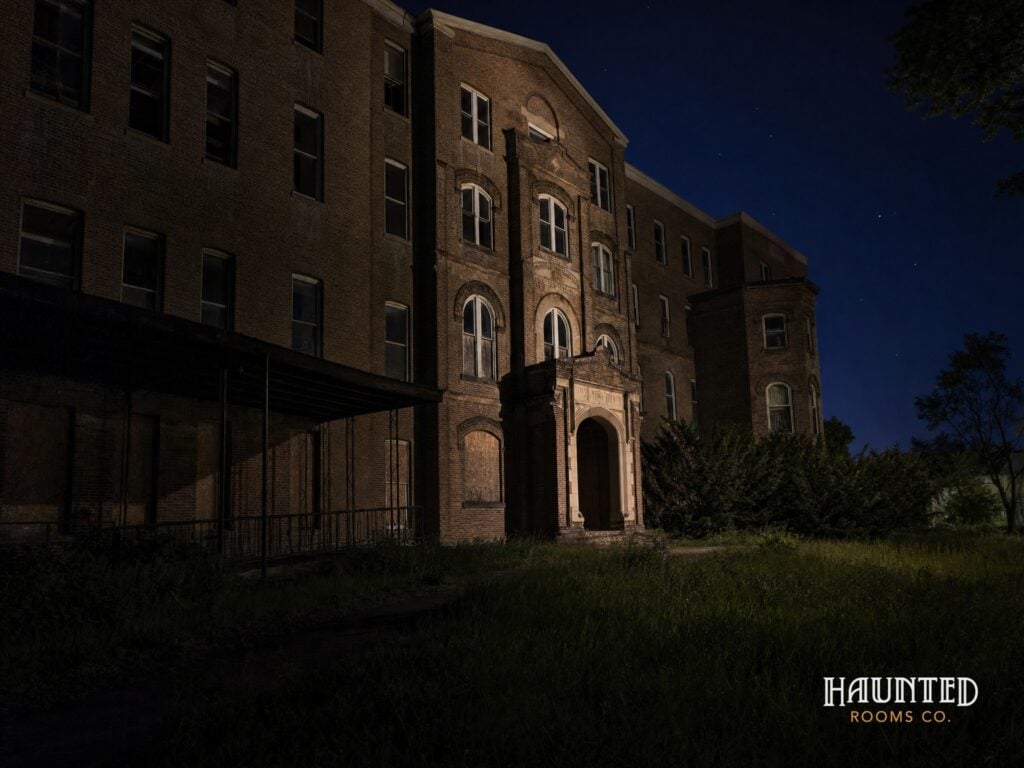
Mother Joseph Pariseau and the Sisters of Providence began this brick hospital on a hill above Colfax in 1893, the first to serve Whitman County. It treated patients until the 1960s, was sold in 1968 and became a home for adults with developmental disabilities until 2000, then stood empty and decaying. The Washington Trust put it on its most endangered list in 2015, the year tours began, and Austin and Laura Storm bought it in 2021 to restore it.
St. Ignatius is eastern Washington’s best-known haunted building, filmed for Paranormal Lockdown and Ghost Adventures. The stories name former residents: Rose, remembered locally as the finger lady, and Donald, who signed for the mail. Guides describe a child heard calling for help, motion cameras firing in empty rooms and an angry presence in Room 312. Tour proceeds pay for the roof and repairs.
What investigators report
On Paranormal Lockdown, investigators focused on Room 311, said to be linked to a former patient named Rose, and reported a GeoBox picking up what sounded like the name “Rose” and screams near the old lift shaft.
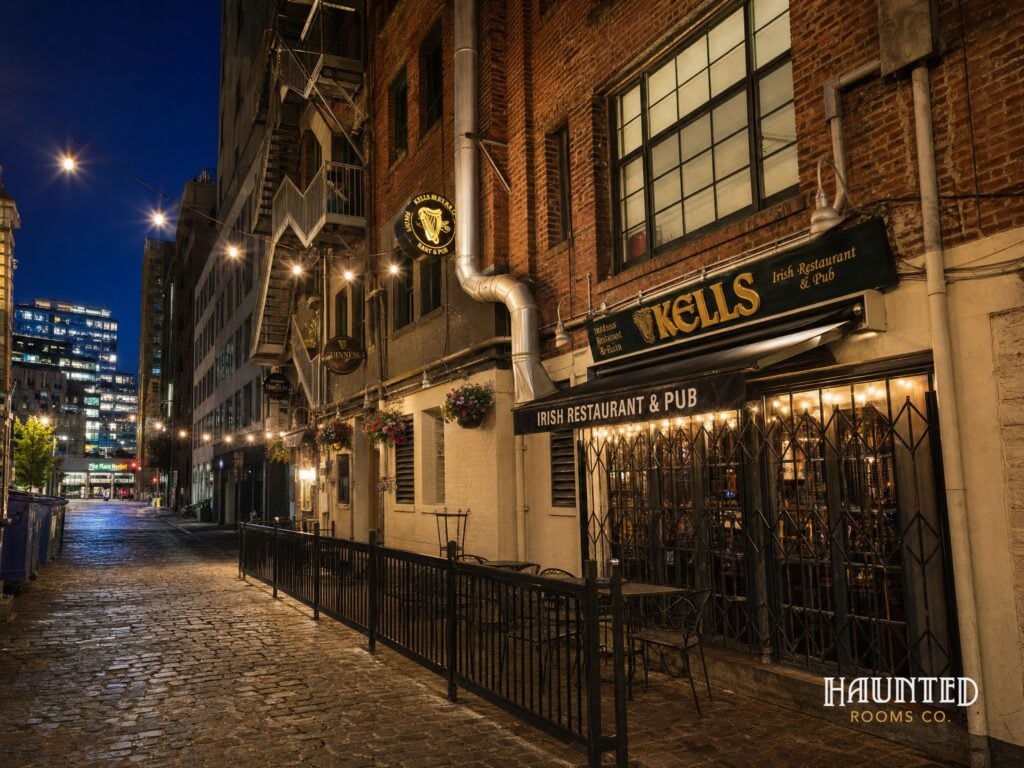
Where to look The bar and its mirrors, the restrooms and the old body entrance on Post Alley
Reported ghosts A little girl with red hair, a man nicknamed Charlie in the Guinness mirror, a man in a suit at the end of the bar
Visiting A working pub in Pike Place Market; open to the public (21+ in the bar after hours)
Tours Several Seattle ghost walks stop outside on Post Alley
The Butterworth Building went up in 1903, designed by John Graham Sr. for E. R. Butterworth and Sons, and it is described as Seattle’s first purpose-built mortuary, with what is said to be the West Coast’s first elevator for moving bodies. The undertakers moved out in 1923. Since 1983 Kells Irish Restaurant and Pub has filled the basement level, and its Post Alley door is the one the dead were carried through.
Kells has a bigger ghost reputation than almost any bar in the Northwest, and it appeared on Ghost Adventures in 2015. Staff and regulars describe a little girl with red hair who seems to want children to play with her, a figure called Charlie glimpsed in the Guinness mirror, glasses sliding off the bar and mirrors breaking. Nobody has tied the stories to a named person, so treat them as the pub’s own folklore.
Haunted Rooms tip: Go on a quiet weekday afternoon, take a seat facing the Guinness mirror and ask the bartender which story they believe.
Where to look The old bank and vault, the buried sidewalks under the vault lights, the former Oriental Hotel
Reported ghosts A bank teller called Edward, a woman in Victorian dress, shadowy seamstresses
Visiting Only on a guided tour; tours start beneath Doc Maynard’s Public House
Tours Bill Speidel’s Underground Tour (75 minutes, daily); Beneath the Streets; Spooked in Seattle evening ghost walks
Hours and season Underground Tour hourly 10am to 6pm
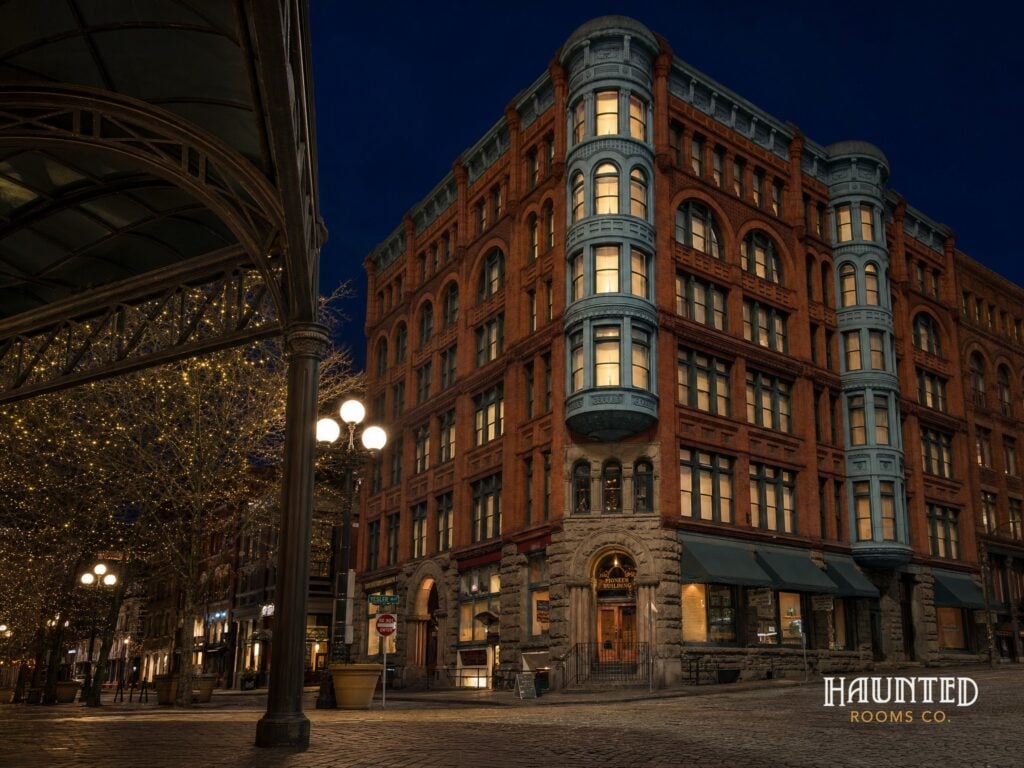
After the Great Fire of June 6, 1889, Seattle rebuilt Pioneer Square in brick and stone and then raised its streets, by about 12 feet in most places and close to 30 in some. The old ground floors and sidewalks were left below, lit by glass vault lights set into the new pavement. The city condemned the passages in 1907, and they became storage, flophouses and speakeasies until Bill Speidel began tours in 1965.
Guides and visitors have collected ghost stories down here for decades. The best known is Edward, a bank teller said to haunt the old teller cage, with a tall man in suspenders described by a guide in the 1980s. Others tell of a woman in Victorian clothes photobombing tourists and the outlines of seamstresses near the old Oriental Hotel. None of it is documented, and the tour itself sticks to history and humor.
What investigators report
A local team investigating the former Spooked in Seattle space beneath Pioneer Square reported EVP responses when they played music from 1900 to 1910 and spoke in Norwegian, alongside spirit box and K2 sessions.
Where to look The lower levels, the stairs down to Western Avenue, the old ramp near Post Alley and the upstairs library
Reported ghosts Princess Angeline, Arthur Goodwin, a singing barber, a small boy who moves beads and toys
Visiting Public market, free to walk; shop hours vary
Tours Market Ghost Tours, run by a market family since the 1980s
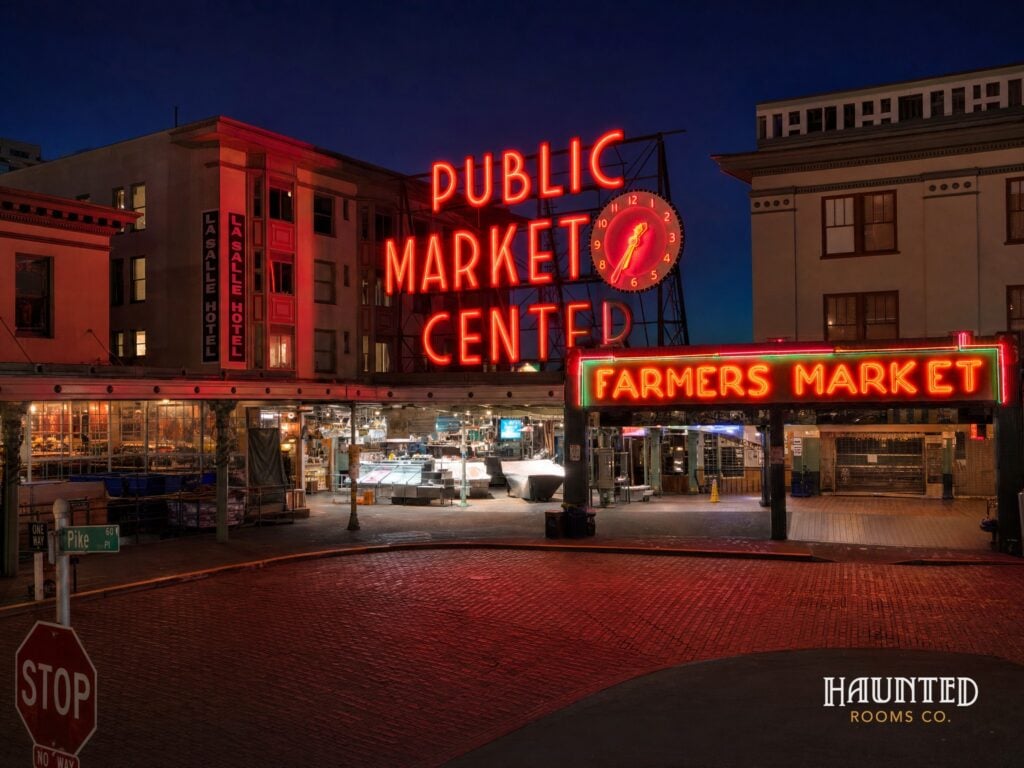
Seattle’s public market opened on August 17, 1907, when farmers brought produce into town by wagon, and voters protected it as a historic district in 1971. It now draws around ten million visitors a year. Below the famous neon sign the market drops through several levels of shops, stairs and old stable ramps toward the waterfront, and that maze is where most of its ghost stories are set.
The best known is Princess Angeline, Kikisoblu, the eldest daughter of Chief Seattle, who refused to leave her cabin when her people were moved to a reservation; the story says she is still seen near the Western Avenue stairs. Others are Arthur Goodwin, the developer’s nephew who later ran the market, in the upstairs library, a barber said to sing customers to sleep and rob them, and a small boy who moves beads and toys in a shop. Market Ghost Tours has told these stories since the 1980s.
Haunted Rooms tip: Book the evening Market Ghost Tour and save the lower levels for after the crowds thin out.
Where to look Rooms 302, 304 and 306, the locked attic, the tower room, the breakfast room (the old chapel) and the laundry room
Reported ghosts Kate in Room 306, a priest linked to Room 302, Charles and Kate Eisenbeis, a young girl
Visiting A working hotel; public areas, restaurants and bars are open to visitors
Charles Eisenbeis, Port Townsend’s first mayor, built this Prussian-style mansion in 1892. After his death it stood empty, then served the Jesuits as a training college from 1927 to 1968 before becoming a hotel. Today it has about 40 rooms, a tower suite and a lounge, a short drive from downtown and Fort Worden. Its German craftsmen left fine woodwork and tiled fireplaces, and the walls are a foot thick.
Rooms 302, 304 and 306 get the most reports. Guests describe footsteps in the locked attic above 302, perfume and flickering lights in 306, and pressure on the bed as if someone sat down. Ghost Adventures filmed here in 2015. Be aware that a former manager told the Peninsula Daily News that a bartender invented the two famous stories. Staff take the stories seriously all the same, and paranormal groups may investigate under house rules.
What investigators report
Ghost-hunting guests focus on Room 302, the turret room, and Room 306, both beside the attic staircase; one investigating couple reported hearing voices and movement from an unoccupied room.
Where to look The Grant House upstairs hall, its balcony and Officers Row after dark
Reported ghosts General Alfred Sully pacing upstairs, a well-dressed boy in the lobby, a tall bearded man on the balcony
Visiting A restaurant open to the public; the national historic site is next door
Tours Grant House ghost tours led by historian Jeff Davis on set dates
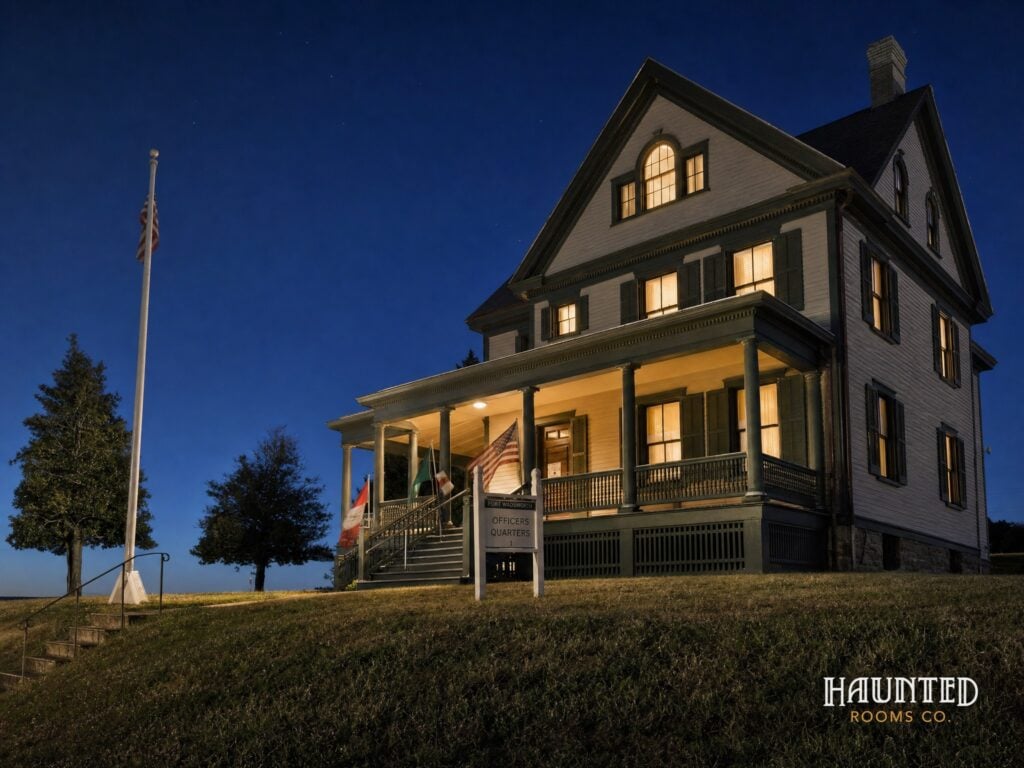
The Grant House, built in 1849, is the oldest building on Officers Row at the Vancouver Barracks, part of the Fort Vancouver National Historic Site and reserve. It was the first army headquarters in the region and later an officers’ club, museum and residence. Despite the name, Ulysses S. Grant did not live in it. Today it is a restaurant.
Its ghost is usually said to be General Alfred Sully, commander here from 1874 until he died in 1879, whose footsteps are heard pacing the upstairs hall where he lived. Staff also describe a polite boy in a suit in the waiting area and a tall bearded man on the balcony. Local historian Jeff Davis, who leads ghost tours here, admits the evidence is weak, which makes the stories more fun.
What investigators report
A local historian investigating General Sully’s former upstairs quarters in the Grant House ran EVP sessions and left Scrabble tiles as a movement test, and reported that his dead camera later switched back on fully charged.
Address Helmick Rd off State Route 20, Sedro-Woolley, WA 98284
Where to look The barns and dairy, the old wards seen from the trails and the patient cemetery
Reported ghosts A nurse pushing a patient in a wheelchair, shadow figures, voices and screams
Visiting Recreation area trails open in daylight; occupied and fenced buildings are off-limits
Ghost hunting No: the trails close at dusk and the buildings are off-limits
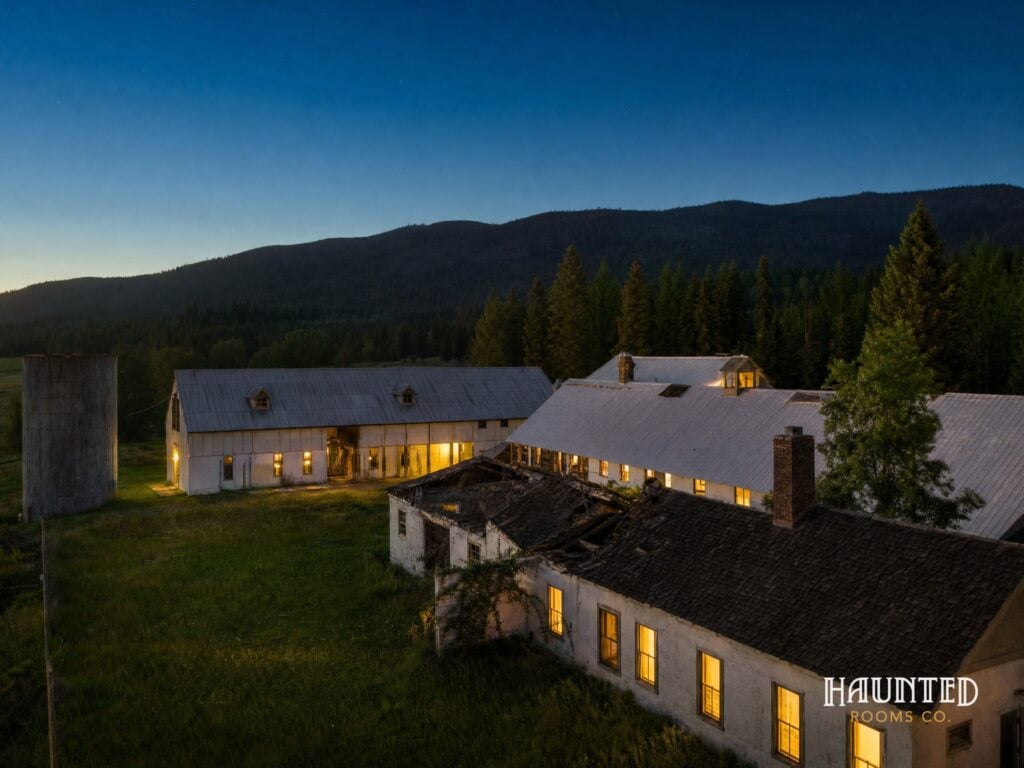
Washington began building Northern State in 1909 to relieve overcrowding at Western State Hospital. The Olmsted Brothers laid out the grounds and Saunders and Lawton designed the Spanish-style wards, and the hospital ran a 700-acre farm, dairy, mill and quarry worked by its patients. It held about 2,700 people in the 1950s and closed in 1973. More than 1,500 patients lie in its cemetery under markers with only initials and numbers.
Most of the old farm is now the Northern State Recreation Area, with free trails past the barns, the cannery and the empty wards. Visitors and ghost hunters describe a nurse pushing a patient in a wheelchair, shadow figures, screams and voices. Local historians would rather you came to remember the patients than to hunt ghosts, and the occupied buildings are off-limits.
Haunted Rooms tip: Walk the 5-mile loop in daylight, stay out of the fenced buildings and stop at the cemetery to read the markers.
Where to look The lobby mezzanine and skylight, Louis Davenport's old suite, the Circus Room
Reported ghosts Ellen McNamara, founder Louis Davenport
Visiting A working hotel; public areas, restaurants and bars are open to visitors
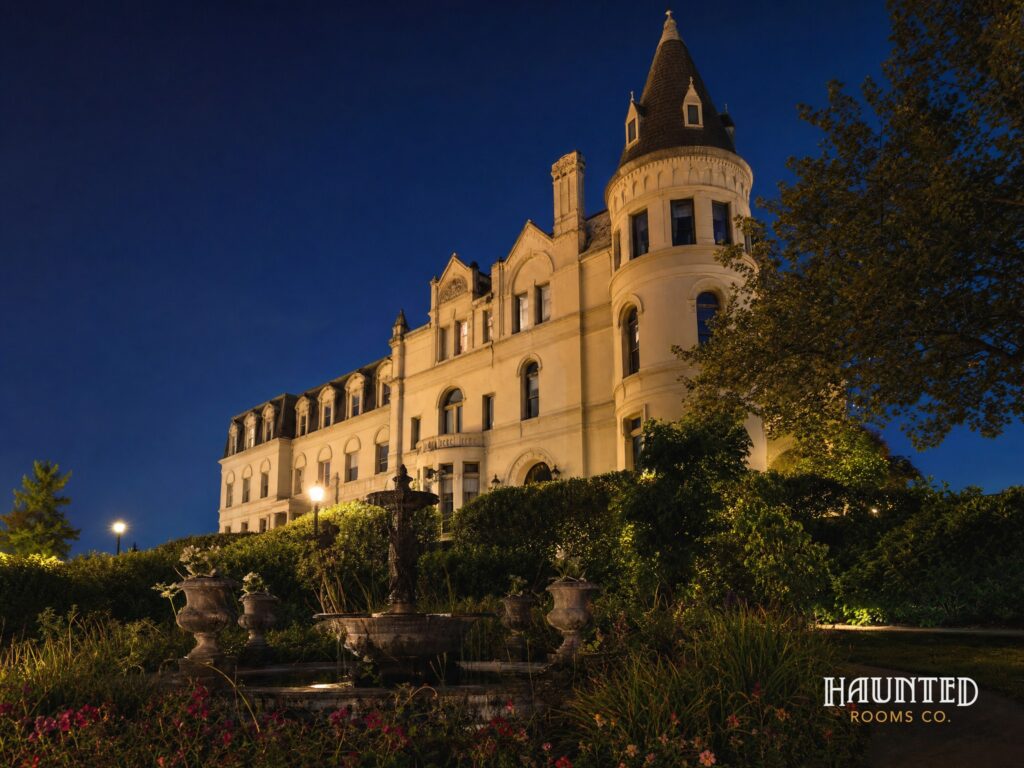
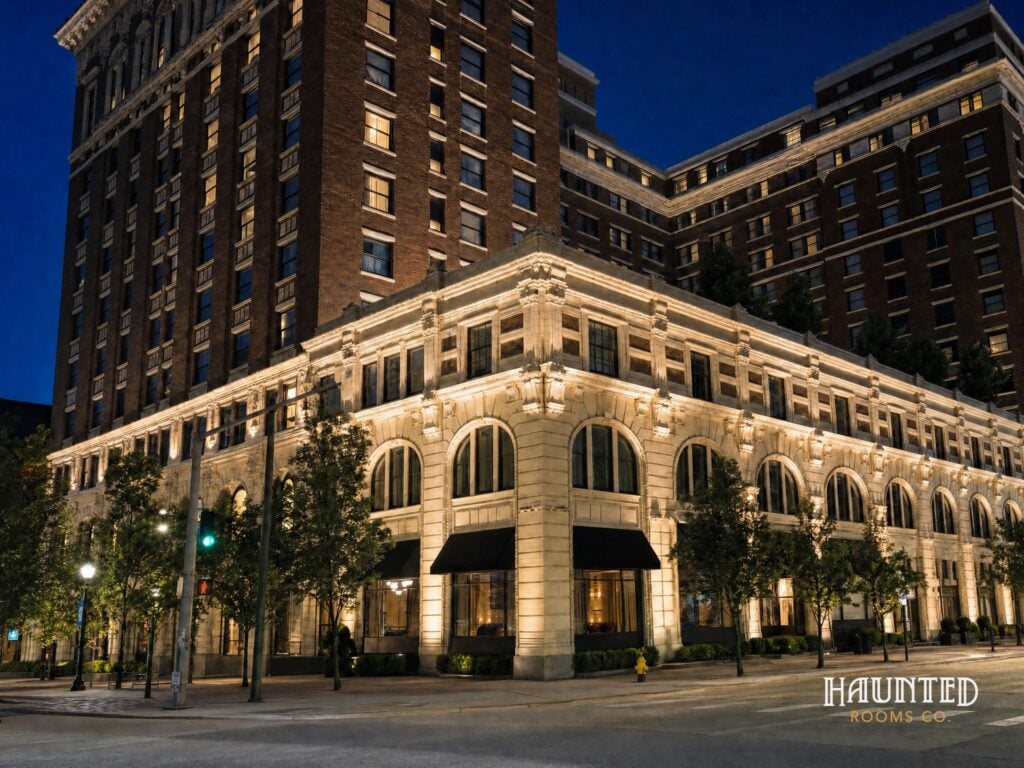
Louis Davenport’s grand hotel opened in 1914, designed by Kirtland Cutter, and was the social center of Spokane for decades. It closed in 1985, was nearly demolished, and reopened in 2002 after a $38 million restoration by Walt and Karen Worthy. It is on the National Register and runs as an Autograph Collection hotel. Its lobby and ballrooms were restored to their original 1914 look, and it remains the city’s grandest place to stay.
Its ghost story is rooted in a real death. On August 17, 1920, New York visitor Ellen McNamara fell through the glass skylight above the lobby and died about an hour later. Night staff still report a woman in 1920s dress on the mezzanine, and some guests say they have seen Louis Davenport, who died in his suite here in 1951. The hotel embraces the stories, describing its ghosts as playful and benevolent.
What investigators report
Staff say ghost seekers often book Louis Davenport’s old room and the Circus Room, and night-shift employees report a woman in white on the mezzanine above the lobby.
Where to look Chester's former room, Anna's Suite (the bridal suite) and its mirror, the lakeshore
Reported ghosts Chester Thorne, Anna Thorne, a small child by the lake
Visiting A working hotel; public areas, restaurants and bars are open to visitors
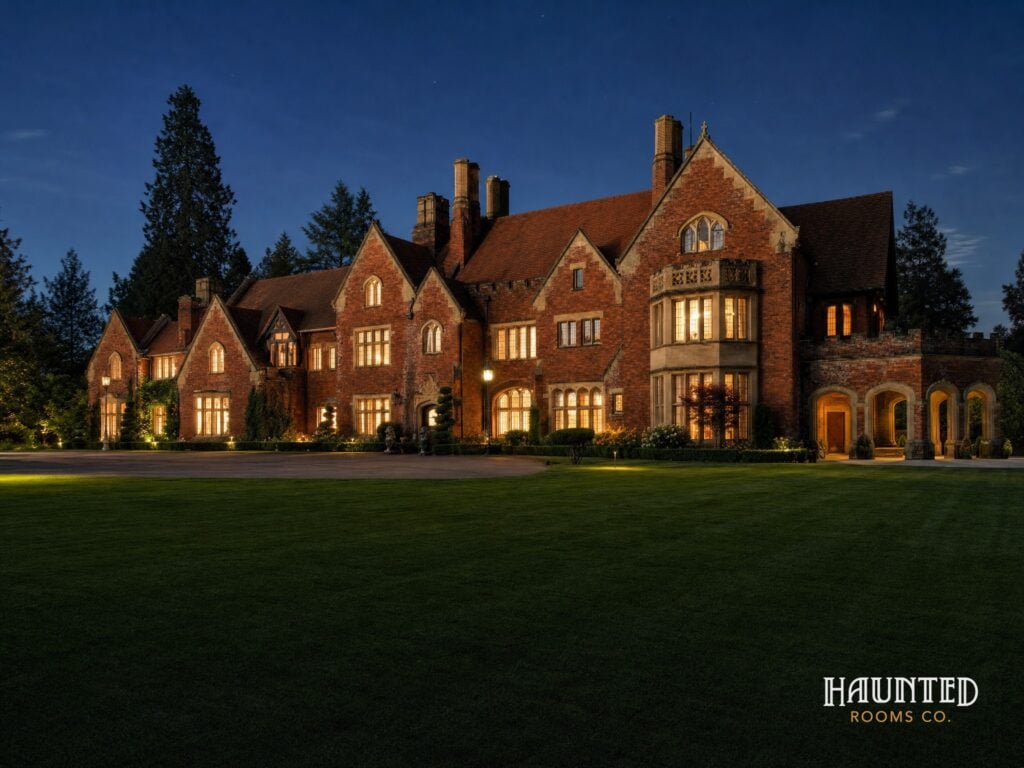
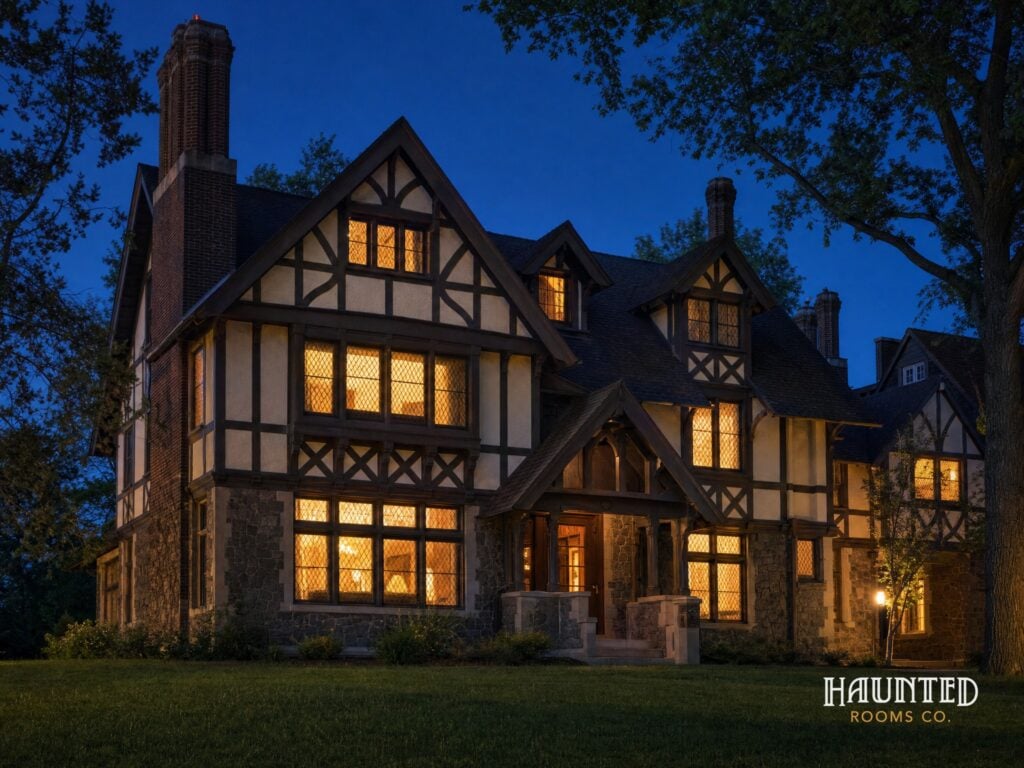
Tacoma financier Chester Thorne built this Tudor Gothic manor on American Lake between 1908 and 1911, using parts of a centuries-old English manor shipped around Cape Horn, with Kirtland Cutter as architect. It is on the National Register and today runs as an inn and event venue with named suites. Stephen King’s Rose Red was filmed here. Presidents Theodore Roosevelt and William Howard Taft attended events here in the Thornes’ day.
The stories center on the family. Light bulbs are said to be found unscrewed in Chester’s old room, and guests describe Anna sitting in the window seat of her room, now the bridal suite, or her reflection in its original mirror. A small child is also said to appear by the water and vanish. The castle itself does not promote its ghosts, and its owners describe it simply as part of Northwest history.
What investigators report
Investigators found the Lakeside Apartment the most active spot, reporting EVPs of “Behind you” and “Mark” during white-noise and Estes Method spirit box sessions.
Where to look Room 7, Room 4, the parlor fireplace, the dining room
Reported ghosts Charley, a ghost cat, Albert Brown
Visiting A working hotel; public areas, restaurants and bars are open to visitors
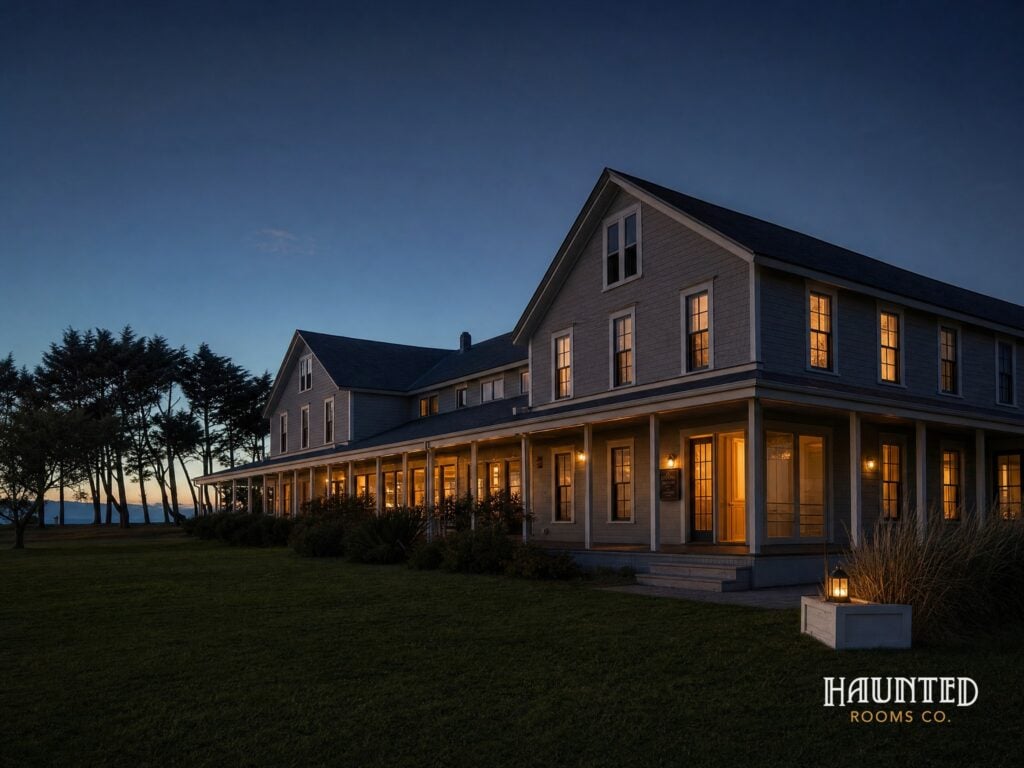
Billed as Washington’s oldest resort hotel, the Tokeland began as the Kindred family’s farmhouse on a point in Willapa Bay, opened to guests as the Kindred Inn and grew into the present C-shaped hotel by 1910. It has been on the National Register since 1978 and has 17 rooms upstairs, with The Wandering Goose restaurant below. It is owned today by Seattle restaurateurs Heather Earnhardt and Zac Young.
The hotel’s guest logbook holds decades of ghost accounts, most about Room 7 and “Charley”, said to be a Chinese immigrant who hid behind the parlor fireplace around 1900 and died there. Guests also describe an invisible cat jumping onto the bed, knocking in the walls and plates that move in the dining room. Albert Brown, a boy who drowned nearby in the 1860s and whose tombstone washed up after a 1970s storm, is said to haunt the halls too.
What investigators report
The innkeeper says Room 7 is where guests most often report unusual experiences, and guests have recorded their encounters in a logbook kept for decades.
Where to look The fourth floor and Room 408, the Fireside Room bar, the front patio
Reported ghosts A woman in turn-of-the-century dress, often linked to Alice B. Toklas
Visiting A working hotel; public areas, restaurants and bars are open to visitors
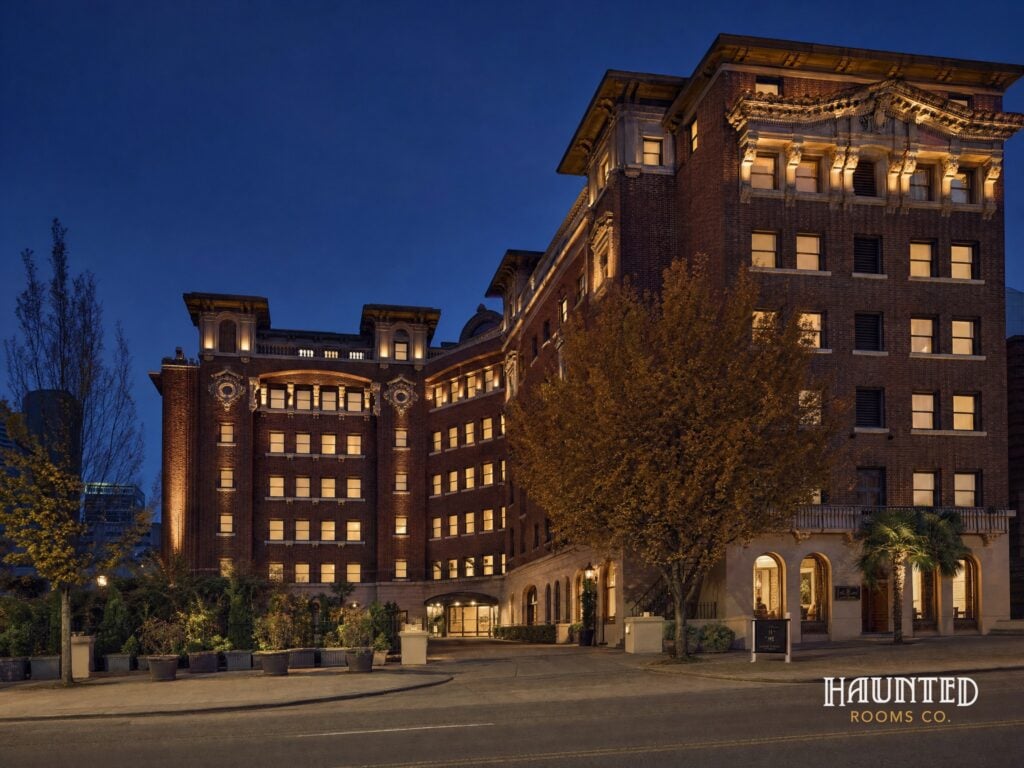
Hotel Sorrento opened on First Hill in 1909, an Italian Renaissance design by Harlan Thomas built around a palm-planted courtyard. It is a Seattle Landmark, was added to the National Register in 2021 and has 76 rooms, with the Fireside Room bar at its heart. The Malone family bought and restored it in the 1980s, and Barbara Malone, its co-owner, still talks openly about what guests report.
Most reports come from the fourth floor and Room 408: a woman in vintage dress in the hall, humming in the bathroom, a weight on the edge of the bed and lights that flicker at once. Many link her to Alice B. Toklas, who lived nearby as a teenager, although she left Seattle years before the hotel opened. In October the hotel leans into its reputation with witches’ teas and a murder mystery dinner.
Haunted Rooms tip: Ask for Room 408 or a fourth-floor room, then end the night in the Fireside Room, where drinks are said to move on the bar.
Where to look The 1910 Lawson Mine grave, the Pennacchi grave and the children's section
Reported ghosts Miners swinging lanterns, a white horse among the stones, whistling and voices
Visiting A city cemetery open to respectful visitors in daylight
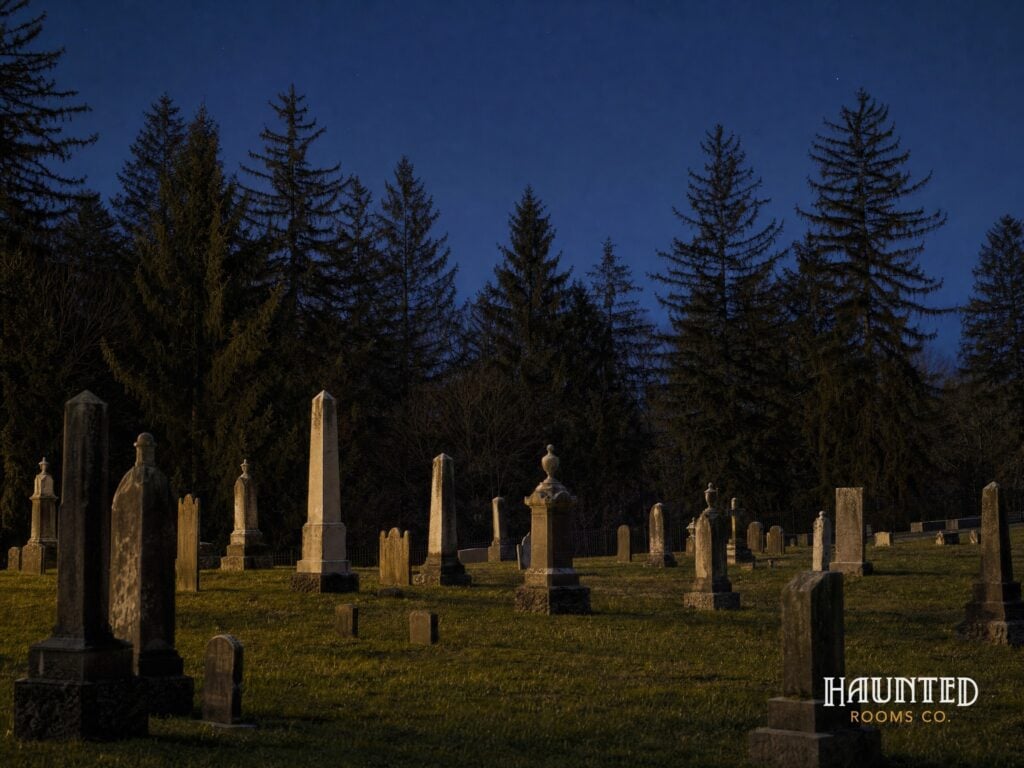
The Black Diamond Coal Mining Company laid out this hillside cemetery in the 1880s for its miners and their families, many of them Welsh, Italian, Polish and Austrian immigrants. It holds more than 1,200 graves and has been on the National Register since 2000. One grave holds eight men killed in the Lawson Mine explosion of November 1910, and men lost at Ravensdale in 1915 lie here too.
It is often called Washington’s most haunted cemetery. The stories describe miners’ lanterns swinging between the stones on foggy nights, a phantom white horse, whistling and voices. A paranormal team that visited in 2020 found glowing electric candles and whirring pinwheels on graves that might explain some reports, and no investigation has produced proof. It is a working town cemetery; visit by day and with respect.
What investigators report
A team running EMF meters, spirit box and EVP recorders overnight reported an EMF hit and a feeling of being followed, after first checking graves for glowing candles and pinwheels that could explain reported lights and whistling.
Where to look The clock tower and the old council chambers
Reported ghosts A bell ringing at night, coughing outside the council chambers, a ghost called Gus who works the elevator
Visiting Under restoration; view from the street until new tenants open
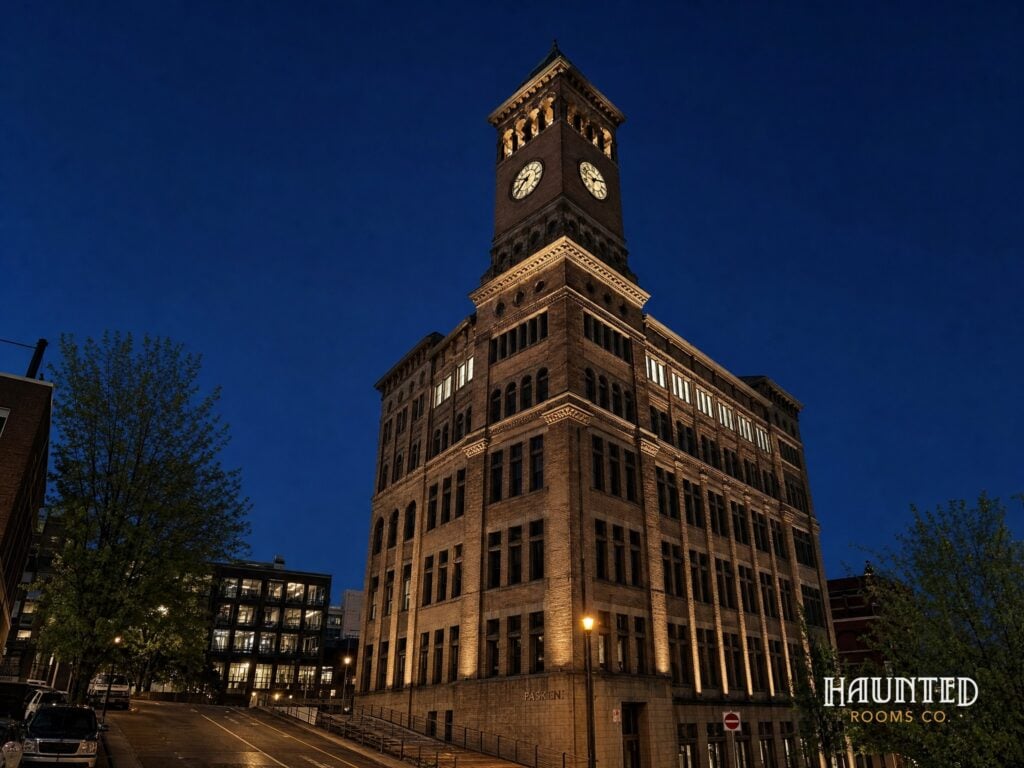
San Francisco architects Hatherton and McIntosh designed this Italian Renaissance landmark, finished in 1893 in the middle of an economic depression, with a clock tower that still dominates downtown Tacoma. It was the seat of city government until 1957, was saved from demolition and listed on the National Register in 1974, then sat empty for years. Local developer Surge is now restoring it for offices, restaurants and apartments.
Its ghost stories began in the empty years. From the 1970s police answered calls for flashing lights, noises and fire and burglar alarms, and found no one inside and no sign of a break-in. Guards described shadowy shapes and coughing outside the council chambers, the tower bell was said to ring late at night, and rumor gave the building a ghost called Gus who rides the elevator and unlocks doors.
Haunted Rooms tip: See the clock tower from Commerce Street or Fireman’s Park; check the building’s own site for when the new shops and restaurants open.
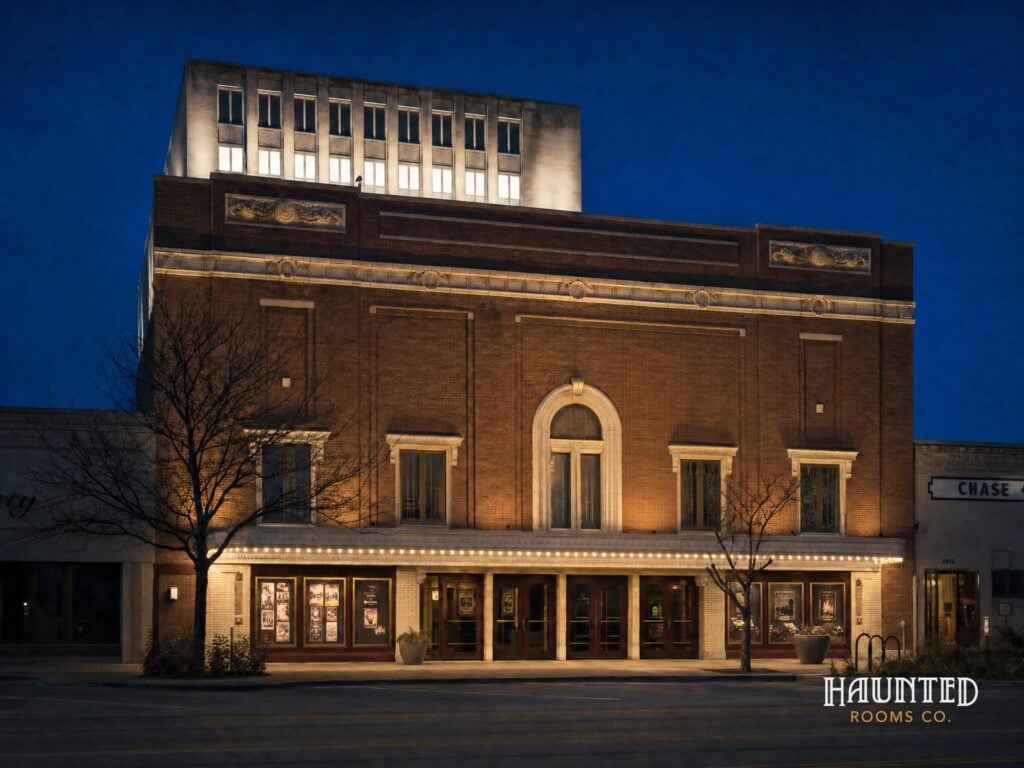
Where to look The corridor between the balcony and the mezzanine, the projection booth and the basement
Reported ghosts Judy, a man in a pin-striped suit, a feral cat in the basement
Visiting Open for ticketed shows; occasional tours
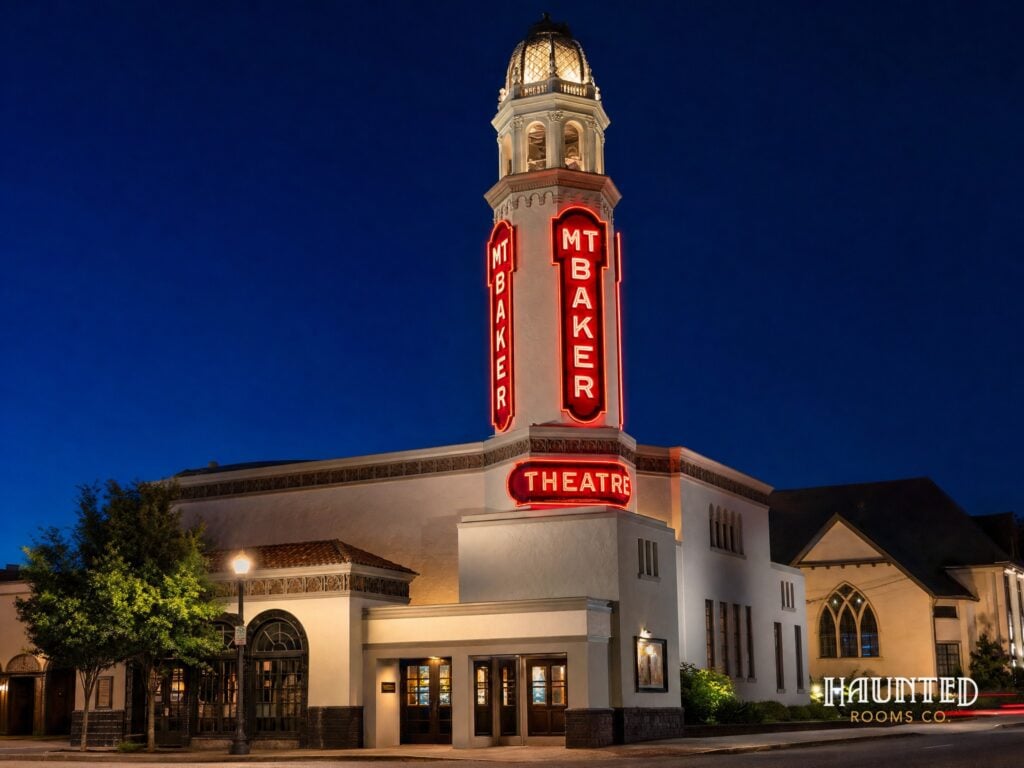
Robert Reamer, who also designed Spokane’s Fox, gave Bellingham this Moorish and Spanish style picture palace, which opened on April 29, 1927 with about 1,500 seats and played vaudeville in its early years. It joined the National Register in 1978 and is now the busy home of the city’s touring shows and concerts.
Judy is its ghost. The theater’s own director told Northwest Travel the story that she sang and danced on the waterfront and lived in a boarding house torn down to build the theater, and that projectionists hear her call their names late at night. Reports go back at least to the 1970s, and include rustling skirts, jangling keys, orbs and a hazy figure in a renovation photo. A man in a pin-striped suit and a basement cat have been added over the years.
Haunted Rooms tip: Ask the box office about a backstage tour, or take an upper seat and walk the balcony corridor at intermission.
Where to look The basement stairs, the downstairs restrooms and the upstairs rooms with the claw-foot tub
Reported ghosts Henry, a police officer; Kathleen, a madam; a man in a bowler hat
Visiting A working bar and restaurant (21+ after dark)
Tours Local ghost walks in Snohomish stop here
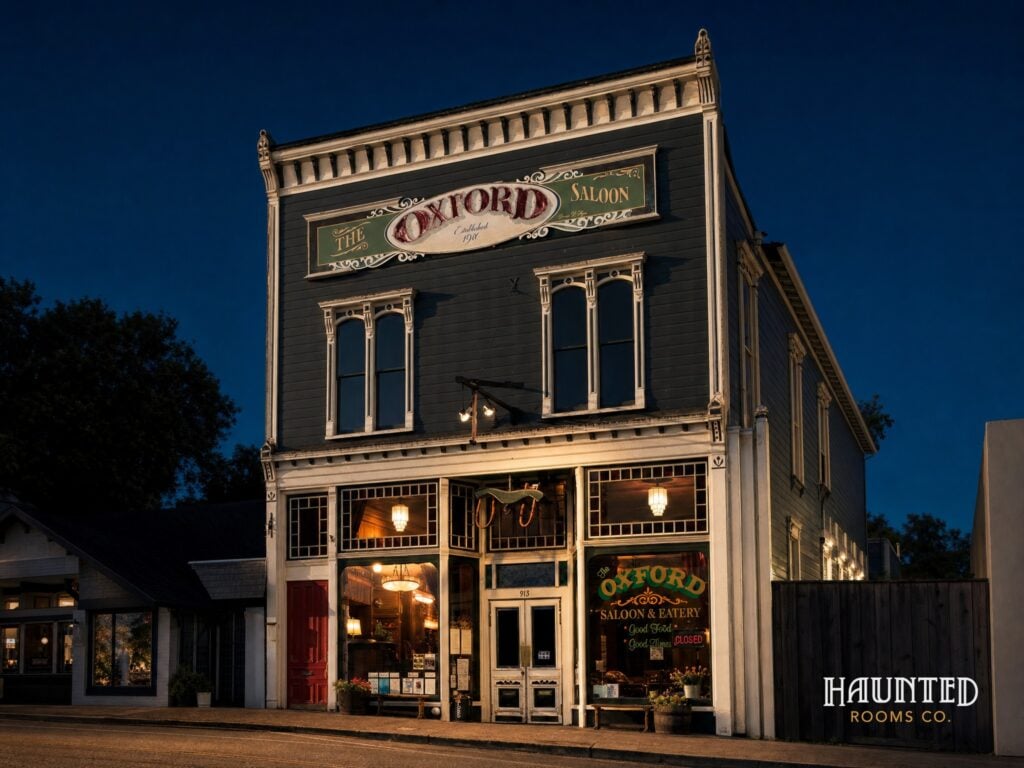
The Oxford began as a dry goods store around 1890 to 1900, sources differ, and became a saloon about 1910, with boarding rooms upstairs. It is one of the oldest bars on Snohomish’s riverfront First Street and still serves food and live music most nights.
Its best-known ghost is Henry, said to be a police officer killed breaking up a fight; the owner says he was stabbed and fell down the basement stairs, while a 1997 Seattle Times story said he was shot. Upstairs, the story goes, a madam called Kathleen ran a brothel and died in the claw-foot tub. Staff hear their names called in empty rooms and investigators have recorded voices. We found no record of either death, so treat both as legend.
What investigators report
Investigators report EVPs upstairs, including a child’s voice and a male voice repeating a female investigator’s words, and focus on the bottom of the stairs and the men’s restroom.
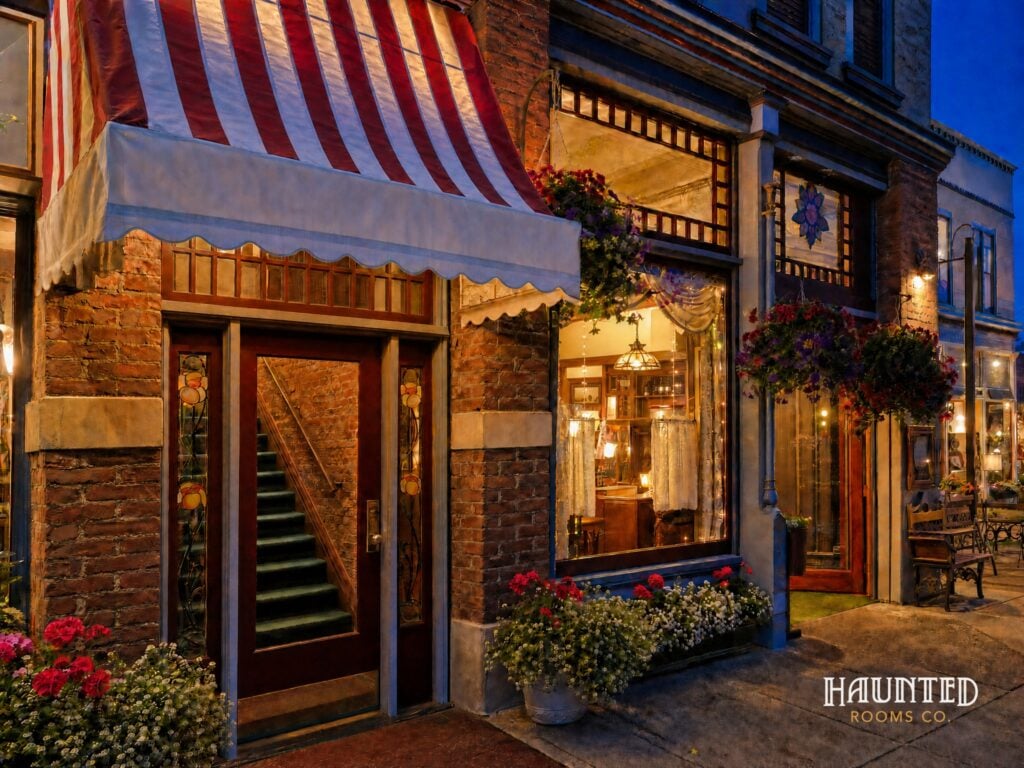
Where to look The main hall, the portrait of Amasa Campbell and the upstairs rooms
Reported ghosts A presence that follows visitors, a portrait whose eyes seem to follow you
Visiting Museum house; self-guided visits included with museum admission
Tours Self-guided visits; special guided tours, including after-hours Dark History tours
Hours and season Tuesday to Sunday, noon to 4pm
Kirtland Cutter, Spokane’s most fashionable architect, designed this Tudor Revival mansion in Browne’s Addition in 1898 for mining man Amasa B. Campbell, his wife Grace and their daughter Helen. After Grace died in 1924, Helen gave the house to the Eastern Washington State Historical Society in her memory. Restored between 1984 and 2001, it is now part of the Northwest Museum of Arts and Culture and open for self-guided tours.
Visitors say they feel followed through the rooms, and some say the portrait of Amasa Campbell watches them. You may also read that Campbell children were murdered here and one kidnapped. That story is false: the Campbells had one child, Helen, who lived to 1964, and nobody knows where the rumor began. The museum leans into the house’s darker gossip with after-hours Dark History tours.
Haunted Rooms tip: Book one of the museum’s after-hours Dark History tours in the fall; otherwise the house is open Tuesday to Sunday afternoons.
Where to look Room 4 (Miss Claire), Room 3 (Marie's Suite), the second floor, the portrait at the top of the stairs
Reported ghosts The Lady in Blue, often linked to Miss Claire
Visiting A working hotel; public areas, restaurants and bars are open to visitors
Sea captain Henry Tibbals put up this brick building on Water Street in 1889. From 1925 to 1933 it ran as a hotel and brothel known as the “Palace of Sweets”, and many rooms are still named for the women who worked there. Today it is a 26-room hotel in the middle of the historic downtown. Its rooms carry names such as Miss Claire, Miss Genevieve and Marie’s Suite.
The hotel has kept a scrapbook of guests’ ghost encounters since 1987, with more than 100 accounts. Most involve the Lady in Blue, whose portrait hangs at the top of the stairs, and Room 4, Miss Claire’s room: shaking beds, moans, perfume and cold drafts. Staff say they neither deny nor promote the stories. Visitors are welcome to look into any room with an open door.
What investigators report
Investigators who set up in Room 3, the basement and the staircase between the second and third floors reported faint whispered voices after asking spirits to speak and inviting a child to come down the stairs.
Address 202 Eisenhower Ave, Port Townsend, WA 98368
Where to look The Artillery Hill bunkers and tunnels, Battery Ash and the Commanding Officer's Quarters
Reported ghosts Moans in the bunkers and tunnels
Visiting State park; Discover Pass required for vehicles
Tours Commanding Officer’s Quarters museum; Port Townsend ghost tours include the fort
Hours and season 6:30am (8am in winter) to dusk
Fort Worden was built from 1897 to guard the entrance to Puget Sound, one corner of a Triangle of Fire with Forts Casey and Flagler, though its guns never fired at an enemy. The army left in 1953, the state used it as a youth treatment center until 1971, and it opened as a state park in 1973. It is a National Historic Landmark, and scenes from An Officer and a Gentleman were filmed on its parade ground.
Port Townsend calls itself Washington’s most haunted town, and the fort is part of that reputation. Hikers describe moans from the tunnels and bunkers on Artillery Hill, and local ghost tours list the fort among the town’s haunted sites. A ghost hunter who recorded in the Commanding Officer’s Quarters museum found nothing. The bunkers are dark and uneven; bring a flashlight.
What investigators report
Investigators staying on Officers Row report EVP activity after leaving a shot of vodka on a dining table, and REM pod and ghost box responses after inviting a soldier to sit in the Alexander’s Castle dining room.
Where to look The octagonal tower, the spiral staircase, the upstairs halls
Reported ghosts A red-haired woman often called Ann Starrett
Visiting A working hotel; public areas, restaurants and bars are open to visitors
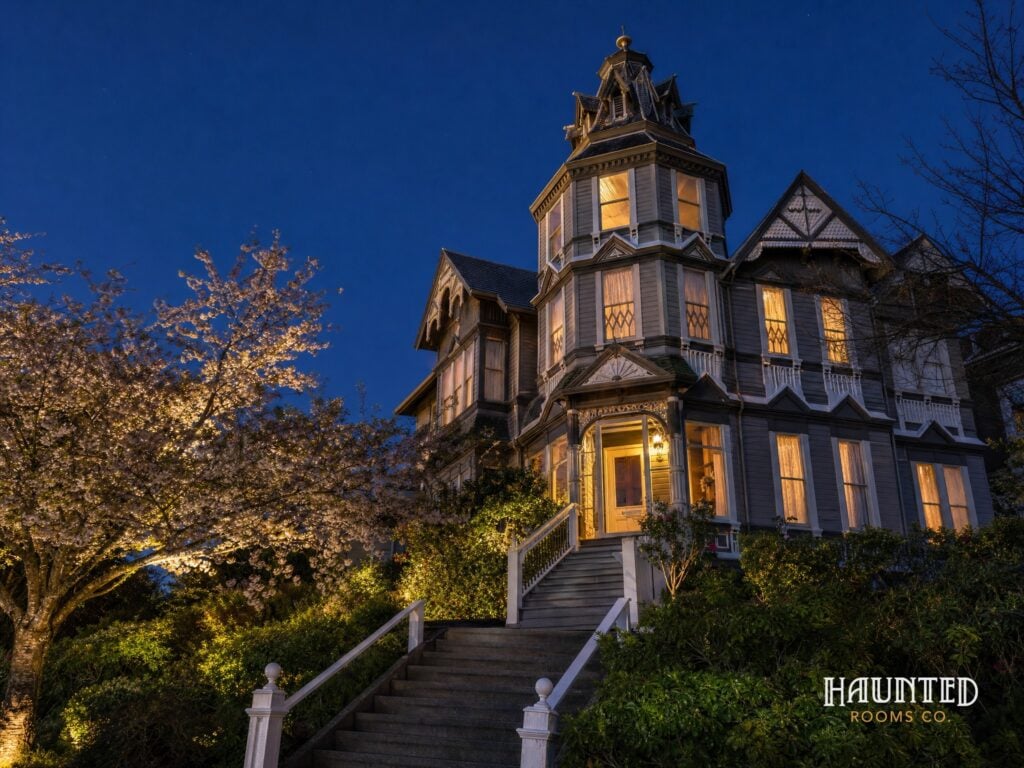
George Starrett built this Queen Anne mansion in 1889 as a wedding gift for his wife, Ann. It is famous for its four-story tower, ceiling frescoes of the four seasons, a free-floating spiral staircase and a solar calendar in the tower dome lit by the sun at each solstice and equinox. After years as an inn and a spell in private hands, it now takes guests again as Starrett House, a six-room bed and breakfast run by the nonprofit Bayside Housing & Services.
The best-known story came from a former innkeeper who saw a red-haired woman in the locked tower, visible only from the bust up. Owner Edel Sokol said she did not know who the redhead was, only that “she just keeps the place warm and cozy.” A later owner described a radio switching itself on at 2 a.m. two nights running.
Haunted Rooms tip: Ask the hosts to show you the staircase and solar calendar; the tower is where the red-haired woman was seen.
Where to look Alice Rheem's old room in the Moran Mansion, the mansion halls
Reported ghosts Alice Rheem, the "lady in red"
Visiting A working hotel; public areas, restaurants and bars are open to visitors
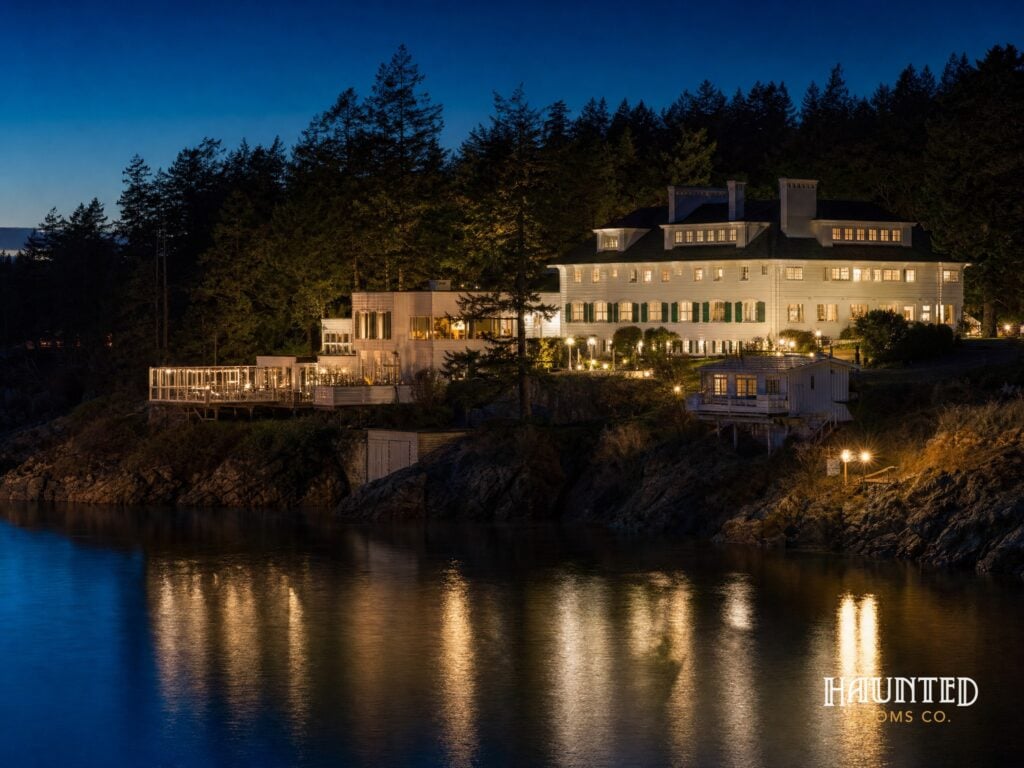
Shipbuilder and former Seattle mayor Robert Moran built this waterfront mansion between 1906 and 1909, and it became the centerpiece of Rosario Resort in 1960. After the resort sold in 2024 the mansion stayed closed; the resort says it is now under separate ownership with no reopening date, while the waterfront rooms remain open. The estate is on the National Register of Historic Places.
The ghost is Alice Rheem, who lived here from 1938 and died in the mansion in 1956. Island lore says she rode a motorbike around Orcas in a red nightgown. Former staff described a shadow and a touch in her old room, a shaking bed, and high-heeled footsteps in empty halls. In 1987 three entertainers staying at the resort said they heard a bed creaking in an empty room whose key had never left its hook.
Haunted Rooms tip: Check whether the Moran Mansion has reopened before you book for the ghost story; the guest rooms are in separate buildings.
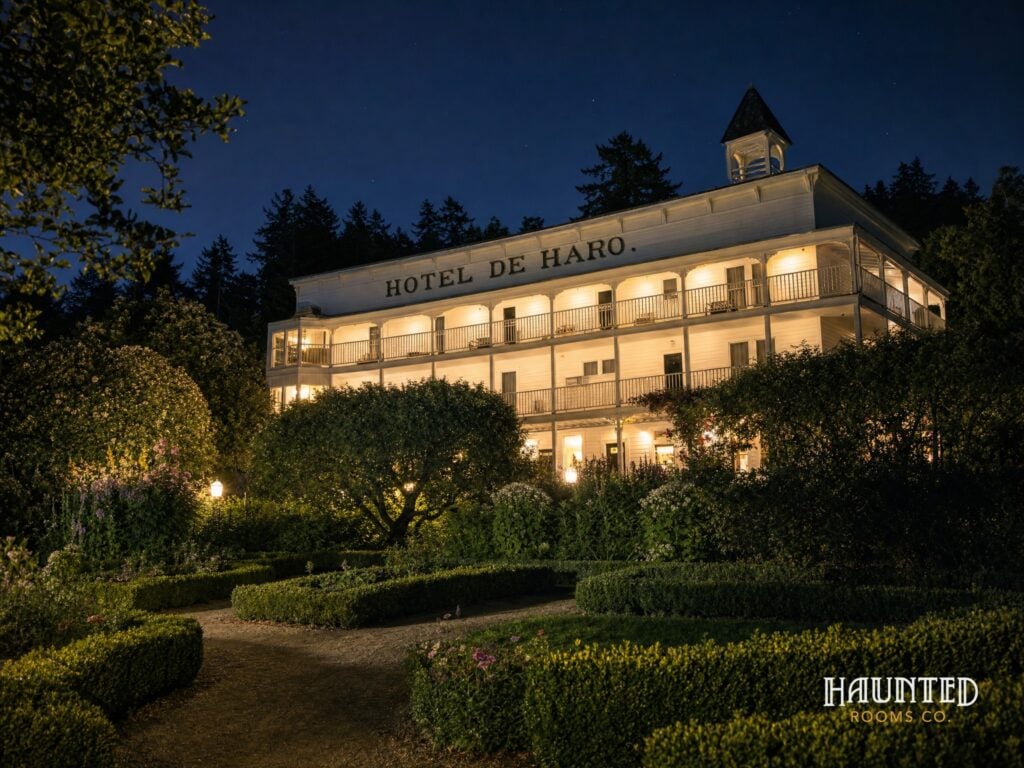
Address 248 Reuben Memorial Dr, Roche Harbor, WA 98250
Where to look The hotel halls, the gift shop and storeroom, the Afterglow Vista mausoleum
Reported ghosts Ada Beane, the McMillin family at the mausoleum
Visiting A working hotel; public areas, restaurants and bars are open to visitors
John S. McMillin built the Hotel de Haro in 1886 for his Roche Harbor lime company, over an older Hudson’s Bay Company bunkhouse. It is now the historic heart of Roche Harbor Resort, with a traditional layout where some rooms share hallway bathrooms. The resort calls it the oldest operating hotel in the state. Guests reach Roche Harbor by ferry and car, by seaplane or by boat, and the old lime kilns and company town are still there to explore.
Staff stories center on Ada Beane, McMillin’s secretary and bookkeeper: glass shelves that shattered in the gift shop as an employee watched and a storeroom door that opens itself. In the woods nearby, the McMillin family mausoleum has a stone table and chairs, and visitors say the family can be seen around it on full-moon nights. The story goes that Ada is troubled, perhaps still angry with McMillin.
Haunted Rooms tip: Walk the trail to the Afterglow Vista mausoleum at dusk, then book a room in the hotel itself rather than the newer resort cottages.
Where to look The projection room and the auditorium seats
Reported ghosts Smilin' Al, a gray-haired man with a broad grin; seats folding down by themselves
Visiting Open for films, concerts and plays
The Everett Opera House opened in 1901 and hosted vaudeville stars including Al Jolson. A fire gutted it in 1923 and it reopened in 1924 as the New Everett Theater, later run by Fox. A 1950s remodel and a 1979 split into three screens did it no favors, but the Everett Theatre Society restored it to its 1924 look between 2000 and 2004, and it now shows classic films and hosts concerts and plays.
Ghost reports began during renovation work in the 1990s. In 1993 the Seattle Times reported that several people had seen a gray-haired man with a broad grin, nicknamed Smilin’ Al after Jolson. Staff tell of projection room doors that would not close, seats folding down with nobody in them and a man watching through the projection window. A Seattle ghost hunting group has investigated here.
Haunted Rooms tip: See a classic movie night and sit toward the back, where you can see the projection windows.
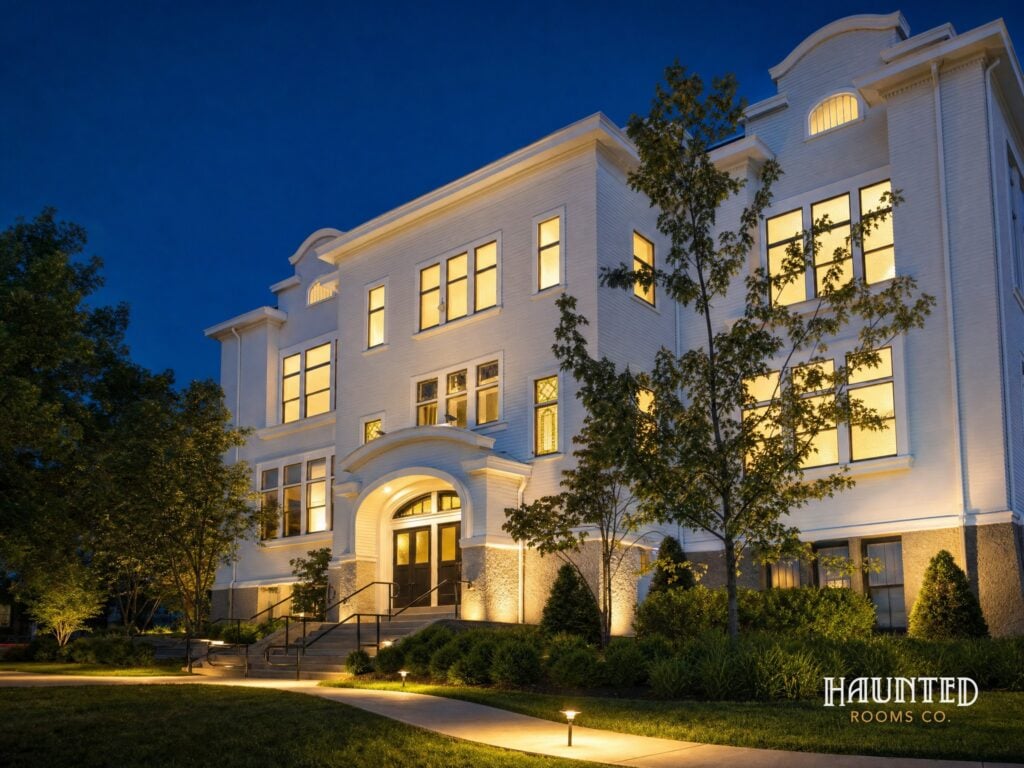
Where to look The basement boys' room, the old principal's office, the stage room and a former classroom
Reported ghosts A boy said to be called Brian, children laughing, footsteps after hours
Visiting A working community center; public events and classes
Charles Bebb and Louis Mendel designed this wooden schoolhouse, finished in December 1902; it opened in 1903, gained an addition in 1908 and an auditorium in 1927, and at its peak taught more than 900 children. The district closed it in 1989 despite protests, and the people who fought for it formed the University Heights Center, which bought the building in 2009 and runs it as a community center with a dozen resident groups.
The building’s ghost story says a teacher locked a boy named Brian in a closet over a weekend and he died. Local investigators who have spent nights here call that an urban legend; they found no record of a child dying, though they mention a janitor said to have fallen near the basement boys’ room. Staff and visitors still describe children laughing and footsteps when the building is closed.
What investigators report
A local team reported capturing an EVP saying “Go away!” in the basement during a ghost tour, found only on audio review afterward.
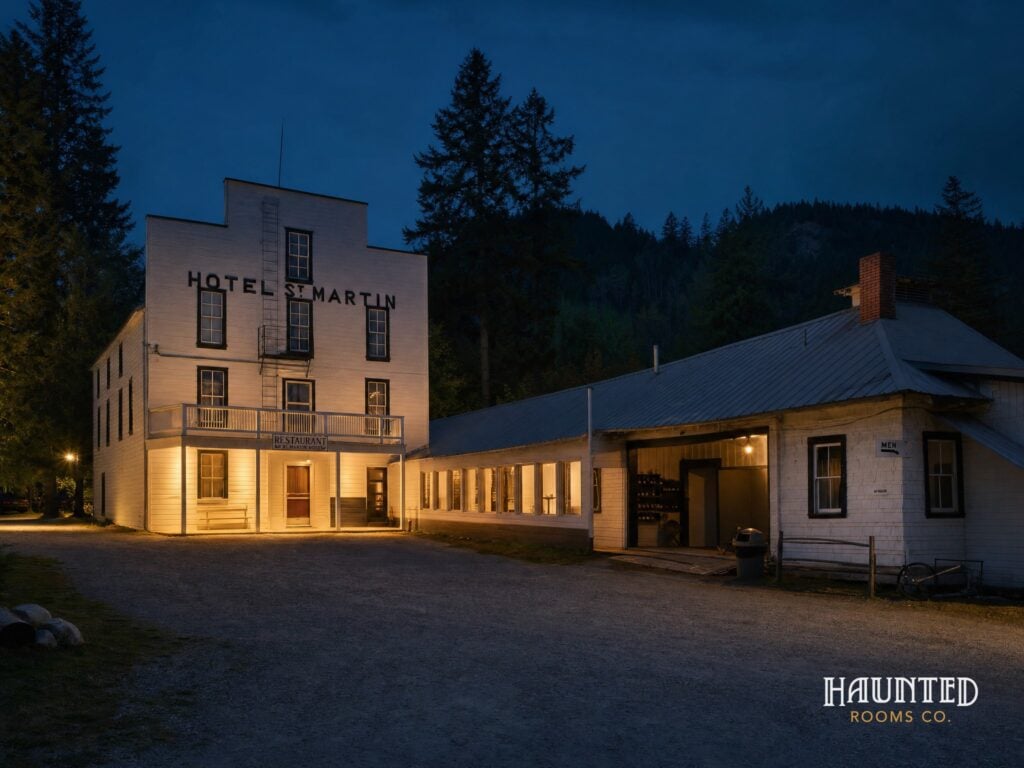
Address 372 St. Martin's Springs Rd, Carson, WA 98610
Where to look The old Hotel St. Martin and the 1923 bathhouse
Reported ghosts Isadore St. Martin
Visiting A working hotel; public areas, restaurants and bars are open to visitors
Isadore St. Martin found hot mineral water along the Wind River in the 1870s, and his family built the white wooden Hotel St. Martin in 1901, followed by cabins and a bathhouse in 1923 where guests still soak in cast iron tubs. Overnight guests now stay in newer lodge buildings; the old hotel still stands on the grounds. The resort sits in a quiet valley on the Washington side of the Columbia River Gorge, about an hour east of Portland.
In 1910 Isadore St. Martin was killed by a guest at the springs, and his widow Margaret went on to expand the resort. Ghost hunters visit each year hoping to find him. Older stories say Margaret also lingers, though the claim that she died of loneliness soon after him does not fit the record. The resort does not tell ghost stories itself, so treat this one as local lore attached to a real and violent death.
Haunted Rooms tip: Book a soak and wrap in the 1923 bathhouse, the most atmospheric part of the property, and walk past the old hotel after dark.
These places appear in older lists of haunted spots. We keep them here so you know the facts before you go, but you cannot (or should not) visit them.
Starvation Heights, Olalla
Dr. Linda Hazzard ran a fasting sanitarium here that locals called Starvation Heights; she was convicted of manslaughter in 1912 for the death of Claire Williamson, and her patients’ deaths are well documented. The sanitarium burned in 1935 and was never rebuilt, and the land is private. There is nothing to visit and no public access.
Changed from our older guide: Starvation Heights moved to the off-limits list (the sanitarium burned in 1935 and the land is private); Tacoma’s Old City Hall is now being restored for new tenants; Fort Vancouver’s ghost stories center on the Grant House, now a restaurant; and the Campbell House murder story was false. We added Fort Worden, the Seattle Underground and Washington’s haunted hotels, and wrote new full guides to Northern State Hospital and the Seattle Underground.
Visited one of these places? Tell us what happened
We collect first-hand accounts from visitors and add the best ones to our guides, with your first name and the date of your visit. We read every story before it’s published.
St. Ignatius Hospital in Colfax and Northern State Hospital near Sedro-Woolley have the biggest reputations, followed by Kells Irish Pub and the Seattle Underground. Of those, St. Ignatius is the one that runs ghost tours and investigations.
Can you go ghost hunting in Washington?
Yes, at some places. St. Ignatius Hospital in Colfax offers evening haunted tours and private investigations, and Seattle has evening ghost walks in Pioneer Square and Pike Place Market.
What is the most haunted hotel in Washington?
Manresa Castle in Port Townsend has the biggest reputation, with the Davenport in Spokane, the Hotel Sorrento in Seattle and Thornewood Castle close behind. See our guide to haunted hotels in Washington.
Can you visit Northern State Hospital?
Yes, the Northern State Recreation Area has free daylight trails past the barns and wards. The occupied buildings are off-limits. Read our full guide.
Which Washington town is the most haunted?
Port Townsend often claims the title, with Manresa Castle, the Palace Hotel, the Starrett House and Fort Worden all within a few miles.
Is Starvation Heights still there?
No. Linda Hazzard’s sanitarium in Olalla burned in 1935 and was never rebuilt, and the site is private land with no public access.
Sources and how we research
Every place in this guide is checked against its official website, historic register listings and news coverage, and we confirm whether it is open, closed, private or gone before we list it. Ghost stories are reported as staff, visitors and local historians tell them; we say so where records contradict a story. Each place shows how many independent sources we checked it against; our own Haunted Rooms pages are not counted.
New guides and haunted places to visit. No spam, unsubscribe any time.
About the authors
The Haunted Rooms Team are paranormal researchers who write about historic haunted places across the United States. We research every place in our guides using official sites, historic registers, local archives and news coverage, and we report ghost stories as the stories they are. We review each guide regularly so you are not sent to a place that has closed, changed hands or banned visitors. Spotted something out of date? Let us know.