Haunted Tulsa, OK: 12 of the Most Haunted Places to Visit
A dance hall where Bob Wills is said to still hold court, a 1914 theater with a tenor’s ghost, an oilman’s stone house on a hill and a rock-covered speakeasy where the ghosts take your keys. These are Tulsa’s best-known haunts, with what is history, what is legend and how you can visit.
Tulsa grew from a Creek town into the Oil Capital of the World in a few decades, and its ghost stories come from that boom: oilmen’s mansions, dance halls, theaters and roadhouses. Most of the stories below come from Tulsa’s own staff, owners and local investigators, and we say who told them. We have checked every place against current sources, labeled the school and park legends as legends, and added two easy day trips, the Belvidere Mansion in Claremore and the Constantine Theater in Pawhuska. Two places are open only for shows, one by appointment and one, the Gilcrease Museum, is closed until it reopens in March 2027.
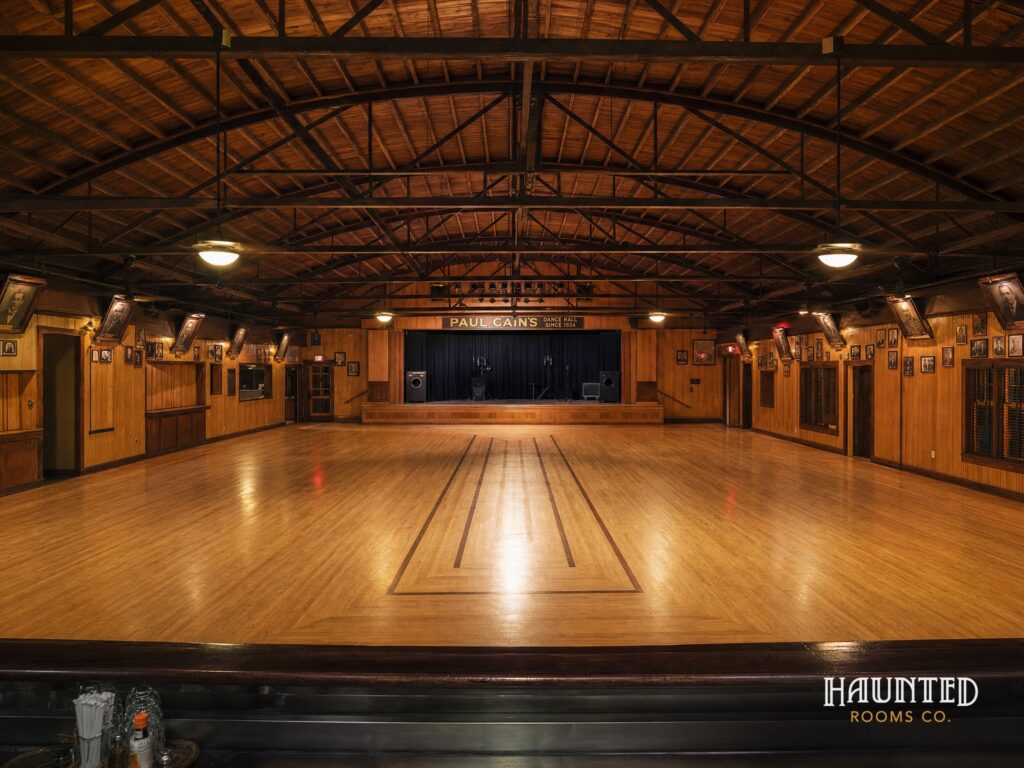
Where to look The maple dance floor, the bar, the restroom behind the stage and the upstairs bar in the old attic
Reported ghosts Bob Wills, a 'lady in red', a cowboy asking for ten-cent popcorn, a child's voice
Visiting A working concert venue; you get in with a show ticket
Tours No regular public tours; it is open for concerts
Hours and season Box office Monday to Friday, 10 AM to 4 PM (closed noon to 1 PM)
Ghost hunting No public ghost hunts; paranormal teams have investigated by arrangement
Tate Brady built this downtown Tulsa building as a garage in 1924. In 1930 Madison “Daddy” Cain turned it into a dance academy, and from New Year’s Night 1935 Bob Wills and His Texas Playboys made it their home, broadcasting on KVOO and turning Western swing into a national sound. The banner over the stage still reads “Home of Bob Wills.” It was listed on the National Register in 2003.
TravelOK says the hall is rumored to be haunted by Wills himself, and staff and fans describe a “lady in red”. A bartender told paranormal investigator Teri French about a see-through woman in a ballgown, and another worker was asked for ten-cent popcorn by a man in old cowboy clothes. Staff also say a paranormal team recorded a child’s voice saying “I wanna help.”
What investigators report
Tulsa Spirit Tours owner Teri French reports capturing an EVP she believes says “I want to help” in a young girl’s voice, and says she heard a woman sobbing in the restroom behind the stage when no one else was there.
Where to look The stage, the rafters and catwalks, and the basement
Reported ghosts Tenor Enrico Caruso; a stagehand said to have died in a fall
Visiting A working concert hall; you get in with a show ticket
Tours Tulsa Spirit Tours starts most of its tours outside the building
Ghost hunting No public investigations
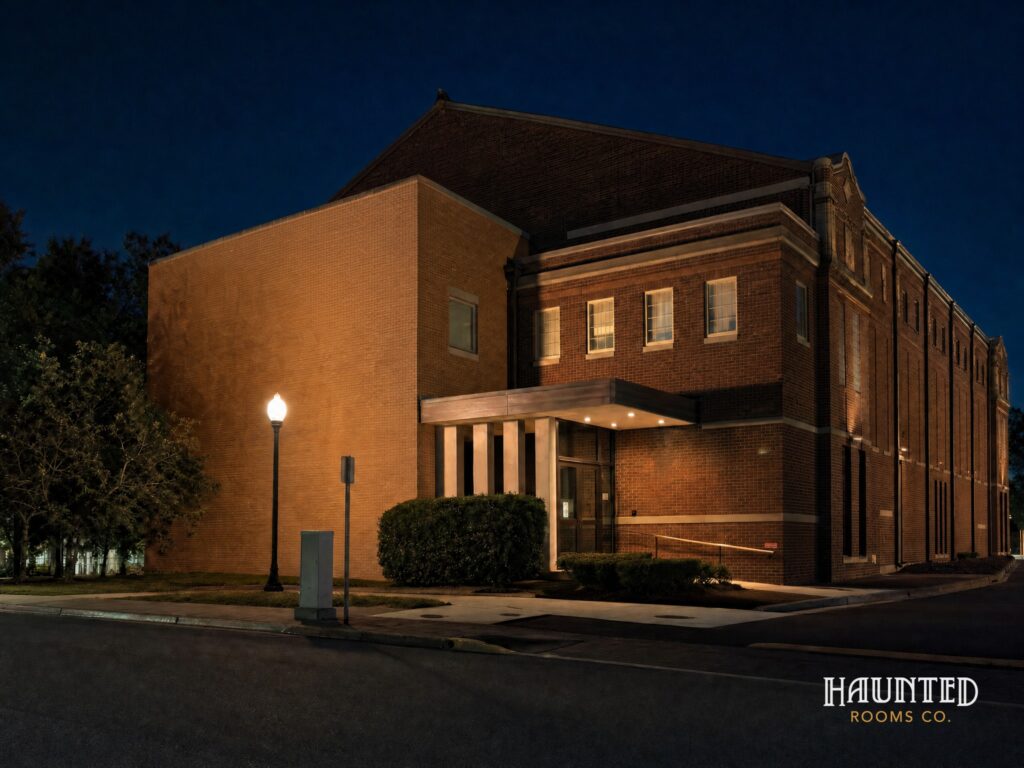
The city built this hall as Convention Hall and opened it on October 22, 1914. It hosted vaudeville, Will Rogers, Mae West and Buddy Holly, and was called the Brady Theater from 1979 until 2019, when it dropped the name of Tate Brady because of his Ku Klux Klan ties. During the 1921 Tulsa Race Massacre the building was used to detain Black men rounded up by the National Guard.
Its best-known legend is the great tenor Enrico Caruso, who sang here in 1920. The story says he caught a chill on a rainy car trip to see the oil fields and blamed Tulsa for the illness that ended in his death in Naples in 1921. Paranormal investigators say they recorded a loud boom from the rafters, and other stories tell of a stagehand who died in a fall. These are legends, not records.
Haunted Rooms tip: See a concert here and think about the building’s 1921 history as well as its ghosts; the Greenwood Rising history center is a short walk away.
Address 1400 N Gilcrease Museum Rd, Tulsa, OK 74127
Where to look The Gilcrease House, its staircase and south bedroom, and the gardens
Reported ghosts Thomas Gilcrease; children seen in the house and gardens
Visiting The museum is closed while a new building goes up; it says it reopens in March 2027
Hours and season Closed until the planned March 2027 reopening
Ghost hunting No public investigations
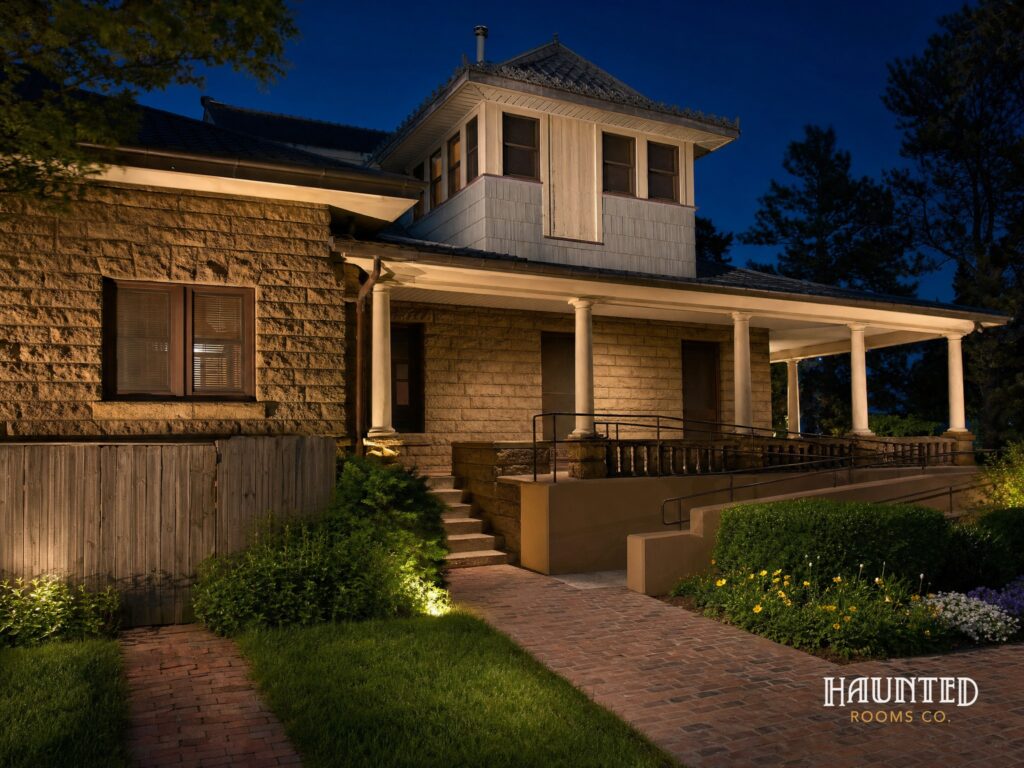
Tulsa lawyer Flower Nelson built the sandstone house in 1913, and oilman Thomas Gilcrease, who grew up in the Muscogee (Creek) Nation, made it his home. He opened a gallery on the estate in 1949, gave the museum to the city, and died in 1962. The old museum building was pulled down from 2022 for a new one, and the museum says it reopens in March 2027.
Teri French of Tulsa Spirit Tours calls the house one of the most haunted places in Tulsa. Former curators are said to have seen Gilcrease tip his hat on the stairs, and French tells of police dogs that refused to climb to a bedroom where cameras kept triggering. Others describe Native American children in the house and gardens. These are staff and investigator accounts, not records.
Haunted Rooms tip: Check the museum’s site before you go: it plans to reopen in March 2027, and the house is part of the new campus.
Open to the publicParanormal investigations allowed
Address 121 N Chickasaw Ave (4th and Chickasaw), Claremore, OK 74017
Where to look The second floor, the basement stairs and the third-floor ballroom
Reported ghosts John Bayless; children playing; a 1940s tenant (unconfirmed)
Visiting A house museum with a tearoom and gift shop, run by the Rogers County Historical Society
Tours Self-guided tours during opening hours
Ghost hunting Occasional paranormal fundraiser nights hosted by local teams
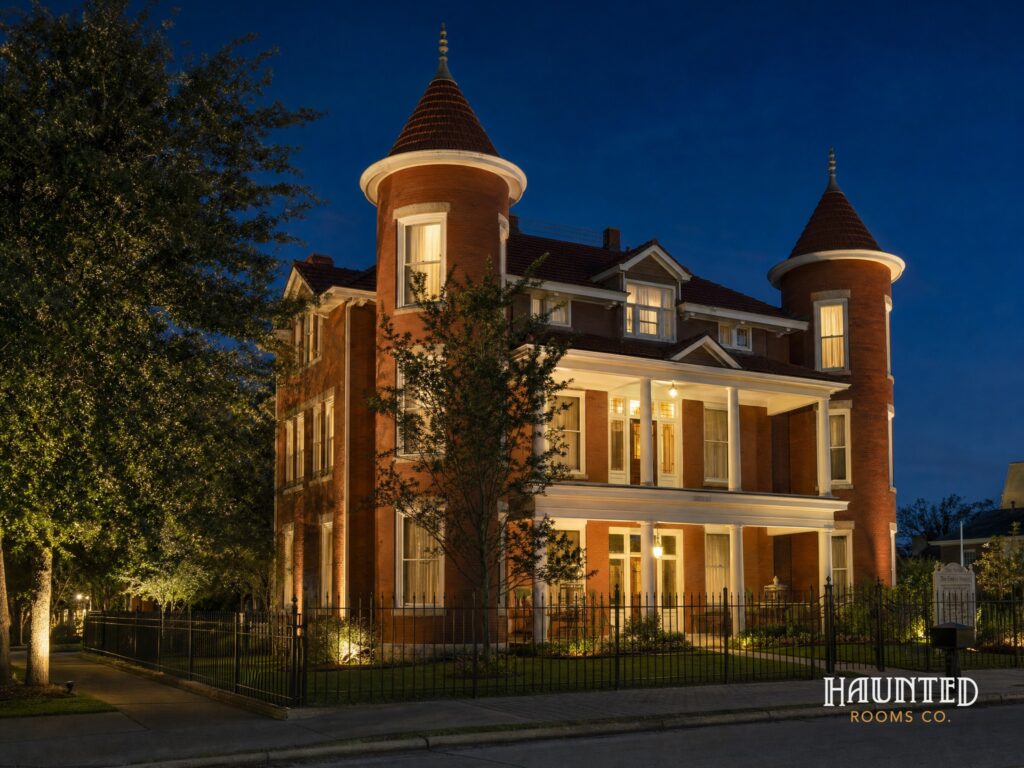
Railroad builder and banker John M. Bayless broke ground on this red brick mansion with four towers in March 1907 and died that June after an appendicitis operation, before it was finished. His widow Mary and their children moved in that December and stayed until 1919. It was then a hospital, then apartments, and was nearly condemned before the Rogers County Historical Society bought and restored it in 1991.
Paranormal groups say most activity is on the second floor: footsteps, whispers, hazy figures, cold spots and toilets that flush on their own. Psychics have described a distressed John Bayless and children at play, and a tenant who is said to have taken her life in the 1940s. The historical society says it has found no record of any death like that in the house.
What investigators report
Organizers of paranormal explorations at the mansion point investigators to the basement, where the group’s founder reports hearing footsteps come down the stairs and finding nothing when he turned on his flashlight.
Where to look The parlor, the sealed tunnel behind the fireplace and the hill out back
Reported ghosts The 'key lady' who hides visitors' keys; a former owner in the parlor; Ella the rag woman
Visiting A private home shown on guided tours by appointment
Tours Guided tours by appointment (918-378-1952)
Tickets TravelOK lists adults $10, children 12 and under $5; confirm when you book
Ghost hunting Not offered publicly
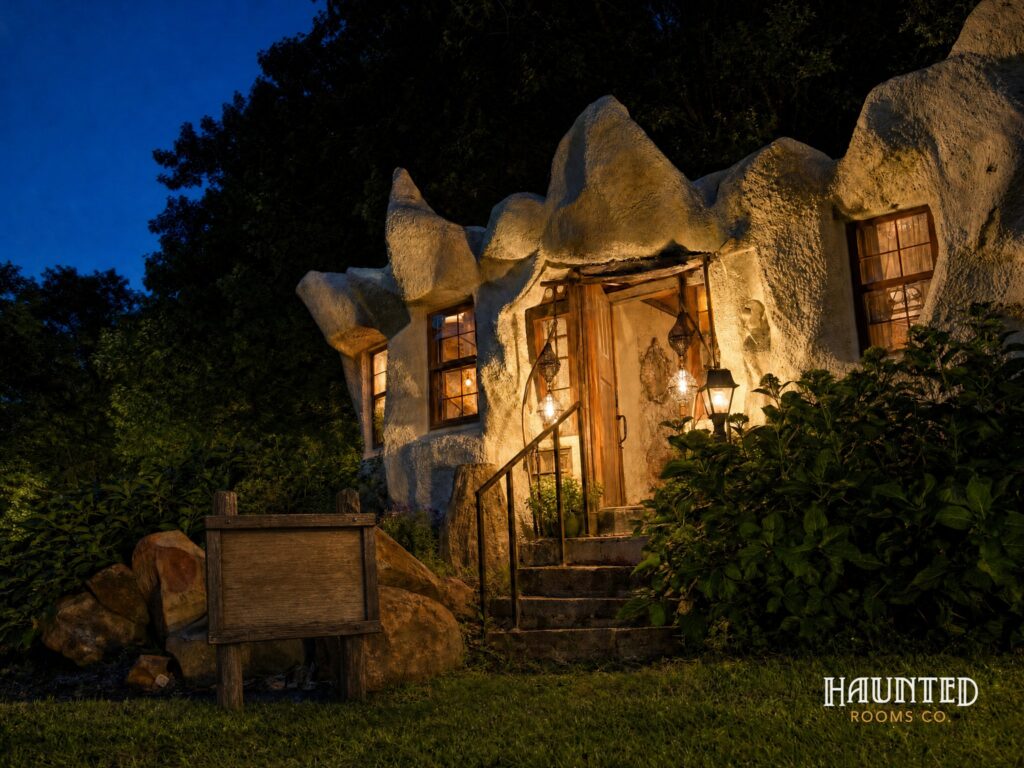
This hand-built house, covered in rockwork and nicknamed the Flintstone House, opened in the 1920s as the Cave Garden Restaurant, serving chicken at outdoor tables by day. TravelOK says it ran as a speakeasy at night, with a tunnel behind the fireplace leading to a room under the hill; the tunnel is now sealed with concrete. Local lore says Pretty Boy Floyd drank here, but there is no record of it.
Owner Linda Collier shows visitors around by appointment. The best-known ghost is the “key lady”: visitors say their keys vanish and turn up by the hill, so people leave spare keys, and thousands hang inside and out. Others tell of Ella, a woman who hung rags in the windows, and of a former owner seen in the parlor.
What investigators report
Visitors traditionally leave a key for the house’s ever-growing key collection, said to keep the mischievous “Key Lady” content, since she is blamed for hiding guests’ keys or leaving them near a hill on the property.
Where to look The staircase, the south room where Mary Hull lay in state, the ballroom and the elevator
Reported ghosts Mary Hull, the wife of the second owner
Visiting The mansion is open on weekdays; the park around it is a public city park
Hours and season Mansion Tuesday to Friday, 9 AM to 4 PM
Ghost hunting No public investigations
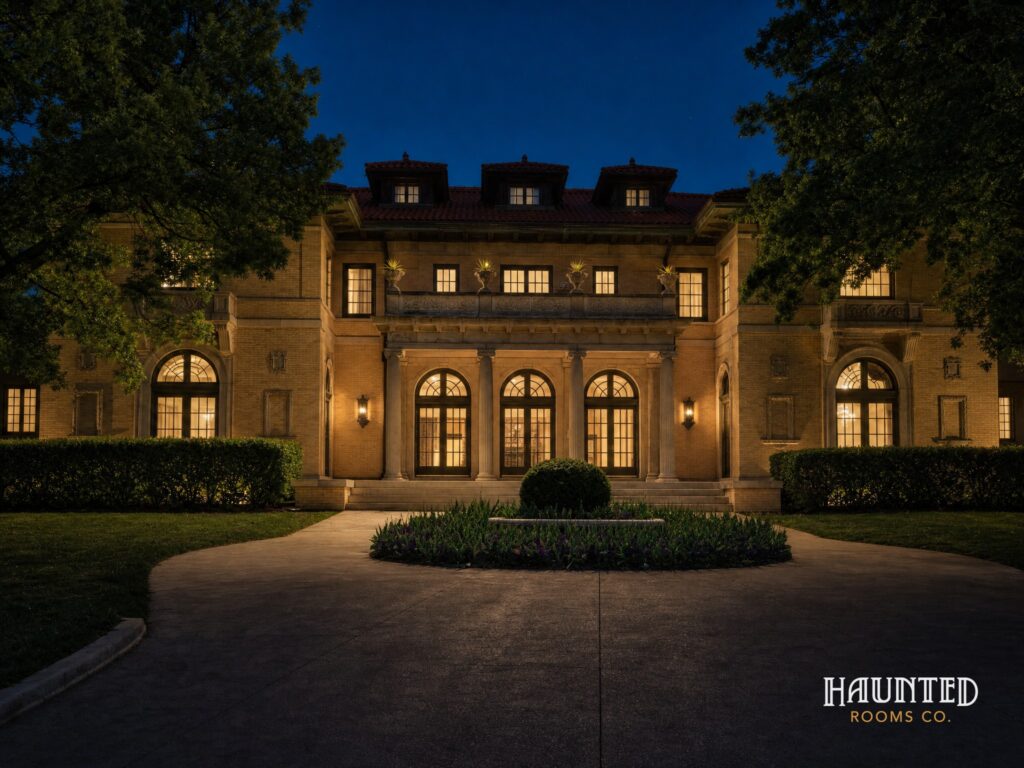
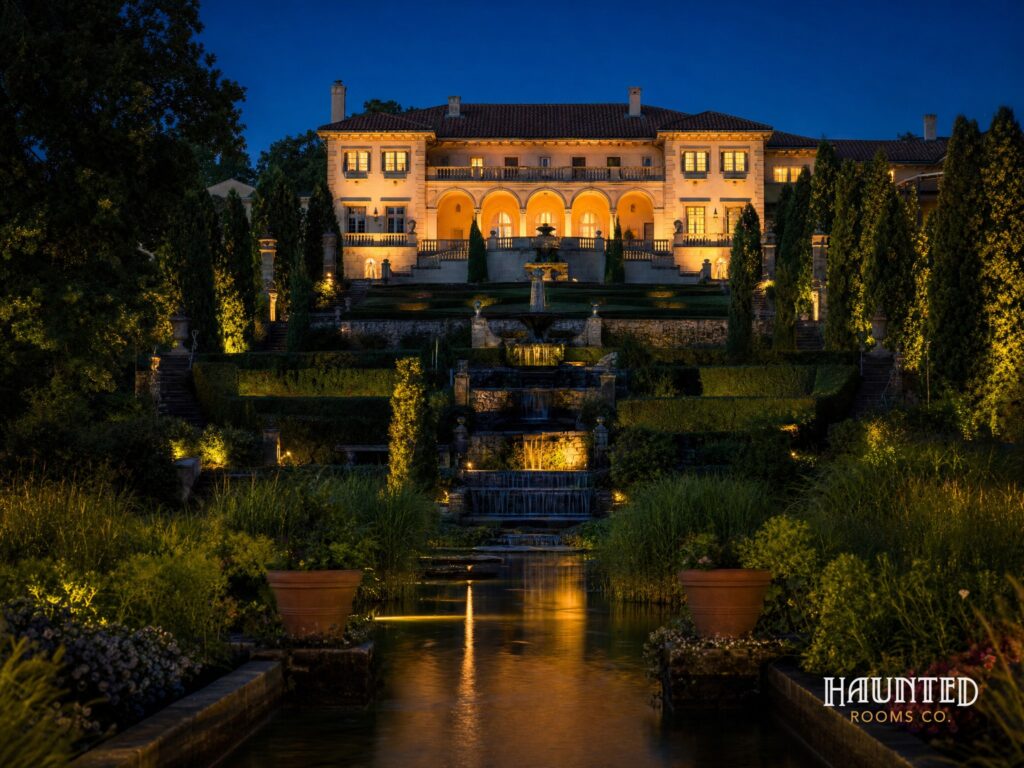
Oilman David R. Travis built this Italian Renaissance style villa in 1919 to a design by Noble B. Fleming. J. Arthur Hull bought it in 1923 and added the conservatory, and his wife Mary died soon after the move; accounts differ on whether it was illness or childbirth. The city bought the estate in 1954 for the Tulsa Garden Center, which still runs it beside Woodward Park and the Tulsa Rose Garden.
The Garden Center’s director told News On 6 in 2009 that staff had felt figures brush past them on the stairs, and she believed Mary Hull was the cause. Teri French’s team said an elevator opened and closed by itself, the doorbell chimed, phones rang together and brochures flew off library shelves. A room where Mary is said to have lain in state stays cool all year.
What investigators report
Investigator Teri French says that on her team’s first visit the elevator opened and closed by itself and brochures flew off the shelves in the library, a room she notes has no ventilation.
Visiting a haunted place by day is one thing. Investigating one after dark is another. On a Haunted Rooms ghost hunt our team takes you through a historic building with professional ghost hunting equipment, runs EVP sessions and vigils, and gives you time to explore on your own. These are the nearest ones we run.
Where to look The old stage, George's seat in the auditorium and the street outside
Reported ghosts George, a longtime director; Sara, a little girl; a light near the curtains
Visiting A private building; the theater is used for concerts and rented events
Tours Open for events; Tulsa Spirit Tours has run tours and classes here
Ghost hunting No regular public investigations
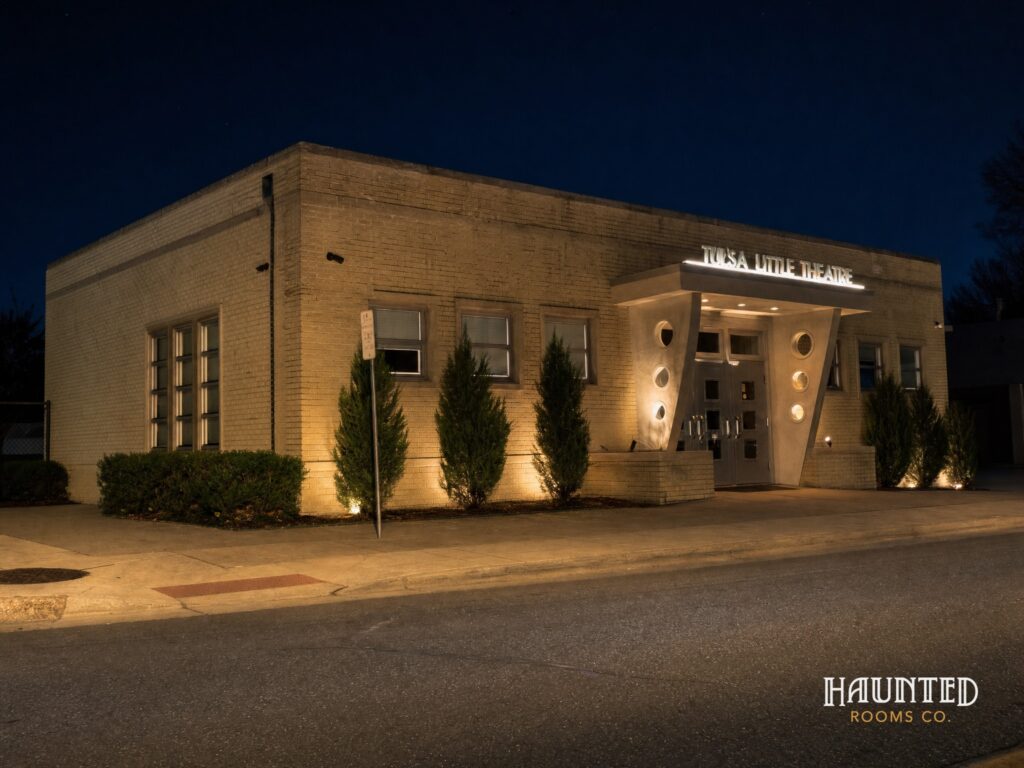
The Tulsa Little Theatre company, founded in 1922, built this brick playhouse at 15th and Delaware in 1932 and opened it with The Cradle Song. As Theatre Tulsa it moved to the Performing Arts Center in 1989, and the building passed through life as a church, a nightclub and a studio. Attorney Bryce Hill and his wife Sunshine restored it in 2004 and 2005; his law office is in the front and the theater hosts events.
The Hills told News On 6 that neighbors warned them it was haunted, and they report sandbags swinging, footsteps, voices and a photo of a boy they can’t explain. Older performers spoke of George, a director said to have died in his favorite seat, and left a light on for him. Neighbors describe a girl called Sara. Legends of America adds a ball of light near the curtains.
What investigators report
The owners keep “George’s light” burning over the auditorium seat where a former director is said to have sat, a tradition carried on from performers, and say a flicker of that light is George making himself known.
Reported ghosts Sappho Constantine Brown, the owner's daughter
Visiting A community theater open for shows and events
Ghost hunting Not offered
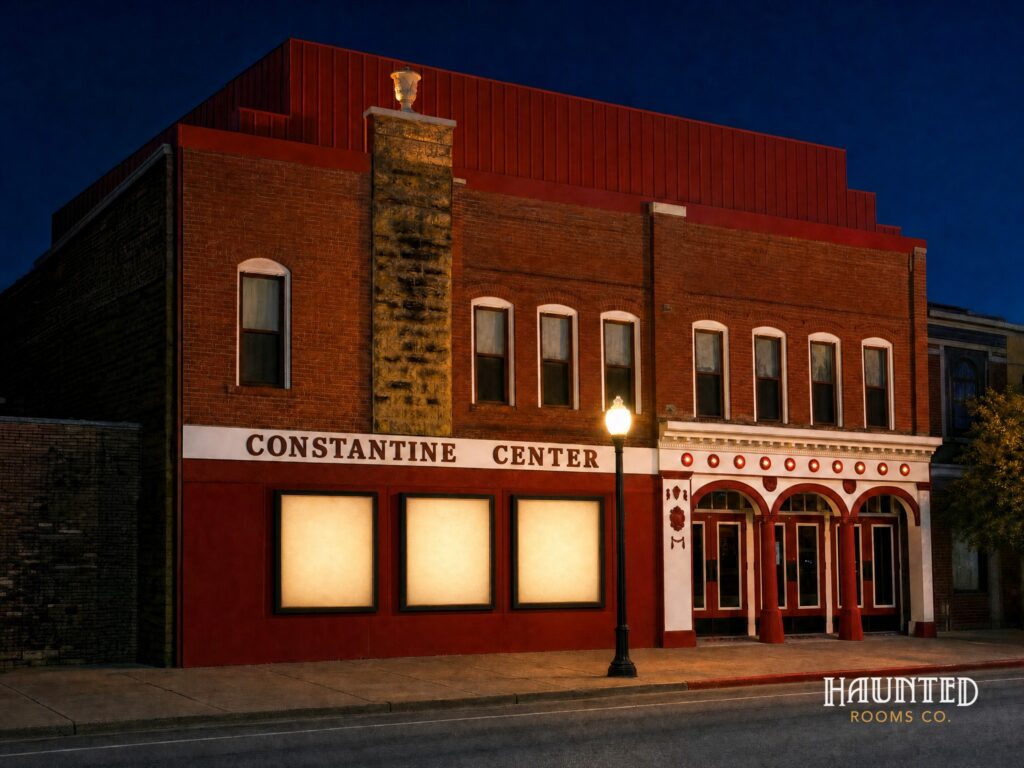
The Constantine opened as a theater in Pawhuska, the capital of the Osage Nation, with a grand opening on December 22, 1914. By the 1980s it was badly run down, and local volunteers, high school students among them, restored it from 1984; it qualified for the National Register in 1986 and is run by a volunteer board for shows, films and community events.
Local legend says the theater is haunted by Sappho Constantine Brown, daughter of the original owner. A 1987 Tulsa World article reported sightings of her backstage, and TravelOK says patrons describe a young woman in a button-down dress in the balconies. OnlyInYourState adds footsteps with a limp and a story that a wall volunteers tore down in the office was found standing again two days later.
What investigators report
One investigation team aimed most of its gear at the stage but reports its activity came in the boardroom above the lobby, including footsteps, knocking and a whispered EVP naming “Peter,” which they later matched to a 1920s Constantine employee.
Reported ghosts A man in a white tuxedo, said to be band director Carl Barnett
Visiting A working public school; not open to visitors
Ghost hunting Not allowed
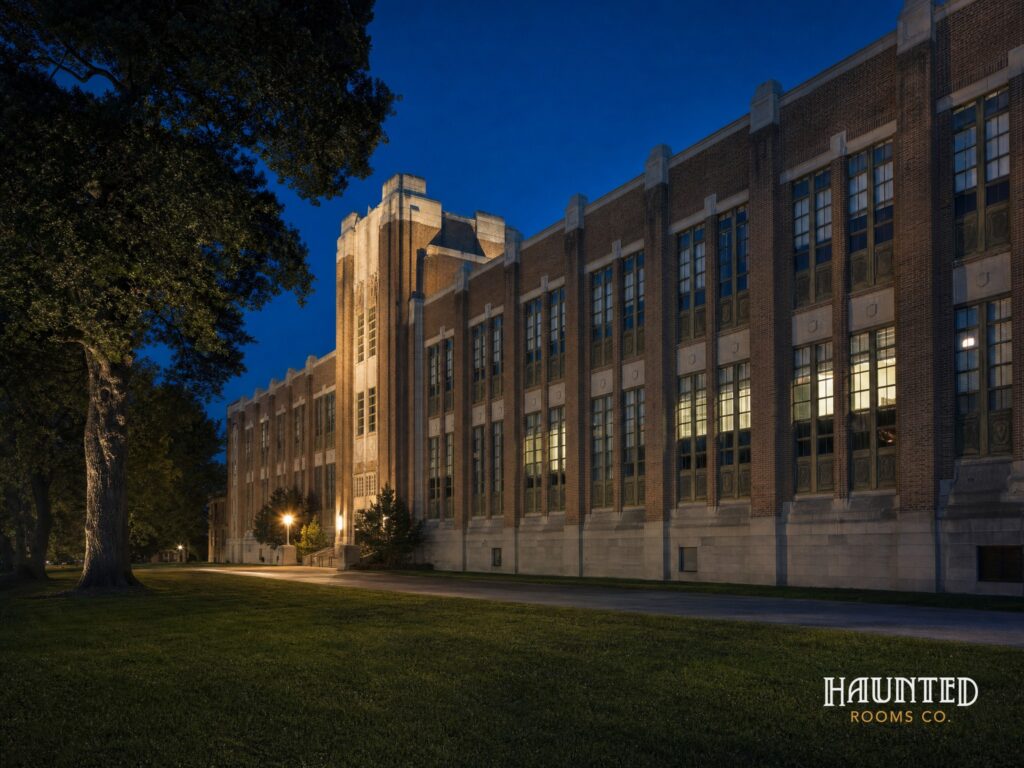
Tulsa Public Schools built this Art Deco high school in 1939 with WPA labor, and it is listed on the National Register of Historic Places. It is still a working school.
The story says a man in a white tuxedo walks the auditorium stage and backstage, seen by janitors and students staying late. He is said to be band director Carl Barnett, who died of a heart attack while conducting in the auditorium in 1974, by most tellings during Bach’s “Come, Sweet Death.” We could not find a record that confirms the details. Teri French told KJRH she has never been called in to investigate.
Haunted Rooms tip: It is a working school: admire the building from 5th Place and do not try to go in.
Reported ghosts Footsteps and scratching in the basement (unconfirmed)
Visiting A working theater; you get in with a show ticket
Tours No tours; Saturday performances
Ghost hunting Not offered
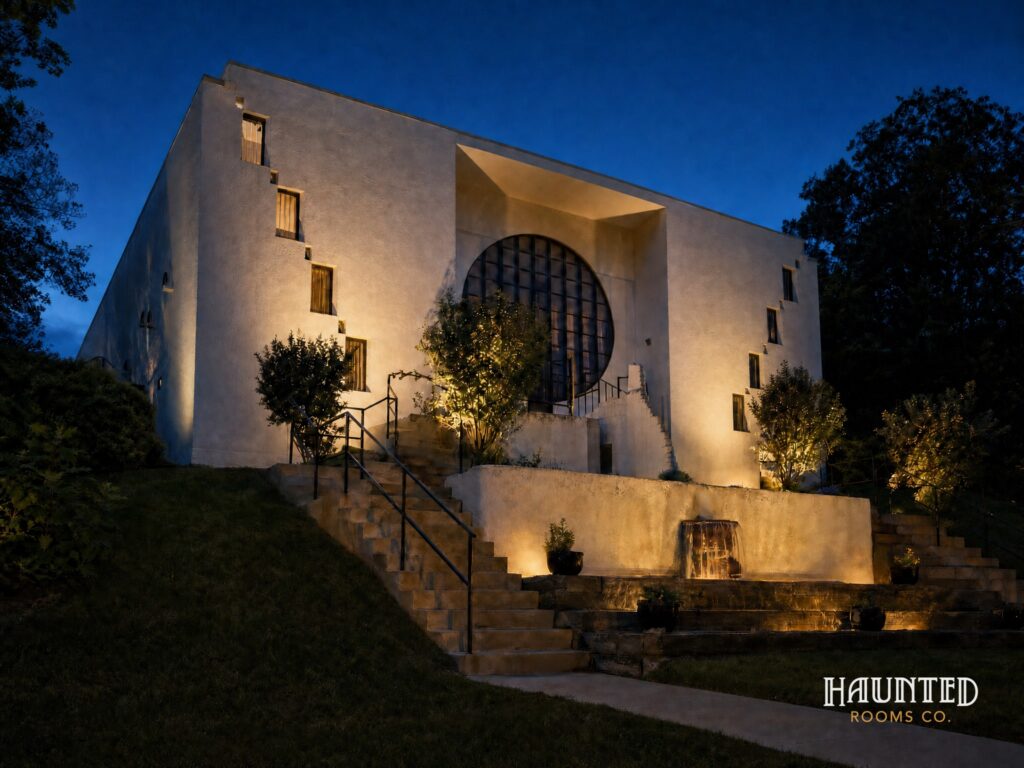
Bruce Goff designed this white Art Deco building on Riverside Drive in 1928 as a home and music studio for teacher Patti Adams Shriner. Since November 14, 1953 it has staged The Drunkard, an old temperance melodrama played for laughs, and it claims the longest continuous run of any play in North America. It was listed on the National Register in 2001.
The ghost story says that anyone who goes into the basement hears footsteps coming toward them, then scratching, and that marks have been found on the walls. Teri French of Tulsa Spirit Tours told KJRH it is just a rumor: a staff member with about 60 years at the theater told her it is not haunted. We include it because it is on many lists, and because the show is worth seeing.
Haunted Rooms tip: Go on a Saturday night for The Drunkard and the Olio; booing the villain is expected.
Where to look The galleries and statues, and the villa's halls
Reported ghosts Statues said to turn their heads; hall lights switching on (legend)
Visiting A public art museum with gardens
Ghost hunting Not offered
Kansas City architect Edward Buehler Delk designed this Italian style villa for oilman Waite Phillips and his wife Genevieve, built in 1926 and 1927. The Phillips family gave it to the city as an art museum, and it opened on October 25, 1939. It sits in 25 acres of gardens first laid out by Hare and Hare after Italy’s Villa Lante.
The haunting here is mostly an urban legend: visitors say the statues’ eyes follow you around, and some claim to have seen a head turn. Teri French of Tulsa Spirit Tours told KJRH that is at best a legend and that feeling watched by art is natural. Older stories add lights going on in empty halls. We list it because it is on many Tulsa ghost lists, and say plainly there is little behind it.
Haunted Rooms tip: Come for the villa and gardens; the haunted reputation is light, but the house is one of Tulsa’s best.
Where to look The woods and trails, and the golf course
Reported ghosts Deer Woman; unseen voices in the woods; a haunted golf course restroom (no record)
Visiting A public city park, open daily
Hours and season Daily, 7 AM to 9 PM
Ghost hunting The park closes at night
Mohawk Park covers about 3,300 acres in north Tulsa and is one of the largest city parks in the country. It grew out of the 1924 project that piped water from Spavinaw to Tulsa, and it holds the Tulsa Zoo, the Oxley Nature Center, the Mohawk Park golf course and miles of trails.
Its legend is Deer Woman, a figure from the stories of many tribes, including the Muscogee, Cherokee, Osage and Pawnee. Locals describe a tall woman with a deer’s legs walking in the woods, and some talk of small unseen voices laughing among the trees. Older lists add a golf course restroom where a light shines with no power; we found no record behind that. Treat it as folklore.
Haunted Rooms tip: Visit the Oxley Nature Center boardwalk in daylight; the park closes at 9 PM and gates shut early in bad weather.
These places appear in older lists of haunted spots. We keep them here so you know the facts before you go, but you cannot (or should not) visit them.
The Hex House, 10 East 21st Street
In 1944 police found two young women living in the basement of Carolann Smith’s duplex, where they had been kept for years and made to hand over their pay; Smith was jailed for a year. The house was razed in the 1970s and the basement lies under a parking lot. Stories of car wipers and radios switching on there are told on local tours, but there is nothing to visit.
The Camelot Hotel
The Camelot opened on Route 66 in the 1960s, closed in the 1980s and stood empty until it was demolished. Older lists say shadows still appear on the site; there is no building left to see.
Changed from our older guide: the Brady Theater is now the Tulsa Theater; Cain’s was built in 1924 as a garage and the ghost said to haunt it is Bob Wills, not “Bob Willis”; the Gilcrease Museum is closed until March 2027; the Spotlight Theater basement story and the Philbrook statues are rumors that local investigators doubt, and we now say so; the Hex House and the Camelot Hotel are gone and are listed under off-limits. New in this update: the Cave House, the Tulsa Garden Center, the Belvidere Mansion, the Constantine Theater and a full guide to Cain’s Ballroom.
Visited one of these places? Tell us what happened
We collect first-hand accounts from visitors and add the best ones to our guides, with your first name and the date of your visit. We read every story before it’s published.
Frequently asked questions
What is the most haunted place in Tulsa?
Cain’s Ballroom and the Gilcrease House are the two most often named. Cain’s, the 1924 dance hall Bob Wills called home, has staff stories of a lady in red and a cowboy who asks for ten-cent popcorn; Tulsa Spirit Tours founder Teri French calls the Gilcrease House one of the most haunted places in the city.
Is Cain's Ballroom haunted?
It has that reputation. TravelOK says it is rumored to be haunted by Bob Wills, and staff have told local media about a lady in red, a phantom cowboy at the bar and a child’s voice on a paranormal team’s recording. You can see for yourself at any concert. Read our full Cain’s Ballroom guide.
Did Enrico Caruso really haunt the Brady Theater?
Caruso did sing at the theater, now the Tulsa Theater, in 1920, and he died in Naples in 1921. The story that a chill caught on a rainy Tulsa trip led to his death, and that he came back to haunt the building, is a legend.
Are there ghost tours in Tulsa?
Yes. Tulsa Spirit Tours, founded by investigator Teri French, runs ghost tours that start outside the Tulsa Theater and visit downtown buildings and pubs. The Cave House gives tours by appointment.
Can you visit the Hex House in Tulsa?
No. Carolann Smith’s house at 10 East 21st Street, where two women were kept in the basement in the 1940s, was torn down in the 1970s and the site is a parking lot. The October haunted attraction of the same name is a separate business.
Is the Gilcrease Museum open?
Not yet. The old museum building was taken down from 2022 for a new one, and the museum says it reopens in March 2027. The Gilcrease House, where most of the ghost stories are set, is part of the new campus.
Sources and how we research
Every place in this guide is checked against its official website, historic register listings and news coverage, and we confirm whether it is open, closed, private or gone before we list it. Ghost stories are reported as staff, visitors and local historians tell them; we say so where records contradict a story. Each place shows how many independent sources we checked it against; our own Haunted Rooms pages are not counted.
New guides, haunted places to visit and ghost hunt dates near you. No spam, unsubscribe any time.
About the authors
The Haunted Rooms Team runs public ghost hunts and overnight investigations at historic venues across the United States. We research every place in our guides using official sites, historic registers, local archives and news coverage, and we report ghost stories as the stories they are. We review each guide regularly so you are not sent to a place that has closed, changed hands or banned visitors. Spotted something out of date? Let us know.