Haunted Detroit, MI: The 10 Most Haunted Places to Visit
A Masonic temple with a ghost story the records disprove, a fort built on a burial mound, a creek renamed Bloody Run and a mansion bar named for its ghosts. These are Detroit’s most haunted places, with what is true and how to visit.
Detroit’s ghost stories run from Pontiac’s War to Prohibition speakeasies and the great county hospital at Eloise. We have checked every place below against current sources, so you know which you can walk into, which you can see on a tour and which are working bars and restaurants where the ghost story comes with dinner. Haunted Rooms runs ghost hunts at Mortuary Manor in Toledo, about an hour south.
Visit on a tourGhost toursParanormal investigations allowed
Address 30712 Michigan Ave, Westland, MI 48186
Where to look The upper floors of the Kay Beard Building, the hydrotherapy room and the basement
Reported ghosts Former patients; tour guests report touches, grabs and voices
Visiting Privately run tours and attractions in the Kay Beard Building
Tours History tours of about three hours; paranormal tours most Saturdays and some Fridays
Hours and season The haunted attraction runs from late September through Halloween
Ghost hunting Yes: public paranormal investigation tours run by the venue
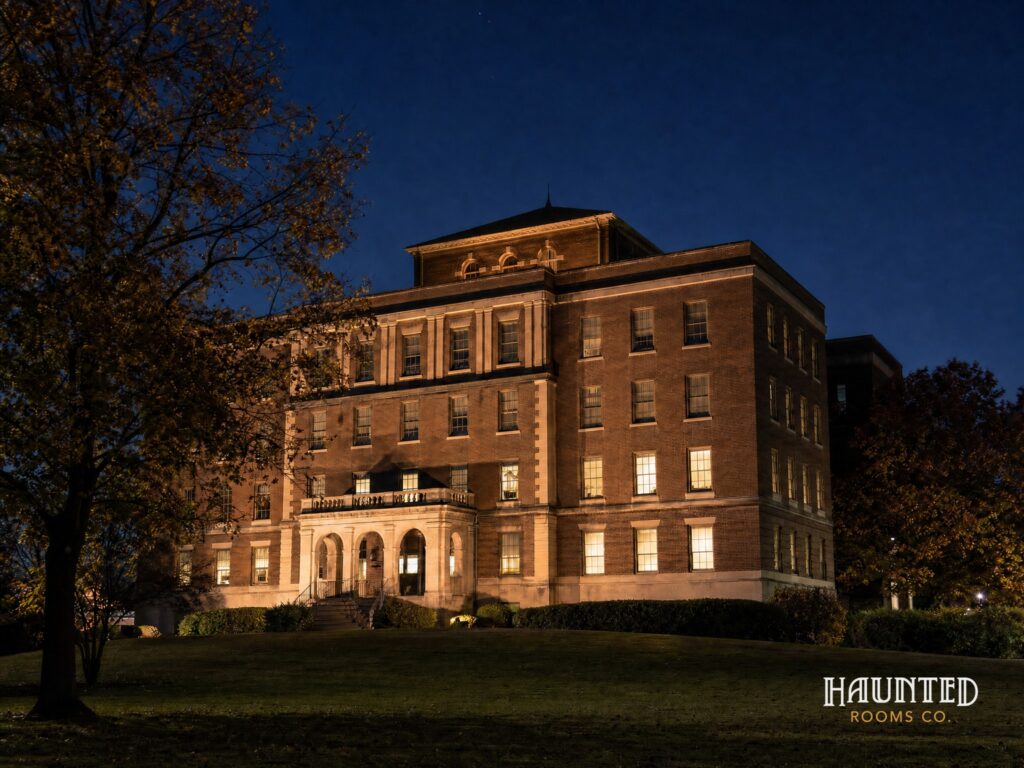
Wayne County’s poorhouse moved to this site in Nankin Township in 1839 and grew into Eloise, a self-contained town of asylum, sanatorium and hospital with its own farm, railroad, police, fire department and post office. About 10,000 people lived here at its Depression-era peak. The psychiatric hospital wound down between 1977 and 1982 and the general hospital closed in 1986; most buildings were razed, but the five-story Kay Beard Building still stands.
Today the Kay Beard Building hosts the Eloise Asylum haunted attraction in the fall, plus history tours and public paranormal investigations on most Saturday nights. Tour leaders say guests are touched, grabbed and whistled at on the upper floors where patients were treated. Some patients’ families object to ghost entertainment here, so go with respect.
What investigators report
Investigators who spent weeks in the D Building report catching an EVP of a woman humming on a digital voice recorder on the third floor, and running fast-scanning radio sessions on the fourth floor that they say produced full words.
Where to look The stairways, the roof doors and the unfinished upper floors
Reported ghosts Architect George D. Mason (by legend), slamming doors and cold spots
Visiting Working Masonic temple and concert venue; the interior is seen on a tour or at a show
Tours Two-and-a-half-hour historic building tours, booked through the temple’s website
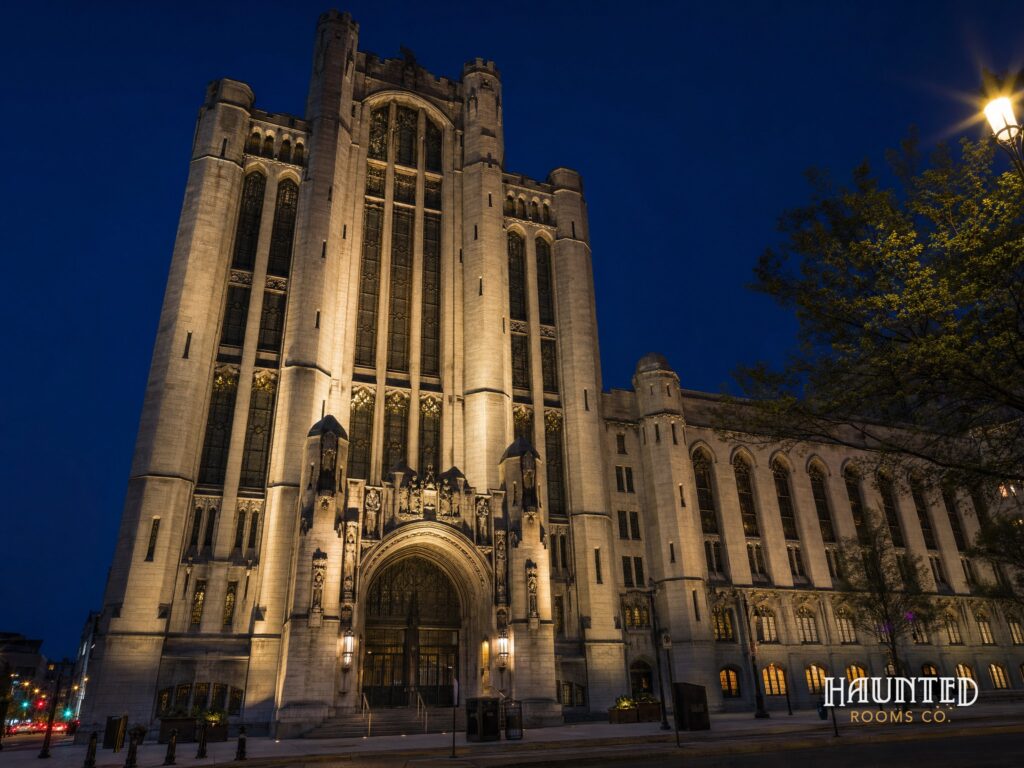
Ground was broken on Thanksgiving Day 1920 and the temple was dedicated on Thanksgiving Day 1926. George D. Mason designed it, and with 16 floors, 1,037 rooms and several theaters it is billed as the largest Masonic temple in the world. In 2013 Detroit-born musician Jack White paid $142,000 of its tax bill, and the temple renamed its cathedral theater after him.
The best-known story says Mason went broke building it, jumped from the roof and now opens the roof doors after the watchman locks them. The record says otherwise: Mason died at home in 1948, aged 91, of natural causes. Staff, tour guides and event guests still report slamming doors, cold spots and a figure on the stairs, and the temple’s chief docent says it is all a matter of interpretation.
Haunted Rooms tip: Book the two-and-a-half-hour building tour, or see a show in the Jack White Theater, and ask the guide about the unfinished spaces.
Where to look The 1848 limestone barracks, the parade ground and the visitor center
Reported ghosts A World War I soldier walking his post, a servant who died on the grounds
Visiting City-owned historic site; grounds open in season
Tours Volunteer-led tours on select fall Saturdays, plus a free audio tour app
Hours and season Daily 6 AM to 8 PM, May through October (2026)
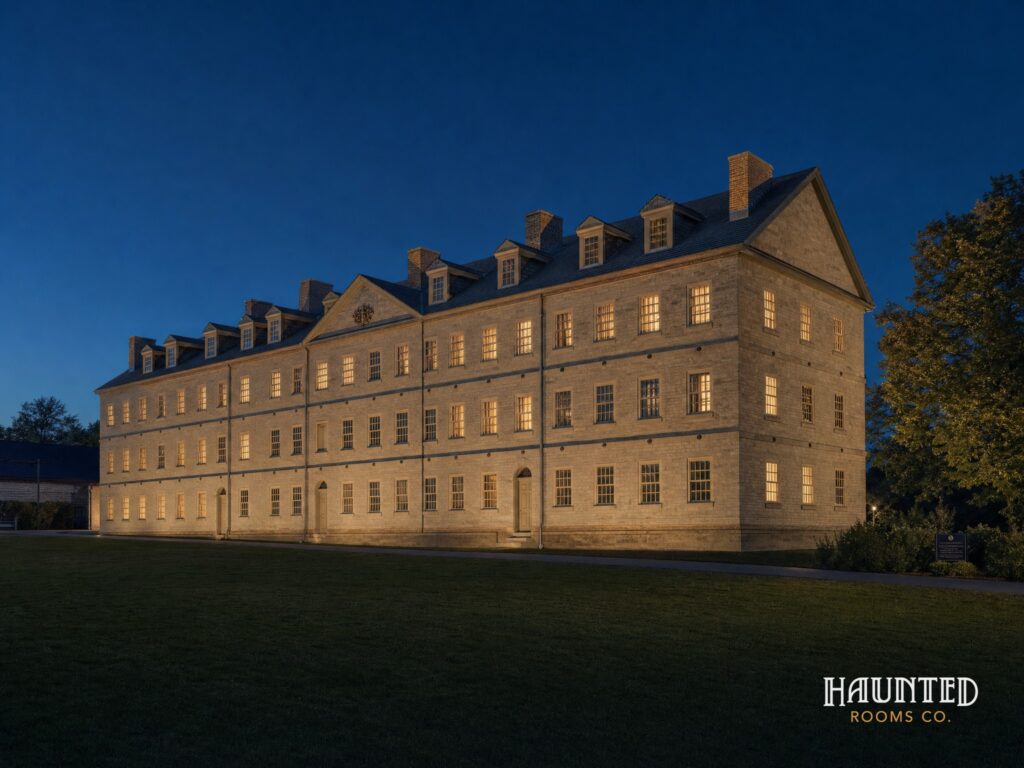
Built between 1842 and 1851 to guard the Detroit River, this bastioned fort never saw a battle. It mustered Michigan troops in the Civil War, sheltered homeless families in the Great Depression and was a vast motor supply depot in World War II. The 1848 limestone barracks still stand, and the grounds keep the last of about 19 ancient burial mounds that once lined the river here.
The Historic Fort Wayne Coalition has run evening paranormal tours in past seasons, telling of a World War I soldier still walking his post and a domestic servant who took her own life on the grounds. Visit Detroit adds civilians and soldiers seen around the fort and links some stories to the 1918 flu epidemic. Volunteers describe footsteps and voices in the empty barracks.
What investigators report
Investigators often focus on the Spanish Guard House, where audio recording during an investigation reportedly picked up a disembodied voice and one woman said her hair was pulled.
Where to look The third-floor GhostbaR, the third-floor restroom, the elevator and the carriage house
Reported ghosts David Whitney Jr., his wife Sara and his first wife Flora
Visiting Restaurant open for dinner nightly, plus afternoon tea and Sunday brunch
Tours Ghost tours with Dye Paranormal have run in the Halloween season; check with the restaurant
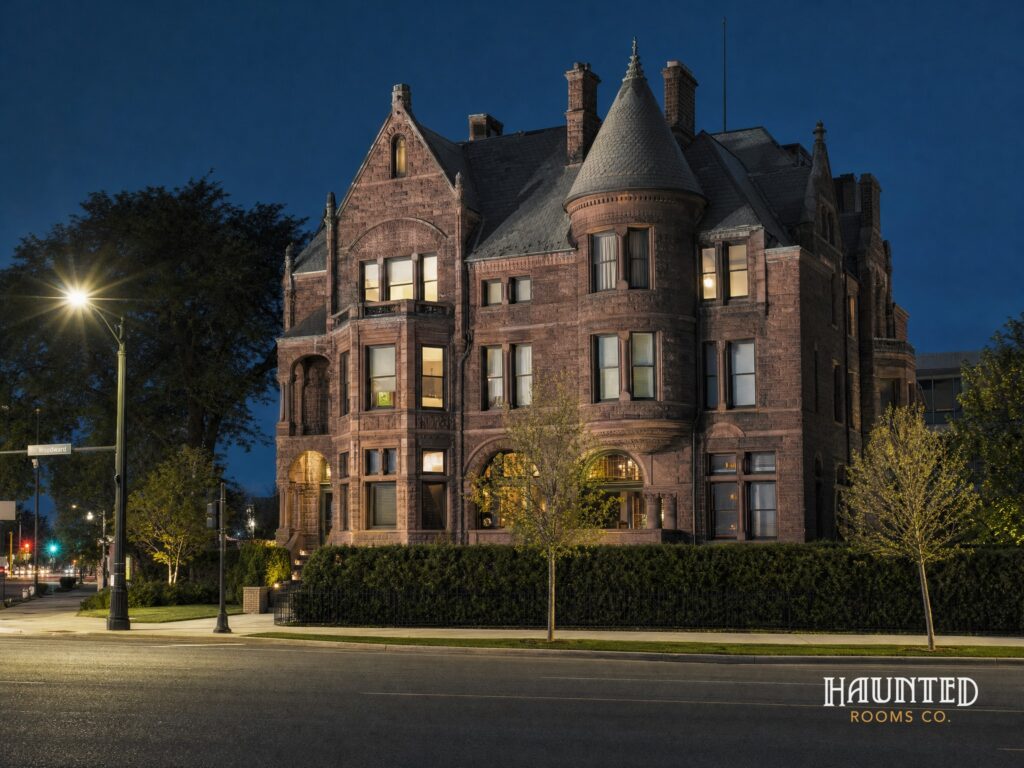
Lumber baron David Whitney Jr. built this 52-room Romanesque mansion of rose-pink South Dakota jasper between 1890 and 1894, to designs by Gordon W. Lloyd. Whitney died here in 1900 and his wife Sara in 1917. The house later served the Wayne County Medical Society and the Visiting Nurse Association, and it has been a restaurant since 1986.
The Whitney leans into its stories: the third-floor bar is called the GhostbaR. Staff and guests describe an elevator that rises with no one at the button, rearranged place settings and dishes clattering in an empty kitchen. Flora, Whitney’s first wife, is said to sob in the third-floor women’s restroom, and the carriage house is linked to children’s voices. Detroit PBS reported in 2024 that Dye Paranormal leads ghost tours here.
What investigators report
Investigators focus on the carriage house window table linked to Grace Whitney, where audio recordings reportedly caught a woman humming. A “shave and a haircut” knock during a paranormal dinner tour is said to have been answered.
Where to look The Bloody Run creek bed and the Veiled Lady monument
Reported ghosts Redcoat soldiers from the 1763 Battle of Bloody Run, the Veiled Lady
Visiting Working cemetery; grounds open to visitors by day
Tours Self-guided tours, tree tours and group tours; call 313-567-3453
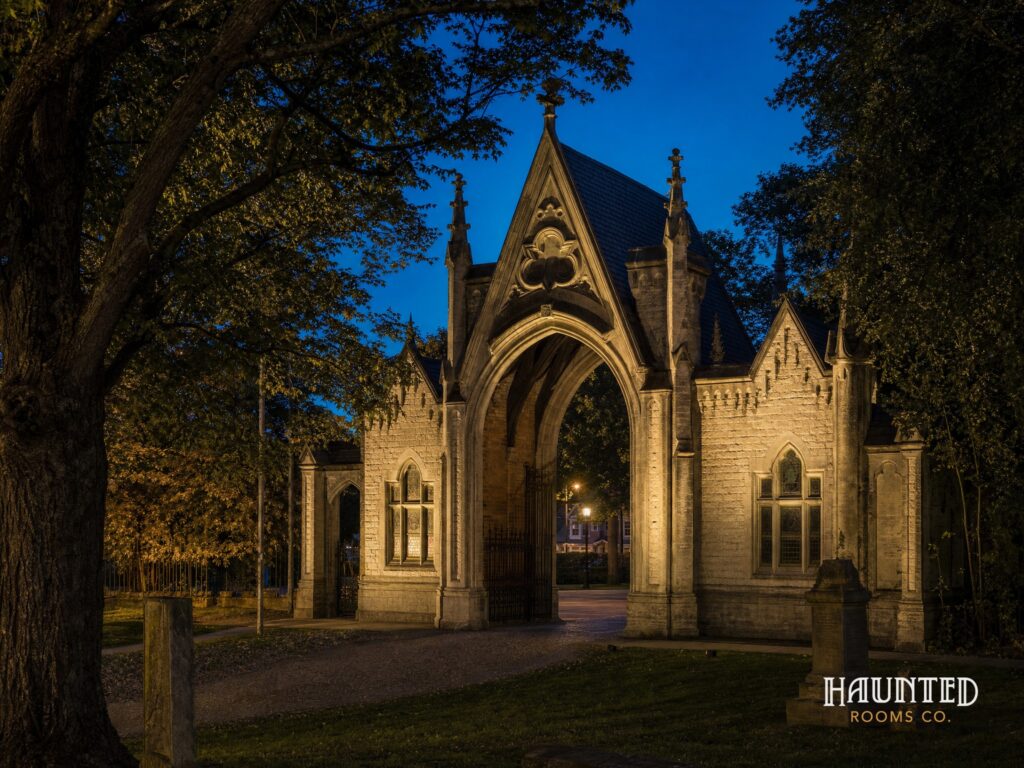
Dedicated in 1846, Elmwood is the oldest continuously operating non-denominational cemetery in Michigan, 86 acres given a park-like design by Frederick Law Olmsted in 1890. Lewis Cass, Coleman Young, MC5 guitarist Fred “Sonic” Smith and 29 Detroit mayors are buried here. The creek on its western side, once Parent’s Creek, was renamed Bloody Run after Pontiac’s warriors killed Captain Dalzell and about 160 British soldiers there on July 31, 1763.
Visit Detroit retells the legend that the creek ran red, and visitors describe soldiers in red coats among the graves. The other story belongs to the Veiled Lady, the monument of Eliza Waterman: legend says touching her headstone invites her to follow you home. Treat both as Detroit folklore, and visit respectfully by day.
Haunted Rooms tip: Join one of the cemetery’s group or October tours, and find the memorial plaque at Bloody Run.
Where to look The bar room and the family's attached home
Reported ghosts Col. Philetus Norris, a lady in white, a little boy
Visiting Working neighborhood bar; check hours before you go
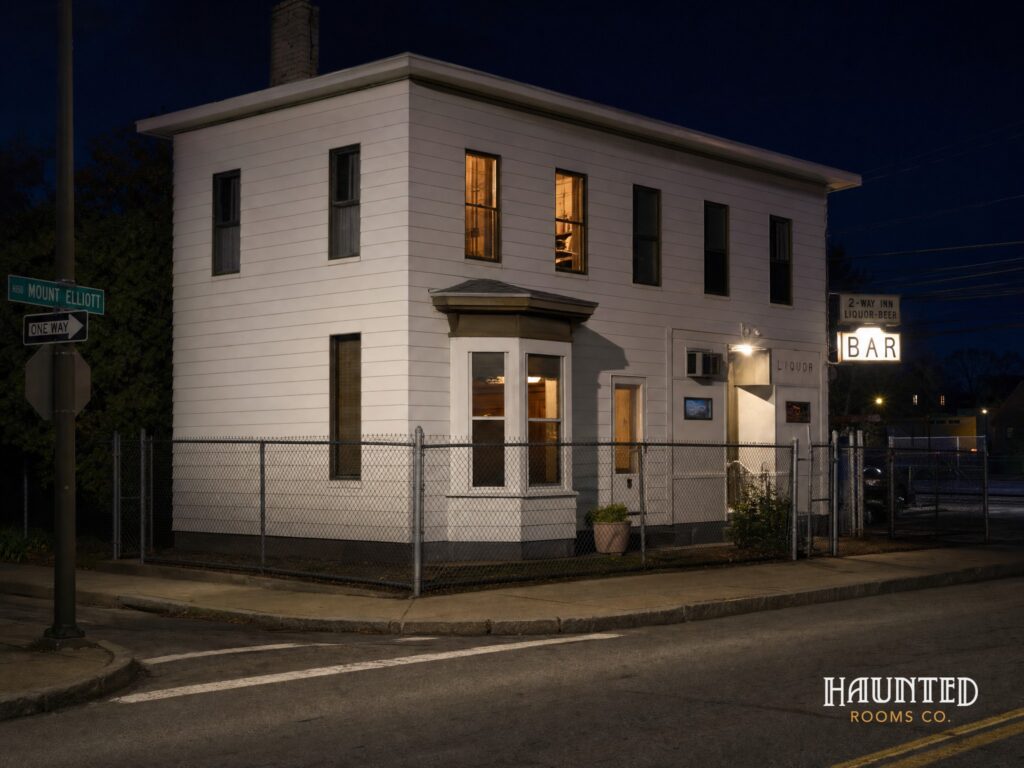
Civil War colonel Philetus W. Norris put up this corner building in the 1870s, and the Two Way is widely called Detroit’s oldest bar, dating from 1876. It has been a general store, post office, stagecoach stop, village jail, dance hall and, during Prohibition, a dentist’s office. Its name comes from its two doors, front and back. Harry Malak bought it in 1973 and his family still runs it.
The family prefers “spirited” to haunted. They describe Norris himself in a wide-brimmed hat, nicknamed the Cowboy; a lady in white they believe is one of his daughters; and a little boy seen around the bar and the attached home, said to be the son of the Prohibition-era dentist.
Haunted Rooms tip: Go on a quiet weeknight, sit at the old Stroh’s bar and ask about the Cowboy.
Visiting a haunted place by day is one thing. Investigating one after dark is another. On a Haunted Rooms ghost hunt our team takes you through a historic building with professional ghost hunting equipment, runs EVP sessions and vigils, and gives you time to explore on your own. These are the nearest ones we run.
Mortuary Manor Ghost Hunt, Toledo: investigate a former north Toledo funeral home with its embalming rooms, basement morgue and viewing parlors still in place.
Where to look The ladies' restroom, the top-floor dressing room and the organ
Reported ghosts Ethel, a former cleaner; a girl and a woman upstairs; a man by the organ
Visiting Volunteer-run movie theater; open for screenings and events
Ghost hunting Occasional paranormal lock-ins by outside groups (for example in 2019); none listed now
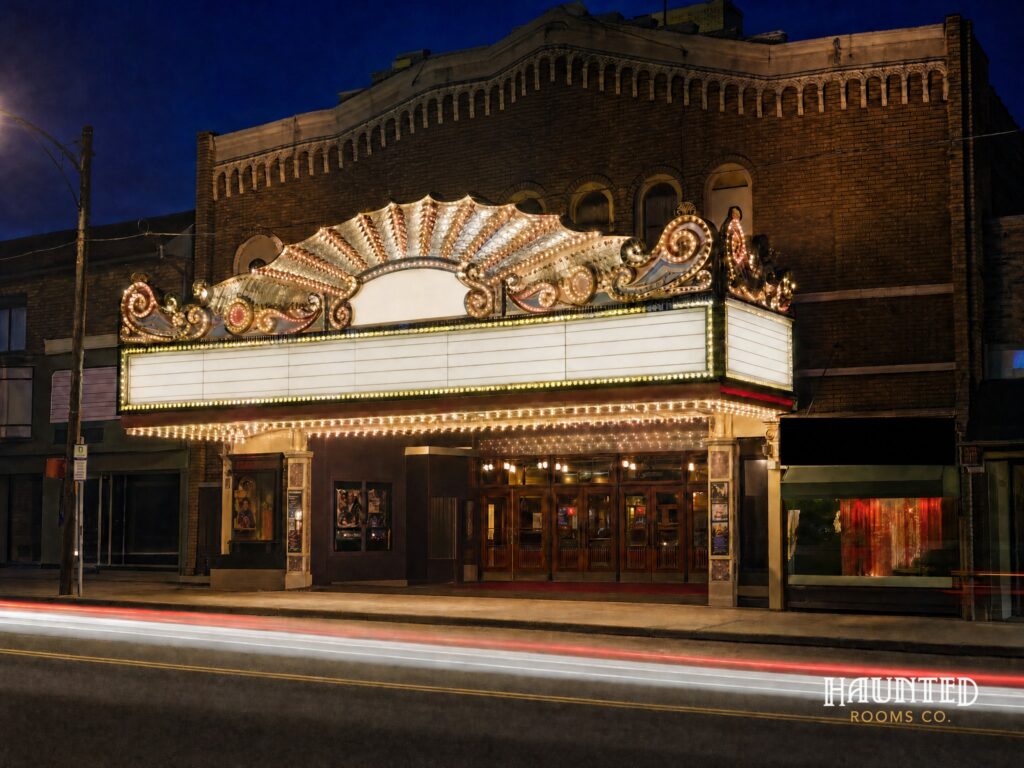
The Redford opened on January 27, 1928, with a Japanese-themed interior and a Barton theatre organ that is still in its original installation. Volunteers of the Motor City Theatre Organ Society bought it in 1977 and still run it, screening classic films with live organ music. It is on the National Register of Historic Places.
Visit Detroit says at least eight ghosts are suspected. The best known is Ethel, a cleaner who worked here into old age and is blamed for bleach smells, flushing toilets and footsteps in the ladies’ room. A young girl and a woman are linked to the top-floor dressing room, and Motor City Ghost Hunters, who have run paranormal lock-ins here, say they caught a man by the organ on camera.
What investigators report
Motor City Ghost Hunters, who run lock-in investigations here, report capturing an apparition near the theatre organ, and the top-floor dressing room is where a woman’s spirit is said to linger.
Where to look The table by the feather bowling room and the basement
Reported ghosts Former owners Yvonne and Robert Devos
Visiting Bar and restaurant open daily from the afternoon; lanes can be reserved
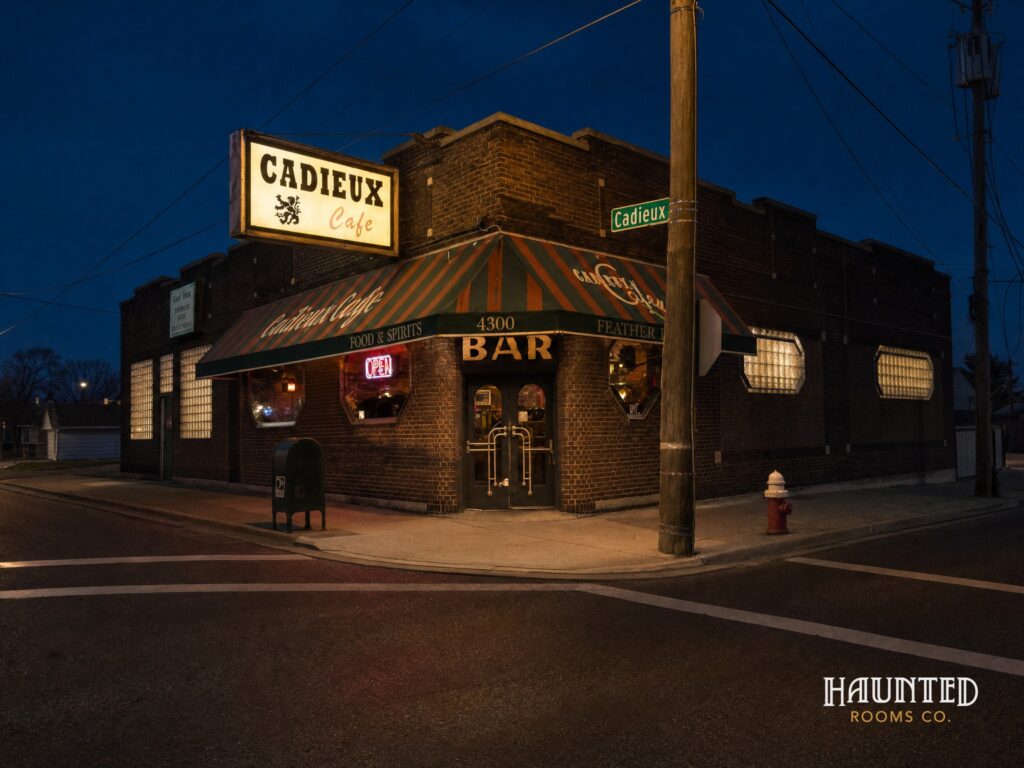
Belgian immigrants opened this east side bar in the early 1930s, starting as a Prohibition speakeasy, and it has operated since 1933. Robert and Yvonne Devos bought it in 1962 and made it the heart of Detroit’s Belgian community, with Belgian beer, pigeon racing clubs and one of the only feather bowling lanes in the country. Anthony Bourdain filmed here in 2009, and new owners took over from the Devos family at the start of 2019.
The ghosts are said to be the Devoses themselves. Yvonne is described in a blue dress at a table near the entrance to the feather bowling room, and Robert in the basement. Staff tell of objects falling from shelves and doors closing on their own, and of a man, struck by a car outside, who runs toward the building and vanishes.
What investigators report
A member of the owning family who joined an overnight ghost hunt here says asking questions only certain people would know brought responses. Staff point to a table by the feather bowling lanes and the basement as the active spots.
Reported ghosts Conductor Ossip Gabrilowitsch, the hall's friendly resident ghost
Visiting Home of the Detroit Symphony Orchestra; open for concerts
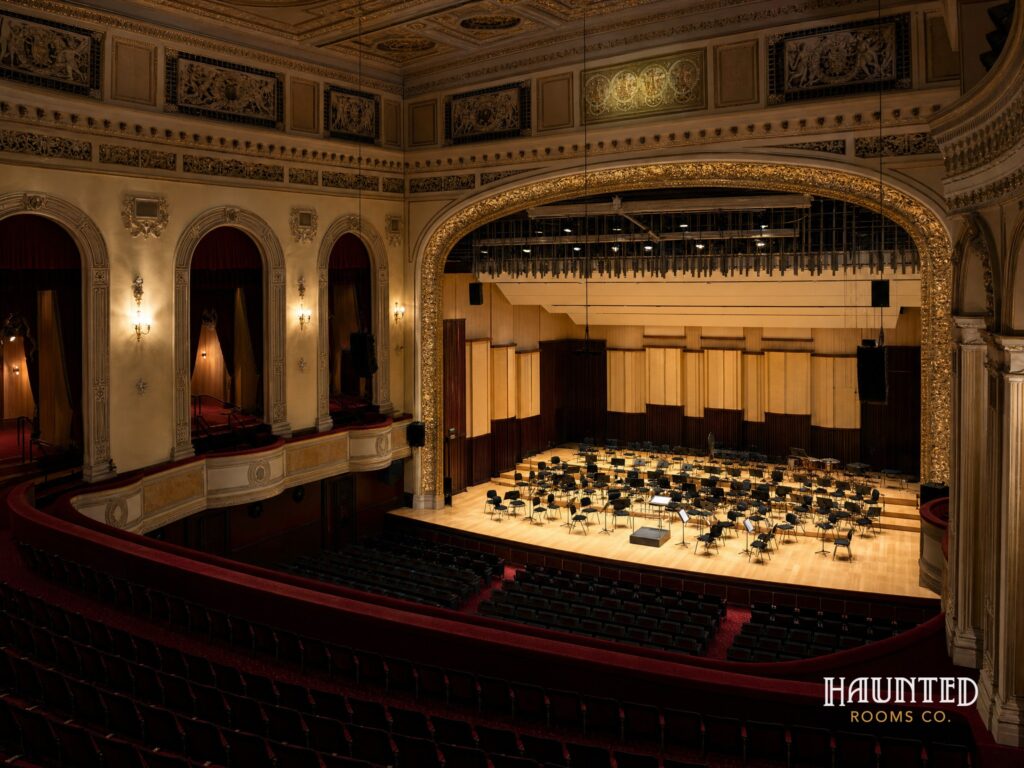
Ossip Gabrilowitsch, the conductor married to Mark Twain’s daughter Clara Clemens, agreed to lead the Detroit Symphony Orchestra only if it built him a proper hall. C. Howard Crane designed it and it went up in about six months in 1919. It was the Paradise Theatre, a jazz venue, from 1941 to 1951, came close to demolition in the 1960s and was saved by a restoration that began in 1970. The DSO came home in 1989.
Gabrilowitsch is the hall’s ghost, and the orchestra plays along: for the centennial in 2019 the DSO staged a family concert called The Ghost of Orchestra Hall, presenting him as its friendly resident spirit. Ghost lists add cold spots and music heard when nobody is playing. It is the gentlest haunting in Detroit, in a hall musicians prize for its sound.
Haunted Rooms tip: Book a DSO concert and sit in the balcony, where the hall’s warm sound is at its best.
Reported ghosts An unseen guest who opens doors and flickers the lights in Suite 418
Visiting A working hotel; book a room to stay
Ghost hunting No ghost hunts; stay the night instead
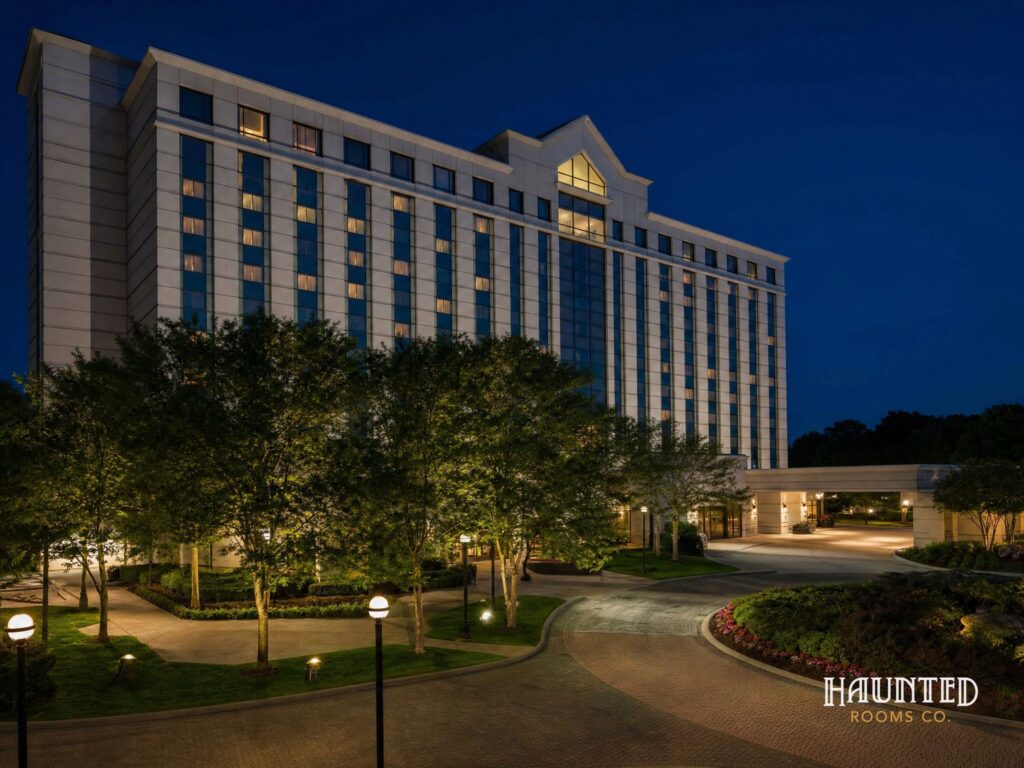
The Henry is a large modern hotel in Dearborn, a short drive from The Henry Ford museum. It was formerly a Ritz-Carlton and is now part of Marriott’s Autograph Collection.
Its story is a small one. Patch reported in 2013 that guests in Suite 418 described doors opening and closing on their own and lights flickering on and off. Older accounts add French doors that rattled after they were locked. It is the least historic hotel on this list, but a convenient base for Detroit’s haunted places.
Haunted Rooms tip: Ask for Suite 418 if you want the story, and use the hotel as a base for Detroit’s haunted places.
These places appear in older lists of haunted spots. We keep them here so you know the facts before you go, but you cannot (or should not) visit them.
Northville Psychiatric Hospital
The state hospital in Northville Township (not Detroit, as our older guide said) closed in 2003 and its main buildings were razed in November 2018. Nothing remains to visit.
Thorn Apple Valley slaughterhouse
An abandoned industrial site that urban explorers used to enter. It is private property, we could not confirm what remains of it, and entering it is trespassing. We have removed it from the list.
The St. Aubin Street murder house
The home where cult leader Benjamin Evangelist and his family were killed in 1929, a crime never solved. It is a private address, we could not confirm the house still stands, and there is nothing to visit.
The Alhambra Building
Our older guide tied this apartment building to a 1904 poisoning. We could not confirm the story or the building’s current status, so we have removed it.
Changed from our older guide: the Masonic Temple suicide story is false, and Cadieux Cafe’s ghosts are said to be former owners Yvonne and Robert Devos. Jackson State Prison is 75 miles west of Detroit and is now apartments and galleries, so it moved to our Michigan off-limits list, along with Northville Psychiatric Hospital, which has been demolished. We removed the Thorn Apple Valley slaughterhouse, the St. Aubin Street house and the Alhambra Building (private or unverifiable). New in this update: the Redford Theatre, The Henry in Dearborn and a full guide to Eloise.
Visited one of these places? Tell us what happened
We collect first-hand accounts from visitors and add the best ones to our guides, with your first name and the date of your visit. We read every story before it’s published.
Frequently asked questions
What is the most haunted place in Detroit?
The Detroit Masonic Temple and Eloise in Westland are the most often named. The Masonic Temple has the city’s best-known ghost legend, and Eloise is where you can actually join a paranormal investigation.
Is the Masonic Temple architect's ghost real?
The story says George D. Mason went broke and jumped from the roof. He did not: he died at home in 1948, aged 91. Staff and visitors still report slamming doors, cold spots and a figure on the stairs.
Can you go ghost hunting in Detroit?
Eloise Asylum in Westland runs public paranormal investigation tours most Saturday nights. Haunted Rooms’ nearest ghost hunt is at Mortuary Manor in Toledo, a former funeral home about an hour south.
What is the oldest bar in Detroit, and is it haunted?
The Two Way Inn on Mount Elliott Street, dating from 1876. The family who runs it describes the founder, Col. Philetus Norris, a lady in white and a little boy.
Is Elmwood Cemetery haunted?
Legend says redcoat soldiers from the 1763 Battle of Bloody Run walk the grounds, and that touching the Veiled Lady monument invites her to follow you home. The battle is real history; the ghosts are folklore.
Every place in this guide is checked against its official website, historic register listings and news coverage, and we confirm whether it is open, closed, private or gone before we list it. Ghost stories are reported as staff, visitors and local historians tell them; we say so where records contradict a story. Each place shows how many independent sources we checked it against; our own Haunted Rooms pages are not counted.
New guides, haunted places to visit and ghost hunt dates near you. No spam, unsubscribe any time.
About the authors
The Haunted Rooms Team runs public ghost hunts and overnight investigations at historic venues across the United States. We research every place in our guides using official sites, historic registers, local archives and news coverage, and we report ghost stories as the stories they are. We review each guide regularly so you are not sent to a place that has closed, changed hands or banned visitors. Spotted something out of date? Let us know.