A stone bridge on Beaucatcher Mountain, a Gilded Age mansion, a writer’s boardinghouse and a 1936 murder that still divides the city. These are the most haunted places in Asheville, with what is history, what is legend and how to visit each one.
Asheville grew rich as a mountain resort in the late 1800s and early 1900s, and its ghost stories cling to the buildings of that boom: grand hotels, a basilica, the Vanderbilts’ Biltmore and the boardinghouse Thomas Wolfe made famous. We have checked every place below against current sources, so you know which are open, which you can only see from the street, and which take overnight guests. For rooms with a reputation, see our guide to haunted hotels in Asheville.
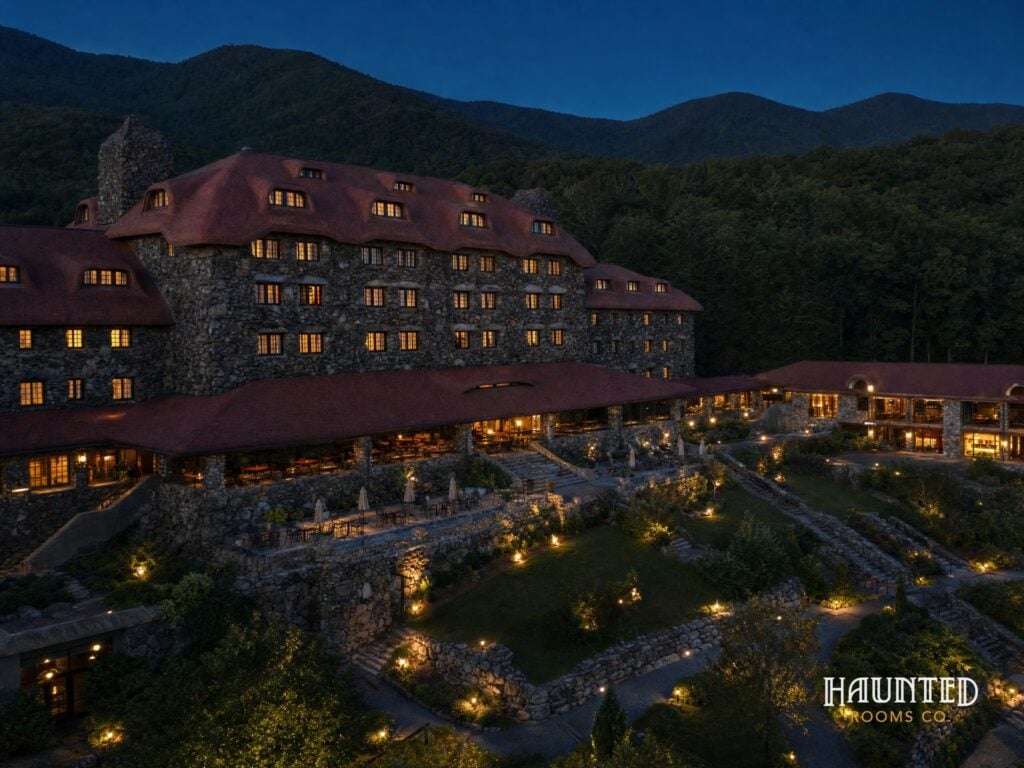
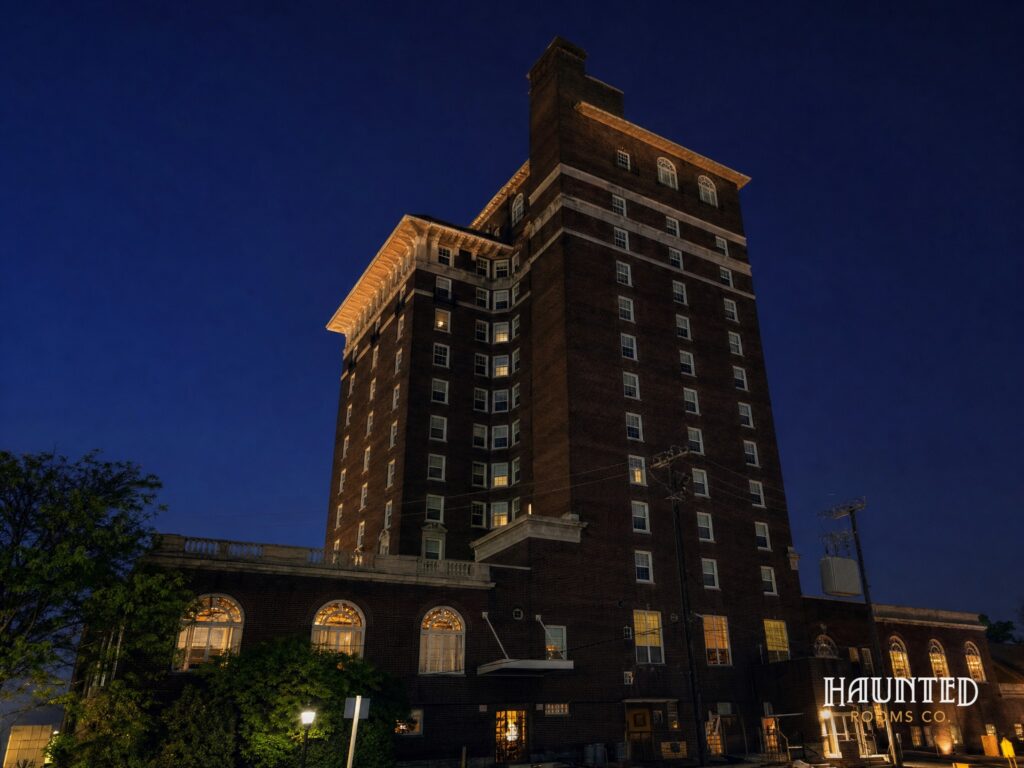
Where to look Room 545 in the Main Inn, the Palm Court atrium, the fifth-floor halls and the Main Inn elevators
Reported ghosts The Pink Lady, a young woman in a pink gown said to have fallen into the Palm Court around 1920
Visiting A working hotel: book a room to stay the night
Ghost hunting No public ghost hunts; stay the night instead
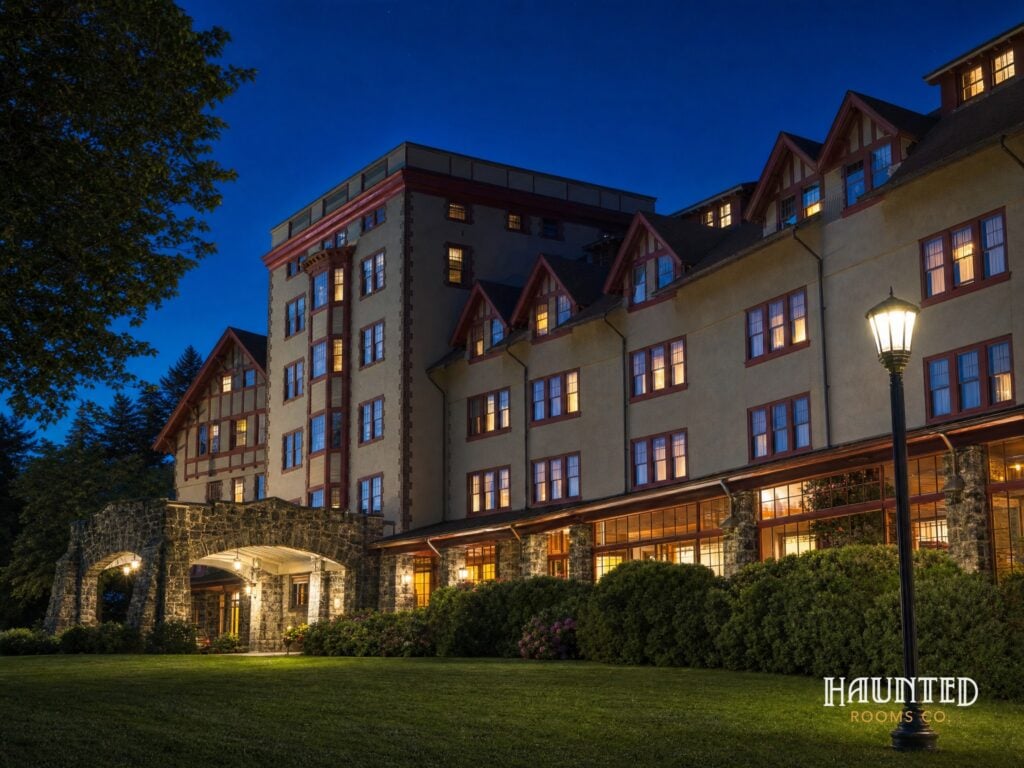
Edwin Wiley Grove and his son-in-law Fred Seely built this granite boulder resort on Sunset Mountain in less than a year, and it opened on July 12, 1913. Presidents from Taft to Obama have stayed, F. Scott Fitzgerald spent the summers of the mid-1930s in rooms 441 and 443, and in World War II it held Axis diplomats. Today it is a 513-room Omni resort.
Its ghost is the Pink Lady. The story says a young woman fell from the fifth floor into the Palm Court atrium around 1920. In 1996 the resort asked author Joshua P. Warren to investigate, and he collected accounts from nearly 50 people: chills outside Room 545, a pinkish mist, lights switching off in a closed inn and a gentle presence that sits on the bed.
Haunted Rooms tip: Ask for Room 545 in the Main Inn when you call; some guests request it and others ask to be as far from it as possible.
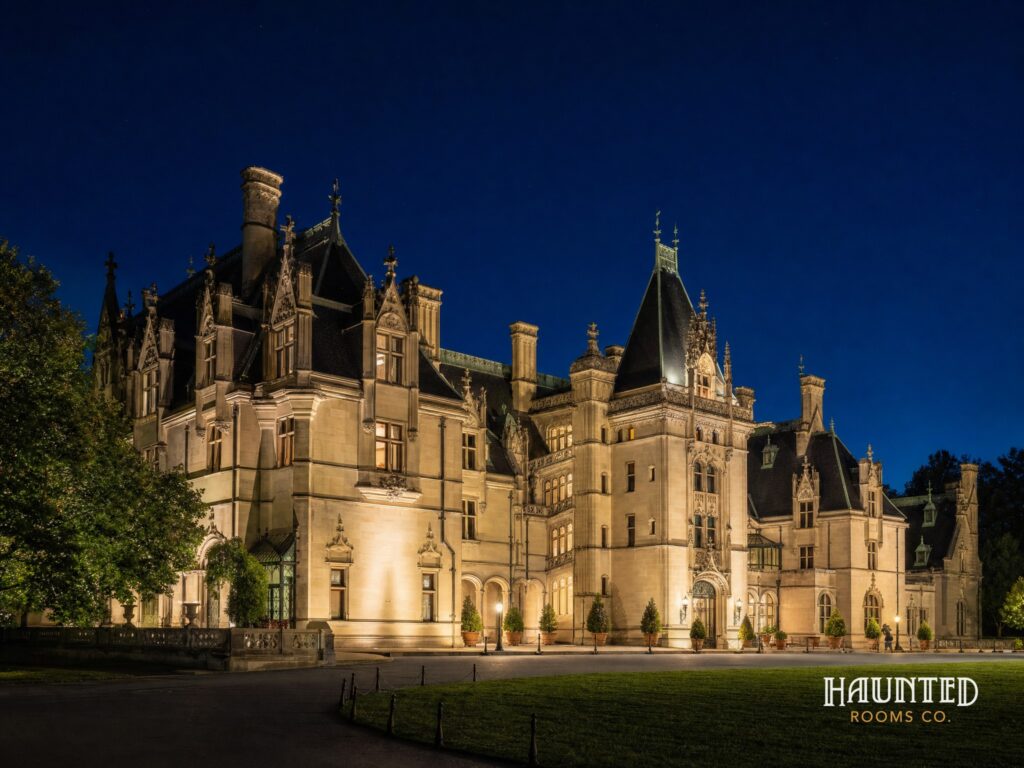
Where to look The library, the basement swimming pool, the Grand Staircase and the Halloween Room
Reported ghosts George and Edith Vanderbilt, party sounds, a woman in black by the pool
Visiting Ticketed estate visits with timed entry to Biltmore House
Tours Audio guide, Backstairs Tour, Rooftop Tour and small-group guided tours
Hours and season Open daily; check the official site for entry times
Tickets Advance tickets required; prices vary by date
Ghost hunting No: the estate does not offer ghost tours or paranormal investigations
George W. Vanderbilt built America’s largest private house between 1889 and 1895 and opened it to family and friends on Christmas Eve 1895. The 250-room chateau, designed by Richard Morris Hunt with grounds by Frederick Law Olmsted, has 65 fireplaces and a 70,000-gallon indoor pool in the basement. Vanderbilt died in 1914 after an emergency appendectomy, and his daughter Cornelia and her husband opened the house to the public in March 1930.
The ghost stories are told by visitors, not by the estate. People describe a shadowy figure in the library they take to be George, a woman’s voice calling his name, the clink of glasses and music from empty rooms, and splashing from the drained pool. A story that a child drowned in the pool has no record behind it. Biltmore runs house, backstairs and rooftop tours, but no ghost tours.
Haunted Rooms tip: Book the Backstairs Tour to see the servants’ areas and the basement, where many of the stories are set.
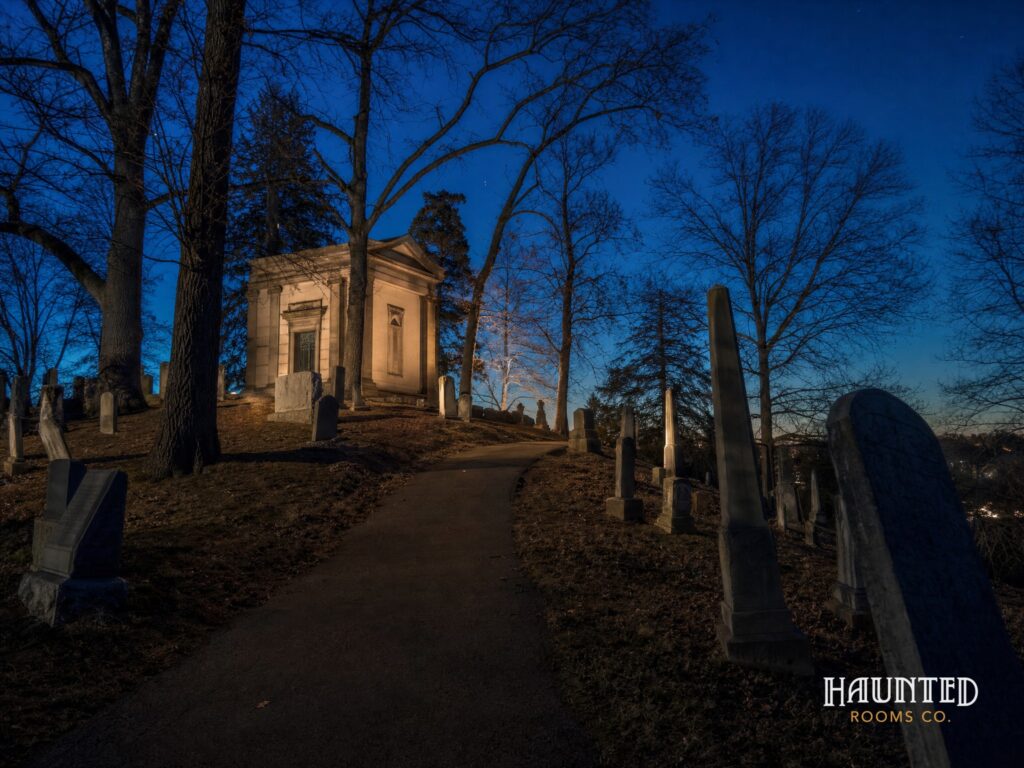
Where to look The Confederate graves, the German sailors' plot and the old receiving vault
Reported ghosts Soldiers in gray, phantom gunfire, voices and footsteps
Visiting City cemetery open to visitors
Hours and season 8 a.m. to 8 p.m. during daylight saving time; 8 a.m. to 6 p.m. the rest of the year
Tickets Free
Ghost hunting No ghost hunts after hours; the gates close at dusk
The Asheville Cemetery Company bought this hillside above the French Broad River in 1885, and the city took it over in 1952. Its 87 acres in the Montford neighborhood hold more than 13,000 people, among them Thomas Wolfe, O. Henry, Governor Zebulon Vance, three Confederate generals, photographer George Masa and 18 German sailors who died in the area during World War I.
Its ghost stories go back to the Civil War. Visitors describe the rumble of distant gunfire, shouting in the hills and shadowy men in gray who appear among the headstones and are gone, and ghost hunters single out the German plot and the old receiving vault for orbs and misty shapes. These are local stories rather than documented events, and the cemetery is a peaceful, working burial ground.
Haunted Rooms tip: Pick up a self-guided tour packet at the cemetery office on a weekday, then find Wolfe’s grave (writers leave pens) and O. Henry’s (people leave pennies) before the gates close.
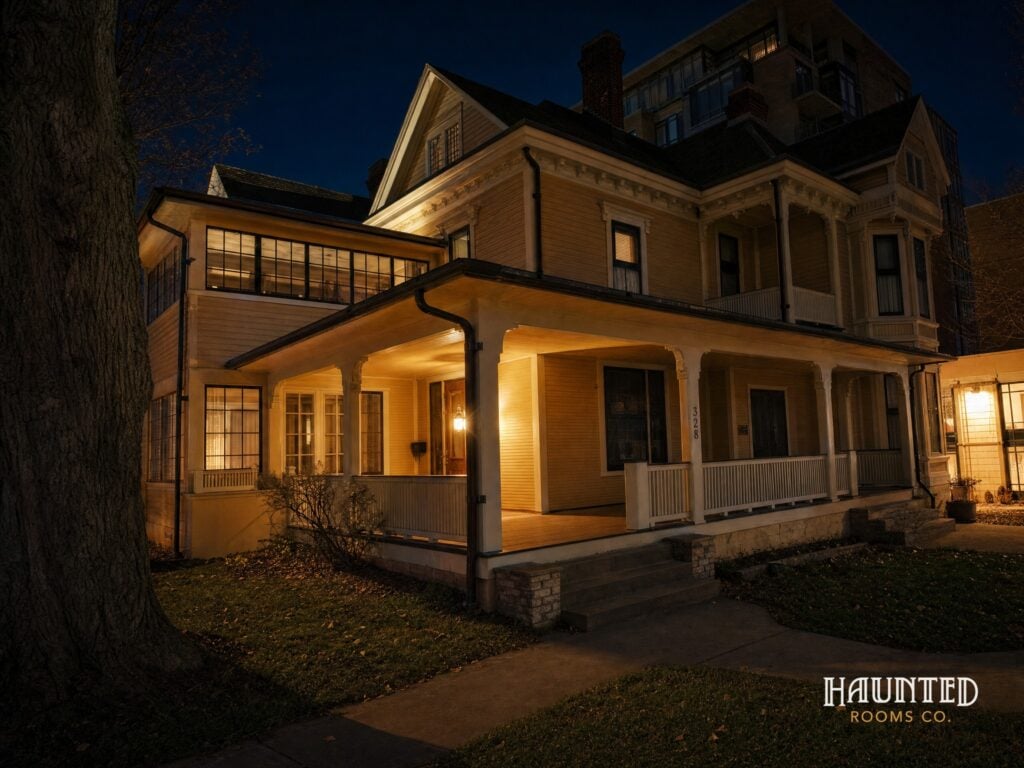
Where to look The upstairs bedroom where Ben Wolfe died and the upper hallway
Reported ghosts Ben Wolfe, a man at an upstairs window, a phantom typewriter
Visiting Guided tours of the house
Tours Guided history tours
Hours and season Tuesday to Saturday, 9 a.m. to 5 p.m.; closed Sunday, Monday and state holidays
Tickets Tours $8 adults, $7 seniors and military, $1 ages 3 to 17
Ghost hunting No ghost hunts; tours are history tours
Julia Wolfe bought this rambling Victorian boardinghouse, known as the Old Kentucky Home, when her son Thomas was six. He made it “Dixieland” in his 1929 novel Look Homeward, Angel. His father died in a back room in 1922 and his brother Ben died of influenza upstairs in 1918. It is now a North Carolina state historic site with guided tours.
Its ghost stories center on Ben’s room: visitors describe a chill outside it, faint footsteps in the upper hall and quiet knocks in the walls, and some say a man in period clothes appears at an upstairs window after dark or that a typewriter clacks in a closed room. Site manager Tom Muir has written that the house feels at peace now, though staff seldom use the hallway where longtime boarder Theodore Salmer died in 1933.
Haunted Rooms tip: Read the first chapters of Look Homeward, Angel before the tour; the guides point out the rooms Wolfe described.
Where to look The window of Room 224 and the old service elevator
Reported ghosts Helen Clevenger; an elevator that runs itself at night
Visiting Private apartment building: view from Battle Square only
Ghost hunting No access; residents only
The Battery Park Hotel opened on Battle Square in 1924, beside the Grove Arcade. On July 16, 1936, Helen Clevenger, an 18-year-old student traveling with her uncle, was beaten to death in Room 224. Martin Moore, a young Black worker at the hotel, signed a confession he later said was beaten out of him and was executed in Raleigh that December. Many people now believe he was innocent.
The building is now the Battery Park Apartments, so you can only look from the street. Haunted Asheville guide Tadd McDivitt has told WLOS that Helen’s old window glows red around the July anniversary, and residents have complained about a service elevator, the kind Moore once ran, moving by itself at night.
Haunted Rooms tip: Stand on Battle Square at dusk and look up, then walk through the Grove Arcade next door.
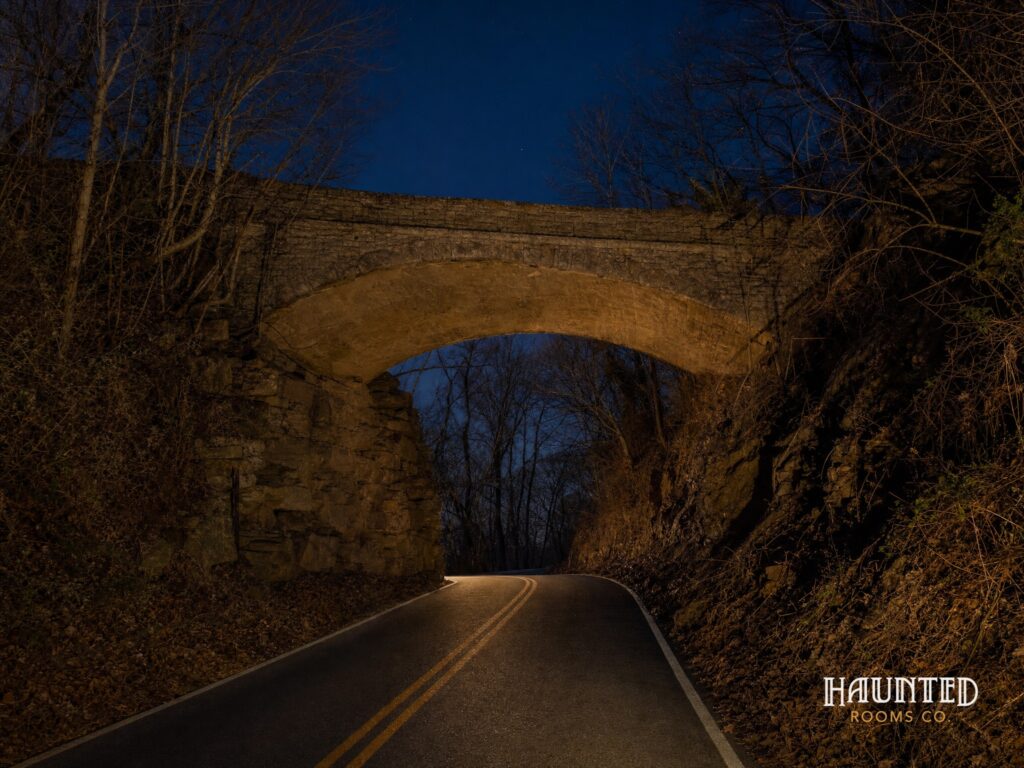
Address College St below Beaucatcher Rd (201 Beaucatcher Rd), Asheville, NC 28805
Where to look The stone arch over College Street and the bend beneath it
Reported ghosts Helen, a grieving mother said to search for her daughter
Visiting Public road under the arch; the Zealandia estate above is private
Hours and season Public road
Tickets Free
Ghost hunting No organized investigations; do not block the road or trespass on the estate
This arch of quarried stone was built in 1909 to carry the drive to Zealandia, the mansion on the crest of Beaucatcher Mountain, over what is now College Street. A young Thomas Wolfe walked beneath it and worked it into Look Homeward, Angel. It still spans the narrow mountain road a few minutes’ drive east of downtown, and it is the most famous haunted spot in Asheville.
The legend says a woman named Helen lived at or near Zealandia with her daughter, lost the girl in a fire and hanged herself from the bridge. Visitors say that calling her name three times brings a woman’s figure at the edge of the headlights, and many tell of cars that will not start afterward. We have found no record of a Helen, a fire or a death at the bridge, and the City of Asheville shares the story as a local ghost tale, not history.
Haunted Rooms tip: Drive under the arch at dusk rather than parking beside it: the road is narrow, residents use it, and the Zealandia estate above is private.
Visiting a haunted place by day is one thing. Investigating one after dark is another. On a Haunted Rooms ghost hunt our team takes you through a historic building with professional ghost hunting equipment, runs EVP sessions and vigils, and gives you time to explore on your own. These are the nearest ones we run.
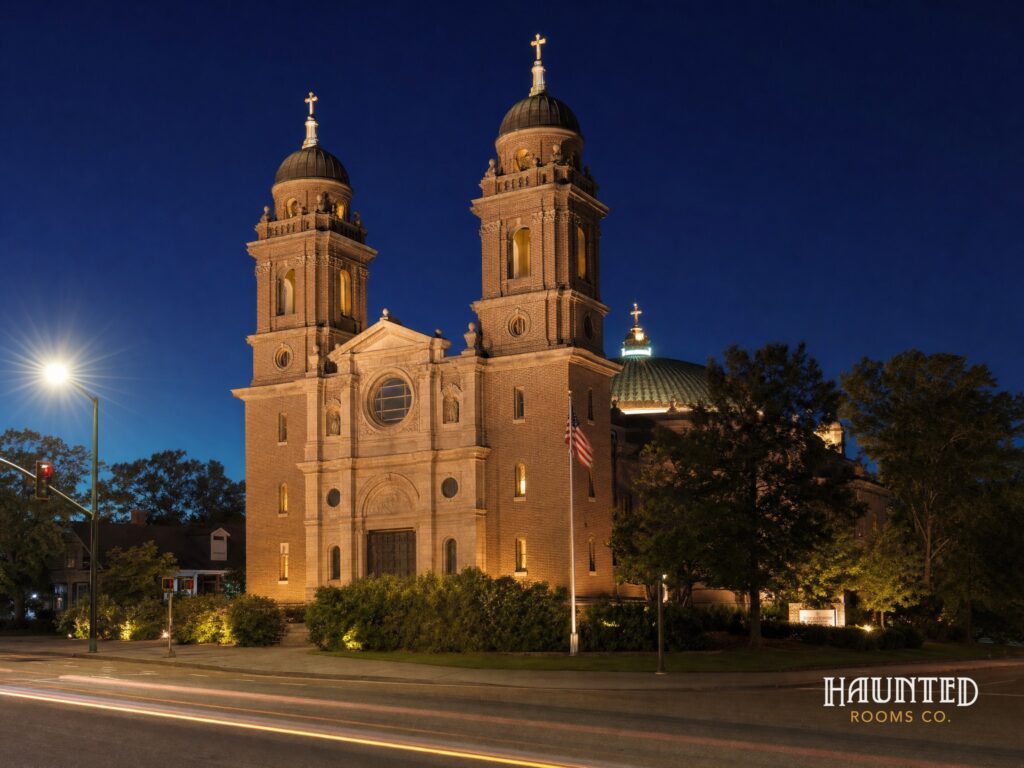
Where to look The Chapel of Our Lady, where Guastavino is entombed, and the dome
Reported ghosts Architect Rafael Guastavino; a dark-clad man near his chapel
Visiting Active parish church; visitors welcome outside services
Hours and season Check Mass and opening times before you go
Tickets Free
Ghost hunting No ghost hunting; this is a working church
Spanish architect Rafael Guastavino designed this church with Richard Sharp Smith, and it was built between 1905 and 1909 using his famous tile vaulting. Its elliptical dome, 58 by 82 feet, is said to be the largest freestanding elliptical dome in North America, and Pope John Paul II made the church a minor basilica in 1993. Guastavino himself is entombed in a crypt in the Chapel of Our Lady.
Because he lies here, the ghost stories are about him. Visitors and staff are said to report lights that flicker, cold spots, footsteps under the dome when the church is locked, and a man in dark clothes near his chapel who fades away. Older Asheville lists add the ghost of a priest. These are stories told locally; the parish does not promote them, and this is a working church.
Haunted Rooms tip: Visit outside Mass times, sit quietly under the dome, and look for the crypt in the back left of the Chapel of Our Lady.
Reported ghosts Sarah and Carrie; a dark presence called the Dark One
Visiting Museum open to visitors
Tours Museum visits
Hours and season Wednesday to Saturday, 11 a.m. to 5 p.m.
Ghost hunting No public ghost hunts
Built around 1840 for James McConnell Smith, this brick house is the oldest surviving home in Asheville. His daughter Sarah and her husband, Major William Wallace McDowell, bought it at auction in 1859 and lived here until 1880. It later served as a school dormitory and passed to Asheville-Buncombe Technical Community College, opened as a museum in 1981, and since 2023 has been the Asheville Museum of History.
Its ghost stories are told by visitors and volunteers alike: names called in empty rooms, cold spots and the feeling of a hand on the arm. The spirits are said to include two women, Sarah and Carrie, and a dark, misty figure some call the Dark One. In 2006 the museum invited a paranormal group, LEMUR, which said it identified four spirits and two unknown entities.
What investigators report
An Asheville paranormal group that toured the house in 2015 reported recording mists in the basement, the old winter kitchen and laundry space. Some docents avoid that room, and visitors describe it as feeling heavy.
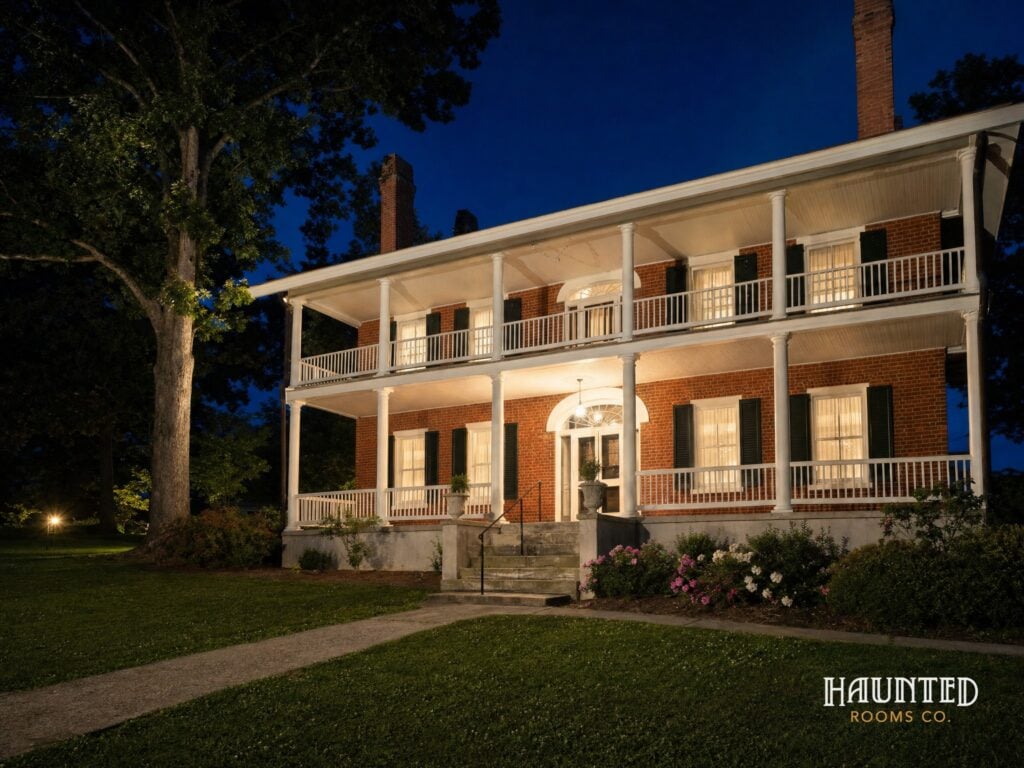
Where to look The main staircase and the third-floor Maggie room
Reported ghosts Annie Lee Reynolds on the stairs and a Reynolds child who died of typhoid
Visiting A working hotel: book a room to stay the night
Ghost hunting No public ghost hunts; stay the night instead
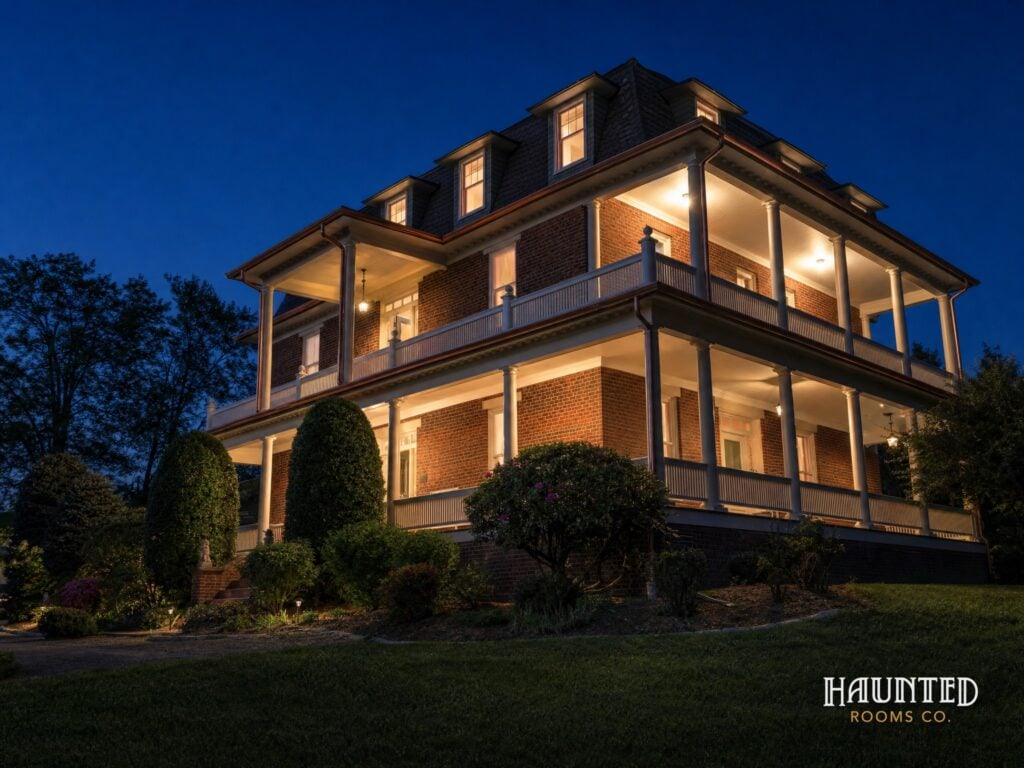
The Reynolds Mansion is a red-brick antebellum house on a knoll of Reynolds Mountain in north Asheville, one of fewer than ten pre-Civil War brick homes left in western North Carolina. Daniel Reynolds raised ten children here; his son Gus added a third floor and wraparound porches around 1905, and from 1919 to 1924 Dr. Elizabeth Smith ran it as the Asheville Osteopathic Sanatorium. It has been a bed and breakfast for decades and is on the National Register.
Former co-owner Billy Sanders told Mountain Xpress that guests often report two spirits: Annie Lee Reynolds, most often seen on the main staircase, and a Reynolds daughter who died of typhoid at six, heard as a child’s voice or seen as orbs. He called the third-floor Maggie room, which he said was Annie Lee’s, probably the most haunted, and said most guests who book it ask for it on purpose. Today’s innkeepers do not promote the ghosts.
Haunted Rooms tip: Book the Maggie room on the third floor by name; it is a modest queen room with a shower, so book a larger room on the second floor if comfort matters more than the story.
Where to look Room 217, the dining room and the spa
Reported ghosts A woman said to have been murdered in Room 217 in the 1930s; Dr. Lucius Morse in the dining room; a gravelly male voice calling staff by name
Visiting A working hotel: book a room to stay the night
Ghost hunting No public ghost hunts; stay the night instead
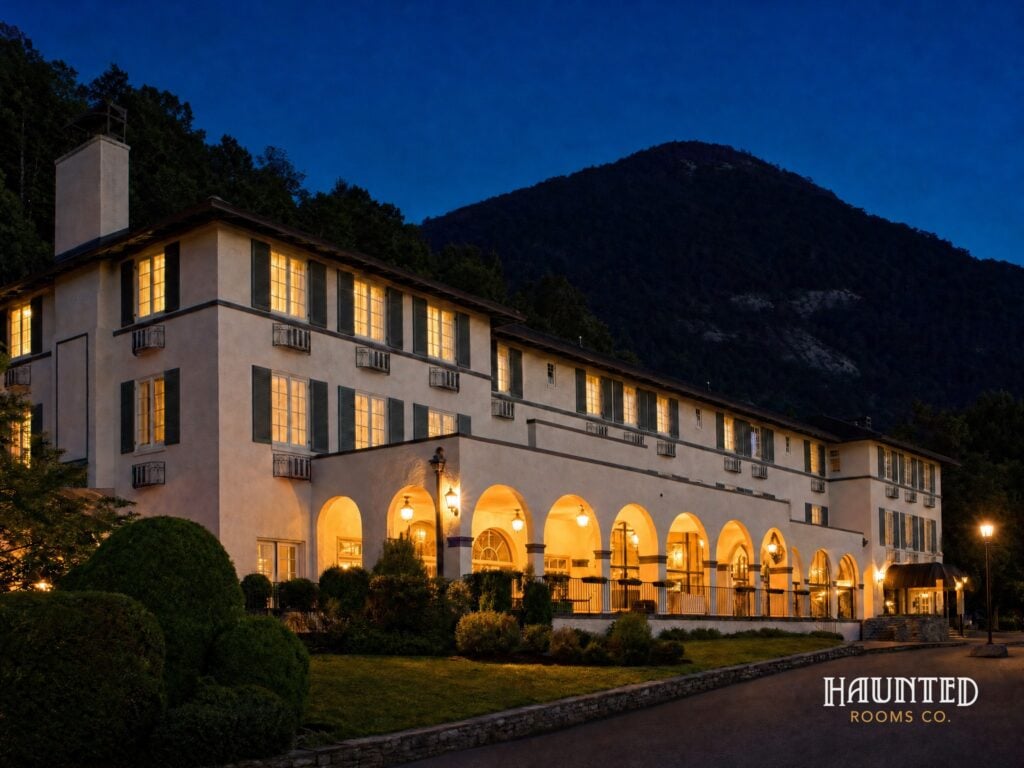
The cream stucco inn opened in 1927 with the new resort town of Lake Lure, below Chimney Rock in Hickory Nut Gorge. It hosted Franklin Roosevelt, F. Scott Fitzgerald and Calvin Coolidge, housed the cast of Dirty Dancing in 1987, and from 1943 to 1945 housed officers at an Army Air Forces rest center for combat aviators. Atlanta-based Ridgeline bought the 72-room inn in 2024.
Staff have reported shadows in the spa and a low, gravelly voice calling their names when no one is there. Local legend puts a woman murdered in the 1930s in Room 217, where a Forest City investigation group says it twice recorded a woman’s scream, and others describe a figure they identify as Dr. Lucius Morse in the dining room.
What investigators report
Paranormal Scene Investigators of Forest City, who have investigated the inn, report recording a woman’s scream on two occasions in Room 217. Other reported activity centres on the spa area and the dining room.
Reported ghosts Soldiers in the basement; old-time nurses with gurneys
Visiting Private apartments: view from the road only
Ghost hunting No access; residents only
The first Kenilworth Inn, a resort hotel, burned in 1909. Its Tudor Revival replacement, built between 1913 and 1918, became a military hospital, General Hospital No. 12, almost at once. From 1931 it was Appalachian Hall, a private psychiatric hospital run by the Griffin brothers, apart from 1943 to 1946 when the Navy used it as a convalescent hospital. The last psychiatric hospital there closed in 1999, and the building was later turned into apartments. It was listed on the National Register in 2001.
Its stories come from its hospital years. Local lore says soldiers haunt the basement and that part of the fifth floor was closed off because it felt too heavy. A resident wrote in Mountain Xpress of being welcomed with “Welcome to the asylum,” of cats staring at an empty ceiling, a light that crossed the room and footsteps in the hall, and of a shared vision of old-time nurses pushing gurneys. These are personal stories, and the building is private.
Haunted Rooms tip: See it from Caledonia Road in daylight; there is no public access.
Where to look The room long known as the Robert Frost Room
Reported ghosts Marion Bridgette, a nurse who bought the house in 1928
Visiting A working hotel: book a room to stay the night
Ghost hunting No public ghost hunts; stay the night instead
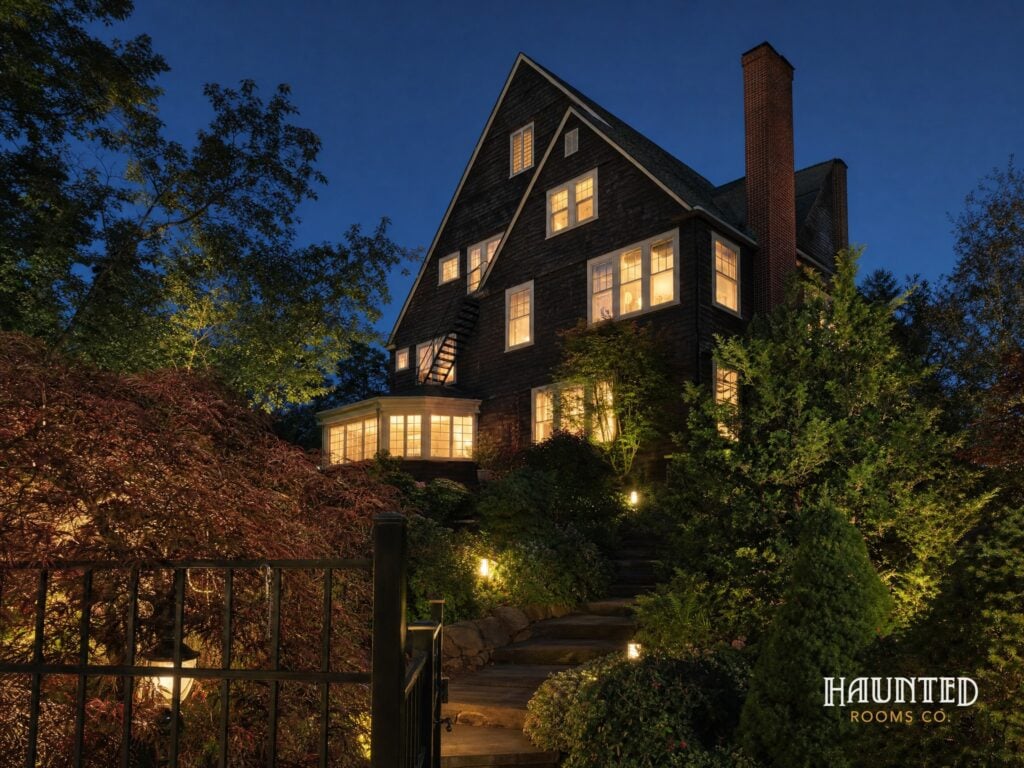
This shingled 1889 Queen Anne house a few blocks north of downtown Asheville was for years the 1889 WhiteGate Inn & Cottage, a much-loved bed and breakfast with rooms named after American writers. It reopened in 2024 as Blind Tiger Asheville, a 14-room boutique guest house (including a cottage) from Lark Hotels, with local art, antiques and a grab-and-go breakfast.
Under its old name the inn was known for one ghost: Marion Bridgette, a nurse who bought the house as her home in 1928. She was said to favor the Robert Frost Room, where guests reported slamming doors, footsteps, flickering lights and floating orbs. The new owners do not promote the story, so ask at check-in which room was the old Frost Room.
Haunted Rooms tip: The new owners do not talk up the ghost; ask which room was the old Robert Frost Room when you book.
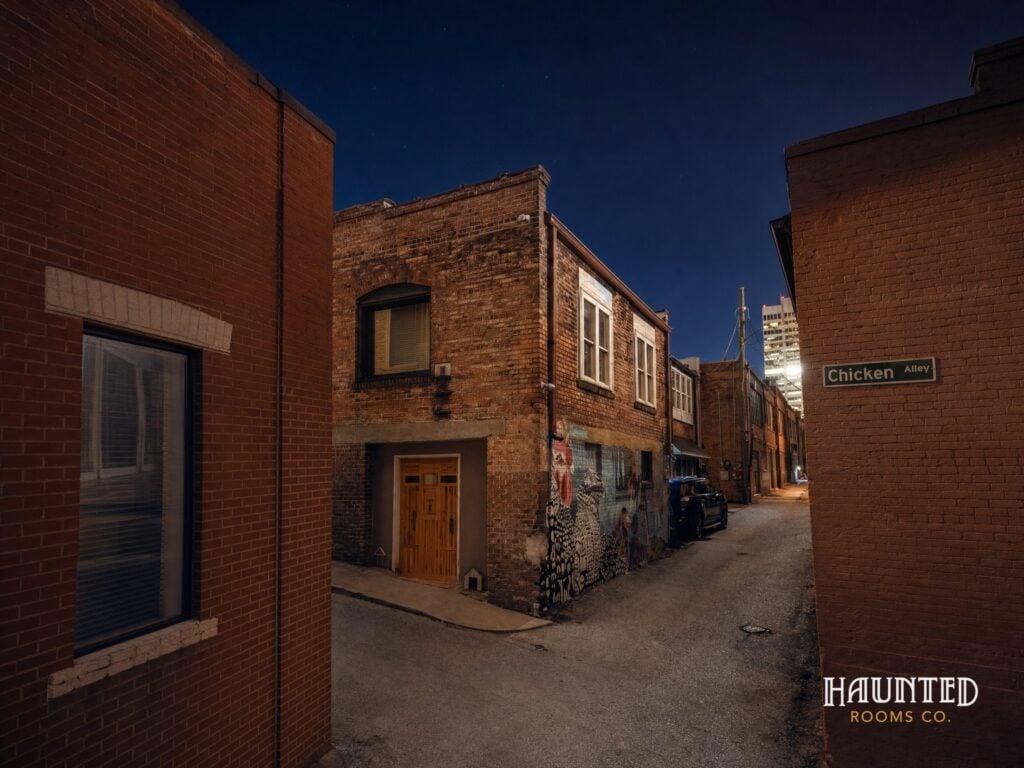
Address Chicken Alley at Woodfin St, Asheville, NC 28801
Where to look The narrow lane by the chicken mural
Reported ghosts "Dr. Jamie Smith" in a wide-brimmed hat and duster coat, with a cane
Visiting Public alley downtown
Hours and season Always open
Tickets Free
This short, narrow lane off Woodfin Street, near North Lexington Avenue, is said to take its name from the days when chickens ran loose among backyard coops; from the 1950s to the 1970s the Young Poultry and Egg Company also opened onto it. Molly Must’s 2011 mural of a towering rooster honors that family business. It is a public alley a two-minute walk from the bars and galleries of Lexington Avenue.
Its ghost is said to be a Dr. Jamie Smith who, the story goes, was stabbed in 1902 while breaking up a fight at Broadway’s Tavern. People describe a man in a wide-brimmed hat and long duster coat carrying a doctor’s bag, and the tap of a cane. Local reporters searched the papers and found no Dr. Smith, no stabbing and no tavern fire; a 1904 clipping names a tavern owner called James M. Smith, who may be where the story started.
Haunted Rooms tip: Come after dark when Lexington Avenue is lively, and use the mural to find the lane.
These places appear in older lists of haunted spots. We keep them here so you know the facts before you go, but you cannot (or should not) visit them.
Zealandia, Beaucatcher Mountain
The mansion above Helen’s Bridge is private property. Enjoy the legend from the road below and do not walk up the drive.
Erwin High School
Older lists say the school was built over the old county home graveyard and that night custodians will not talk about what they have seen. It is a working school, so it is closed to visitors.
Highland Hospital, Montford
A 1948 fire at this former psychiatric hospital at 75 Zillicoa Street killed nine women, among them Zelda Fitzgerald, and her ghost is said to be seen on the grounds. The site is private, so it is not listed above.
Changes in this update: Erwin High School moved to the off-limits list because it is a working school. The Battery Park Hotel is now apartments and is listed as exterior only. Added the Smith-McDowell House, the Kenilworth Inn and Asheville’s haunted hotels.
Visited one of these places? Tell us what happened
We collect first-hand accounts from visitors and add the best ones to our guides, with your first name and the date of your visit. We read every story before it’s published.
Frequently asked questions
What is the most haunted place in Asheville?
Helen’s Bridge on Beaucatcher Mountain is the most famous, for the legend of a grieving mother and the car trouble visitors blame on her. The Grove Park Inn’s Pink Lady and the Battery Park Hotel, where Helen Clevenger was murdered in 1936, are close behind.
Is Helen's Bridge real?
The bridge is real: a stone arch built in 1909 to reach the Zealandia mansion, over what is now College Street. The story of Helen is not documented; we have found no record of her, the fire or a death at the bridge. The estate above is private, so view it from the road.
Is the Biltmore Estate haunted?
Visitors tell of Edith Vanderbilt calling for George in the library and splashing and laughter in the empty indoor pool, but Biltmore does not promote ghost stories. You can tour the house by day; see our Biltmore guide for details.
Can you go ghost hunting in Asheville?
Not inside most of these places: they are museums, churches, apartments or hotels. Local walking tours tell the downtown stories, and Haunted Rooms runs ghost hunts in Tennessee and on the North Carolina coast; see the list on this page.
Can you stay overnight in a haunted building in Asheville?
Yes. The Omni Grove Park Inn, the Reynolds Mansion and Blind Tiger Asheville all take guests, and the Lake Lure Inn is a short drive away. See our Asheville haunted hotels guide.
Sources and how we research
Every place in this guide is checked against its official website, historic register listings and news coverage, and we confirm whether it is open, closed, private or gone before we list it. Ghost stories are reported as staff, visitors and local historians tell them; we say so where records contradict a story. Each place shows how many independent sources we checked it against; our own Haunted Rooms pages are not counted.
New guides, haunted places to visit and ghost hunt dates near you. No spam, unsubscribe any time.
About the authors
The Haunted Rooms Team runs public ghost hunts and overnight investigations at historic venues across the United States. We research every place in our guides using official sites, historic registers, local archives and news coverage, and we report ghost stories as the stories they are. We review each guide regularly so you are not sent to a place that has closed, changed hands or banned visitors. Spotted something out of date? Let us know.